- 12-1. (1) Political Prisoners Day; (2) Diary of Camp 35
- 12-2. (3) Perm Camps 36 and 37; (4) Mordovia (5) Vladimir Prison. (6) Belorussia, Georgia. Krasnoyarsk Region; (7) Letters & appeals from political prisoners
*
FIVE SECTIONS
3.
PERM (Contd.)
3.1: Camp 36
Apart from Anatoly Zdorovy (CCE 36.6-1), the following were also sent to Vladimir Prison for proclaiming themselves political prisoners: Vitaly Kalinichenko (CCE 34.8 [11]), Volodomyr Raketsky (CCE 27.1-1), and Prikhodko [1].
A number of prisoners were punished for the same offence by being put in the cooler, among them Andrei Turik.
On 25 May 1975 Petras Plumpa (CCE 34.6) sent a declaration from Camp 36 to the Presidium of the USSR Supreme Soviet, in which he renounced his Soviet citizenship and asked that he and his family should be allowed to emigrate. On 2 July Plumpa was informed from Moscow that his declaration had been passed to the Lithuanian procurator’s office.
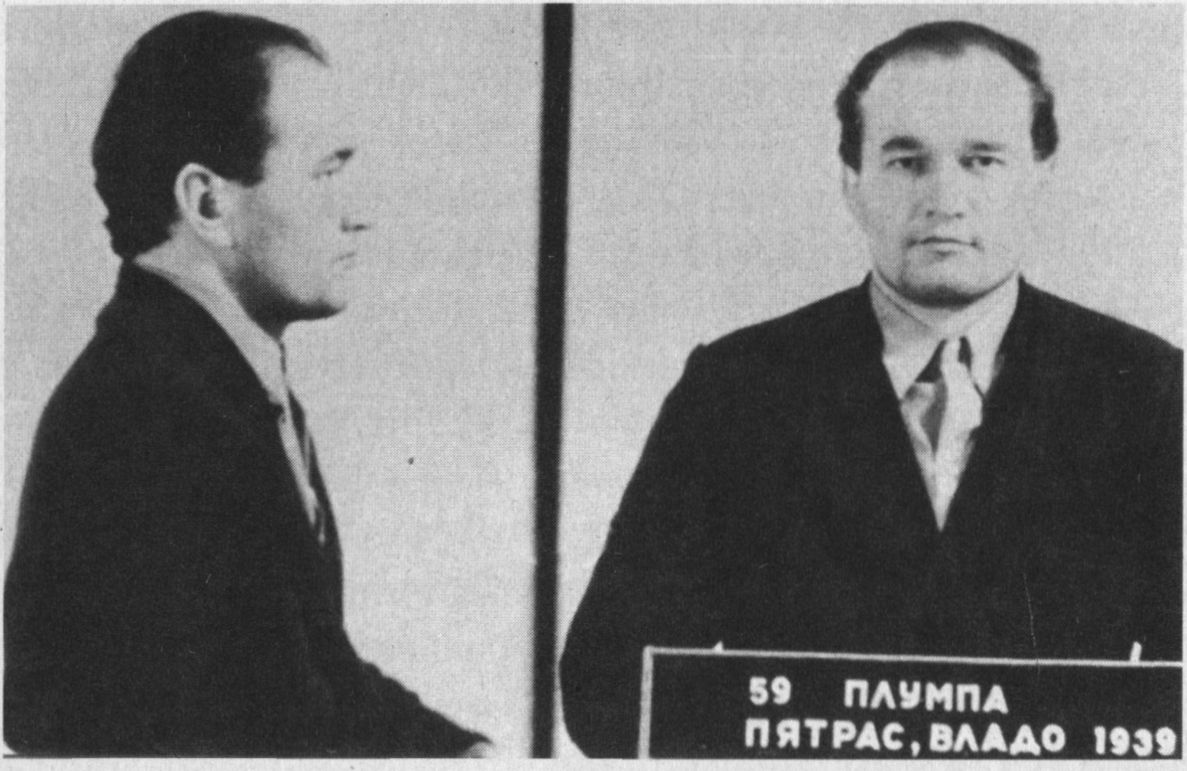
Petras Plumpa
On 30 July, the date when the Helsinki Agreement was signed, a one-day hunger strike took place in the camp. Those who participated are sure that the Soviet government will not observe the terms of the agreement.
*
3.2: Camp 37
At the end of September 1975, a new camp for political prisoners was opened in the settlement of Polovinka, two kilometres away from Camp 35 (CCE 37.5-1).
The living conditions in Camp 37 are unprecedented; in particular, each prisoner has his own bedside cupboard and each section has a refrigerator and an airing cupboard. There are no war criminals among the prisoners. The administration is polite to the prisoners and their relatives.
*
There are now about 50 prisoners in the new camp. The names of 26 are known to the Chronicle. (The list was continued in CCE 39.2-1).
1. Grigory Berger-Kolodezh: a common criminal who became a ‘political’; his sentences and articles of the criminal code are too numerous to list. (See on him Prison Diary by Eduard Kuznetsov).
2. Berdnik.
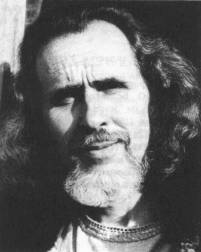
Oles Berdnyk
3. Yury V. Vasilyev: Article 64, sentence, 11 years plus three in exile; has served six years (CCE 16.5).
4. Mikhail Vendysh: Article 64. CCE 33.6-2 [24]).
5. Anatoly Gorodetsky.
6. Zinovy Dovganich: ten year sentence; due for release in 1979 (see CCE 46.23-2).
7. Vasily Doroshenko (see CCE 39.2-2).
8. Vladimir Dyak: Article 70 plus stealing timber; sentence ten years; has been in prison since 1971. He denies the theft charge (CCE 33.6-2 [34]).
9. Alexander Yegorov: Article 70, sentence four years (see CCE 29.4 and CCE 39.2-2).
10. Izrail Zalmanson: Article 64, sentence eight years (CCE 17.6-1); three years left to serve.
11. Ismail Ismagilov.
12. Yusup Kaziev.
13. Mikhail Kapranov: Article 70, sentence seven years; due for release next year (CCE 12.4, CCE 13.3).
14. Dmitry Kvetsko: Article 64, sentence 15 years plus five years exile. Imprisoned since 1967 (CCE 17.7).
Dmitry Kvetsko
15. Vitaly Kolomin: Article 70, six years; imprisoned since 1971 [2].
16. Kononchuk.
17. Mikhail Kopotun: Article 70, sentence three years(see CCE 42.4-4).
18. Ivan Kochubei.
19. Yury Levshin: Article 64, sentence 12 years; imprisoned since 1968.
20. Lychak [Pyotr]: sentence eight or 12 years, Article 64; two years left to serve (see CCE 46.23-2).
21. Vladimir Marmus (see CCE 46.23-2).
22. Vladimir Panchenko: Article 64, eight-year sentence; about two left to serve.
23. Nikolai Potapov: Article 64, 12 year-sentence; imprisoned since 1966.
24. Alexander Chekhovskoi: Article 70, sentence six years; imprisoned since 1970. CCE 33.6-3 [13], CCE 35.7.
25. Isaac Shkolnik: Article 65, sentence seven years; imprisoned since 1972. CCE 33.6-2 [18].
26. Shushunin.
About 40 prisoners were transferred from Mordovia; about ten from Perm Camp 35.
***
*
4. Mordovia
This autumn there were 44 prisoners in Camp 17, about 50 in Camp 3, and about 280 in Camp 19.
*
The following prisoners took part in a hunger strike on 30 October 1975 (Political Prisoners’ Day):
Yury Butchenko (or Buchenko) — Camp 17, Article 70: sentence seven years; recently brought from Leningrad. Nothing is known of his case except that two others were tried together with him.
Mikhail Heifetz — Camp 17, Article 70: sentence six years (CCE 34.2).
Pyotr Lomakin — Camp 17, Article 70: sentence two-and-a-half-years (released on 15 November).
Alexander Bolonkin — Camp 19, Article 70: sentence four years plus two in exile (CCE 29.3, CCE 30.4).
Paruir Airikyan — Camp 19, Articles 65, pt 2, & 67 (Armenian SSR Criminal Code = Articles 70, pt 2 & 72, RSFSR Code): sentence seven plus three (CCE 34.4 [7]).
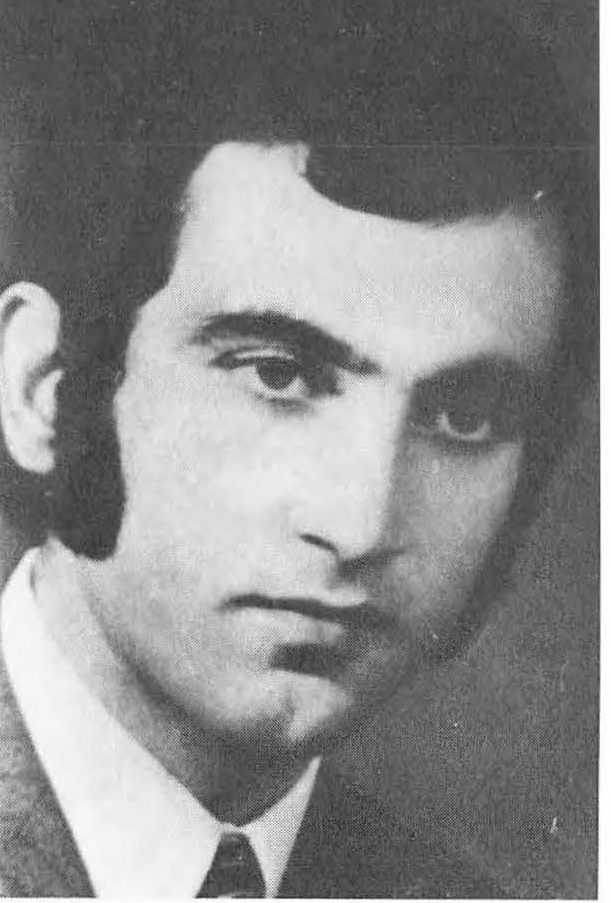
Paruir Airikyan
Pyotr Sartakov — Camp 19; 60 years old,
Graur (or Grauer).
Vasyl Dolishny.
*
Vitaly Konstantinovich LYSENKO is in Camp 17.
He is about 35 years old, a naval lieutenant from Kaliningrad. The details of his case are unknown to the Chronicle; Article 70 (perhaps also Article 64), sentence — five years plus two years exile; apparently arrested in 1974, Tried in Leningrad. His co-defendant Konstantinovsky got 15 years plus five in exile. He must serve the first five years in prison and is now in Vladimir Prison.
According to unverified information, in June this year Alexander Bolonkin received a ‘Warning’ under the appropriate decree. The ‘Warning’ apparently concerned Bolonkin’s ‘anti-Soviet activities’.
*
TRANSFERS & RELEASES
This autumn Vasyl Stus was transferred to Ukraine for routine ‘re-education work’.
Stefaniya Shabatura was transferred to Lvov in October, where she was kept in prison until December. She is now back in camp 3.
On 6 December Nina Antonovna STROKATA-KARAVANSKAYA (CCE 28.7) was released at the end of her sentence. For the last few months of her imprisonment, she was not held in a camp but in the MVD cancer clinic in Rostov-on-Don.
***
*
5. Vladimir Prison
According to some reports, the struggle against forced labour by the political prisoners in Vladimir Prison has had some success.
At present the situation is as follows: prisoners who had earlier been punished for refusing to work and who had not yet completed their punishment (in the cooler or on strict regime) have not had this punishment commuted, but no new penalties are being inflicted for refusal to work.
*
SERHIYENKO
Oksana Meshko, mother of Alexander Sergiyenko [3], had a talk with the prison doctor in April. The latter declared that Sergiyenko was more or less healthy.
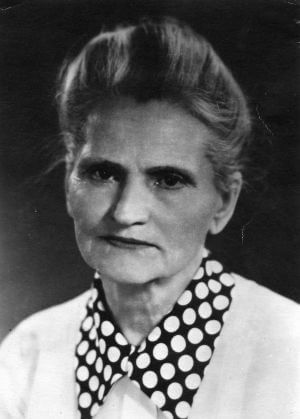
Oksana Meshko
Sergiyenko has severe tuberculosis; from 1951 he was continuously on the register at a tuberculosis clinic; his medical history was confiscated during the investigation of his case by KGB official Ganenko and has not been seen since.
In October Alexander SergiYenko got 15 days in the cooler for using impermissible expressions in a complaint to the procurator.
*
The hunger strike begun by Vitold Abankin and Alexei Safronov on 15 May (CCE 37.5-1), as a protest against Abankin being beaten up in the cooler,lasted until 19 June.
*
On the night of 17-18 October, in Cell 31 (Block 3), the prisoner Gunnars Rode was taken ill. It was obvious that he was having a volvulus attack, like the one he had in 1971 (CCE 18.2 [13]).
The warder Mikhailov — the same man who beat up the hunger-striker Abankin in the cooler on 18 May (CCE 37.5-1) — refused to summon a doctor. Then the prisoners in Cell 31 (Vitold Abankin, Vladimir Bukovsky, Yury Grodetsky, Alexei Safronov and Bobur Shakirov) created a commotion, and broke the glass spy-hole and the food aperture. The assistant commandant on duty and a medical assistant came running. Rode was taken to the hospital wing. He was given medical treatment and later that day he was sent back to the cell.
*
CELL 31
The prisoners of Cell 31 were dispersed to different cells and were later punished for making a noise and breaking the food aperture.
On 29 October Abankin was sent to the cooler for 15 days.
On 30 October Bukovsky, too, was sent there for 15 days (he was transferred to the cooler from the hospital wing).
On 2 November Safronov was sent to the cooler for ten days.
On 3 November Shakirov got ten days in the cooler.
*
The Chronicle now corrects its reports on how Vladimir Balakhonov has been moved from place to place. From January to July 1975 he was moved along the following route: Perm Camp 35, Mordovian Camp 3 (the psychiatric wing of the hospital), the KGB prison in Perm, Perm Camp 36, Vladimir Prison (CCE 35.9 [2], CCE 37.5-1).
On 20 December Malva Landa appealed to Amnesty International, asking it to adopt (i.e., put on its books) the political prisoner V. Balakhonov, if this had not yet been done.
*
D. M. Airapetov has been brought to Vladimir Prison from Azerbaijan [4].
He was sentenced under Article 70 for “Anti-Soviet Agitation & Propaganda” (expressing his views, writing letters to various authorities). His sentence is seven years, the first three years of which Airapetov must serve in prison.
*
In the autumn of this year the following were transferred from Perm Camp 35 to Vladimir Prison: Nikolai Bondar, Zinovy Antonyuk and Jokhan Valdman [5]. They are all held in Block 1.
*
FEDORENKO
On 20 April Vasily Petrovich FEDORENKO was brought to Vladimir Prison.
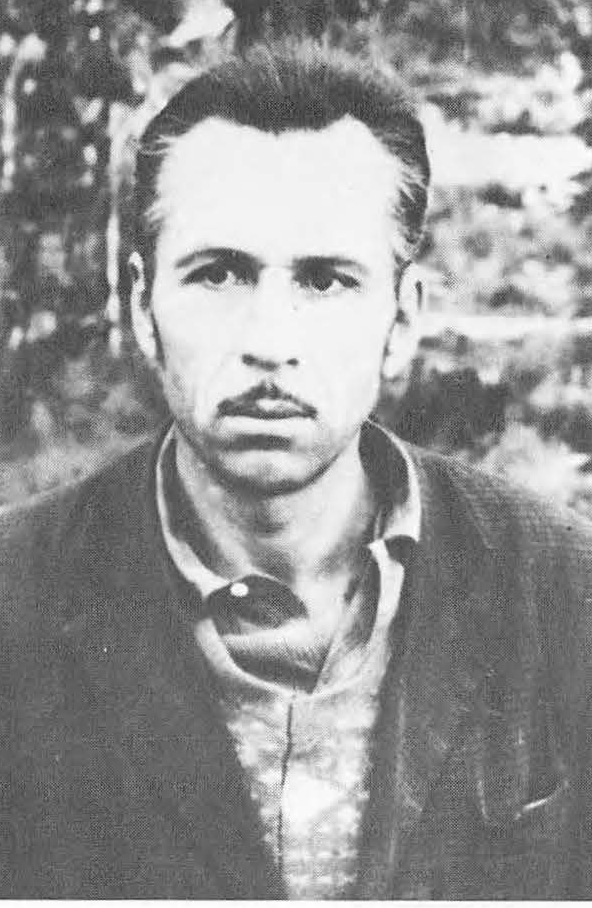
Vasily Fedorenko
Fedorenko had not been allowed to emigrate to West Germany, where his sister lives, and had crossed the Czechoslovak border. He was detained in Czechoslovakia. He got a 15-year sentence, the first five years of which he must serve in a prison and the remaining ten years in a special-regime camp [correction CCE 39.14].
He began a hunger strike as soon as he got to the prison and continued it for 95 days.
Fedorenko is 47 years old; he has served two previous sentences on political charges [correction CCE 44.28].
*
Colonel Zavyalkin, the prison commandant, said to prisoner Lyubarsky: “The commentaries to the Corrective-Labour Code were compiled by a bunch of illiterate academics” (January 1975).
*
In cell-Block 2 (cell 2/15) there is a common criminal who is paralysed. He lies there without moving. So he has to be taken to the cooler on a stretcher.
This man’s name is Nikolai Yedkov; in the past he was a front-line pilot. He is sent to the cooler because he constantly writes complaints.
*
The traditional one-day hunger strikes by political prisoners in Vladimir Prison took place on the following days: 30 October, “Political Prisoners’ Day”; 5 December, “Constitution Day”; 10 December, “Human Rights Day”.
This year a one-day hunger strike also took place on 20 November [in fact 20 October], the opening day of the International Women’s Congress.
***
*
6. OTHER CAMPS AND PRISONS
Belorussia
About a year ago a Central Women’s Prison was opened in Belorussia. From now on women transferred to a prison regime will be sent, not to Vladimir Prison, but to this prison.
Nadezhda Usoyeva, a “True Orthodox Christian” (CCE 33.4 [9]) has been transferred there from Mordovia.
*
Georgia
PAILODZE
On 23 September Valentina Serapionovna PAILODZE (CCE 32.11) was released, on completing her sentence, from women’s penal colony No 12 in Tbilisi.
Valentina Pailodze
On 11 September 1975 the newspaper Tbilisi published in its ‘Courtroom’ column an article by Z. Mesengiser, “A Slanderer and Paper-soiler”, again about V. Pailodze (CCE 34.13). The article ends with these words:
“It is to be hoped that other people who have turned the writing of anonymous letters into a profession will draw appropriate conclusions from this unpleasant story.”
*
Krasnoyarsk Region (Krai)
On 11 October Reshat Dzhemilev was released from a camp on completing a three-year sentence (CCE 31.2, CCE 34.11).
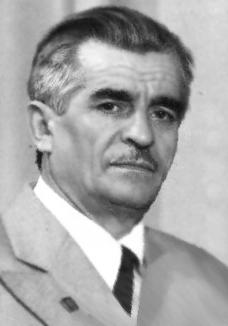
Reshat Dzhemilev
***
*
7. Letters and Appeals from Political Prisoners
1.
APPEAL TO:
“the governments of all countries, the United Nations Organization, all honest people in the world”
compiled by a group of prisoners in Perm Camp 36 at the end of last year, which has only now become available. The authors announce their intention to fight for recognition of their status as political prisoners. ‘We are full of determination to pursue this aim to the end,’ the appeal declares.
Later events — the development of the struggle for political prisoner status — are well known to readers of the Chronicle [6].
Those who signed the appeal included Yakov Suslensky, Pavel Kampov, Yury Grodetsky, Nikolai Bondar, Anatoly Zdorovy, Vitaly Kalinichenko and others.
*
2.
Bagrat Shakhverdyan
“To the Office of the Soviet Committee for European Security and Cooperation,” September 1973
Shakhverdyan feels that the conditions established for political prisoners in the USSR contradict the Final Act of the All-European Conference signed in Helsinki.
He notes that “the prisoners had hoped for a great deal from detente” but that “after the Final Act had been signed in Helsinki the authorities heaped repressive measures on us with renewed vigour”.[7]
*
3.
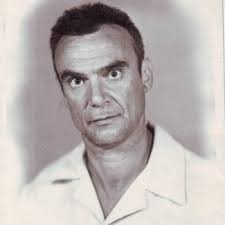
Mikhail Heifetz
(appeal, August 1975).
The writer, sentenced to six years in the camps [8] by Leningrad City Court in September last year (CCE 34.2), briefly describes his ‘case’.
He appeals to literary figures all over the world, especially to the western communist writers James Aldridge, Albert Kahn and André Steel [?], calling on them to “make every effort to ensure the victory of truth and justice” [9].
*
SOROKA (4-5)
4.
Stepan Soroka (July 1975).
An account of the visit paid to Camp 35 by a delegation representing ‘Ukrainian public opinion’ (the visit has been referred to earlier in this section).
These were some of the comments made by Professor Kakovsky, Doctor of History, a member of the delegation.
— “They shouldn’t be imprisoned for their nationalist opinions, they should be executed.”
— “Make them rot here!” (to the camp administration).
— “The nationalists killed Halan!”
*
Soroka has his own views on the murder of the well-known Soviet writer Yaroslav Halan.
He considers that the followers of Bandera had no reason to kill Halan and that Halan may have been bumped off by Stalin.
In Soroka’s opinion the young men who killed Halan had been prompted to do so by agents of the Soviet Ministry of State Security (MGB) [10]. As a further example, Soroka cites his own ‘case’ in 1952: he was charged with being a member of an organization affiliated to the Organization of Ukrainian Nationalists (OUN) which had been founded at the behest of the MGB by Ivan Kharechko (who nevertheless got a 25-year-sentence, like the others).
*
5.
Declaration to the Politburo of the CPSU Central Committee. 3 June 1975.
In 1956 Soroka was released and his conviction was quashed. However, in December 1957 he was again arrested on the basis of a false denunciation — supposedly he was planning to assassinate N. S. Khrushchev.
After the falsity of this allegation had been proved, Soroka was not released, as Khrushchev had by then been informed of the “assassination attempt”. It is clear that the then chairman of the Ukrainian KGB, Nikitchenko, decided to resolve the situation by obtaining permission to revoke Soroka’s release in 1956. In this way Soroka was sent to serve out his 25-year-term.
The resulting situation is expressed in the words of Kiev KGB official Major Ruban, quoted by Soroka: “How can we release Soroka? He’ll tell people all about it, then …!”
“It seems that my worst crime is my innocence,” concludes Soroka.
=============================
NOTES
- Unlikely to be ‘war criminal’ Fyodor Prikhodko (CCE 33.6-3). Grigory Prikhodko, perhaps? (see CCE 46.23-2).
↩︎ - On Kolomin, see CCE 32.12, CCE 33.6-3 [131], CCE 35.16 and CCE 42.4-4.
↩︎ - On Sergiyenko (Ukr. Serhiyenko), see CCE 25.2, CCE 27.1, CCE 30.8 and Name Index.
↩︎ - CCE 40.9-1 provides more details about D. M. Airapetov. (See also CCE 44.17-1.)
↩︎ - Roman Gurny has been removed from this list [correction CCE 39.14].
↩︎ - On the struggle for political prisoner status, see CCE 34.8, CCE 35.7, CCE 37.5-1 and this issue CCE 38.12-2.
↩︎ - See full text of Shakhverdyan’s appeal in CHR 1975 (No. 17).
↩︎ - In fact, Heifetz was sentenced to four years in camps plus two in exile.
↩︎ - Heifetz’s full text is in CHR 1975 (No. 17).
↩︎ - Soroka considered that Halan’s murder was designed to discredit the Ukrainian nationalists led by Stepan Bandera.
↩︎
==========================

