
10 ENTRIES
[1]
The Goncharov Case
On 23 July 1979, Victor Mikhailovich GONCHAROV (CCE 52.8) was arrested in the town of Novoukrainka, Kirovograd Region. He was charged under Article 187-1 (UkSSR Criminal Code = Article 190-1, RSFSR Code).
*
On 25 September four searches were conducted in Odessa in connection with the Goncharov case. At the home of Valentina Barladeanu (CCE 45.8 & CCE 47.14) poetry by her husband Vasily (trial CCE 46.3), his letters from camp, the copy of A Chronicle of Current Events in which there is an account of his case, extracts from materials of Party congresses and conferences, a tape-recorder, texts of prayers, and receipts for registered letters to Goncharov were confiscated (144 items in all).
A list of the registration numbers of vehicles used by the KGB for their observations, and handwritten texts of the Covenants on human rights were confiscated from Leonid Tymchuk [1].
Notebooks and personal correspondence were confiscated from Anna Mikhailenko [2].
Photocopies and xeroxed copies of Bulgakov’s Master and Margarita; the Baptist journal Herald of Truth [Vestnik istiny] Nos. 1-3; Vasily Barladeanu’s letters; articles by Grigory Pomerants, writings by M. Liyatov [Mikhail Yakovlev’s nom de plume]; and joint letters of protest — 39 items in all — were confiscated from Anna Golumbievskaya [3].
On the same day an investigator visited Vyacheslav Igrunov (CCE 53.15) to talk to him ‘about his views’.
*
In September 1979, S. Ostroushchenko, a local newspaper correspondent, talked to Golumbievskaya, Tymchuk and Valentina Barladeanu. It turned out that an article was being written about the moral make-up of Odessa dissidents.
*
At a teachers’ conference in the Ilichev district of Odessa, which took place on 23 August, third secretary of the district Party Committee Tryanova made a speech in which she said that there was no place for Golumbievskaya in a Soviet school because she did not vote and did not accept the Soviet Constitution. Tryanova asked for such an atmosphere to be created around Golumbievskaya at school that ‘the earth will burn under her feet’ and she would finally leave the school.
It turned out that in the spring and summer of 1979 relatives, colleagues and even former pupils of Golumbievskaya were summoned to the KGB and asked to give evidence against her. The head of the Odessa KGB Investigations Department stated that Golumbievskaya would definitely be imprisoned.
*
[2]
The Monakov Case
On 21 August 1979, V. Isakova (CCE 53.20) was interrogated in Leningrad in connection with the case of Mikhail Monakov (CCE 53.17), and the next day Lt-Col Kondratev interrogated Yevdokimov. The investigators also asked about the Sery couple. In connection with the same case Genrikh Altunyan (Kharkov) and Valery Gnatenko (Lvov) were interrogated at the end of August, and Oksana Meshko (Kiev) on 3 September.
*
In Odessa, on 3 September 1979, Major Khokhlov and Captain Grazhdan (CCE 48.2) summoned Leonid Sery to a confrontation with Monakov. Monakov said that he had given Sery the manuscripts of his anti-Soviet writings. Sery refuted Monakov’s testimony. Monakov then said that he, with Sery’s assistance, had been preparing to organize a workers’ party, but Sery had not accepted his proposals.
On 6 September V. Seraya, under threat of being brought by force, arrived for a confrontation with Monakov. Investigator Lemeshko conducted the confrontation. Monakov repeated his testimony, adding that V. Seraya had not been present during his conversation with L. Sery and that he did not know whether she had read his papers. Monakov also explained that he had come to the idea of founding a workers’ party as a result of the Influence of Western radio-stations. Seraya said that Monakov had promised to petition for free food for one of her daughters, who was in his class, and that that was the sum total of his contact with the family.
On 20 September L. Sery was again summoned to the KGB and asked to write something down so that they could verify his handwriting. He refused. In conversations with L. Sery and V. Seraya, KGB officials are demanding that they renounce their intention to leave the Soviet Union and threatening to put them in prison or a psychiatric hospital, and their children in a home. It transpires that on the medical files of their two elder children, Edik and Vika, it says that they are handicapped. In fact the children attend an ordinary school and their work is perfectly normal.
On 31 August 1979, district Soviet executive committee official Negrov and his wife beat up Vika (who is 15) for entering the staircase to their flat. V. Seraya took Vika to the doctor, who diagnosed concussion. On a return visit to the clinic on 10 September it transpired that Vika’s medical history had been mislaid. (V. Seraya considers that the history ‘disappeared’ because at one of her KGB interrogations she told the investigator about the incident and demanded that the guilty parties be punished.)
*
On 18 September 1979, in Kiev a local policeman visited Lyubov Murzhenko (CCE 53.29) and demanded that she go at once to an interrogation. He said that he had a warrant to take her, but did not show it to her.
Murzhenko refused to go, since she had her four-month-old daughter with her. After waiting for her to finish breast-feeding the child, the policeman called two people who were waiting by the door. The three of them dragged Murzhenko to their car, not even allowing her to get dressed first. The policeman wrapped the child up carelessly, thrust it into Murzhenko’s arms and took her off to be interrogated. Kiev KGB investigator Bereza questioned Murzhenko in connection with the case of Monakov, who is unknown to her.
*
[3]
The Arrest of Litvin
On 6 August 1979, Yury Litvin (CCE 53.17) was arrested in Vasilkov, Kiev Region.
He had been summoned to a police station and did not return home. His mother, who had started searching for him, was handed a notification from the Vasilkov Procuracy, dated 9 August, that Litvin had been arrested for committing an offence defined under Article 188-1, pt. 2 (UkSSR Criminal Code: ‘resisting a police official or people’s vigilante’). It was several days before Litvin’s mother found out that he was being held at Lukyanov Prison in Kiev. Investigator Stepanenko informed her that Litvin had refused to talk to him.
From the moment of his arrest Litvin (Ukr. Lytvyn) maintained a hunger-strike in protest. On the fourth day they started to force-feed him, which made his ulcer very painful. He was taken to the Pavlov Hospital for a psychiatric examination. Here he stopped his hunger-strike. (They accepted the first parcel for him on 22 August.) A month later he was diagnosed ‘mentally normal’ and taken back to prison. The investigation ended in September. On 3 October the Vasilkov district people’s court sent his case-file back for further investigation.
On 13 November 1979 Stepanenko informed defence counsel V. V. Medvedchuk that the case would be concluded by 20 November.
*
The following incident had preceded the arrest: on 19 July Litvin had bought a bottle of champagne and gone to say ‘Happy Birthday’ to his son. He was then detained by police on the beach in Vasilkov and taken to a sobering-up station.
There he was forcibly undressed, strapped to a cot and beaten up. His release was achieved the same day, with the help of the personnel manager of the factory where he worked, who valued him as a worker and knew that he never drank. This man and an ex-inspector of the district Education Department who knew the Litvin family well, went to the sobering-up station and got an M V D official of their acquaintance on to the case. Not only was Litvin released, he also immediately found that the administrative surveillance of himself had been lifted. However, the next day a policeman arrived at Litvin’s home and made him out a receipt for the services of the sobering-up station.
*
Yury Litvin (b. 1934) was sentenced to 10 years in 1951 on a charge of stealing a collective-farm cow.
Two years later the case was reviewed and quashed, and Litvin was released. In 1955 he was again arrested and sentenced to 10 years on a charge of organizing an anti-Soviet group during the time that he was in camp. He served his entire term in the Mordovian camps. He was sentenced for a third time in 1974 (CCE 37.13 & CCE 39.2-2) under Article 187-1 (UkSSR Criminal Code = Article 190-1, RSFSR Criminal Code), He served a term of three years in the Komi ASSR and was released on 14 November 1977 (CCE 47.9-4). Litvin has acute thrombophlebitis and stomach and duodenal ulcers. He has had two operations, one in camp.
*
[4]
The Sichko Case
On 7 August 1979, in the town of Dolina (Ivano-Frankovsk Region), a search was conducted in the flat of Petro and Vasily Sichko, who had been arrested on 5 July (CCE 53.17).
Mykhaylo Lutsyk (CCE 51.22) and Oksana Meshko were present during the search. Immediately afterwards Lutsyk was taken away somewhere and Meshko was asked to go for an interrogation. She refused categorically. Meshko left the same night for Lvov. An official came to the flat where she was staying and ordered her to return immediately to Kiev, threatening that if she did not comply the occupant of the flat would be punished for violating residence regulations. Meshko was obliged to submit.
On 23 August an article by A. Pavlyuk was printed in the local newspaper Red Dolina. Entitled ‘The Dirty Deeds of Provocateurs’, it was about the Sichko family.
On 5 September Stefania Petrash (Petro Sichko’s wife, Vasily’s mother) sent a protest to the Presidium of the USSR Supreme Soviet in which she listed and refuted the libellous fabrications contained in the article.
On 26 September the pre-trial investigation of both Sichkos was concluded, Vasily, who had spent 40 days under psychiatric observation, was ruled responsible. A parcel which Stefania Petrash prepared for her son was accepted, one for her husband was not; they told her he had refused it.
*
[5]
A Search at the Home of Surovtseva
On 30 August 1979, in the town of Uman (Cherkassy Region), a search was conducted at the home of 83-year-old writer and historian Nadezhda V. Surovtseva: the name on her passport is Olitskaya; she is the wife of E. L. Olitskaya’s brother (see CCE 26.18, CCE 34.18, also CCE 47.4). The search was conducted with the purpose of discovering stolen goods, allegedly taken by her lodger, the poet D. Kalyuzhny.
There were several people in the house when the search, led by Senior Lieutenant D. Mishchenko, took place. Apart from Surovtseva herself, they were Kalyuzhny, Stefania Gulyk (CCE 48.2) from Lvov, E. Gabovich (CCE 53.25-2) from Moscow, and two people from Kiev. Notebooks were confiscated from all the visitors, they were advised to go home immediately, and the officials insisted that Gabovich, who had been about to go to Lvov with Gulyk, should not do so.
Surovtseva’s memoirs about the Ukrainian writer Yu. Smolich, and Kalyuzhny’s poetry and private notes, were confiscated. Trousers, boots and a plastic butt from an air rifle belonging to Kalyuzhny were also taken away.
*
Gabovich did, however, go to Lvov.
On 1 September 1979, when walking through the town with friends, an unknown man came up to them, asking for a light, then hit Gabovich’s friend Valery Gnatenko. A voice was heard from behind, shouting ‘Not that one!’ Several more men ran up and pushed Gabovich into a car. He was taken to a police station, locked in a cell and told that he was being charged with petty hooliganism.
They ignored all Gabovich’s demands for a piece of paper on which to write a statement. Gabovich started a hunger-strike. Sometime later Gabovich was told that a criminal charge of hooliganism had been brought against him for attacking the ‘stranger’ who hit Gnatenko. Twenty-four hours later Gabovich was released, after he had signed an undertaking that he would stay in Moscow. He then returned to Moscow and on that note the ‘criminal case of hooliganism’ ended.
*
[6]
The Arrest of Rozumny
On 8 October 1979, Petro Pavlovich Rozumny (b. 1926) was arrested.
Rozumny was arrested as he was returning from a visit to Yevhen Sverstyuk, who is serving a term of exile in Siberia (CCE 54.14). Rozumny is now in the Dnepropetrovsk Region UVD Investigations Prison. Police Investigator Captain Tkachenko informed Rozumny’s brother: ‘We’II have him sent down at any cost. He doesn’t work and he flits all over the country.’
On 20 October Sverstyuk was interrogated. He was asked whether he had seen a hunting-knife in Rozumny’s possession. In a statement to the USSR Procurator-General, dated 20 October, Sverstyuk wrote:
‘… Yes, I have seen it. And I’m not the only one. All the competent, informed and instructed organs of your regime have seen it too, at each place where he has changed planes.
‘But if the authorities return such a ’weapon’ to a person in order to use it as grounds for bringing criminal charges against him if the chance arises, then the authorities concerned are provocateurs and, in essence, hostile to the citizen …
‘I address this statement to you, because it is in your power to put a stop to this shameful outrage to the law and human dignity, this purposely frightening demonstration of tyranny, which puts one in mind of the famous proverb about Soviet legal officials: ‘Find us a man and we’ll find you a case against him’. How dangerous it is now to declare oneself a decent person and a friend of a dissenter.’
*
Rozumny is an English teacher. In 1967 he was barred from teaching; in 1978 he was made redundant by a building organization.
*
[7]
The Arrest of Gorbal
On 23 October 1979, soon after his return from a trip to Moscow and Perm, Nikolai Gorbal [Ukr. Mykola Horbal] (CCE 47.10) was arrested in Kiev.
At 10 pm five people, including a woman, attacked him in the street and took him to the October district Police Station. Three days later he found out that he was being charged under Article 117 (Ukraine SSR Criminal Code: ‘rape’) and the victim and witnesses were the people who had attacked him. The investigator maintains that there is a female witness (whose name he has not disclosed) who had either acquainted Gorbal with the victim or seen them together on the day.
*
Gorbal was born in 1941 on Polish territory. During or shortly after the war his family was forcibly resettled in the Far Eastern Khabarovsk Region [Krai], from which they then moved back to the Ternopol Region. He graduated from the music college and worked as a teacher in a middle school. At the same time, he studied at a teachers’ training college.
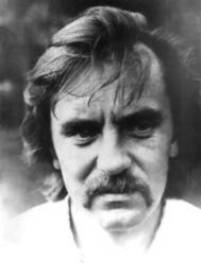
Mykhaylo Horbal (b. 1941)
In October 1970 Gorbal was sentenced to five years of camps and two years of exile for writing the poem Thought. Since 1977, on completion of his sentence, he has lived in Kiev, working as a lift operator.
*
In connection with his arrest, a group of Ukrainian defenders of the rule of law sent appeals to human rights organizations in the USSR, the USA, Poland and Czechoslovakia, and to Amnesty International and President Carter (14 signatures):
‘The filthy charge against Gorbal and his crude arrest are new evidence of the fact that the time of political trials in the Ukraine is passing and a new age is dawning in which political prisoners are being sent to criminal camps after being framed on criminal charges.
‘This is being done, of course, to stop the wave of protests against political trials in the USSR, to lower the number of political prisoners in special-regime camps and at the same time weaken their unity, also to put defenders of the rule of law in an extremely difficult situation, and to heap slander on the human rights movement. We remember that human rights workers such as Smogitel, Monblanov and Melnichuk were charged with hooliganism and former political prisoners Yury Litvin (a member of the Ukrainian Helsinki Monitoring Group) and Vasyl Ovsienko with resisting the police.
‘A charge of rape is especially convenient because, according to Article 70 of the Ukrainian Code of Criminal Procedure, a rape case can be heard in camera, and therefore the relatives and friends of the accused have no right to attend the trial. Moreover, it is a trump-card for the propagandists — to discredit Ukrainian defenders of the rule of law in this way.’
V. Stus, S. Kirichenko and P. Stokotelny sent a telegram to Brezhnev, demanding that he prevent the reprisals being prepared against N. Gorbal.
Political exile Valery Marchenko (CCE 53.19-2) wrote a letter to Metropolitan Filaret of Kiev, ‘… I know Nikolai well. He is a very religious man. a priori incapable of such an act …’
*
In spring 1979 Gorbal received an invitation from his sister in the USA and tried to obtain permission to emigrate. His wife Anna Marchenko (Valery Marchenko’s aunt) then waited about six months for the letter from her place of work without which OVIR refuses to accept applications. She was given the letter on 24 October, the day after her husband’s arrest.
On the same day P. Stokotelny, who had applied for permission to visit the USA by invitation, was summoned to OVIR. He was told that he would not be allowed to go just for a visit, but that he could rewrite his application and leave permanently. Stokotelny consented to this.
*
[8]
Persecution of Kirichenko
The investigator in charge of the case against Yury Badzio (CCE 52.4 & CCE 53.17) has told Badzio’s wife Svetlana Kirichenko (CCE 53.17) that as the manuscript The Right to Live which incriminates Badzio is written out in her handwriting, she must be an accomplice or possibly the initiator of the crime.
Kirichenko has been dismissed from her place of work. In November her telephone was disconnected. Correspondence, including money orders, has not been reaching her.
*
The telephones of P. Stokotelny and L. Litovchenko were disconnected at the same time. The telephone of Nadiya Svetlichnaya, Ivan Svetlichny’s sister, was disconnected in June.
*
[9]
Mafia-like Actions
On 2 August 1979, Vladimir Malinkovich (CCE 49.4; CCE 52.15, CCE 53.17) was beaten up and then arrested for 15 days.
As he was walking towards his house at around midnight he was attacked by a stranger. When Malinkovich called for help two more men jumped out from behind some bushes, threw him to the ground and tied him up. Then a policeman appeared. Malinkovich was taken to the Shevchenko district Police Station, where a statement was drawn up in which Malinkovich figured as the assailant of the first stranger, and the two others figured as witnesses. The Shevchenko district court sentenced him to 15 days’ in jail. His relatives were not informed of the arrest.
Soon after his release, a meeting took place in the institute where he worked and his dismissal was demanded. The director of the institute asked him to write a statement of repentance. He refused. He was later made redundant and is now unemployed. On 23 August Malinkovich’s wife Galina was cautioned by the KGB that she could be brought to trial for slander.
On 4 November Malinkovich was again assaulted, this time in the afternoon. Galina Malinkovich and Olga Matusevich, in whose presence the attack took place, shouted and called for help. All approaches to the place where the incident was occurring had been blocked off by KGB officials.
Malinkovich has twice been cautioned ‘according to the Decree’. KGB officials have summoned him several times for interrogations and ‘chats’. His friends and relatives have suffered threats and blackmail. His home has been searched on more than one occasion and he is constantly and blatantly shadowed.
*
On 25 November 1979, Mark Belorusets was again assaulted at the entrance to his home (CCE 53.29).
From time to time, he receives telephone calls from a man who says that it was he who attacked him and warns him to ‘behave quietly’. It is possible that the purpose of the attack and the attempts to frighten Belorusets is to compel him to emigrate. The KGB official ‘monitoring’ him has hinted to Belorusets that it would be desirable for him to emigrate.
*
In Lvov in September 1979, Lyudmila Dashkevich, wife of the historian Jaroslav Dashkevich (whom the authorities consider untrustworthy because of his acquaintances), asked a ‘private-enterprise’ cab-driver for a lift.
He drove her into the woods and tried to rape her. She managed with difficulty to get away from him and ran away, wearing only her underwear. Before this, he had asked her: “What begins with ‘I’ and hangs from a tree? Don’t you know? It’s IVASYUK!” (CCE 53.17) [4].
The things which Dashkevich left in the car turned up in the morning outside her front door.
*
[10]
The Arrest of Streltsov
On 25 October Vasily Streltsov (CCE 53.17) was arrested in Dolina, Ivano-Frankovsk Region, for “a violation of the passport regulations”.
Two years previously he had renounced his Soviet citizenship and handed in his passport. He refused to take it back, despite attempts by KGB officials to persuade him.
***
On 30 October a document entitled ‘Lamentation’ was issued. It contains a large number of facts concerning ‘the escalation of State terror and slander’ against members of the movement to defend the rule of law in the Ukraine, and concludes as follows:
“The Ukrainian Helsinki Group finds itself threatened with liquidation, with having all its members put behind bars in the near future.
“We, who are women and members of the Ukrainian Helsinki Group, appeal in desperation to all progressive world society and in particular to international women’s organizations, maybe for the last time.“
Signed: Oksana Meshko, Nina Strokata, Irina Senik
========================================
NOTES
- On Leonid Tymchuk (former sailor, taxi-driver): CCE 38.5 1975 trial; CCE 39.13 1976 appeal; CCE 42.3, seminar on Ukrainian art, and CCE 42.9 further provocation; & CCE 45.8 1977 Barladeanu case.
↩︎ - On Anna Mikhailenko: CCE 42.3 KGB and seminar on Ukrainian art; CCE 44.13 1977 arrest of Barladeanu; CCE 45.8 1977 Barladeanu case; CCE 49.18 1978 chat with KGB; CCE 51.8 1978 search. ↩︎
- On Anna Golumbievskaya, see CCE 34.15; CCE 42.9 and CCE 42.3; & CCE 44.27.
↩︎ - Ivasyuk (CCE 53.17) was a popular young singer found hanged in mysterious circumstances.
↩︎
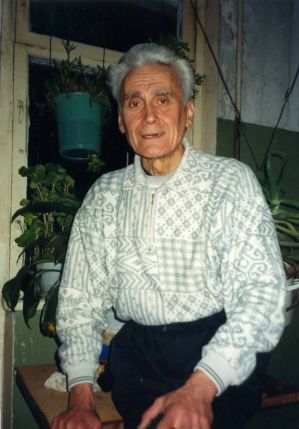
Leonid M. Tymchuk, b. 1935
========================
 A Chronicle of Current Events