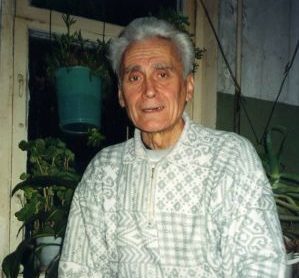
On 30 December 1975, Leonid Tymchuk (feature photo) was tried in Odessa on a charge of hooliganism.
*
POLICE
On 4 November, when Tymchuk was returning home from work, he had been grabbed on the street and pushed into a minibus parked nearby. Already sitting in it were two women (the ‘victims’) and a few ‘witnesses’. At the police-station a report was drawn up: he had insulted the women, brawled, used bad language, and resisted the police.
Tymchuk was sentenced to 15 days’ in jail.
On 19 November Tymchuk was released, but on 23 November a similar incident took place: he was grabbed late at night on an empty street and taken in a police car — in which new victims and witnesses were already waiting — to the police station. Once again he was charged with hooliganism, but this time a criminal case was begun against him.
*
Tymchuk’s friends sent a declaration to the district and Regional procurators’ offices, testifying that Tymchuk did not drink, that he was an educated, well-behaved man and “could not have behaved like a hooligan on the street, nor could he have insulted anyone or done anybody any harm.”
The declaration was signed by six people: teacher Anna Golumbievskaya (CCE 36.9), machine-operator Dontsova, librarian Mikhailenko, pensioner Mrs Barenboim, dress-designer Kopteva and lathe-operator Kryukov.
Tymchuk himself, after scrupulously setting out in detail what had happened, came to the conclusion that these people [those who took part in both arrests, Chronicle] were directed by a certain hand, “that of the KGB”.
*
TRIAL
In court Tymchuk went into further details.
He had been followed. He discovered a microphone in his flat (CCE 36.10 [14]):
“I’m on trial because I read a lot and have made certain deductions from what I read, because I have thought for myself and got to know people like Sakharov. The KGB didn’t like this . . . The KGB official Grazhdan threatened me, saying, ‘If you kick up a fuss, we’ll get you into trouble through the police’.“
The witnesses Golumbievskaya and Gorodentsev, summoned at Tymchuk’s request, confirmed that they had seen Tymchuk being followed. These witnesses spoke favourably of Tymchuk’s character:
“He always has a book in his hand”… “He could not have behaved like a hooligan”.
The ‘victims’ and the prosecution witnesses repeated the story contained in the police reports and the indictment. Their testimony during the pre-trial investigation and in court was unclear and contradictory; the defence lawyer Molchan expressed doubt about how they had come to be on the scene. Tymchuk and his lawyer pressed for a missing witness to be called — the taxi-driver Tokar, whose first testimony at the pre-trial investigation had read: ‘A police official prompted me on how to write my explanatory statement’. The court refused to call Tokar.
The lawyer Molchan asked for a verdict of not guilty.
The court found Tymchuk guilty and sentenced him to one year’s corrective labour at his place of work, with confiscation of 20 per cent of his wages; he was made to sign a statement promising not to leave the city.
*
DISSENT
The Chronicle reminds readers: Leonid Tymchuk is 40 years old, a sailor of the seaport of Odessa, the author of an Open Letter supporting the 1968 appeal “To world public opinion” from L. Bogoraz and P. Litvinov; he has signed a number of collective Open Letters about topical subjects in society, for example the “Moscow appeal” (1974, CCE 32.1 [12]).
In 1974 the Odessa KGB issued an ‘Official warning’ to Tymchuk.
On the day before the trial, 29 December, Tymchuk sent a telegram to the CPSU 25th Congress, demanding that it either defend him against arbitrary violence, or give him the chance to emigrate to any free country.
==================================================
NOTE
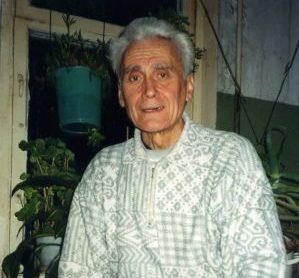
Leonid Tymchuk
(1935-; 1990s photo)
==========================

