THIRTY-SEVEN ITEMS
[1]
“A Chronicle of Current Events” on its Founder
On 18 December 1975, Natalya Yevgenyevna GORBANEVSKAYA emigrated from the Soviet Union.
*
N. E. Gorbanevskaya was born in Moscow in 1936.
She graduated from the faculty of philology at Leningrad University. In 1961 she contributed to the typewritten collections of poetry Syntaxis (edited by A. Ginzburg).
*
On 25 August 1968 Gorbanevskaya took part in the protest demonstration on Red Square (CCE 3.3). Later, in 1969, she wrote a book Red Square at Noon, about this demonstration and the trial of those who took part in it.
Natalya Gorbanevskaya was the moving spirit behind the foundation of the Chronicle of Current Events in the spring of 1968 . She organized the publication of the Chronicle, and in many ways her work determined the style, structure and principles of the periodical [1].
On 25 December 1969 Gorbanevskaya was arrested. The main charges against her were her authorship of the book Red Square at Noon and her systematic activities in editing issues of the Chronicle.
She was declared not responsible (CCE 15.1) and sent to the Kazan Special Psychiatric Hospital. She was released in February 1972.
*
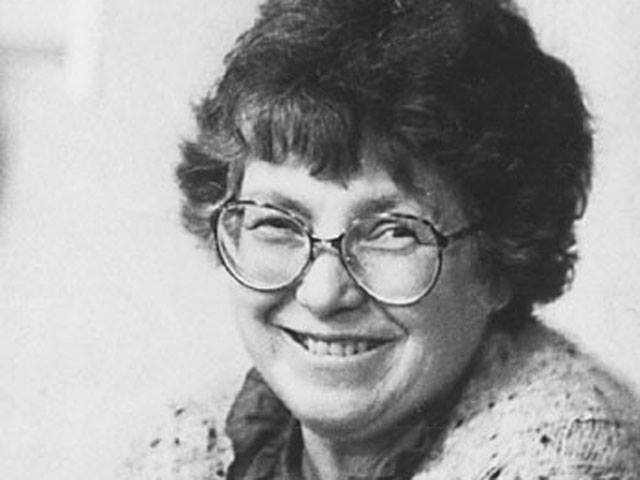
Natalya Gorbanevskaya (1938-2013)
Natalya Gorbanevskaya is a poet and the author of many collections of poetry which circulated in samizdat in the 1960s and 1970s.
In 1972 a collection of her selected poems, The Coastline, was published in the USA.
The Soviet press has sometimes published her translations of Polish, Czech and Spanish poetry. Gorbanevskaya’s original work has hardly ever been published.
*
[2]
On 14 November 1975 Andrei Tverdokhlebov (CCE 36.1, CCE 37.4) finished studying the materials of his ‘case’.
*
[3]
On 5 December 1975, the traditional ‘silent demonstration’ took place on Pushkin Square in Moscow (cf. CCE 43.2, “Traditional Days of Protest in the USSR”) [2].
The first such demonstration on Pushkin Square took place 10 years ago.
*
[4]
10 December is the anniversary of the adoption of the Declaration of Human Rights by the United Nations. The trial of Sergei Kovalyov in Vilnius (CCE 38.3) was under way that day.
On 10 December 1975, the Supreme Court of the RSFSR confirmed the sentence passed on Vladimir Osipov: eight years’ imprisonment.
*
On ‘International Human Rights Day‘ a group of Soviet citizens issued a declaration addressed to world public opinion.
The authors outline the situation with regards to human rights in the USSR, in so far as this is possible within the confines of a short declaration. They declare their solidarity with those fighting for these rights and with political prisoners on hunger-strike; and they protest against infringements of human rights.
The declaration is signed by the following;
Vyacheslav Bakhmin, Vladimir Borisov (Leningrad), Ksenia Velikanova, Zinaida Grigorenko, Tatyana Velikanova, E. Kostyorina, Irina Zholkovskaya, R. Urban, V. Gordeyev, Vladimir Voinovich, Vladimir Kornilov, (Father) Sergy Zheludkov (Pskov), (Father) Dmitry Dudko, Yury Orlov, Tatyana Khodorovich, Malva Landa, Grigory Podyapolsky, Nina Bukovskaya, Victor Nekipelov, and Galina Salova.
*
[5]
The authorities continue to persecute Alexander Ginzburg.
This spring Ginzburg went round nearly all the places of employment in the town of Tarusa in search of a job. He tried unsuccessfully to obtain work as a hospital orderly, a stoker, an electrician and an odd-job man.
In April he managed to get a job as a park attendant in a local rest-home. Usually, such work ends in November. However, on 1 September Ginzburg was suddenly dismissed ’because of the end of seasonal work’, without even being given a few days’ notice.
Ginzburg handed in a declaration to the local trade-union committee, pointing out the infringements of the law which had taken place; his wife I. Zholkovskaya wrote a complaint to the Tarusa district Party committee.
On 15 September A. S. Venikov, secretary of the district Party committee, promised that the situation would be normalised. On the same day Ginzburg was re-employed (though in a different job). He was sent to harvest fruit, which involved dragging heavy sacks about from morning till night. Ginzburg has a duodenal ulcer and has been categorically forbidden to do heavy manual labour.
On 1 October Ginzburg was told that his employment would be terminated on 14 October ‘because of the end of seasonal work’. This time a letter from Ginzburg’s wife to Venikov remained unanswered. Ginzburg was then taken to hospital suffering from a haemorrhage of the ulcer and remained there until the middle of December.
Ginzburg has two children, aged one and three.
*
[6]
During his visit to the USA in August 1975 Alexander Solzhenitsyn discussed his “fund for the support of Soviet political prisoners and their families” (Relief Fund) with American senators. This fund is administered in the USSR by Alexander Ginzburg. The senators took a decision to try to ensure his safety.
*
[7]
On 10 October 1975 Serafima Starobinets was expelled from the Komsomol.
A 1st-year student at Moscow’s Electro-Technical Institute of Communications, Starobinets is a resident of Lvov in the West Ukraine. The meeting petitioned that she also be expelled from the institute; this happened soon afterwards.
The reason for her expulsion was that on 18 September 1975 Starobinets dined with some Israeli sportsmen who were taking part in the world athletics championships. After dinner one of the sportsmen escorted her to an underground station. As soon as he had gone, a policeman asked her to accompany him to a police station, where her passport was examined under the guise of a search for some female criminal who had committed a robbery; the details on her passport were noted down; the police then apologized to her and let her go home.
The report drawn up by Sergeant Tumashevich was sent to the Institute. It stated that Tumashevich had noticed a young woman in the entrance hall of the Rossiya Hotel, who was spending a long time in the company of foreign nationals and was drinking spirits with them right in the entrance hall. She had been detained, taken to the police station and discovered to be the student Serafima Starobinets.
At a censure meeting Starobinets argued that the policeman’s report was false, but her views were not taken into account. The very fact that she had dined with foreigners was regarded as ‘immoral’. The student’s guilt was made worse by the fact that the sportsmen were Israelis. She was asked:
“Didn’t you think that there might have been spies among them? Or that they might have tried to create a provocation involving you?”
*
Starobinets appealed to the rector of the Institute, Professor I. E. Yefimov.
The expulsion had been carried out hastily, she declared, without checking the unsubstantiated statement of the police sergeant. The rector replied that a signal from the police was enough for expulsion, as was the fact that the incident was linked with Israel.
Starobinets also appealed to the police station: Lieutenant Yu. V. Nemanezhin, the deputy superintendent, told her that police officials are educated in the ‘spirit of Soviet morality’ and that her action had been a misdemeanour which did not require the compiling of legal documents or testimony by witnesses, but could be dealt with administratively.
On 20 October the case of Starobinets was examined by the Institute’s Komsomol bureau. Participants censured ‘the ruling circles of Israel’. The Komsomol authorities changed the reason for S. Starobinets’s expulsion from ‘immorality’ to ‘political immaturity’.
*
LITHUANIA (8-11)
Most of these reports are from issues 18 & 19 of the Chronicle of the Lithuanian Catholic Church (LCC Chronicle).
*
[8]
On 25 June 1975 Mindaugas Tamonis (CCE 35.6) sent a letter to the Central Committee of the Lithuanian Communist Party referring to the threat of neo-Stalinism and the need to develop a Christian culture.
On 27 June a policeman came to Tamonis’s place of work and ordered him to report to the Vilnius psychiatric hospital, Tamonis refused. On the evening of the same day a police captain and some orderlies took Tamonis off to the psychiatric hospital.
On 29 June Tamonis’s mother died of a heart attack. Tamonis spent about two months in the psychiatric hospital.
One day in November Tamonis was found dead beside a railway track. It is supposed he committed suicide. His funeral was held on 10 November; it was attended by over two hundred people. The funeral rites took place under the surveillance of the KGB.
*
[9]
In June 1975 Leonas Laurinskas was sentenced to one year in strict-regime camps for “possession of arms” (CCE 36.7, CCE 37.7).
*
[10]
In 1971 a National Folk-Song Club was established at the Trade Union House of Culture (5 Daukantas Street) in Vilnius. In four years, the club organized over a hundred performances; its activities have been praised in the press many times.
On 11 September 1975, when club members arrived for their first meeting after the holidays, they were forbidden to enter by order of the deputy-director of the House of Culture. Members of the choir wanted to begin a rehearsal in the entrance-hall but were forced to leave the building by the administrative authorities of the House of Culture.
The Chronicle of the Lithuanian Catholic Church No 19 expresses a fear that the National Folk-Song Club may suffer the same fate as the Ethnographers’ Club (CCE 29.9).
*
[11]
Leonas Andriukaitis (from Kaunas) wrote a letter to Izvestiya, asking if it was true that there were plans to issue new passports in the Russian language only. He had understood an article in Izvestiya on the new passports to mean this (mistakenly)
He expressed his opposition: many Lithuanians and people of other nationalities, he wrote, did not know the Russian alphabet. The author of the letter was summoned by the KGB. As he was ill his son went instead of him. The KOB officials promised him that they would take steps with the Andriukaitis family.
***
[12]
Georgy I. Yermakov, a prisoner in Perm Camp 35, given a 4-year sentence in 1974 under Article 70 for writing and circulating anonymous “letters of an anti-Soviet nature” (CCE 36.10 [11]), sent a declaration to the USSR Procurator-General on 2 July.
He asserts that he did not write or send the letters attributed to him.
He had earlier admitted guilt “under the influence of the investigators”; his lawyer, writes Yermakov, asked him not to make a fuss, “because it will only make your situation worse”.
*
[13]
In the space of one week I. Smagin, a section head of penal institution ZhKh-385 (the Mordovian camps), signed the following two letters
“to Citizen Kryuchkov, Moscow, 7 Chernomorsky Boulevard, block 2, flat 124”:
Letter One
Institution ZhKh-385,
Number 3/K-2, 431160 Yavas,
Zubovo-Polyana district, Mordovian ASSR
10 March 1975
In answer to your complaint of 2 January 1975, I inform you for the second time [N. N. Kryuchkov has received no ‘first’ reply, Chronicle] that according to official information from the Moscow postal division, no registered letters addressed to the village of Barashevo in the Mordovian ASSR for prisoner A. A. Bolonkin were submitted.
*
Letter Two
Institution ZhKh-385,
Number 3/K-5, 431160 Yavas,
Zubovo-Polyana district, Mordovian ASSR
17 March 1975
In answer to your statement of 20 February 1975, I inform you that the registered letters sent by you to the prisoner A. A. Bolonkin institution ZhKh- 385/19 have been returned justifiably, because …
[both replies refer to the same registered letters, Chronicle].
*
[14]
In September 1975 Gennady Paramonov [3], prosecuted in 1969 in the ‘Baltic Fleet Officers’ case and sent for compulsory psychiatric treatment, was transferred from Chernyakhovsk Special Psychiatric Hospital (SPH) to the Perm Region Psychiatric Hospital of ordinary type: his mother lives in Perm.
In November he appeared before a psychiatric commission, and it extended his compulsory treatment.
*
[15]
In May 1975 Vasily Nikolayevich NIKITENKOV [4] was released from a psychiatric hospital.
*
[16]
24 December was the fifth anniversary of the last day of the “Aeroplane Trial” in Leningrad (CCE 17.6).
On that day in Moscow a ‘silent demonstration’ of Jews took place on the steps of the Lenin Library opposite the Presidium of the USSR Supreme Soviet. 37 people took part in it. Another eight persons heading for the demonstration were detained by police near their homes and released on the evening of the same day.
*
[17]
GESYA B. PINSON
In October-November 1975 Gesya Borukhovna PINSON, mother of Boris Penson of the ‘aeroplane case’, journeyed three times from Riga to Moscow and staged demonstrations on her own, holding up a placard calling for her son’s release. On each occasion she was taken to the police station and deported from Moscow.
At the end of November, in Riga, she was asked to come to the police station; a statement was drawn up alleging that she had insulted the police and she was imprisoned for 10 days under the decree on petty hooliganism.
When, after her release, she tried to travel to Moscow, she was taken off the train at the last moment and her ticket was taken away.
Afterwards she was summoned to the Riga Visa Department and told to emigrate from the USSR (the Riga Visa Department has had in its possession since 1970 the applications for emigration written by herself and Boris: in 1970 they had received a refusal, which had been the reason for Boris’s participation in the ‘aeroplane affair’).
G. B. Pinson made it a condition for her emigration that she be allowed a special three-day meeting with her son (her routine visit was due in May 1976). She was promised this and the visit was fixed for January 1976.
Prior to 1940 G. B. Pinson was a member of the Latvian Communist Party and was active in underground activities. In 1940, when Latvia was incorporated into the USSR, she saw the beginning of the mass deportation of Latvians to Russia and left the Communist Party.
*
[18]
On 10 October the Odessa Regional court, consisting of V. M. Kotenko, D. T. Konevsky and K. S. Smirnova, with the assistance of prosecutor G. P. Shulyachenko and defence lawyer Nelly Nimirinskaya, examined the appeal of Lev Roitburd (CCE 37.3).
The appeal was turned down and the sentence confirmed.
*
[19]
On 24 December four searches were carried out in Moscow (at the homes of Vladimir Prestin, Josif Begun, Pavel Abramovich and Elias Essas) in connection with the case of the journal Jews in the USSR (CCE 37.4).
During the searches typewritten copies of the journal were confiscated, as well as plain paper and unused carbon paper. In one case the confiscations included not only foreign currency certificates which had been obtained by wholly legal means but also documents granting the right to receive these. As a rule, books about Israel and Jewish history, published in Israel in the Russian language, were not confiscated. The search at Begun’s home was conducted by Tikhonov, who is in charge of the investigation of the journal.
*
[20]
On 26 December, in connection with the same case, a search was carried out at the home of Malva Landa in Krasnogorsk (near Moscow). Material on political prisoners was confiscated from her.
The investigator conducting the search secretly removed from the search record a page on which M. Landa had noted down how she had been seized on the morning of the search and taken to a police station, where she was detained for an hour without any explanation.
There the police had spoken to her very rudely and no record of her detention had been drawn up.
*
[21]
On 20 December 1975 Yelena Georgyevna BONNER, wife of A. D. Sakharov, returned to the USSR. See CCE 37.13 [18] and “Sakharov’s Friends and Enemies” (CCE 38.1).
When Bonner arrived at Sheremetevo airport in Moscow, customs officials confiscated not only published copies in various languages of Sakharov’s book My Country and the World (CCE 37.17 [2]), but also A Collection of Conventions Ratified by the Soviet Union (Khronika Press, New York) and a Bible. The customs official conducting the search of her belongings said: “We only allow Bibles to very old people.” He also deceived her by promising, but then failing, to give her a copy of the list of items confiscated.
*
[22]
On 19 April 1975 an International Committee to Combat Psychiatric Abuses was founded in Geneva.
Amnesty International took part in organizing the committee, whose work has been widely publicized in the press; national sections have been formed in a number of European countries.
On 5 September the British section was founded; its chairman is Professor Henry Dicks, president of the Royal College (an association of psychiatrists). In July Dicks wrote a letter to Snezhnevsky, whom he knows personally (Dicks has worked in the USSR and was a member of the Soviet psychiatric society) [5]. Snezhnevsky replied that it was not Soviet psychiatrists who were abusing psychiatry for political ends but those who were using former patients of Soviet psychiatric hospitals for a dirty anti-Soviet campaign.
Snezhnevsky’s answer, when it was read out on 21 November at a meeting of the Royal College [6], made a great impression on those present. A resolution was adopted by 50 votes to 2, condemning the use of psychiatry against dissenters in the USSR and calling for a commission of psychiatrists and lawyers to be sent to the USSR. At the meeting reference was made to Plyushch, Gluzman and Bukovsky.
*
[23]
Vladimir Maramzin (CCE 35.4) emigrated on 12 July 1975 [correction CCE 39.14].
*
[24]
In November Vadim Delaunay (CCE 3.3, CCE 4.1), a participant in the Red Square demonstration in Moscow on 25 August 1968, emigrated together with his wife Irina Belogorodskaya [7].
*
[25]
On 4 September Boris Landa, a Moscow psychotherapist, a member of the Soviet Amnesty International group, and the author of several letters in defence of human rights in the USSR, emigrated to the USA.
The Visa & Registration Department (OVIR) had twice refused him permission to emigrate to the USA, where Landa’s wife lives.
In July of this year Landa’s wife visited him for a month in Moscow, at his invitation. Together they wrote a number of letters to L. I. Brezhnev, N. V. Podgorny and Shcholokov, but they received no reply. Landa and his wife then sent a telegram to Helsinki, “to the American delegation for passing on to Brezhnev”, in which they told their story and asked for help in being reunited.
In addition, they informed the head of Brezhnev’s office that if their request was not fulfilled by the beginning of the Helsinki conference, they would take whatever steps they considered necessary. On 28 July a deputy to the USSR Minister of Internal Affairs informed Landa by telephone that his request had been granted.
*
[26]
THE RIGHT TO MARRY (conclusion)
CCE 36.11 [5] and CCE 37.11 have already reported about the obstacles which the Soviet authorities have put in the way of Moscow literary critic Alexander Sokolov and the Austrian teacher Johanna Steindl and their desire to marry.
On 4 July 1975, Johanna Steindl was forced to leave the USSR: the Visa Department (OVIR) would not extend her visit to Moscow. The new date for the registration of their marriage was fixed for 23 September; the young couple were assured that the bride would have the opportunity to visit Moscow at that time. In spite of this, the Soviet embassy in Vienna refused J. Steindl a visa.
On 22 September 1975, Alexander Sokolov handed in an application to the local Visa Department for emigration to Austria in order to register his marriage.
On 23 September the young people began a hunger-strike.
Steindl held her hunger-strike in Vienna’s St Stephen’s cathedral: she wanted to hold the hunger-strike outside the Soviet embassy in Vienna, but the Austrian police authorities asked her to demonstrate in any other place. Alexander Sokolov went on hunger-strike in his Moscow flat. Bruno Kreisky, the Austrian chancellor, appealed to Brezhnev to intervene.
On 29 September 1975 the deputy head of Moscow OVIR told Sokolov that he would be allowed to emigrate to Austria. On 8 October Alexander Sokolov left the country.
*
[27]
In the first days of November 1975 I. S. Bobrov (Cand.Sci, Technical Sciences) was informed by OVIR that permission had been granted for his emigration to Israel; at the same time he was told that this would remain in force only until 12 November.
Bobrov said that such a short time for making preparations, which included only a few non-working days, would make things very difficult for him. Sivets, an OVIR official, told Bobrov that officials of “the relevant organization” would be willing to help him in his difficulties, if he agreed to meet and talk to them. Bobrov categorically refused to take part in any such exchange. One day later he was given a visa, on which the date ‘28 November’ had been typed; this date had, however, been crossed out and under it a new date, ‘12 November’, had been typed in.
*
Yu. R. Tuvin (Cand.Sci, Technical Sciences) who left the USSR earlier, was put in exactly the same position. As he wanted a chance to say goodbye to his son, who was not in Moscow at the time, Tuvin agreed to the suggested meeting. The resulting ‘chats’ with KGB officials (who would not give their names) differed from the usual interrogations only by the absence of any record and of any similar procedural ‘formalities’.
*
[28]
TURCHIN’S TELEPHONE
V. F. Turchin, in Vilnius during the trial of S. A. Kovalyov, tried to phone home a number of times. Only on the first day of the trial, however, since on the second day his home telephone had already been disconnected without warning.
*
Turchin’s friends in Moscow got in touch with the telephone repairs office: “What’s wrong with telephone No 129-25-30?” they asked.
“The telephone has been repaired, but it’s been switched off for three months.”
“Why?”
“For breaking the regulations.”
“What regulations?”
“Paragraph 59 of the Statutes on communications.”
“And what do those regulations say?”
“I don’t know.”
“Who does know?”
“Phone Vladimir Aronovich Joffe, the chief communications engineer.”
*
The conversation with Joffe:
“Tell me please, why has telephone No 129-25-30 been disconnected?”
“Is it your telephone?”
“No, it’s my friend’s.”
“So ask your friend; he knows perfectly well why it is.”
“But he’s not in Moscow at the moment, nor was he when it was disconnected; the repairs office told me the telephone had been disconnected because paragraph 59 of some regulations had been broken.”
“They told you the truth.”
“But can’t you tell me what this paragraph 59 consists of?”
“Why do you want to know?”
“So that I know what to protest about.”
‘All that is quite useless!’
‘But nevertheless?’
“All right, I’ll read it to you: ‘A telephone may be disconnected if it is being used for purposes contrary to State interests or public order; [8] rent continues to be payable in the usual way.’ Do you understand?”
“Not quite, I must admit. Who decides what is ‘contrary to State interests or public order’?”
“The relevant authorities, of course.”
“But what ‘relevant authorities’ can decide what is ‘contrary to’ anything? Do you mean they listen in to telephone conversations?”
“This is a completely unnecessary conversation!”
“Do you mean that some third person is listening to our telephone conversation as well?”
“I repeat, this is a wholly unnecessary conversation!”
“But tell me, who gives the order to disconnect a telephone?”
“The head of the communications network.”
“Well, who does the head of your network work for — the Ministry of Communications or the ‘relevant authorities’?”
“We all work for those authorities.“
“What do you mean? You too?!”
“Listen, I’ve already said much too much.”
*
[29]
In October Yelena Tsezarevna CHUKOVSKAYA [9] received two letters at once.
The first was in an envelope bearing the return address of a friend in Leningrad and a Leningrad postmark — but it turned out to be from somebody else and had been written in the Caucasus. The envelope of the second letter bore exactly the same return address (and the corresponding postmark).
Without opening the second envelope, Yelena Chukovskaya took both letters to the post office (district K-9, Central Telegraph). The director, on hearing her complaint, was shocked: “Surely you don’t think our postmen change letters around?” Chukovskaya assured the director that she fully trusted the postmen but asked that those who were actually responsible should be found. When she received a categorical refusal at the post-office, Chukovskaya turned to the procurator’s office.
In her presence and that of witnesses, an investigator opened the second envelope and revealed that the letters had been switched before the Moscow stamps had been put on them. At the investigator’s suggestion, Chukovskaya wrote a declaration asking that those who had violated the secrecy of her correspondence be found. The procurator’s office replied that there were no grounds for starting a criminal case. Chukovskaya is continuing to demand that those responsible be found and punished. She also demands the return of her letters, which were kept by the procurator’s office after being examined.
*
[30]
Eduard Trifonov, a staff memberat the Kurchatov Institute of Atomic Energy (Moscow), was given a character reference for his emigration to Israel. In the character reference, it was noted among other things that “He concealed his nationality in the interests of his career.”
*
[31]
A group of young Leningrad poets and artists have sent a letter to the department in charge of parks and gardens in Leningrad. The letter describes how on 14 December 1975 at 11 am, they planned to commemorate the Decembrists by organizing a poetry reading on Senate Square (this anniversary is officially celebrated on 26 December in the New Style calendar) [10].
On the morning of 14 December six people were detained on their way to Senate Square: Yulia Voznesenskaya; Victor Krivulin and his wife Tatyana Goricheva; Boris Ivanov and two others.
Senate Square was cordoned off and blocked by police and vigilantes. The streets leading to the square were barricaded with cars.
Two artists, Sinyavin and Filimonov, managed to get to the square (they had not spent the night at home). When they began to be pushed out of the square, Filimonov threw a banner which he had rolled up under his arm into the Neva. The banner floated off, with the text uppermost: ‘The Decembrists were the first Russian dissidents.’
The police did not disperse until evening. It is rumoured that in the neighbouring police stations extra detachments were on duty the whole of the following night.
A few days later Yulia Voznesenskaya (CCE 43.5) was summoned by the KGB. Voznesenskaya and her friends were asked to give notice of such events beforehand in future, so that needless alarm would not be caused; they and their verses were praised and they were offered help in getting their work published.
A couple of days after that, the entire group were invited to the editor’s office of the journal Aurora, where Gleb Gorbovsky, an editor of the journal, promised to publish their work in future [11].
*
[32]
On 29 October the Moscow city court refused to grant Mirra Prazdnikova’s claim for alimony to support her child.
The child’s father is Milos Gladek, a highly placed State Security official of the Czechoslovak SSR. Judge Korneva stated that ‘the claim is justified but the respondent is not under our jurisdiction’; when the city court inquired about Gladek’s salary, the reply was that this was a State secret.
On 29 December the case should have been heard in the Supreme Court of the RSFSR, but was put off until March 1976.
*
[33]
On 18 January 1975 Andrei Nikolayevich SOKOLOV, 48, a Party member and deputy head of Glavlit‘s [12] section 2, was arrested.
He was charged with putting on the black-market books sent to his section for destruction after being confiscated by customs at the border. It was discovered that he had been doing this, apparently, for 15 years (i.e., since 1960). In recent years Sokolov provided the book market mostly with books by Solzhenitsyn, Chukovskaya, Voinovich and with the journal Kontinent.
*
The (closed-court) trial lasted from 12 to 30 September. Sokolov was sentenced for speculation and abuse of his official position to seven years’ imprisonment and barred from taking up a responsible position for five years after his release.
Sokolov’s immediate superior Sokochtikov, the head of section 2 of Glavlit, was retired on pension.
The ‘leakage’ of confiscated books was discovered by criminal investigation officials while they were investigating a case involving the loss in the customs of parcels of records, ties, umbrellas and so on.
*
[34]
MOSCOW. On 10 September the people’s court of Volgograd district sentenced Vladimir Arkhangelsky [correction CCE 39.14] to 2 ½ years’ imprisonment under Article 206 (“hooliganism”).
Arkhangelsky was tried for fighting with his acquaintance Karakhan and two of his colleagues, one of whom he hit on the head. The fight took place on 19 June and ended in a reconciliation, but a week later Karakhan Initiated legal proceedings. On 1 July Arkhangelsky was arrested.
The Chronicle mentions this case not because Arkhangelsky was a member of ‘Group 73’ (CCE 30.14 [7]), but, one, because there is serious reason to believe that Karakhan’s court application was inspired by someone else. Two, during the investigation Arkhangelsky’s wife was visited by KGB official A. K. Shevchuk (in charge of the Tverdokhlebov case even before his arrest): he gave her to understand that if her husband testified against Tverdokhlebov, things would be made easier for him [13].
*
[35]
YAKUTSK. On 11 December 1975 a search was carried out at the home of Pavel E. Bashkirov, an employee of the Republican Museum of Fine Arts.
State Security officials came to the wing of the museum where Bashkirov lives while he was absent. After waiting for the arrival of Bashkirov’s wife, A. L. Gabysheva, they followed her into the house without showing a warrant and carried out the search; as a result the book The Creator and the Moral Feat by Rzhevsky was confiscated.
After the search A. Gabysheva was taken away for an interrogation which lasted about four hours. At the same time P. Bashkirov, who had been picked up on the street, was also brought in for interrogation. No warrant was presented for the search, nor was a record made either of the search or of the confiscated material, or of the interrogation. A few days later P. Bashkirov received a formal summons to a second interrogation, at which again no record was made. It is known that KGB officials Lieutenant Gulyayev and Major Kuznetsov participated in the search and the interrogations.
*
[36]
The printing-press of the Christian publishing house, seized on 24 October 1974 at the Ligukalys farmhouse (CCE 34.12), is now in a museum of criminology in Riga closed to the public.
According to reports from visitors, the press (which is completely hand-made) is still in working order and can be easily used. The standard of the printing is very high.
*
[37]
In September there were unannounced showings of the documentary film “The Spider’s Web”, directed by L. Makhnach, at closed sessions in the newsreel auditorium of the Moscow cinema “Rossiya”.
The film basically makes use of film and photographs taken by hidden cameras:
- on the streets of Moscow, e.g., American journalists meeting Andrei Amalrik, the crowd outside the Moscow Synagogue during a Jewish festival;
- in the entrance-halls of Moscow hotels (the graduate student Mikheyev meeting a Swiss tourist [cf. CCE 21.2], who gave him his passport so that Mikheyev could leave the country illegally);
- in the passenger lounge at Sheremetyevo Airport — the detention of Mikheyev and some other incidents;
- in the customs booths at Sheremetyevo airport: a foreign woman who tried to bring in material about Bukovsky, being searched.
To judge from certain parts of the film ‘The Spider’s Web’, hidden cameras are also used to observe various foreign establishments which study Soviet problems or try to send religious and political literature into the USSR (‘Slavic Mission’, the Munich Institute for the Study of the Soviet Union, and others) and broadcast in Russian (Radio Liberty). The film uses extracts from the interview given by Andrei Amalrik to American television and part of the press-conference given by Pyotr Yakir and Victor Krasin after they had been sentenced.
The second half of the bill was taken up by the film “Night over China”, whose theme is the violation of human rights in the Chinese People’s Republic.
Tickets to the films ’The Spider’s Web’ and ’Night over China’ were distributed to Party district committees, district soviet executive committees and various institutions.
===========================================
NOTES
- See 2004 interview with Natalya Gorbanevskaya (in Russian): “The Chronicle emerged of its own accord” — https://chronicle-of-current-events.com/2018/02/23/khronika-voznikla-samorozhdeniem/.
↩︎ - Three days later (8 December 1975, 3039-A) the KGB reported on the event in a memorandum to the Central Committee, naming several of its 30 participants and foreign correspondents.//
↩︎ - On Paramonov, see CCE 10.5, CCE 11.5, CCE 15.4 [1], CCE 33.6, CCE 37.5-2, and Name Index.
↩︎ - On Nikitenkov, see CCE 19.11 [1], CCE 20.12 [7], CCE 24.11 [2], CCE 35.10 [8] and Name Index.
↩︎ - This report about the International Committee to Combat Psychiatric Abuses contains a few inaccuracies.
The late Dr Dicks (d. 1977) was president of the UK’s Royal College of Psychiatrists in the late 1960s. He indeed knew Russian and had once worked on a project connected with the USSR; he did not belong to the Soviet psychiatric society.
↩︎ - The original text (“at a meeting of the British section in the Royal College”) has been modified to eliminate an inaccuracy.
↩︎ - On Irina Belogorodskaya, see CCE 3.1, CCE 6.1, CCE 29.8, CCE 30.2 and Name Index.
↩︎ - Cf. the 1971 addendum to Article 74 (CCE 27.12 [23]), permitting phone-tapping.
↩︎ - Yelena Chukovskaya was the daughter of Lydia Chukovskaya and Caesar Volpe.
↩︎ - Early next year, Andropov sent the Central Committee a brief account (11 January 1976, 81-A) of how the KGB had prevented the “hostile demonstration”, commemorating the Decembrists.
↩︎ - A similar clash occurred in December 1976 (CCE 43.15 [9]), by which time Julia Voznesenskaya was already in custody.
↩︎ - Glavlit = the Chief Administration (at the USSR Council of Ministers) for Preventing State and Military Secrets Appearing in Print.
↩︎ - A detailed record of this conversation between the KGB and Arkhangelsky’s wife is possessed by Khronika Press: see also CCE 40.15 (10).
↩︎
=====================
 A Chronicle of Current Events