- 17-1 Vladimir Prison. Mordovia. Perm. Other Camps
- 17-2 Letters and Statements of Political Prisoners
- 17-3 In Defence of Political Prisoners; Releases
- 17-4 Political Prisoners in Vladimir Prison
*
1. Vladimir Prison
Senior prison officials:
- commandant, Lieutenant-Colonel Ugodin;
- deputy for regime, Captain Fedotov;
- deputy for security, Captain Sokolov;
- head of special section, Captain Krutilin.
*
Before New Year political prisoners in many cells manufactured ‘Christmas trees’ and decorations for them out of journals and postcards, moulded candles, and made a Father Christmas figure. On 1 January 1977, in the morning, a special raid was organized: the block warder walked through the cells and took away the Christmas trees: “Not allowed!”
From 21 January Georgy Davydov is once again on strict regime.
Alexander Sergiyenko (Ukr. Serhiyenko) has served three years imprisonment in Vladimir Prison (CCE 30.8). In January 1977 he was returned to Perm CAMP 36. The end of his term of imprisonment is January 1979, after which he will have another three years in exile.
In December 1976 D.M. Airapetov was transferred by a court decision from Vladimir Prison to a camp on termination of half of the prison term prescribed to him in his sentence (CCE 40.9-1). He was arrested in April 1975. He already had several criminal convictions. In the prison he declared that he was not a ‘political’.
See also “A List of political prisoners in Vladimir Prison” (CCE 44.17-4).
*
2. Mordovia
2.1: Camp 1 (special-regime)
On 6 January 1977 Ivan Gel (Ukr. Hel) began a hunger-strike. Evidently one of the reasons for his strike was his rough treatment in the Kharkov Transit Prison (see his letter, CCE 44.17-2). At the end of January his strike was still continuing.
In February Svyatoslav Karavansky was in the cooler (reason unknown). He has been deprived of the long visit due to him (see letter from his wife Nina Strokata, CCE 44.17-2).
*
2.2: Camp 19
In August 1976 Sergei Soldatov was deprived of access to the camp stall. In December 1976 he was taken off to Saransk Prison for ‘re-education’. In January-February 1977 Mikhail Kheifets was transferred there. In March 1977 Soldatov was back in the camp again.
Recently Boris Penson has been working in the camp according to his profession of artist (drawing posters). Mikhail Korenblit has also been working according to his profession of dentist for several months.
Razmik Markosyan has a serious stomach ulcer. On 29 October 1976 Stus, Soldatov and Arshyakan issued a protest against the refusal to treat Markosyan and his being sent to work.
*
For refusing to work Maigonis Ravins was put in the cooler in August 1976, September 1976 and January-February 1977. He has progressive deafness. He is in prison for attempting to escape abroad. His term of imprisonment is five years.
*
KHRAMTSOV
Yury Khramtsov is almost constantly in either the cooler or the punishment block.
Although he is a Group II invalid, Khramtsov is constantly being punished for refusing to work. At the end of 1976 (or the beginning of 1977) warders beat him up violently and blood was pouring from his head. In response to prisoners complaints, Procurator Ganichev came and promised to punish those responsible. As a result, one of the warders was transferred for a time to a camp for common criminals. KGB officers came and tried to persuade prisoners not to write complaints. Khramtsov is in prison for espionage.
*
Civil aviation pilot Vladimir Kapoyan is in Camp 19. He received 10 years under Article 64 (RSFSR Criminal Code) for espionage. [see CCE 45.22 for corrections about Kapoyan, Sorokin and Bogdanov.]
At the end of 1976-beginning of 1977 three prisoners were taken from Camp 10 to the Perm camps: Yevgeny Sorokin, imprisoned because he escaped abroad and returned, receiving 12 years under Article 64 (RSFSR Criminal Code); Bogdanov who, before arrest lived in Elektrostal near Moscow, and received 10 years for espionage (CCE 6.9 [5], CCE 45.22); and Russu, a Moldavian nationalist, sentenced to seven plus five (imprisonment and exile).
*
On 15 July 1976 Vasyl Stus repudiated his Soviet citizenship (this issue, CCE 44.17-2). On 30 October 1976 he declared a three-day hunger-strike in protest against the confiscation of 50 of his notebooks of verse (CCE 42.4-1).
In February 1977, on the termination of his camp term, Stus was transported into exile. At the beginning of March, he arrived at his Far-Eastern place of exile (Magadan Region).
*
2.3: Camp 3 (male zone)
On 10 December 1976 Vyacheslav Chornovil adopted the status of a political prisoner. It is also known that he was placed in the punishment block.
*
A manual worker from Volgograd, Pyotr Kirillovich SORTAKOV, is in Camp 3.
He is over 60. he received 7 years of camps and 5 years of exile under Article 70 (RSFSR Criminal Code) for attempting to hand his memoirs about the time he spent in Stalinist camps to staff-members of an American exhibition in Volgograd.
Sortakov’s sister Galina Kirillovna Taishina lives at this east Siberian address: Irkutsk Region, Zima, Angarsky micro-district, No. 20, flat 39.
*
Petras Paulaitis (b. 1904) is also in Camp 3. His 25-year sentence is due to end in 1983 (CCE 32.10). He is ill.
*
2.4: Camp 3 (female zone)
On 10 December 1976 Stefaniya Shabatura went on hunger-strike, demanding that her confiscated artistic works (CCE 41.6-1, CCE 42.4-3) be returned to her. The procurator for the Mordovian camps, Ganichev, replied to her that the confiscation was justified.
(See also “In Exile”, this issue, CCE 44.19).
*
3. Perm
3.1: Camp 36
On 15 June 1976, the anniversary of the occupation of Lithuania by Soviet forces in 1940, Sarunas Žukauskas (CCE 33.6-3 [75]) wrote a letter to Brezhnev demanding an end to the occupation. He was placed in the cooler.
At the beginning of January 1977 Yevhen Sverstyuk was placed in the punishment block.
*
In spring 1976 the wife of Petras Plumpa (CCE 34.6) sent him an Easter greeting card decorated with a small icon.
The card was not given to Plumpa. His wife complained about this confiscation. He too, from May 1976 onwards, demanded that the icon be given to him.
On 13 June 1976 he was beaten up ‘for another reason’ and placed in the cooler. In September 1976 Plumpa’s wife travelled from Lithuania to the Urals for a long visit with him (three days). The camp administration treated her in a hostile manner and allowed her to see her husband for only 24 hours. Issue No. 25 of the Chronicle of the Lithuanian Catholic Church suspects that the reason for such hostility was the fact that she was accompanied to the meeting by Father Juozas Zdebskis.
*
***
On 24 December 1976 a general search was organized in the living quarters at Camp 36. ‘Extra’ clothing was confiscated, mostly warm things. The greater part of what was taken, was burned.
On 25 December 1976 it was announced that it was forbidden to walk around in felt boots [valenki, winter-wear] in the living zone, both in the yard, and inside the barracks. Only those to whom they were issued as “special clothing” could wear valenki, and only at work. The rest were obliged to hand their valenki in to the stores.
After work on 28 December a check was organized.
***
SERGEI KOVALYOV
Sergei Kovalyov asked the officer on duty whether it was really impossible to wear valenki. Hearing that it was, Kovalyov took them off in the workshop cloakroom and returned to the guard-house barefoot. The following day Kovalyov handed in a statement: he personally would decide what footwear he would wear in the Urals during the winter, he wrote; the usual temperature in the barracks was 8-10° Centigrade, he continued, and such bans had not existed even in Stalin’s camps.
The camp commandant Lieutenant-Colonel Zhuravkov told Kovalyov that he ought to be tried and sent to prison: he was only being sent to the cooler as a concession. For “violating the form of dress and demonstratively going barefoot” Kovalyov was sent to the cooler for seven days, from 6 to 13 January 1977.
*
On 3 February 1977 Kovalyov was due to have a long visit.
He was allowed to see his relatives, however, for only 24 hours; Kovalyov’s wife and son were not told about this in advance, furthermore. Kovalyov and his wife Ludmila Boitsova asked about prolonging their meeting several times, and the officer on duty promised to communicate their request to the camp commandant. Despite promises, no one in authority came to talk to them.
The deputy camp commandant, Major Fedotov, came only when the 24 hours had expired. He would not listen to Kovalyov and his wife when they pointed out that they had not yet discussed the question of Kovalyov’s forthcoming operation. Because of Kovalyov’s behaviour, Fedotov declared, he should not have been allowed even a 24-hour meeting, and he announced that the visit was over. All three refused to obey and were taken away by force.
Kovalyov declared a hunger-strike until such time as the meeting resumed.
Ludmila Boitsova appealed to the local Chusovoi district procurator and to the Chief Administration for Corrective Labour Institutions at the USSR Ministry of Internal Affairs (MVD) to allow the visit to resume, in view of its importance for her husband’s health and his ongoing hunger-strike. The administration had not broken the law, she was told, and Kovalyov was receiving the medical aid he needed.
Kovalyov’s wife also asked the MVD Medical Administration to send her husband for examination and treatment to the Leningrad central hospital for prisoners. This request, the latest of many over two years, again met with refusal, although an official examination in November 1976 had shown the presence of a suspicious-looking tumour. The director of the Medical Administration, Major-General V.A. Strusov, told Boitsova on 12 February 1977 that the local hospital (i.e., in Camp 35) could carry out the operation and promised only an additional examination.
Ludmila Boitsova also appealed to the International Committee of the Red Cross to help her obtain skilled treatment for her husband in good time.
Requests for the transfer of Sergei Kovalyov to the Leningrad hospital also came from abroad.
In August 1976 a group of American scientists wrote to Shchelokov, the USSR Minister of Internal Affairs. Among the signatories were eight Nobel-Prize winners and Jeremy Stone, director of the Federation of American Scientists. In February 1977, Peter Luff, a staff member of the British section of Amnesty International, and Tom Stoppard, the well-known English playwright and public figure, visited the MVD Medical Administration for the same purpose.
At the end of February, a decision was taken to transfer Kovalyov to the Leningrad hospital.
On 1 March 1977 he was sent to Perm. Only there was he told that he was being taken to Leningrad. Kovalyov has been in the Leningrad hospital since 9 March. He terminated his hunger-strike on 11 March.
***
*
3.2: Camp 35
A leader of the All-Russian Social-Christian Union, Yevgeny Vagin (CCE 1.6), who left the USSR in August 1976, passed the Belgian King a request from Igor Ogurtsov to grant him Belgian citizenship. On 14 November 1976 KGB officers proposed to Ogurtsov that he withdraw his intention of taking Belgian citizenship, promising him an early release instead. Ogurtsov did not agree to this.
On 8 March 1977 Ogurtsov was put in the cooler.
*
At the end of 1976 Ivan Svetlichny was in hospital.
After leaving hospital he was offered lighter work, as a fireman: before he had been operating a compressor. Shortly after Svetlichny left hospital, a man who had come from Moscow asked Svetlichny whether the state of his health had improved and whether he was satisfied with his new work arrangements. Svetlichny answered that his health was better and he was satisfied with his work.
Sheliya has been appointed head of the medical service for the Perm Camps in place of Major Yarunin. The medical service has considerably worsened under him. Some people avoid seeking medical help altogether.
*
4. In Other Camps
GEORGY VINS
Georgy Petrovich VINS (CCE 35.3) is in a camp in the Soviet Far East: Yakut ASSR, Tabaga settlement, penal institution YaD 40/7.
A bible belonging to Vins, a foreign edition, is in the store and they refuse to hand it over to him. The Procurator for Supervising Places of Imprisonment replied to a complaint from Vins’s wife that prisoners could use only books published in the USSR.
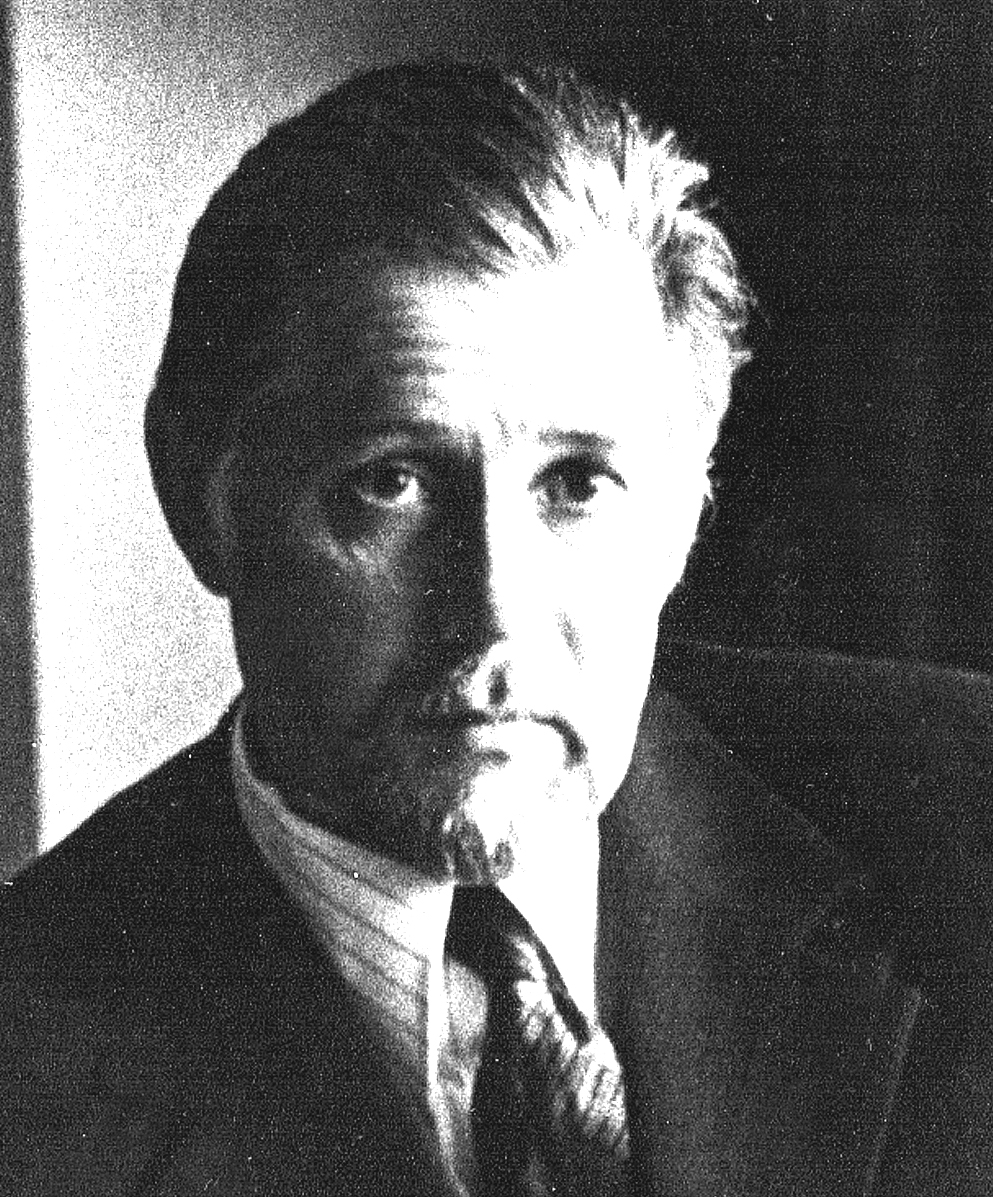
Georgy Vins, 1928-1998
In summer 1976, when Vins’s wife travelled for a long visit, she took a Bible published in the USSR with her, and a senior MVD officer for Yakutia, Lieutenant-Colonel Udovichenko, promised her he would pass the book to Vins. However, in the autumn the bible was returned to Kiev in a postal wrapping with a letter signed by the same Udovichenko: “Insofar as the given book contradicts the spirit of Marxism-Leninism, it cannot be allowed into places of imprisonment.” A new statement, sent to the procurator’s office by Georgy Vins in January 1977, again met with the reply that books published abroad were not allowed.
In other respects, Vins is not experiencing oppression in camp. In February 1977 the camp administration gave him an additional long visit from his relatives, for three days, as a reward for conscientious work.
Vins, who suffers from illnesses of the kidneys and heart, finds it hard to endure the difficult climatic conditions in Yakutia and especially the poor quality of the water.
*
GRIDASOV
Magadan worker Victor Gridasov is in one of the camps in Kolyma (Soviet Far East).
For several years he has sought permission to leave the USSR. On 26 November 1976 he was arrested (CCE 40.15 [7], CCE 43.7 [2]) and convicted under Article 197 (RSFSR Criminal Code: “Violation of the rules of entry into, and residence in, a border belt or a border zone”). Gridasov received the maximum sentence under this Article, six months. There is a danger that in the camp a new charge awaits him — this time under a ‘political’ Article. Even before the arrival of Gridasov in the camp, ‘witnesses’ from amongst the prisoners were being approached stealthily and given instructions.
In the first few days of March a long visit between Gridasov and his wife, which had already been agreed, was cancelled.
The cancellation was based on four reports of “violations of the correct form of dress”, “violating the regime”, etc. Gridasov himself thinks that the decision is directly linked to the preparation of a new ‘case’ against him.
=======================================
 A Chronicle of Current Events