Special Psychiatric Hospitals
This section has been compiled from material in the Information Bulletin of the Working Commission (CCE 44.10), Nos. 2 (10 September 1977), 3 (19 October 1977) and 4 (5 November 1977).
*
Kazan Special Psychiatric Hospital (SPH)
The women’s sections have been transferred from here to the Alma-Ata SPH.
In May Nikolai Grigorevich Plakhotnyuk (CCE 46.13) was recommended by a medical commission for release from the special psychiatric hospital. His case is to be decided by the Kiev Region Court.
Nikolai Ivanovich Baranov [1] has been here since July 1974. On 8 August 1976, during a visit from his mother, he asked her to appeal to Andrei Sakharov for help. After that he was given injections of arsenic preparations for three months. In the last month, letters from him have ceased to arrive. His mother’s address is: 196180, Leningrad, Ilych Street, flat 19.
*
In August 1976 Boris Dmitrievich Yevdokimov [2] was transferred here from Dnepropetrovsk SPH. Recently he has been complaining of bad health. He has chronic ischemia, asthma, diabetes and hypertonia. At present he is in the ‘work’ section.
On 28 October 1977, Yevdokimov’s son Rostislav Yevdokimov (192028, Leningrad, 5 Saltykov-Shchedrin Street, flat 24) appealed to the committee set up by the World Psychiatric Association to investigate complaints about the abuse of psychiatry for political ends:
“I am convinced that his psychological state does not necessitate his being forcibly detained in a psychiatric hospital, and that prolonged isolation in the conditions of a prison hospital will be dangerous for his physical health.
“Numerous complaints and statements from his relatives to official Soviet institutions have not eased his lot.
“I ask the Committee to do all it can to release my father.”
*
Chernyakhovsk SPH
Mikhail Nikolayevich Zhikharev (CCE 46.13) was arrested in Sochi on 12 September 1974.
An investigation was carried out under Article 190-1 (RSFSR Criminal Code). On 7 October 1974 an outpatient diagnosis, which took place at Krasnodar Prison (the doctor was Baklanov), declared him not responsible, stating he had “a mental illness in the form of psychopathic paranoia with over-valued ideas and quarrelsome inclinations”. On 28 October 1974 the people’s court of Sochi’s central district (Judge, M.A. Shelikhova; prosecutor, V.G. Chaiko; defence counsel, N.A. Sorokina) sent Zhikharev for compulsory treatment in a Special Psychiatric Hospital.
Zhikharev arrived in Chernyakhovsk on 11 April 1975. He was given neuroleptic drugs, which led to a sharp decline in his health.
Zhikharev’s wife has complained repeatedly about the forcible medical treatment of her husband, but has never received any reply.
In July 1977 a medical commission recommended Zhikharev’s transfer to an ordinary hospital. On 17 September 1977 he was transferred to the Krasnodar Region’s central psychiatric hospital (1 Krasin Street). There he was given injections of aminazine and sulphazine. The head of the department threatened Zhikharev, saying that if he did not “stop agitating” she would send him back to the SPH.
On 25 September 1977 Zhikharev’s mother, Elena Illarionovna Khumago (Sochi, 27 Gargarin Street, flat 35), sent this declaration to the World Psychiatric Association’s Committee, to Investigate Psychiatric Abuse for Political Ends:
“… I declare that my son is sane, he has never suffered from any mental illness and needs no medical treatment. …
“I ask the Committee to investigate my son’s case and do all it can to obtain his release from the psychiatric hospital.”
*
Dnepropetrovsk SPH
Josyp Terelya (CCE 46.13) has been transferred here.
On 17 October 1977 Sophia Kalistratova, Naum Meiman, Pyotr Grigorenko and Andrei Sakharov issued a statement on his behalf (this issue CCE 47.15).
*
Vasily Spinenko (CCE 33.6-2 [8]) is here.
Vladimir Trifonov (CCE 26.5, CCE 34.9, CCE 39.3) has been transferred here from Leningrad SPH.
*
Leningrad SPH
Lev Ubozhko (CCE 17.1) has been sent here after his escape from an ordinary psychiatric hospital (CCE 37.13 [10], CCE 39.3).
*
In Ordinary Hospitals
Yu. Belov’s twin sister (CCE 46.13) has written a statement, asking that he be registered for residence with her and undertaking to create normal living conditions for him.
A medical commission at Krasnoyarsk psychiatric hospital has recommended Yu. Belov for release. The Vladimir Region Court has ordered that compulsory treatment of Belov should cease.
*
In July 1977 Vladimir Veretennikov (in Chronicle 46 he was wrongly called Vedernikov) was released from Leningrad psychiatric hospital No. 5.
On 26 October he was summoned to the psychiatric clinic in Leningrad’s October district. There he was told that for his own good he would have to spend the holiday period, the anniversary of the October 1917 Revolution, in a psychiatric hospital. He was then taken forcibly to the Kashchenko psychiatric hospital (near Gatchina). Veretennikov was put in a ward where there were over thirty people. They are not allowed out for walks “because of a lack of medical personnel”.
*
In July 1977 Vladimir Avramenko (CCE 44.26-1) and Sergei Musatov (CCE 44.26-1 [13]) were released from psychiatric hospital No. 5 near Moscow, at the Stolbovaya rail station.
***
MIKHAIL KUKOBAKA
On 6 October Mikhail KUKOBAKA, who was working as a loader in one of the factories of Bobruisk, was forcibly committed to Mogilyov psychiatric hospital.
By way of protest at the psychiatric diagnosis fabricated against him in the past, Kukobaka refused to place himself on the list of patients at the psychiatric clinic or to respond when summoned by a psychiatrist.
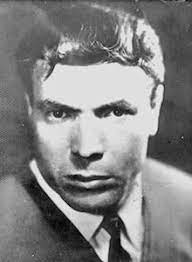
Mikhail Kukobaka (b. 1936)
*
Kukobaka is the author of various works: notes exposing the Sychovka SPH, which have been circulated in samizdat; the article “Defence of Human Rights and Detente are Indivisible” (CCE 45.20 [1]); and an open letter to Petrovsky, the USSR Minister of Health.
In April 1977 he sent a statement to the Presidium of the USSR Supreme Soviet asking for permission to renounce his Soviet citizenship and emigrate.
The pretext for his hospitalization was Kukobaka’s refusal to take down a small icon he had hung above his bed in the factory hostel, together with portraits of Andrei Sakharov and Pyotr Grigorenko and a copy of the Universal Declaration of Human Rights.
*
Kukobaka is in section 3 of the Mogilev regional psychiatric hospital, in strict isolation, with no walks outside his section. The doctor in charge of his treatment, head of department Nadezhda Matveyevna Drabkina, told him:
“To hang up icons and portraits of people like Academician Sakharov and General Grigorenko is going against the usually accepted norms of behaviour in our society and is therefore a mental abnormality.”
Drabkina also considered Kukobaka’s desire to obtain a picture of US President Carter to be a mental anomaly. Kukobaka was forced to take neuroleptic drugs.
*
On 15 October 1977 Alexander Podrabinek appealed to the head doctor of the hospital:
“… The Working Commission considers the forcible hospitalization of Kukobaka to be a case of psychiatric abuse for repressive political ends and we inform you that if Kukobaka is not released in the near future, the Commission will be forced to appeal to the special committee set up by the executive committee of the World Psychiatric Association …”
On 20 October Victor Nekipelov and Alexander Podrabinek issued a joint letter “In Defence of Mikhail Kukobaka”:
“… Kukobaka was a danger to the authorities because of his influence on other workers, to whom he gave an object lesson in how to fight for their rights. Living in a hostel, mixing with the factory collective, Kukobaka was an undesirable dissenting element, a sort of centre for the crystallization of independent public opinion. That was something the regime could neither accept nor forgive …
“The situation is all the worse because Kukobaka is alone, he has no relatives, and this being so, under Soviet law he has no one to defend his rights …
“We appeal to public opinion abroad, to the World Psychiatric Association [WPA], to those who participated in the recent congress in Hawaii: Come to his aid! Freedom for Mikhail Kukobaka!”
On 5 November Alexander Podrabinek appealed to the WPA’s Committee to Investigate Complaints about Psychiatric Abuse for Political Ends to investigate the case of Kukobaka’s forcible incarceration in a psychiatric hospital.
=======================================================
NOTES
- On Baranov, see CCE 18.1, CCE 27.6, CCE 39.3, CCE 52.7, CCE 56.23.
↩︎ - On Yevdokimov, see CCE 26.2 [3], CCE 27.6, CCE 37.5-2, CCE 39.3, CCE 42.5 and Name Index.
↩︎
==============================
 A Chronicle of Current Events