THIRTY-ONE ENTRIES
[1]
MOSCOW. On 9 November 1979, at 1 pm, 70-year-old A.R. Agapova walked into Red Square carrying a banner with the words: “Brezhnev, Let the Agapov Family Leave!”
Agapova, whose son went abroad and did not return, and her daughter-in-law (Ludmila) have been trying for many years to leave the USSR (CCE 51.19-2, CCE 53.25-1, CCE 54.20-1). A police-officer and two men in plain clothes took Agapova to a police station and from there she was taken to Psychiatric Hospital No. 1. No treatment was prescribed. On 19 November 1979, she was released with a sick-leave certificate filled in with the diagnosis: “heart attack”.
*
[2]
MOSCOW. On 21 December 1979, Yevgeny B. Nikolayev was refused permission to visit West Germany (CCE 55.8).
On 28 January 1980, Nikolayev was summoned to the internal affairs department of Moscow’s Soviet district, where OVIR Inspector Askov asked him to hurry up and collect the documents necessary for arranging his departure to take up permanent residence in Israel. On 4 February 1980, Nikolayev was again summoned to the Soviet district internal affairs department. Senior Inspector Shatayev told him: “We are being told to hurry up. The sooner you get your documents together, the sooner you will leave”.
However, the authorities in Ust-Kut, Irkutsk Region (east Siberia), where Nikolayev’s father B.A. Nikolayev lives, refused to witness the latter’s signature on a document giving his consent for his son’s departure to Israel. Initially the reason given was that Ye. Nikolayev was not entered in his father’s passport. When B.A. Nikolayev produced copies of his son’s birth certificate and of his own certificate of divorce from Yevgeny’s mother, he was told that the house management committee “is not empowered to stamp certificates for people who are emigrating, or for anyone who is trying to help them, even if they are closely related”.
In a statement dated 22 February 1980 and addressed to the Chairman of the Ust-Kut Town Soviet executive committee and to the Irkutsk Regional Soviet executive committee, Yevgeny Nikolayev wrote:
“not empowered to witness my father’s signature, please send me an official answer stating which legal statute and which paragraph refers to this, so that I can send this official reply to OVIR in Moscow.”
Nikolayev’s wife Tyan Zaochnaya is in a similar position. A.K. Leonova, Secretary of the Sharomy village soviet, Milkovo district, Kamchatka Region (Soviet Far East), told Zaochnaya’s mother N. Abakumova that “officially, we are not permitted to witness any documents unless requested to do so by OVIR”.
At an interview on 21 February 1980, Senior Inspector Shatayev told Yevgeny Nikolayev: “Your case will not be settled within a few days, but it won’t go on for several months. So hurry up about obtaining your parents’ certified consent”. In March a commission from the Regional capital Petropavlovsk-Kamchatsky came to Sharomy village and verified Nikolayev’s statement, after receiving a confirmation from A.K. Leonova.
On 3 April 1980, about three months after N. Abakumova had first approached A. Leonova, the latter witnessed her signature on the statement of consent. However, availing herself of Abakumova’s lack of education, Leonova wrote Abakumova’s patronymic incorrectly: ‘Alexeyevna’ instead of ‘Alexandrovna’.
In mid-April, Yevgeny Nikolayev submitted documents necessary for emigration to OVIR. He was told that he would receive a reply in about two months’ time. Meanwhile, on 20 April 1980, his passport expired. Nikolayev refuses to exchange his old passport for one of the new type, in protest against the acts of repression to which the authorities have subjected him and also because he had renounced his Soviet citizenship on 25 November 1977. He has agreed to give up his passport only in exchange for an exit visa.
*
[3]
LEV KOPELEV
MOSCOW. On 13 April 1980, the writer and translator Lev Z. KOPELEV, winner of this year’s literary prize from the German Academy of Language and Literature, sent a request to the Presidium of the USSR Supreme Soviet for permission to go to West Germany for two or three years.
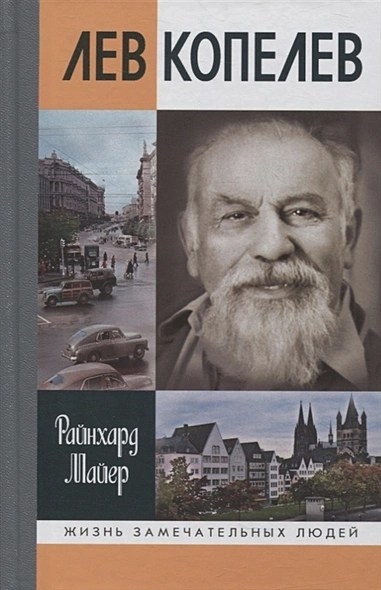
Lev Z. Kopelev (1912-1997)
He and his wife had often been invited by their friends Heinrich Böll and Marion Donhoff, and also by the German Academy of Language and Literature.
The invitations have the support of German Social Democratic Party leaders Willy Brandt and Egon Bahr, who have written and talked about the matter to German and Soviet officials. Kopelev writes that the visit is necessary to enable him to continue work on three books which he began some time ago. In order to complete them he needs to consult West German archives and libraries.
Kopelev says in his statement that he was forced to appeal directly to the ‘highest State leaders’ since he could not obtain a satisfactory response from other official bodies.
*
[4]
MOSCOW REGION. In December 1979, mathematician Vadim Yankov, who lives in Dolgoprudnoye, near Moscow, was refused permission to emigrate (he submitted his application in September 1978). The explanation given was: “You live in a closed town” [1].
On 5 February 1980, during an interview at the All-Union OVIR office, Yankov pointed out that Alexander VOLOSHANOVICH, who lived in Dolgoprudnoye, was leaving the USSR at this time (see “Those who Have Left” 27-31, below). He was told:
“Our business is to inform you of the reason for refusal and of the time when you may submit your next application”.
*
[5]
LENINGRAD. On 28 December 1979, G.M. Shikarev sent a statement to the Presidium of the USSR Supreme Soviet requesting permission for himself and his family to emigrate to any West European country or to the USA.
He mentioned in the statement that he and his wife Tatyana Mamonova are interested in avant-garde art and would like to devote themselves to it. Furthermore, Mamonova is an ardent feminist. She helped produce one issue of a feminist literary miscellany (Women and Russia, CCE 55.11 [4]) and as a result has recently been harassed by the KGB.
*
[6]
LVOV REGION (West Ukraine). On 3 February 1980, Ivan Kandyba (CCE 53.25-1) submitted another application for permission to emigrate. On 14 February he sent a letter to Brezhnev in which he explained his decision to emigrate.
At the beginning of April 1980, surveillance of Kandyba was extended for another six months, because on 20 March he had not slept at home (he was on duty at the boiler-house); for this breach of surveillance regulations a court fined him 20 roubles on 25 March. On 18 April Kandyba received a refusal from OVIR, dated 14 March.
*
[7]
UZHGOROD
(Transcarpathia, Ukraine).
On 17 February 1980, Alexander Maximov sent an appeal to the US Congress describing his situation and asking Congressmen to help him emigrate from the USSR and avert the arrest with which he is being threatened.
On 25 February, he and his mother were summoned to the police station because he had no job. Here again the conversation centred on violation of residence regulations and parasitism; they were then taken to see the city procurator, in whose office the conversation continued. Towards evening Investigator Major Senko accompanied them home, where a search was carried out. After the search Maximov was driven away.
On 10 April 1980, his mother, Galina Maximova, was informed that Alexander had been transferred, without trial, to do chemistry (forced labour without imprisonment). The following day she received an anonymous postcard to the effect that on 7 April her son had “gone away” to a psychiatric hospital in Lvov. On 15 April, however, Senko told her that her son was still in an investigations prison.
*
[8]
IVANO-FRANKOVSK REGION (West Ukraine).
Ivan Sivak, his wife and three children, who live in Dubrovo village have been trying for about ten years to obtain permission to emigrate to Canada, where Ivan’s father lived and died. In August 1979, Sivak renounced his Soviet citizenship and returned his passport. On 19 February 1980, he was arrested for ‘violation of the residence regulations’.
On 27 February 1980, the Orthodox priest Miron Sas-Zhurakovsky who refused a passport of the new type, was arrested in Kolomiya for “violation of the residence regulations”. While still a child, Father Miron and his mother were forcibly deported from Germany, where his parents, former Polish citizens, had German passports. His father served in the German Army.
*
[9]
KLAIPEDA (Lithuania).
In November 1979, Justas Gimbutas (CCE 55.8) was warned three times by the KGB that unless he took a passport, criminal charges would be brought against him. He was given a deadline of two months to obtain a passport and find a job. On 25 November he was fined 10 roubles by the Town Soviet executive committee. On 22 January 1980, criminal charges were brought against him. On 12 February his case was heard in court, with E. Parochka as Chairman.
Gimbutas refused the services of a lawyer and stated that he did not recognize the court in its present composition, as the court had considered him guilty from the start: conviction by (Stalin-era) three-man Special Boards was not considered legal even by Soviet judicial organs. When the court retired to consider its verdict, Gimbutas left the courtroom. The continuation of the trial was delayed. It resumed on 23 April.
Gimbutas was sentenced to one year’s imprisonment for “violation of the residence regulations”. He is now in a camp in Kapsukas, Lithuania.
*
[10]
LITHUANIA.
Marija Jurgutiene has been trying for six years to obtain permission to emigrate to the USA to join her husband A. Jurgutis [2], who did not return to the USSR from a trip abroad.
The usual reply from the Lithuanian OVIR has informed Jurgutiene that her husband has permission to join her in Lithuania. Jurgutiene considers this reply a mockery, since Jurgutis’s return to Lithuania would inevitably lead to his arrest for ‘treason’. In a letter dated 29 January 1980, addressed to Griskevicius, first secretary of the Lithuanian Communist Party, Jurgutiene writes:
“My daughter and I feel like hostages, although my husband was not and has not become a political activist. He stayed away abroad only because he wanted to devote himself exclusively to art.”
*
[11]
RIGA.
On 16 February 1980, Yury Maximov (CCE 53.25-1) sent a letter addressed “To the US Congress. To the Commission Monitoring the Observance of the Provisions of the Final Act of the Conference on Security and Cooperation in Europe”. Maximov describes how he decided, while still a young man, that he wanted to emigrate from the USSR, how he tried to achieve his wish and what persecution he has suffered at the hands of the authorities.
Copies of Maximov’s 1975, 1978 and 1979 statements to the Presidium of the USSR Supreme Soviet (CCE 53.25-1) were attached to the letter.
*
Jews (12-15)
[12]
KIEV.
On 1 December 1979, officials at the Leningrad district internal affairs department in Kiev refused to give L.K. Kozelskaya an application form for emigration. An OVIR inspector added: “In our opinion there is no reason for you to go there!” Kiev city and Ukrainian Republic OVIR officials confirmed that the inspector had acted correctly.
On 29 February 1980, Kozelskaya sent a statement to Brezhnev describing the reasons behind her decision to emigrate. She concluded:
“I ask you to take action over my request to leave the USSR, since the actions of the people concerned with the emigration of Soviet citizens should be in accordance with the international agreements and Covenants and above all the Universal Declaration of Human Rights, which have been signed by Soviet leaders.”
*
[13]
On 4 January 1980, Moscow refusenik Victor Yelistratov [3] came to Kiev to visit Sergei Rotstein, who (together with Josif Bussel) was due for release after a routine 15 days in jail (CCE 55.8).
At 11 am Yelistratov and Rotstein’s family met Rotshtein and Bussel outside the gates of the Kiev City Special Detention Centre and they all went to Rotstein’s home together. When Rotshtein and Yelistratov left the house on the morning of 5 January a GAZ-89 car drove up to them and three men in plain clothes jumped out. Rotstein knew one of them by sight as Odintsov, an official of the Kiev KGB. The men forced Yelistratov into the car, but left Rotshtein behind, saying: “You are free for the time being”.
The car headed towards the police station. On the way Odintsov said to Yelistratov: “Turn out your pockets!” Yelistratov answered: “That’s none of your business!” whereupon he was searched forcibly. Only his passport and 25 roubles were taken. At the station he was handed over to the police and spent about five hours in a detention cell. He was then put on a train bound for Moscow. Odintsov said in parting: “Citizen Yelistratov. if you visit Kiev again, we won’t be able to guarantee your safety, won’t be able to restrain the anger of the public”. Ten minutes before the train arrived in Moscow, the carriage conductor to whom Yelistratov had spoken in Kiev approached him and gave him his passport, saying: “I was told to give you this”. Instead of 25 roubles the passport contained only ten (the ticket from Kiev to Moscow costs 15 roubles).
*
[14]
On 1 February 1980 Liliana, the wife of Leonid Varvak (CCE 53.25-2), was summoned to the Kiev OVIR office, where she was told that she had been refused permission to emigrate and that “OVIR has not yet decided the reason. However, that’s only a matter of time”.
The Varvak family has been trying to obtain permission to emigrate for about two years. There are three children (aged from 2 ½ to five years) and they live on Leonid’s pension: he is a Group II invalid. Once it became known that Liliana was trying to emigrate to Israel, she was refused work wherever she applied; she cannot even get a job as a cleaner.
*
[15]
MOSCOW.
On 19 March 1980, representatives of the Kiev refuseniks had an interview in Moscow with K.I. Zotov, Head of the USSR OVIR.
They informed him that over the past six months Kiev OVIR had issued about 70 permissions to emigrate and had refused about 3,000 families. Only people who had invitations from parents or children in Israel were being granted permission. V. N. Siforov, Head of Kiev OVIR, and Yu.L. Titarenko, Head of Kiev internal affairs department, had both said that this policy towards Jewish emigration had now been adopted throughout the USSR.
On 20 April 1980, the weekly Moscow News published some information provided by Zotov in an article entitled: “An Exit Visa? In a Couple of Days!” Zotov maintained that refusals to grant exit visas to ‘people of Jewish nationality’ were of a temporary nature and that the relative number of such people was minimal.
*
On 23 April 1980, a large group of refuseniks from Kiev intended to make another journey to Moscow, this time to the CPSU Central Committee.
On 21 and 22 April, however, many refuseniks were summoned for questioning and ‘chats’ at which they were threatened with reprisals for their visits to Moscow and ordered to stop signing collective letters of protest. On the same day raids were organized — near trains due to leave for Moscow and at Kiev’s airports — on people of Jewish appearance.
If someone was suspected of belonging to a group representing Kiev refuseniks, he (or she) was detained. All documents, letters, statements, notepads and notebooks were confiscated. Nevertheless, at 11 am on 23 April, about forty Kiev refuseniks gathered at the CPSU Central Committee in Moscow. At 3 pm a few of them were received by Central Committee official A.A. Glukhovtsev.
On 26 April 1980, Kiev refuseniks wrote an appeal to the Jewish people in which they describe their situation and their visit to the Central Committee:
“… When the group left the reception room after the interview, the narrow street outside the Central Committee building was surrounded by police; there were about ten cars, a lorry packed with armed policemen and hung with some sort of balloons, and numerous people in plain clothes, walking up and down the street, keeping their eyes fixed on the group of representatives.
“These were terrible moments — 40 unarmed people and a punitive battalion ready to pounce on them. These moments were as frightening as everyday life: there are 2,000 refusenik Jewish families here and everywhere the machine of repression is ready to pulverize them …”
*
Germans (16-17)
[16]
On 15 February 1980, the Moscow Helsinki Group published Document 122, “On the Obstacles to Family Unity Facing German Citizens of the USSR” (CCE 56.27-2):
“The Moscow Helsinki Group has received a letter signed by 98 German citizens of the USSR whose families have for many years been trying unsuccessfully to join their close relatives in West Germany.
“Helsinki Group member Ye. Bonner has given copies of this letter to the press.
“The Moscow Helsinki Group believes that the rights of these families have been grossly violated. The denial of their right to emigrate to West Germany clearly contravenes Basket 3 of the Final Act of the European Conference in Helsinki.
“The Group asks the UN Commission on Human Rights, the US Congressional Committee on Human Rights, all governments which signed the Helsinki Final Act and, in particular, the West German government, to study this letter from 98 German families and to help them emigrate to West Germany.”
*
[17]
RED SQUARE (Moscow). A demonstration by Germans wanting to emigrate to West Germany took place in Moscow’s Red Square at 4.10 pm on 31 March 1980.
About thirty people had intended to take part in the demonstration, but just before it began Germans who had arrived from the North Caucasus (from Nartkala, Kabardino-Balkar ASSR) were detained by police. Only five people, from Kotovo in the Volgograd Region (South Russia), managed to get to Red Square. They carried banners saying; “We Want to Live in our Motherland, the FRG [Federal Republic of Germany]”.
All five were immediately seized by police and taken to a public order point beside Red Square. Their names are: Victor (b. 1952) and Lydia (b. 1957) Ebel; Victor (b. 1953) and Alwina (b. 1955) Fritzler; and Gottfried Oblinder (b. 1953). The Ebel and Fritsler families have been refused permission to emigrate by OVIR on five occasions.
*
Baptists (18-19)
[18]
VOROSHILOVGRAD REGION. Vladimir and Maria Khailo from Krasny Luch in the Voroshilovgrad Region (CCE 48.16-2) have been trying to obtain permission to emigrate since 1974.
On 2 February 1980, they sent a statement to the USSR Procurator-General’s Office complaining about the actions of Voroshilovgrad OVIR officials, who had groundlessly refused them an exit visa. When they had complained about this to higher authorities, their complaints had been referred back to the OVIR office in question to be dealt with. Their statement also describes the persecution of their family by the authorities.
*
[19]
KIEV. At the end of February or the beginning of March 1980, Moscow Helsinki Group member Tatyana Osipova was informed by telephone that the Lebedev family from Kiev intended to come and tell her about the harassment to which they were being subjected. A few days after this telephone call, KGB officials informed the Lebedevs that there was no need for them to go to Moscow they would receive an answer to their application to emigrate within a month.
*
Pentecostalists (20-26)
[20]
On 11 February 1980, Pentecostalists who submitted applications to emigrate for religious reasons and renounced their Soviet citizenship in 1977 have sent a statement to the Presidium of the USSR Supreme Soviet. It describes the reprisals against Fyodor Sidenko (//), Ilya Goretoi, Nikolai Goretoi, Pavel Matyash and Pavel Lupanov (CCE 54.20-2, CCE 55.8 and CCE 56.19-2) as the authorities response to their decision to emigrate.
The authors state that no official repression will force them to change their decision to leave a country whose leader has said that communism and religion are incompatible.
*
[21]
On 10 January 1980, Pentecostalists who applied for permission to leave the USSR have appealed to various international and national organisations — the UN Human Rights Commission, Amnesty International, the International Committee of the Red Cross and the Red Crescent, the World Council of Churches, Christian organizations throughout the world, the World Tribunal and to the World Federation of Women — to come to the defence of preacher Nikolai Petrovich GORETOI.
Goretoi is under investigation in a prison in Krasnodar, South Russia (CCE 55.7). The appeal has been signed by 667 people.
*
[22]
ESTONIA. In February 1980, a number of Estonian Pentecostalists were called in for chats. The subjects: Bishop N.P. Goretoi and V. Yelistratov. The Pentecostalists were told that Yelistratov had been arrested.
*
[23]
KRASNODAR. The following have been summoned to KGB headquarters in Krasnodar for questioning in connection with the case of N.P. Goretoi: N. Bobarykin and V. Bibikov on 3 March 1980; E. Goretoi on 11 March; V. Galushkin on 12 March; A. Pishchenko on 17 March; V. Denchik on 24 March; A. Kovalenko and V. Arbuzov on 31 March; and V. Taranenko on 29 February, 1 and 28 March 1980.
*
[24]
NAKHODKA
NAKHODKA. Seventeen people were questioned by the KGB in Nakhodka (Primorsky Region, Soviet Far East): V. Poleshchuk, Boris Perchatkin, Z. Perchatkina, Yury Zherebilov, V. Patrushev, V. Istomin, S. Onishchenko, T. Prokopchuk, Vladimir Stepanov, S. Oshlaban, A. Yurovskikh and I. Patrushev (the names of the others are not known to the Chronicle). They were all forcibly taken there, some from work, others from home. Not a single record was made.
The Pentecostalists were questioned about Nikolai P. Goretoi and Victor Yelistratov; they were told that both had been arrested. Istomin was told that any future contact with Yelistratov would be regarded as a crime. Questions were also asked about believers’ attitudes to events in Afghanistan, and attempts were made to persuade them to give up the idea of emigration.
In mid-March 1980, Sokolov, Deputy Procurator of Nakhodka, questioned V. Stepanov and A. Ralyan. The questions concerned N.P. Goretoi. Ralyan was also asked about his views on the emigration of Pentecostalists (Ralyan is opposed to emigration).
At the same time Boris Perchatkin was questioned by Romashkin, Procurator of Nakhodka.
The interrogation lasted about six hours: two hours were taken up with questions about N.P. Goretoi and the remaining four with questions about Perchatkin himself. He was asked about his acquaintance with Tatyana Osipova, Tatyana Velikanova, Z. Shcheglova, Yury Orlov, Alexander Ginzburg, Anatoly Shcharansky, Arkady Polishchuk, Victor Yelistratov, Andrei Sakharov, Yelena Bonner, Yury Yarym-Agayev, Gleb Yakunin, Victor Kapitanchuk, Ludmila Alexeyeva, Tatyana Khodorovich and Sergei Khodorovich.
Solokov joined in part of the interrogation. He shouted at Perchatkin and tried to make him sign a warning about giving false evidence and a record of the interrogation.
*
At the end of March 1980, searches were carried out at the homes of Boris Perchatkin, his mother L. Perchatkina, V. Patrushev, Yury Zherebilov and Vladimir Stepanov; letters from abroad, addresses and magnetic tapes were confiscated. A statement addressed to the UN Human Rights Commission, journalists and Congressmen visiting cards, religious samizdat and tamizdat were also confiscated from Perchatkina.
They took Perchatkin’s notebook — no one else’s notebook was confiscated — and damaged his stove looking for a hiding-place; the cushions were ripped open and boards were torn down from the veranda roof; everything was tapped (the other searches did not include this).
Religious poetry was tom out of the hands of Stepanov’s wife (in her fifth month of pregnancy) when she did not want to hand it over, and her hand later swelled up. During the search at Patrushev’s home his wife began to feel ill — twice an ambulance was called. The children (he has ten) returned from school and spent four hours outside in the frost before they were allowed into the house; meanwhile, the people inside were not allowed to go out to the toilet.
Two days later all five who had been searched were summoned by the KGB for questioning about the confiscated items. They were also asked about Goretoi. No one gave evidence or signed the record.
On 2 April 1980, Boris Perchatkin was forcibly brought in for questioning: he had not gone in response to a summons. He was asked about the case of Tatyana Velikanova (CCE 56.7).
On 8 April 1980, Perchatkin was again brought in for questioning by the KGB in connection with the case of Bishop Goretoi. Lieutenant-Colonel Kuzmin, a Senior Investigator for Especially Important Cases, conducted the interrogation. Perchatkin asked for some paper. He wanted to state in writing that he refused to give evidence, since his oral statements were ignored. In answer, Kuzmin began the ‘interview’ and then the interrogation. He wrote down the questions and answers of some sort for Perchatkin: then he tried to read the record to Perchatkin, but the latter refused to listen.
*
[26]
TERNOPOL REGION. Vladimir and Anna Konopatsky, from Chernilevka village, Ternopol Region (West Ukraine), are trying to obtain permission to emigrate to the USA.
The local authorities have been demanding that they give up the idea: they are threatening to fine them and have been putting pressure on Anna’s parents who have also been trying to prevent her leaving the country (Anna is 22 and officially disabled, a Group I invalid). The Konopatskys were condemned and insulted at a village meeting and in the local press.
The Konopatskys have appealed to UN Secretary-General Kurt Waldheim to intervene on their behalf with the Soviet authorities and help them move to the USA.
*
[26]
ZHDANOV [Mariupol].
Alexander Balak and his family (wife Raisa, four children and their son-in-law) live in Zhdanov (Donetsk Region, east Ukraine [4]). Since January 1978, they have been trying to obtain permission to leave the USSR. They have still not received a reply to their application.
Soon after the Balaks applied to emigrate and renounced their Soviet citizenship, they began to receive summonses to the district Soviet executive committee. In 1979 they had an interview there with some man who told them that if they persisted in their attempt to emigrate, they might get beaten up by citizens of the town and the authorities would not protect them. These threats were made in the presence of P.M. Kiselev, Regional Commissioner of the Council for Religious Affairs. On 30 November 1979, in the presence of the chairman and secretary of the City Soviet executive committee, the same man made similar threats against the Balaks and other believers who had applied for permission to emigrate.
On 26 January 1980, a certain Agayev beat up Balak’s sons Igor and Vitaly. Their mother phoned the police three times, but no one came. The same day the whole family went to Police Support Point No. 23, in an attempt to obtain protection. A police captain who refused to give his name told them the police would not protect them because they had renounced their citizenship. For a week the Balaks did not let their children go to school, to prevent them from being attacked. The police then forced the children to go to school, but Agayev was made to sign a statement that he would not beat the children again.
On 13 February 1980, Igor Balak was beaten up at school and in the evening four hooligans beat up both Igor and his parents. The police did not come this time either. The next morning the family abandoned their home and left the town; now they have nowhere to live. On 18 February, Alexander and Raisa Balak and their elder daughter Lyudmila Tarasenko sent a statement to the USSR Minister of Internal Affairs and to the USSR Procurator-General. In it they asked them to take steps to restrain the criminals; to punish the police officials who let them get away with it; and also take action against the official who had threatened them with violence in front of the district and city Soviet executive committees.
*
Those Who Have Left (27-31)
[27]
On 17 January 1980, Pyotr M. YEGIDES (CCE 55.2-2), a member of the editorial board of the journal Poiski, left the USSR; on 22 January, Andrei TVERDOKHLEBOV (CCE 36.1, CCE 40.2), a founder-member of the Human Rights Committee (CCE 17.4), left the country via Moscow; on 30 January E. Gabovich (CCE 53.25-2, CCE 54.11 & CCE 55.9 [13]) and refusenik Yevgeny Tsyrlin (“The Exile of Sakharov”, CCE 56.1), both from Moscow, emigrated.
*
[28]
MOSCOW. On 1 February 1980, Irina ZHOLKOVSKAYA, wife of Alexander Ginzburg (CCE 53.1), left for the USA with his mother L. I. Ginzburg. Zholkovskaya’s efforts to obtain permission for her 22-year-old adopted son Sergei Shibayev (CCE 53.1 & CCE 54.23-1) to emigrate, were unsuccessful.
Following the departure of Zholkovskaya and the arrest of Malva LANDA (CCE 56.3-2) the only administrator of the Relief Fund for Political Prisoners who remains at liberty in the USSR is Sergei KHODOROVICH.
*
[29]
On 5 February 1980, the psychiatric consultant to the Working Commission to Investigate the Use of Psychiatry for Political Purposes Alexander Voloshanovich [5] left the USSR.
Immediately after his release from exile, Mikhail Heifetz (Kheifets) left the USSR In March 1980.
On 14 April 1980, Moscow resident Igor Zhiv (CCE 51.8, CCE 52.4-2, CCE 54.23-1) left the country.
*
[30]
LENINGRAD. On 13 April 1980, former political prisoner Georgy Davydov [6] left the country via Leningrad.
Davydov returned to Leningrad from exile in the summer of 1979. On 27 February 1980 he and his wife V. Isakova were asked to go to the Leningrad OVIR office; a letter from Israel, asking OVIR to let the Davydov family leave the USSR because Isakova’s cousin in Israel was seriously ill, was read out to them (a similar fabrication was shown to Natalya Lesnichenko by Leningrad OVIR, see below); until then Davydov had not applied to OVIR, although in letters and telephone calls to his friends he had asked them to send him and his family an invitation.
The OVIR inspector told the Davydovs that they could take emigration forms with them if they wished; their documents must be submitted within a month. By March Davydov had already received permission.
*
[31]
MOSCOW. R. Popova (b. 1939) of Moscow,a senior inspector of the Editorial-Publishing Council (Academy of Pedagogical Sciences) applied for permission to emigrate in May 1979.
On 18 July 1980, Popova sent a letter to the Council of Ministers, to the Presidium of the Supreme Soviet and to the editorial boards of Pravda and’ Izvestiya, in which she gave an unflattering review of Brezhnev’s books Small Land and Rebirth.
On 25 August, G.V. Loshilov, a psychiatrist from the district psychiatric clinic, arrived at Popova’s home for a ‘chat’. Popova decided not to talk to him.
*
Popova was forced to live with friends to avoid forcible internment In hospital. Nevertheless, on 6 November 1980, when she was recovering in hospital from an ear operation, two orderlies arrived in the ward to take her to a psychiatric hospital. Doctors intervened and prevented her forcible hospitalization.
On 30 November 1980, having received permission to emigrate, R. Popova left the USSR.
*
Between Emigration and Prison (32-35)
[32]
With increasing frequency, the authorities are saying to undesirable people: “leave the country, or we’ll lock you up”. Irina Korsunskaya, for example, was placed in this dilemma during the “week of prophylactic chats” in Moscow (see CCE 56.8).
At the beginning of April Anatoly Marchenko [7] was asked to come into Alexandrov: he lives just outside the town. There he was told by KGB official to leave the country, as he would not survive a new sentence under Article 70 [Marchenko died in prison in 1986, ed.]
*
[33]
LENINGRAD. At the beginning of April Natalya Lesnichenko [8] was summoned to the OVIR office in Leningrad, where she was shown a letter “from friends of her grandmother in Israel”. It stated that ‘granny’ had sent her ‘granddaughter’ several invitations, and her friends were asking OVIR to arrange for Lesnichenko’s departure.
A week later Lesnichenko told OVIR Inspector Pilina that she would decide whether to emigrate after she had visited her husband Lev Volokhonsky [9] in the camps. The next visit was scheduled to take place on 10 May. Pilina told Lesnichenko that she had to give her answer earlier than that, otherwise she would not be allowed to leave (Lesnichenko had previously been threatened, via a third party, with charges of ‘treason’). After her conversation at OVIR, Lesnichenko asked permission from the camp administration for an unscheduled visit. Permission was granted.
A few days before the visit, two KGB officials came to see Volokhonsky to find out whether he was planning to emigrate. Volokhonsky replied that at present he had no such intention and that after his release he wanted to study philosophy ‘somewhere quiet’. Then they asked him whether he knew that his wife was planning to emigrate and that if she did not do so, she would be faced with a long ‘term’ [of imprisonment]. Volokhonsky did not know his wife’s intentions, but said he would not stand in the way of her departure.
On 22 April 1980, Volokhonsky had a short visit from his wife, who stated afterwards that she had been unable to come to a decision about emigration due to the presence of a camp official. She was then granted a long visit of 24 hours.
*
[34]
MOSCOW. On 24 February 1980, election day, two ‘plainclothes men’ came to see Vladimir VOINOVICH. One of them introduced himself as an official from the district Party committee and told Voinovich his life would become intolerable unless he emigrated.
In April a writer of Voinovich’s acquaintance told him about a conversation between two high-ranking officials of the State Publishing Committee, at which the writer had been present. These ‘high-ranking officials’ said that Voinovich ought to emigrate, but that they valued his contribution to Soviet literature highly and would not wish him to be lost to it forever; Voinovich could leave with a Soviet passport (as a rule those leaving the USSR are deprived of their Soviet citizenship), and everything would then depend upon his behaviour.
Voinovich asked his acquaintance to pass on the message that he agreed, as long as he had no trouble obtaining permission to emigrate and provided his wife’s parents were allowed to live in his flat, and could have a telephone installed in it (CCE 43.17). A few days later he received a reply through the same source. His terms had been accepted, but he must leave by 15 July; if he was still in Moscow during the Olympic Games, he would be placed under house-arrest. He would leave in September, Voinovich said, but that he would not be in Moscow during the Olympics. ‘From above’ came agreement and instructions that Voinovich should now apply to OVIR.
Voinovich then went to the city OVIR office. (Rank and file would-be emigrants in Moscow have to go to the OVIR inspectors at their local district internal affairs department.) Voinovich showed the inspector a telegram of invitation from the Bavarian Academy of Fine Arts, of which he is a member (CCE 43.17). To the objection that such a telegram could not be regarded as an invitation, Voinovich asked the inspector to go down ‘to the second floor’, to his boss’s office. On his return it turned out that everything was in order, and he was given emigration application forms.
*
[35]
On 8 April 1980, the poet Yury KUBLANOVSKY, a contributor to the Metropole almanac, was asked to come to the KGB.
On the table in front of S.V. Bulavin, who had summoned him, lay a copy of the journal Kontinent, in which Kublanovsky’s poems had been published, and the Criminal Code. If the doctors pronounced him well (at one time Kublanovsky had been on the out-patient list at a psychiatric clinic, but the clinic had left him alone for several years), Bulavin told Kublanovsky, he would be charged under Article 70. He then read aloud the text of that law. In conclusion he said: “Don’t think we’ll let you rest on your laurels,” he said in conclusion. “I advise you to find another base.”
=============================
NOTES
- Towns, cities (e.g., Gorky) and large areas of the USSR, especially border regions, were ‘closed’ to foreigners and, often, to non-residents as well (e.g., Primorsky Region in the Soviet Far East).
↩︎ - On Maria Jurgutiene, see CCE 36.9 [3], CCE 44.24, CCE 45.15, CCE 47.5 and CCE 49.15.
↩︎ - On Victor Yelistratov, see CCE 53.25-2, CCE 54.20-1, CCE 55.8 and Name Index.
↩︎ - Between 1948 and 1989, Mariupol, the second largest city in the Donetsk Region of Ukraine, was renamed Zhdanov, after the Stalin-era Communist leader.
↩︎ - On Alexander Voloshanovich, see CCE 50.7, CCE 51.19-1, CCE 52.7 and CCE 54.2-2.
↩︎ - On Georgy Davydov, see CCE 29.2, CCE 36.6-2 [9], CCE 46.23-2, CCE 47.9-1 and Name Index.
↩︎ - On Anatoly Marchenko, see CCE 35.2, CCE 36.10, CCE 51.12 and Name Index.
↩︎ - On Natalya Lesnichenko, see CCE 42.3, CCE 43.5 and CCE 45.13 [1].
↩︎ - On Volokhonsky, see CCE 53.11, CCE 54.13-2, CCE 55.3 and Name Index.
↩︎
=============================
 A Chronicle of Current Events