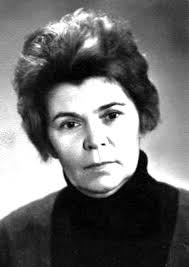
1. Kronid Lyubarsky
On 17 January 1977, Kronid Arkadyevich LYUBARSKY left Vladimir Prison after serving his full five-year sentence.
Despite his categorical objections (his family lives in Chernogolovka, a town not far from Moscow), in his “Release Document” the paragraph “To be sent to …” was inscribed “Tarusa, Kaluga Region” . This inscription means that in order to obtain a passport [ID document] he was forced to go to Tarusa (in no other place would he have been issued with a passport).
On the morning of 18 January, the police arrived at a flat in Moscow where Lyubarsky and his family were spending the night and took him off to a police station. There he was ‘advised’ “don’t hang around in Moscow” .
On the morning of 19 January, the police broke into another flat in Moscow where Lyubarsky and his family were staying the night.
*
PRESS CONFERENCE
On 20 January 1977, Lyubarsky gave a statement at a press conference.
In the mid-1970s, he said, fundamentally new tendencies had developed amongst Soviet political prisoners: they felt themselves to be a united whole, one of the ranks of the opposition, acting in a concerted way in the vanguard of the struggle. Political prisoners in different camps and prisons had begun, moreover, to carry out joint actions. They launched a movement for the legislative adoption of a Statute on Political Prisoners, and, until such a law was adopted, personally acted on the Statute without official permission. They regularly observed Political Prisoners Day (30 October) and, on 5 September, a Remembrance Day for the Victims of Red Terror [1].
Lyubarsky described how courts were refusing to examine petitions from political prisoners to the administration. In this connection, he cited the reply given by Judge Revenkova of the Zubovo-Polyansky district assizes (Mordovia) to a petition by Mikhail Ya. Makarenko [2]:
“Any actions performed by MVD officers in the execution of their duties are not under the jurisdiction of courts: complaints about them can only be made to higher agencies of the MVD [Ministry of Internal Affairs].”
Lyubarsky directed the attention of the correspondents to the fact that prisoners who had completed their term of imprisonment were, with the help of the unpublished ‘Rules on Registration’ [3] and the ‘Statute on Administrative Surveillance’, frequently deprived of the possibility of living with their family and were, effectively, in the position of exiles.
Lyubarsky asked correspondents to let the world know about the fate of Vasily Petrovich FEDORENKO (CCE 38.12-2, CCE 39.2-2): he had been on hunger-strike with short interruptions ever since April 1975, protesting against the violation of human rights in the USSR and against his own unlawful sentence.
*
On the morning of 21 January someone broke into the next flat in Moscow in which Lyubarsky and his family had spent the night.
On 22 January Lyubarsky was taken off to a police station. There it was recorded against him that he had violated the residence rules and he was formally told to vacate Moscow and the Moscow Region within 72 hours. There, too, despite his passive resistance, his fingerprints were taken by force and he was photographed. In this connection the police referred to an unpublished resolution of the USSR Council of Ministers (25 June 1964, No. 585), whereby persons with a conviction who violate the residence rules can have their fingerprints taken.
On 25 January Lyubarsky left Moscow for Tarusa.
On 1 February he was put under surveillance there for a year.
At first, he was offered a passport with registration in a hostel but Lyubarsky refused to accept a passport with compulsory registration. He complained about the actions of the police to the town soviet executive committee and to the Communist Party district committee. The following day the police allowed him to choose his own place of residence in Tarusa. Lyubarsky registered himself at the house of Alexander Ginzburg.
To all the statements in which Lyubarsky, referring to one of the published provisions of the rules on registration, demanded permission to live with his family, he received a refusal. The police in their refusals also referred to the rules on registration, but to one of the unpublished provisions (note 3).
In Tarusa there is no work for Lyubarsky in his profession of astronomer.
(About Lyubarsky see also “Reprisals against Helsinki Groups”, “In the Prisons and Camps” and “Letters and Statements” in this issue CCE No. 44).
*
2. Surveillance of Nina Strokata
On 2 February 1976, after four years imprisonment (1971-1975), Nina Antonovna STROKATOVA, the wife of Svyatoslav Karavansky, was placed under administrative surveillance in Tarusa for a year (CCE 39.13 [12]).
The American Association of Microbiologists had earlier elected Nina Strokatova (Ukr. Strokata) as a member. In April 1976 Strokatova received an invitation to the Association’s annual meeting. She asked the police for permission to go to Moscow for three days for her regular oncological examination and for clarification at the US embassy of questions connected with the invitation. She received permission.
On the day she should have met the American consul, however, on a street not far from the embassy, two men went up to the consul (a woman) who had gone out to meet Strokata and declared that they would go everywhere with her. The consul asked the policeman guarding the entrance to the embassy for protection, but was told that the men pestering her were free Soviet citizens and could go where they liked.
As a result, the meeting between Strokata and the consul did not take place that day. Although this was the last day of Strokatova’s authorized stay in Moscow, she decided to stay longer in order to meet the consul. Because of this she was not home the following day at 8 pm. For this a court fined her 15 roubles and recorded her first “violation of the rules of surveillance”. At that time in April 1976 Nina Strokata handed an application to the Visa & Registration Department (OVIR), requesting permission to go to the USA in May. (She received a refusal in June.)
*
In October 1976 Strokata fell seriously ill and was taken to hospital in Kaluga. In November she was discharged at her own request.
On 20 November, without asking permission from the police, Strokata entered a Moscow hospital, where she stayed until 4 January 1977. On 17 January, the chairman of the Tarusa people’s court N. P. Karpezhnikov fined Strokatova 20 roubles for her absence in November-January and recorded her second “violation”.
On 3 February 1977, Strokata was again put under surveillance: this time for six months.
*
3. And four others …
VOROBYOV
Oleg Vorobyov, who was released in September 1976 (CCE 42.4-4), was placed under surveillance in Tarusa. The police registered him at the house of Alexander Ginzburg, without asking for the agreement of either the proprietor of the house or Vorobyov. [An error. CCE 45.22 corrects it by saying that Vorobyov himself requested registration here.]
In February 1977 Vorobyov moved to another flat, having previously informed the police in writing of his new address.
On the first evening after Vorobyov had moved, the police appeared at Ginzburg’s house and, naturally, did not find Vorobyov there. A record was drawn up. The two following evenings two analogous records were drawn up.
The police accused Vorobyov of having changed his place of residence without receiving their permission, although according to the ‘Statute on Administrative Surveillance’ (point 15) a person under surveillance is obliged to inform police officers about a change in his place of residence but is not obliged to ask their permission.
On 9 March Judge N. P. Karpezhnikov fined Vorobyov 30 roubles and recorded his first “violation of the rules of surveillance”.
*
Yakov Suslensky, released from Vladimir Prison in January 1977, has been placed under surveillance in Bendery city (Moldavia).
*
At the end of January 1977, Nadiya Svetlichnaya (Ukr. Svitlychna) managed to find work in Kiev, as a janitor [dvornik]. As before she is not registered for residence there: see CCE 41.6-2, CCE 42.11 [7, 8], CCE 43.17 and CCE 44.27.
*
At the end of January 1977 Kuzma Matviyuk (CCE 33.6-3 [39], CCE 42.4-4) found work as a junior technologist. He has three diplomas. He graduated from the engineering and teachers’ training faculties of the Ukrainian Agricultural Academy and from the evening university of Marxism-Leninism.
His address is: UkSSR, Kirovograd Region, Alexandria, 58 Krasnoarmeiskaya Street, flat 8.
=====================================
NOTES
- Political Prisoners’ Day was first launched by Lyubarsky himself in 1974, aided and abetted by Alexei Murzhenko.
On 5 September 1918, the Bolshevik government issued a Decree about the “Red Terror” and the need to support the Cheka (Extraordinary Commission) in its battle against the enemies of the new regime.
↩︎ - Mikhail Makarenko (born Moishe Hershkovich in Romania) appealed to the local and national authorities on several occasions, notably about the obstruction and confiscation of correspondence (CCE 40.9-1).
↩︎ - See Official Documents (December 1974, CCE 34.21 [1, 4, 5]) for unpublished decrees and directives on residence, passports and registration.
↩︎
=========================
 A Chronicle of Current Events