The main demands of the inmates of Vladimir Prison who held a hunger strike in December 1970, timed to coincide with Constitution Day and Human Rights Day, were as follows:
- an improvement in the conditions in which female prisoners are held;
- an improvement in medical care – the doctor usually arrives twenty days after being called;
- a lifting of the ban on using one’s own books;
- an end to outrages connected with the food (serving rotten fish, etc.);
- an end to the arbitrary shortening of visits, to as little as half an hour.
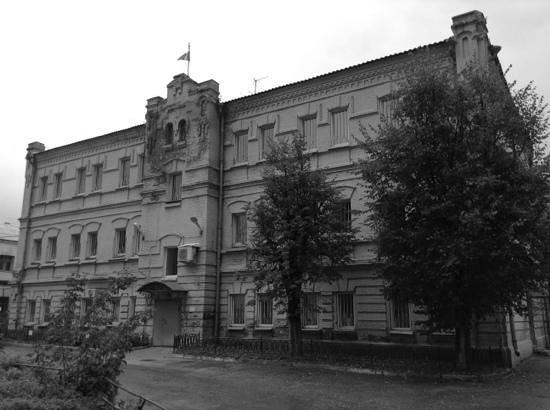
Altogether 27 persons were on hunger strike in Vladimir Prison from December 5 to 10. The majority of them had at various times been transferred to the prison from the Mordovian camps. We now give a list of those who took part:
- Vyacheslav Aidov convicted of trying to make a printing-press. Due for release, 22 November 1971.
- Yakov Berg-Khaimovich. Sentenced to seven years in the same case, transferred to Vladimir Prison in November 1969 (CCE 11.3 [21]); held an unsuccessful two-week hunger strike in December 1969 for the right to have an Hebrew-Russian dictionary.
- Yury Belov. Article 70, pt. 2, convicted for a second time of “anti-Soviet agitation and propaganda”; sentenced to five years of special-regime camps (for information on him CCE 9.10 [14]).
- Alexander Ilych Ginzburg. Due for release on 22 January 1972 (CCE 1.1).
- Nikolai Fyodorovich Dragosh. Headmaster of a school in the Tarutino District (Odessa Region, south Ukraine); sentenced to five years for creating the “Democratic Union of Socialists”; due for release in May 1971; transferred to Vladimir in July 1970 (CCE 15.7 [2]).
- Stepan Zatikyan. From Yerevan, sentenced in 1968 to four years of strict-regime camps (CCE 16.4) transferred to Vladimir together with Dragosh.
- Svyatoslav Karavansky. For information about him see CCE 13.7 and previous issues [1].
- Lev Borisovich Kvachevsky. See CCE 3.4, CCE 5.2 and other reports. Sentence expires on 2 August 1972.
- Dmitry Kvetsko. 15 years for taking part in the “Ukrainian National Front” (CCE 17.7).
- Zinovy Mikhailovich Krasivsky. Same case and sentence [2].
- Igor Vyacheslavovich Ogurtsov. “All-Russian Christian-Social Union for the Liberation of the People” (ACSULP). (CCE 1.6; sentenced to 15 years.)
- Yury Rayev. Convicted of attempting to cross the border.
- Gunar Rode. The Latvian organisation “Baltic Federation”: the case of K. Skujenieks, V. Kalnins and others; sentenced to 15 years.
- Anatoly Radygin. Leningrad poet; attempting to cross the border; ten years; sentence expires in September 1972.
- Valery Yefimovich Ronkin. Leningrad “Union of Communards”, publishing The Bell; seven years of strict-regime camps plus three years’ exile; sentence expires on 6 June 1972.
- Roman Semenyuk. Member of Organisation of Ukrainian Nationalists (OUN), sentenced to 25 years. In 1965 he was sentenced to an additional three years for attempting to escape (his companion in the attempt, Anton Oleinik, was shot dead).
- Nikolai Andreyevich Tarnovsky. Same case as Dragosh; sentenced to seven years; transferred to Vladimir in July 1970 (CCE 15.7 [2]).
- Josif Tereza. (Josip Terelya, see CCE 41.7), “Ukrainian nationalist propaganda”: sentenced to eight years.
- Leonid Ivanovich Borodin. The “ACSULP” case; sentenced to six years. Transferred to Vladimir in autumn 1970.
- Boris Bykov. See this issue, CCE 18.3, “Political prisoners in Mordovia”.
- Richard Dragunas. Information about him in CCE 17.14 [57].
- Lazarev.
- Yaroslav Lesiv. The Ukrainian National Front (UNF; CCE 17.7), see Nos. 9 and 10 of this list; six years.
- Yevgeny Pashnin. From Kishinyov (Moldavia), arrested in 1968; sentenced to ten years.
- A.A.Petrov-Agatov. See previous issues of the Chronicle (CCE 11.3, CCE 17.12 [9]).
- Yury Ivanovich Fyodorov. The biographical information given in CCE 12.5 is incorrect: before his arrest he was no longer an investigator with the Ministry of Internal Affairs, but worked in the supplies department of a Leningrad establishment.
- Anatoly Leontevich Avakov (b. 1938). Worked in Komsomolsk-on-Amur (Soviet Far East), previously sentenced to eighteen months under a non-political Article of the Criminal Code. Now serving a five-year sentence under Article 70 (RSFSR Criminal Code) for writing letters to newspapers and to the authorities.
==============================================
NOTES
- On Karavansky, see also V. Chornovil, The Chornovil Papers, 1968, pp. 166-226, and Michael Browne, Ferment in the Ukraine, London, 1971, Passim.
↩︎ - Krasivsky’s sentence, according to other sources, was twelve years, plus five in exile.
↩︎
===========================
 A Chronicle of Current Events