Vladimir Region,
Alexandrov,
27 Novinskaya St.
To:
G.A. Mitiryov, Chairman of the [USSR] Red Cross Society;
B.V. Petrovsky, USSR Minister of Health;
A.A. Pokrovsky, Director of the Food Institute, USSR Academy of Medical Sciences;
Alexy, Patriarch of All Russia;
M.V. Keldysh, President of the USSR Academy of Sciences;
V.D. Timakov, President of the USSR Academy of Medical Sciences;
V.M. Chkhikvadze, Director of the Institute of State & Law;
I.G. Petrovsky, Rector of Moscow State University;
V.M. Zimyanin, Board Chairman of the USSR Journalists’ Union;
K. Fedin, Board Chairman of the USSR Writers’ Union;
the writers Konstantin Simonov, Rasul Gamzatov, Robert Rozhdestvensky and Yevgeny Yevtushenko.
(Copies to UN Human Rights Commission and UN’s “International Human Rights Conference”)
*
17 APRIL 1968
Five months ago I completed My Testimony, a book about the six years (1960-1966) I spent in Vladimir Prison and in camps for political prisoners.
In the introduction I wrote:
“contemporary Soviet camps for political prisoners are as horrible as Stalin’s. In some respects they are better, in some respects worse.
“Everybody should know about this:
“THOSE WHO WANT THE TRUTH, but get false, glossy newspaper articles lulling the reader’s conscience; and
THOSE WHO DON’T WANT TO KNOW, who shut their eyes and stop their ears, in order to justify themselves later, and to show their clean record: “Good Lord! We never knew …”
“If the latter have a scrap of social conscience and genuine love for their country they will take a stand in its defence, as Russia’s true sons have always done.
“I should like my testimony on Soviet camps and prisons for political prisoners to become known to humanists and progressive people of other countries: to those who raise their voices in defense of political prisoners in Greece and Portugal, in the South African Republic and in Spain.
“Let them ask their Soviet colleagues in the struggle against anti-humanism:
‘What have you done to ensure that political prisoners in your country, at least, have not been “educated” by hunger?’
*
I’ve done my best to make my book known to the public [1]. So far, however, there has been no reaction at all in official circles — except an invitation from a KGB officer to discuss my “anti-social activities”.
Conditions in the camps remain the same.
*
I am forced, therefore, to address certain individuals who, through their public positions, are among those most responsible for the state of our society, for its level of humanity and legality.
You should be aware:
There are thousands of political prisoners in the camps and prisons of our country.
Most were sentenced behind closed doors. There have been virtually no truly open trials, apart from those of war-criminals; in all cases, openness (glasnost), a fundamental principle of legal procedure has been violated. Society has not monitored either the observance of legality or the extent of political repression.
Political prisoners are generally in a similar position to convicted criminals.
In some respects they are considerably worse off: politicals are at best held in strict-regime conditions, while for the criminals there is an ordinary-regime and an even lighter one; criminals may be released after serving two-thirds or half of their time, while politicals must serve every single day of their sentence.
Political prisoners are thus treated in all respects like the most dangerous criminals and recidivists: no juridical and legal distinction is made between them [2].
*
As a rule, before their arrest political prisoners were engaged in socially useful work. They were engineers, manual workers, literary men and women, artists, scholars and scientists. In the camps, as a form of ‘re-education’, they have to do forced labour.
The camp administration uses work as a means of punishment: weak individuals are forced to perform heavy physical labour; intellectuals are compelled to do unskilled physical work.
Failure to fulfil the norm is regarded as a violation of the regime. It is the pretext for various administrative punishments: a ban on visitors, incarceration in the punishment cell, solitary confinement.
*
HUNGER is the most powerful means of influencing prisoners.
The usual rations make a person feel constant lack of food, perpetual malnutrition.
The daily camp ration contains 2,400 calories (enough for a 7 to 11-year-old child), and has to suffice for an adult doing physical work, day after day for many years, sometimes for as many as 15-25 years!
Those calories are supplied mainly by black rye bread (700 gms a day). Convicts never set eyes on fresh vegetables, butter, and other indispensable products. These products are even banned from sale at the camp stall (as is sugar).
Let me state right away: the camp food as well as the camp clothes are paid for by the prisoners themselves from the earnings accredited to them. (Fifty per cent is deducted immediately for the upkeep of the camp: barracks, equipment, fences, watch-towers, etc.)
Only five roubles a month [3] — out of the money that remains after all deductions — can be spent on goods, including tobacco, at the stall. Yet “for violation of the regime” one may be deprived even of that right, to spend seventeen kopecks a day.
*
FOR EXAMPLE
The imprisoned historian Rendel, 10 years for taking part in an illegal Marxist circle [4], was banned from the stall for two months for bringing supper to sick comrades in the barracks.
The imprisoned writer Sinyavsky was likewise banned, for exchanging a few words with his friend Daniel when the latter was in the camp prison.
To punish a prisoner for “violating the camp regime'” e.g., for failure to fulfil the work quota, he may be put on the ‘severe’ food ration: 1,300 calories [5], enough for an infant of one to three years. This was the case, for example, at the end of summer 1967 with the writer Daniel and the engineer Ronkin (seven years for illegal Marxist activities).
Food parcels from relatives are ‘not authorized’ for prisoners sentenced to the strict regime.
*
Only by way of encouragement for good behaviour (i.e., repentance, denunciation, collaboration with the administration) do the camp authorities sometimes allow a prisoner to receive a food parcel — but not before he has served half his sentence, no more than four times a year, and not over five kilograms!
The camp administration, therefore, wields a powerful means of exerting physical pressure on the political prisoners, a whole system for escalating hunger. The application of this system results in emaciation and vitamin deficiency.
Some prisoners are driven by permanent malnutrition to kill and eat crows, and (if they’re lucky) dogs. In autumn 1967 one prisoner from Camp 11 of Dubrovlag (Mordovia) found a way of getting potatoes while he was in the hospital section. He ate too many and died — the potatoes were raw.
Hunger reigns even more harshly in Vladimir Prison and in the ‘special-regime camps’, where there are also numerous political prisoners.
*
By comparison with this permanent malnutrition, OTHER ‘MEANS OF INFLUENCE’ look relatively harmless. One must, however, mention a few.
Prohibiting meetings with one’s relatives; complete shaving of the head; banning the wearing of one’s own clothes (including warm underwear in winter); obstructing creative work and the performance of religious rites.
Prisoners’ letters of complaint and petitions addressed to the procurator’s office, the Presidium of the USSR Supreme Soviet, or the Party Central Committee are returned, without fail, to the camp administration. The highest agencies forward them to the USSR Ministry of Internal Affairs [6] or to the Main Administration for Places of Confinement. From there, after a multi-stage journey round the departments, they somehow or other always end up in the hands of those against whom the complaints were directed “so they can be checked”.
All complaints end the same way. The camp administration replies that “the allegations have not been confirmed” and “the punishment was justified”.
The position of the petitioner becomes unbearable. Sometimes the prisoner is transferred to the camp prison or to solitary confinement for this latest “violation of the regime”.
“Go on, lodge a complaint against us!” the ‘educators-cum-officers’ often maliciously tell the dissatisfied prisoner: “Go on, write, it’s your right to do so!” Others, more simple-minded, warn him:
“Well, why protest? You know yourself the administration can always find a reason to punish any prisoner. You’ll only harm yourself; better put up with it …”
And indeed, The Regulations for Camps and Prisons, passed by the Supreme Soviet in 1961, give the camp administration practically unlimited opportunities to apply physical and moral pressure.
Prohibition of food parcels, a ban on purchases from the camp stall, starvation rations, banning of visits, punishment cells, handcuffs, solitary confinement — all are legalized by the Regulations and applied to political prisoners. The camp administration finds these measures much to its taste. Especially because not a few officials of the Stalinist concentration camps, who were accustomed to unlimited arbitrary power (which, incidentally, was quite in line with their instructions at that time), are still to be found among the ‘educators’.
Prisoners lack all rights and this drives them to dreadful and disastrous forms of protest: hunger-strikes, self-mutilation, and suicide —in broad daylight the prisoner walks towards the barbed wire, into the ‘forbidden’ zone, and there the guard shoots him “for attempting to escape”.
*
Some among you bear direct responsibility for the existing situation. The responsibility of others is determined by their public position.
I am appealing to you as my fellow citizens: we are all equally responsible before our Motherland, the younger generation, and the country’s future. It’s enough that the generation of the 1930s and 1940s put up with crimes committed “in the name of the people”. It is impossible and impermissible to display yet again the criminal indifference which turned the whole nation into accomplices in bloody crimes.
I appeal to you to demand the following:
- a public investigation into the situation of political prisoners;
- wide publication of The Regulations for Camps and Prisons;
- special rules for political prisoners;
- publication of the food rations for prisoners;
- immediate dismissal from ‘educational’ work of former staff of Stalin’s concentration camps and of such camp officials as have more recently displayed cruelty and inhumanity towards prisoners.
- that these officials face a public trial.
It is our civic duty, the duty of our human conscience, to put a stop to such crimes against humanity.
For crime begins not with the smoking chimneys of extermination-camp crematoria, nor with the steamers packed with prisoners bound for Magadan —
crime begins with civic indifference.
A. MARCHENKO
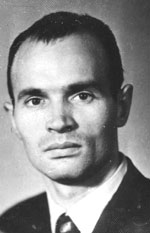
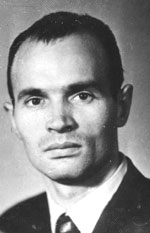
Anatoly Marchenko (1938-1986)
*
REPLY BY THE SOVIET RED CROSS TO MARCHENKO’S LETTER
Executive Committee,
USSR Union of Red Cross & Red Crescent Societies (Order of Lenin),
MOSCOW V-36,
No 5, 1st Cheremushkinsky proyezd,
No. 182/125 yur.
To Citizen A. Marchenko,
Vladimir Region,
Alexandrov,
27 Novinskaya St.
29 APRIL 1968
The letter sent in your name to the Executive Committee of the USSR Red Cross & Red Crescent Societies has not, unfortunately, been signed by anyone [7]. This makes it impossible, and unnecessary, to give it detailed consideration in substance.
The Committee, nevertheless, considers it necessary to point out briefly that our legislation and our Soviet conception of law look upon individuals who have attacked the conquests of the October Revolution as having committed a most serious offence against their nation and as deserving severe punishment rather than any kind of indulgence or forbearance.
In the light of the foregoing the entirely groundless nature of all your other assertions becomes obvious.
F. ZAKHAROV
Deputy Chairman
Executive Committee,
USSR Union of Red Cross & Red Crescent Societies
=========================================================
NOTES
- “His book … aroused such hatred for him in the KGB that they began to bait him like a hare,” wrote Larisa Bogoraz in 1969:
“KGB agents followed on his heels for months on end. I spotted them so often that I came to know many by sight.
“And not just in Moscow where he was working or Alexandrov where he lived. He went to visit relatives in Ryazan but wasn’t allowed off the train. He had to return to Moscow.
“He was seized on the street almost as soon as he was discharged from hospital. When he came to Moscow for a literary evening they smashed his face in and shoved him inside a car.”
↩︎ - As defined and ranked by the 1960 RSFSR Criminal Code, Article 70 (“Anti-Soviet Agitation and Propaganda”) was listed with Treason, Terrorism and Espionage among “the most grave crimes against the State”. (Years later when Gorbachev’s Politburo discussed the position of Soviet political prisoners they were compared to traitors, terrorists and spies: see Bukovsky Archive, 25 September 1986.)
A milder political offence, ranked among ordinary crimes investigated by the police and the procurator’s office, was Article 190.1, added to the RSFSR Criminal Code in 1966.
↩︎ - Five roubles a month was slightly over £2 at the official exchange rate.
↩︎ - On Leonid Rendel, see CCE 1.5 [3], CCE 21.10 [5] and CCE 26.16 [1].
↩︎ - A ‘severe’ food ration amounted to 1,300 calories a day.
Replying to a remark about prisoners being kept “at public expense”, in a letter by Alexander Chakovsky, chief editor (1962-1988) of the weekly Literaturnaya gazeta, Marchenko broke down the normal ration. It consisted, he wrote, of six cupfuls of thin gruel, two cupfuls of soup made with rotten cabbage, and a piece of boiled cod the size of a matchbox. All that contained only 20 gms of fat, plus 700 gms of black bread and 15 gms of sugar.
The ‘severe’ ration consisted of 400 gms of cabbage soup, two cupfuls of thin gruel, the same size piece of cod and 450 gms of black bread.
For comparison, we may note that in 1942-1943 at Tha Makham, a Japanese concentration camp on the River Kwai, the daily ration (in grams), was as follows: rice (700 gms), vegetables (600), meat (100), sugar (20), salt (20) and oil (15), with similarly few chances of buying extra food.
This amounts to about 3,400 calories. Even here, vitamin deficiency diseases were very common. (See article by Ian Watt in The Observer, 1 September 1968).
↩︎ - Known for over two years (July 1966-November 1968) as the “Ministry for the Preservation of Public Order” (MOOP).
↩︎ - “Marchenko probably confined himself to a typewritten signature, and forgot to sign his letter by hand,” suggest the Chronicle‘s editors.
↩︎
==============================
 A Chronicle of Current Events
One thought on “A Letter from Anatoly Marchenko, April 1968 (2.6)”
Comments are closed.