SIXTEEN ITEMS
[1]
The Trial of Tsurkova
On 4 April 1979, Irina Lopatukhina, called as a witness in the trial of Tsurkov (CCE 53.6), refused to give evidence.
On 6 April the Leningrad City Court passed sentence on Arkady Tsurkov and at the same time made a ruling to institute criminal proceedings against Lopatukhina under Article 182 (RSFSR Criminal Code: “Refusal or disinclination of a witness … to give evidence”). After reviewing Tsurkov’s case on appeal, the Supreme Court of the RSFSR upheld both the sentence and the ruling.
On 11 September Selin, a Procuracy investigator of the Dzerzhinsky district of Leningrad, charged Irina Tsurkova (on 23 May the marriage of I. Lopatukhina to A. Tsurkov was registered in the investigations prison of the Leningrad KGB, CCE 53.6) under Article 182, and made her sign an undertaking not to leave the city.
On 27 September Selin signed the indictment stating that:
“... She committed a crime under Article 182 of the RSFSR Criminal Code, for which she pleaded entirely guilty, but did not repent of her crime, since she considered that out of affection for her husband she had no right to give evidence against him.“
On 8 October the Dzerzhinsky district people’s court, presided over by V. I. Poludnyakov, sentenced I. Tsurkova to three months corrective labour at her work-place, with a 20% withholding of earnings.
*
[2]
TARTU. Teet Papson was sentenced on 24 August and Annes Enelhiem on 20 September under Article 78 pt. 1 (Estonian SSR Criminal Code: “Evasion of a regular call to active military service”) to 18 months in ordinary-regime camps each, after they had refused to serve in the Army because of their pacifist beliefs.
*
[3]
YEREVAN-MOSCOW. Eduard Arutyunyan (CCE 53.18) has undergone psychiatric examination at the Serbsky Institute. In September he was sent to Yerevan. He does not know the results of his examination. Before the examination he had not once been interrogated. He does not know what he is charged with.
*
[4]
GORKY REGION. In September an officer of the Gorky Region KGB visited A. F. Shutkin.
He was interested in how Alexander Shutkin had sent his article “How I Became a Dissident” to the West (CCE 52.17 [6]; in September the article was broadcast by Radio Liberty). He questioned Shutkin about his acquaintance with dissidents, in particular with Lyudmila Boitsova and Victor Nekipelov, and asked him to give a character reference for the latter. He also gave Shutkin to believe that he knew that he had signed Document 69 of the Moscow Helsinki Group (CCE 52.16-2).
The KGB officer tried to blackmail Shutkin, telling him that when he was in the camps (1975-1977), together with another prisoner, Smirnov, he had planned to commit acts of arson and terrorism after release. The officer hinted that the KGB had a statement from Smirnov. (After ‘conditional release with compulsory work’ Smirnov died in mysterious circumstances.) Shutkin refused to be blackmailed or to answer questions.
Soon afterwards an attempt was made to have Shutkin dismissed from work (only in August he had been appointed director of a rural House of Culture). In late September the Department of Culture of the Gorky Region Soviet executive committee received an anonymous letter stating that they had employed an ‘anti-Soviet’. The head of the department of culture at the Krasnobakovsky district Soviet executive committee proposed that Shutkin resign. In reply, he wrote the following statement:
- To the Chairman, Chashchikhino Village Soviet (Krasnobakovsky district, Gorky Region)
- To the Krasnobakovsky district Department of Culture
- Copy to: A. D. Sakharov, 49 Chkalov Street, Moscow,
From: citizen A. F. Shutkin.
Statement
As a citizen of the Soviet Union I am not granted by my government the elementary political freedoms which might enable me to defend my civil and human dignity and oppose the lies and lack of human rights confronting everyone in our country who dares to tell the truth!
I am therefore prepared to be dismissed from work and become unemployed and without rights.
“This statement is written under pressure.
“A. Shutkin, 28 September 1979
On 17 October a sitting of the Chashchikhino Village Soviet examined the question of Shutkin’s employment. At the meeting Shutkin was asked why he wrote to Sakharov, who had ‘sold himself to the Americans’. Shutkin explained his views on Sakharov to the meeting. Most of the deputies voted that Shutkin continue in his post.
*
[5]
TARTU. For the past 12 years Mart Niklus [1] has taught evening courses of foreign languages and has won great popularity in the city as an outstanding teacher of English, French and German.
Recently his relations with the course administrators have deteriorated, and the amount of work given to him has been greatly reduced. When, at his pupils’ request, he agreed to continue the courses unpaid, three rebukes were issued to him: ‘violation of work discipline’, ‘disorganization of studies’ and ‘taking things into his own hands’.
These rebukes were the formal grounds on which Niklus was dismissed on 13 November.
*
[6]
ZHELEZNOVODSK (Stavropol Region [Krai]). In July 1979, Oleg SoIovyov (CCE 52.15-1) was called to a psychiatric clinic. Doctor Feksa questioned Solovyov about his dispute at work. Solovyov, a stoker, had started a campaign against the administration concerning the working conditions in the boiler-rooms. The doctor advised him to behave more ^sensibly; ‘Many people think like you, but they keep quiet about it’.
He suggested that Solovyov come for a second talk in December. Solovyov’s mother was invited to the KGB to discuss her son’s article ‘Mentally ill? No, Socially Dangerous!’ which was published in Kontinent (Paris).
*
[7]
A Chat with Bakhmin
On the evening of 17 October Vyacheslav Bakhmin received a telephone call from B.B. Karatayev (CCE 45.18, CCE 47.8-3, CCE 51.9-1), who invited him to the KGB the following morning for a talk with ‘the management’.
When Bakhmin asked for an official summons, Karatayev hinted that if he did not appear, he would be summoned through his personnel department. Bakhmin agreed to attend. On 18 October Bakhmin was received by S. I. Sokolov, who had bid farewell to him and Irina Kaplun just before they were released from Lefortovo after their pardon in 1970 (CCE 16.10 [3]).
Sokolov said that he was interested in Bakhmin’s activities as a member of the Working Commission to Investigate the Use of Psychiatry for Political Purposes. He ‘advised’ Bakhmin to cease his activities and began pointing out the mistakes which had supposedly been made in the Information Bulletin of the Working Commission. Bakhmin replied that Sokolov should inform the Commission regularly ofany inaccuracies he might find, and promised to correct them if checking proved the information to be accurate. Sokolov rejected the offer, and in return suggested that if Bakhmin came across any instance of the misuse of psychiatry, he should refer them to Bulat Bazerbayevich Karatayev, who would investigate the matter and help in any way he could.
During the talk Sokolov repeated the allegation circulated by the KGB that Ginzburg and Orlov had lived at the expense of the ‘dissident fund’, from which Bakhmin also was receiving contributions. Sokolov said that emigres who had been treated in psychiatric hospitals in the Soviet Union regularly ended up in similar Institutions in the West. For example Fainberg, according to Sokolov, had already been in hospital several times since leaving the Soviet Union, and the British Communist newspaper would be returned the money it paid as compensation for libel after Fainberg had taken out a lawsuit against them for reprinting an article about him which had previously appeared in the Literary Gazette (CCE 39.13).
When the time came to leave, Sokolov warned Bakhmin that his activities were illegal, and that he was distributing defamatory information which was being used by organizations hostile to the Soviet Union. After the talk. Bakhmin asked Karatayev about Sokolov’s rank. Karatayev replied that he did not know.
*
[8]
A Chat with Meiman
On 14 September Naum Meiman, a member of the Moscow Helsinki Group, was called for a talk with Sablin, Chairman of the Moskvoretsky district Soviet executive committee. Two others were also present at the talk, one of whom introduced himself as a secretary of the district Party Committee, and the other as a professor of Philosophy.
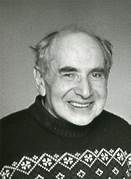
Naum Meiman (1912-2001)
Sablin told Meiman that he had been called to the talk because the district authorities were concerned that Meiman was engaging in activities harmful to the country. The Party secretary began to read from a dossier which he said had been sent by the Novosti Press Agency, which listed mentions of Meiman on Western radio-stations. He said that Meiman’s activities were aimed at spreading anti-Soviet slander.
Meiman stated that he thought he had been summoned in connection with his wish to emigrate to Israel. However, they replied that the dossier was directly connected with that question. They then began trying to demonstrate to him that the Helsinki Group’s activities were contrary to the Helsinki Agreement.
Meiman, however, insisted that they discuss the question of his emigration. He was told that he would not succeed in leaving the country, since his skills could be used against the USSR. The fact that he had not been engaged in secret work for more than 24 years made secrecy a matter of no relevance. But his present involvement in the Helsinki Group was an obstacle to his obtaining an exit visa.
Helsinki Group Document 101 (CCE 54.23-2) states:
“... The real significance of the talk lies in the fact that Meiman’s interrogators several times gave him what they called ‘insistent’ advice to cease his ‘harmful activities’, and in particular to leave the Group. This is most certainly both a warning and a threat, firstly to Meiman, but at the same time to the entire Helsinki Group.“
*
[9]
A Chat with Ostrovskaya
On 27 July 1979 Natalya Ostrovskaya, a resident of Ust-Nera (Yakut ASSR), was called to the town Military Recruitment Office. There she was met by a KGB officer, who took her to the district KGB Office for a talk which lasted 90 minutes. No record was taken of the talk.
Gerasimov, Head of the district KGB, accused Ostrovskaya of discussing the trial and exile of Ust-Nera of Alexander Podrabinek (CCE 50.7; Podrabinek lives with his wife in Ostrovskaya’s house). Ostrovskaya was invited to write an explanatory statement about her spreading of ‘deliberate fabrications’. When she refused, Gerasimov began to threaten her with criminal proceedings under Article 190-1 (RSFSR Criminal Code). Ostrovskaya was also blackmailed about some sort of details of her personal life which the KGB claimed to know.
In a statement to the Oimyakon district Procurator, which she wrote the same day, she protested about the threats and blackmailing and demanded that the illegal actions of the KGB be stopped.
Alexander Podrabinek sent a similar statement to the USSR Procuracy and an appeal to Soviet and foreign organizations campaigning for human rights.
*
[10]
KAMESHKOVO (Vladimir Region). In August 1979, on returning from holiday, Victor Nekipelov discovered that the hatches leading to his attic had been fitted with locks.
Several days later the attic windows were boarded up, considerably increasing the fire risk. Nekipelov asked for the attic keys at the house-manager’s office, but was refused. He was told that the windows had been boarded up by the police, and that the locks had been fitted personally by Major M. V. Ganzha, the Chief of the local State Fire Inspectorate. Nekipelov suspected that bugging apparatus had been set up in the attic.
On 10 October he sent a statement to Ganzha and the Vladimir Regional Procurator. On 20 October he received a reply, informing him that the attic had been sealed in accordance with the ‘Standard Fire Safety Regulations’, and that he should go to the house-manager’s office for the keys. However, he was again refused the keys.
On 24 October, Captain Kalmykov, Acting Chief of the State Fire Inspectorate, and the house-manager, Dmitriev, visited Nekipelov in person and gave him the keys.
*
[11]
YURYEV-POLSKY (Vladimir Region). On 20 June Valery Fefyolov (CCE 53.26) was detained by officers of the Motor-Vehicle Inspectorate, who claimed that he was driving his car in a drunken state, and took him to the Kolchugino Hospital for a medical examination. The doctor who examined him said that Fefelov was absolutely sober. However, when pressured by the police, he signed a statement that Fefelov was ‘slightly intoxicated’.
On 15 July Fefelov was driven in his own car to the district Police Office, where the number-plates were removed. Fefelov then told them that he would remain in the car on hunger-strike until the number-plates were returned. He spent one night outside the police station, and the following morning Chernov, the Head of the Motor-Vehicle Inspectorate (CCE 51.17, CCE 53.26), told him that on the basis of the record drawn up on 20 June the suspension of his driving licence was to be extended by five years. This suspension had previously been due to expire in October 1982 (CCE 51.17). Fefelov was fined 30 roubles and his number-plates were returned.
Fefelov was several times led to believe that if he ceased his activities in the Action Group to Defend the Rights of the Disabled in the USSR, the suspension would be waived.
On 25 September he received a further visit from local authority representatives (CCE 52.13, CCE 53.26). Fefelov demanded that these visits stop, and stated that he would continue his activities for the Action Group, as the State did not take care of invalids.
*
[12]
MOSCOW. Returning from a birthday party. Vsevolod Kuvakin, Yury Grimm, V. Repnikov and V. Grigorenko dropped into a Metro station entrance way.
There policemen surrounded them and took them to the station’s police-room. Captain Birman explained that they had been detained on suspicion of assaulting a policeman. All of them were subjected to body-searches, and a record was drawn up for each individually. An hour to an hour-and-a-half later Birman said that the suspicion regarding assault of a policeman had not been confirmed, and asked them to sign the records to confirm the return of the articles and documents confiscated from them during the searches.
When signing his record, Kuvakin wrote in: ‘Was in a mild state of intoxication, did not commit any infringements of the law’. On 13 September the accountant’s office at Kuvakin’s place of work received an order imposing a fine. It turned out that a fine of ten roubles had been imposed for appearing in a public place in a non-sober condition. On 19 September Kuvakin wrote a complaint demonstrating the lack of grounds for a fine.
*
[13]
MOSCOW. On 4 March, the date of the elections to the USSR Supreme Soviet, Natalya and Oleg Popov were visited by an official canvasser, who asked why they had not voted. The Popovs replied that they refused to take part in the elections.
Two hours later they were visited by the chairman of the electoral committee and the officer responsible for the election campaign in their polling district. They asked why the Popovs had refused to vote, to which they replied that the right to elect and to be elected, guaranteed under the Constitution. was not an obligation, but a right. At first they tried to persuade the Popovs, and then to frighten them with the consequences of their refusal. Finally the visitors left. At 6.00 pm they had another visitor: N. P. Surovtsev, deputy head of the ideological department of the Voroshilov district Party Committee. When he failed to persuade the Popovs to participate in the elections, he threatened that they would have unpleasantness at work.
Towards 8.00 pm the Popovs were visited by a delegation from the Institute of Biophysics, who were responsible for the election campaign. The Popovs were urged to go to the polling-station and cross out the names of candidates if they did not wish them to be elected. The Popovs refused. They did not yield even when the secretary of the district Party Committee tried to persuade them by telephone. Ten minutes before the voting closed they were visited by the entire electoral committee, but it too failed to persuade them to vote.
The following day Natalya Popova was called to the administrative office of the RSFSR State Construction Organization’s Institute to Plan Research Institutes for Agricultural Construction, where she works, and was asked to explain her abstention from voting. She referred to her constitutional rights, and in reply to threats said that if any sanctions were imposed on her, she would appeal to the highest authorities. She was assured that no reprisals would ensue, but that in future she would not be allowed to carry out political information work.
*
[14]
The USSR Academy of Sciences’ Department of Biochemistry, Biophysics and Organic Chemistry has worked out a “scientific and technical requirement” for all scientists in academic institutions who travel abroad to symposiums and seminars. This ‘requirement’, drawn up by the Department Secretary, Academician A. A. Bayev. includes the following in particular:
2) In talks with foreign scientists, to spread propaganda about the achievements of Soviet science, advances in socialist construction in the USSR, the peace-loving policy of our State, and the decisions of the 25th Congress of the CPSU.
3) To explain and popularize the ideas behind the new Constitution of the USSR; when the question of ‘human rights’ arises, to base one’s views on the standpoint of the central press.
*
[15]
The 2 November 1979 edition of the periodical Review of Books [Knizhnoye Obozreniye] published a list of books included in the series ‘Ardent Revolutionaries’ by the Politizdat publishing house since 1968.
At least seven books are missing from the list.
Those by writers who have emigrated are: The Gospel According to Robespierre and Dreams of the Schlusselberg Fortress by Anatoly Gladilin (CCE 40.15); Time of Defeat by Mark Popovsky (CCE 47.8-3); and Overthrow Any Yoke by Igor Yefimov (whose works have been published in samizdat under the name of ‘Moskovit’: CCE 24.12 [7]; CCE 38.20 and see CCE 49.20 [4]).
The others are A Degree of Trust by Vladimir Voinovich [2]; I Don’t Want to Say, But …, by Vladimir Kornilov (CCE 32.17-1; CCE 38.19, CCE 45.17); and He Raised the Sword by Raisa Orlova (the wife of Lev Kopelev [3].
*
[16]
According to numerous orders issued by Glavlit, the Chief Administration at the USSR Council of Ministers for the Prevention of State Secrets Appearing in the Press:
[1] all books written by the following émigré authors [4]
R. L. Baumvol, A. Belinkov (both CCE 35.15); Alexander A. Galich (CCE 32.20); Anatoly Gladilin (CCE 40.15); A. Kuznetsov, I. Kerler (both CCE 35.15); Vladimir Maximov (CCE 32.20); Victor Nekrasov (CCE 32.20, CCE 32.18); A. M. Nekrich (CCE 41.14); Andrei Sinyavsky (CCE 30.14 [4]); A. I. Solzhenitsyn (CCE 32.1); Z. L. Telesin (CCE 35.15); and Yefim Etkind (CCE 34.18, CCE 35.15) —
are to be removed from libraries and sent to Glavlit;
[2] also all books by Mykola Rudenko (CCE 46.4), now in prison, and by Alexander Berdnik (CCE 53.17) whose case is at present under investigation; and
[3] the following books: The National Liberation Movement in Czechoslovakia (published, 1938), The Birth of the Czechoslovak People’s Army (Voyenizdat, 1959), and A History of the Czechoslovak Communist Party (Politizdat, 1962); a book by V. Kopecky, Memoirs: A History of the Czechoslovak Republic and the Struggle of the Czechoslovak Communist Party for the Victory of Socialism (Voyenizdat, 1962); a book by E. Yevseyev, Zionism: Ideology and Policies (Moskovsky Rabochy, 1971); and books by Roger Garaudy and O. Šik.
At the International Book Fair held in Moscow the Soviet customs refused to admit biographies of Mikhail Baryshnikov, the former Soviet Ballet soloist who remained abroad, and Nikolai I. Bukharin, or the autobiography of Menahem Begin (which contains recollections of the period he spent in Soviet camps).
===========================================
NOTES
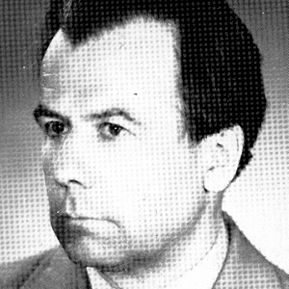
- On Mart Niklus, see CCE 42.3 1976 arrest and CCE 43.7 release; CCE 47.4 taken off Tallinn-Moscow train; CCE 48.3 1978 Vilnius interrogation, and CCE 48.23 Challenging Estonian psychiatrist; CCE 50.5 1978 Petkus trial, CCE 51.20 contacts Procuracy after trial; and Name Index.
↩︎ - On Vladimir Voinovich, see CCE 20.11 1971 reprimanded; CCE 32.17.2 1974 expulsion from Writers Union; CCE 36.11 [7]: 1975 letter to Andropov; CCE 38.1 1975 congratulates Sakharov for Nobel Prize; CCE 42.13, eulogy at Bogatyryov’s funeral; CCE 43.17 1976 letters, phone disconnection and Bavarian invitation. (And see CCE 56.19 1979 encouraged to emigrate.)
↩︎ - On Kopelev, see CCE 36.11 [2], CCE 38.1, CCE 40.4 [3], CCE 45.17 and Name Index.
↩︎ - On Telesin and Baumvol, see CCE 20.11 [22] (1971).
↩︎
===========================
 A Chronicle of Current Events