<< No 33 : 10 December 1974 >>
PERM CAMPS
- 5-1. Camp 35, hunger strike, official reply
- 5-2. Appeals, Bukovsky in the camp, Camp 36, hunger strike
*
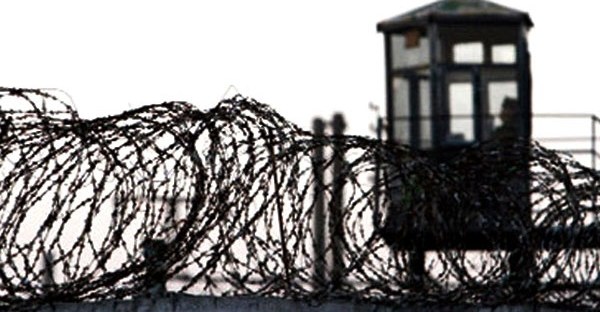
Spread out over the Chusovoi district of the Perm Region is Penal Institution VS-389, a camp complex where political prisoners are held in two camps, Nos 35 and 36. Camp 35 is in the settlement of Vsesvyatskoye; Camp 36 is in Kuchino village.
At Kuchino a new camp (apparently No. 37) to house 200 to 250 people is being built by prisoners from camps 35 and 36 (see CCE 37.5-1).
*
1. Camp 35
- Camp Commandant — Major Pimenov
- Political Officer — Major Kitmanov
- Head of the medical section — Captain Yarunin
The camp is designed to house 240 people.
It is situated in a small valley, and as a result the atmosphere is always damp and there are sudden changes in atmospheric pressure. It is about one kilometre above sea level. The winter temperature can be as low as 50 degrees below zero (Centigrade).
Issue 10 of A Chronicle of Human Rights in the USSR published “A Diary of a Month-Long Hunger Strike”, which describes events in Camp 35 between 12 May and 4 July of this year. The ‘Diary’ is part of an extensive collection of texts and documents compiled by prisoners in Camp 35. Those who compiled it have called this collection The Chronicle of the Gulag Archipelago (CGA).
The information on Camp 35 included in this issue is largely based on material from the Chronicle of the Gulag Archipelago. (The full text of the CGA exists in samizdat.)
*
BOBROV
On 6 February 1974 Lieutenant Nikolayev, the officer on duty, struck a prisoner, Vladimir Bobrov, while putting handcuffs on him. Following a demand by the prisoners, Bobrov was examined by a doctor, Captain Yarunin, head of the medical section: he estimated and recorded in his register the degree of force used to inflict the wounds.
Demanding an investigation, the prisoners Afanasyev, Bukovsky, Litvinenko, Meshener, Yatsishin and Bobrov himself went on hunger strike.
On 7 February, together with the new head of the camp’s KGB section, the head of the Special Section of the Perm Directorate of Internal Affairs Lieutenant-Colonel Mikov (CCE 30.8) tried during an investigation to justify Nikolayev’s actions. Only after the hunger-strikers had addressed an appeal to the USSR Procurator’s Office and to the Administrative Bodies Department of the CPSU Central Committee did Chusovoi procurator Mirodyan, who is responsible for supervising corrective-labour colonies, arrive. He promised to carry out an objective investigation.
The results of this investigation were given by the RSFSR Procuracy in its 9 August answer by Bolysov to the prisoners written complaints (see Document below).
*
(1.1) Hunger Strike
12 May-12 June 1974
The prisoners in Camp 35 believe that over the past 18 months the camp administrators have been ‘tightening the screws’.
- In the winter of 1973-74, for example, Semyon Gluzman and Svan Svetlichny (Ukr. Svitlychny) were deprived of visits because “they were sitting on their beds in the daytime”.
- In April 1974 Svetlichny was again deprived of a visit because of some “ideologically harmful poems” which were confiscated from him.
- In February 1974, Vladimir Bukovsky was put in the cell-type premises for three months (CCE 32.12; and below).
- In April 1974 Vladlen Pavlenko was deprived of a visit from his wife (CCE 32.12).
The prisoners consider that, in recent months, they have been picked on much more often over trifles: “Why haven’t you shaved?” “Why are you walking so slowly?” “Why aren’t you wearing socks?”
*
YEVHEN PRONYUK
On 12 May 1974, Yevhen Pronyuk (CCE 30.6) [1] was deprived of a visit because, having fallen ill, he had stayed away from work without first informing the administration: Pronyuk had only just arrived in the camp and did not yet know the rules. This was the last straw which drove the prisoners to go on hunger-strike.
On the evening of 12 May more than forty prisoners went to Sidyakov, the officer on duty, and asked him to send for Major Pimenov. The latter promised to come to the zone, but did not do so. When the evening bell sounded the prisoners refused to go to bed unless Pimenov came. The garrison was alerted and the outer guard posts of the camp were reinforced.
The following morning many prisoners refused to turn out for roll-call – 25 of them declared that they were going on hunger strike. (According to other sources, the hunger strike was started only after Major Pimenov finally appeared and ordered Svetlichny and Zinovy Antonyuk to be put in the camp prison for having “organised a disturbance”: Svetlichny for three days, Antonyuk for seven.)
Those who went on hunger strike were: Altman, Antonyuk, Afanasyev, Balakhonov, Budagyan, Bukovsky, Butman, Valdman, Gluzman, Gorbal, Danne, Zakharchenko, Kalynets, Kandyba, Lychak, Valery Marchenko, Meshener, Nemazilov, Pavlenkov, Svetlichny, Khnokh, Chanturishvili, Chekalin, Shakhverdyan and Yagman [2]. All of them refused to go out to work.
A few other people staged a one-day hunger strike in support of the protest; prisoner Gladko refused to go to work. The hunger-strikers called for an end to the repressive measures against political prisoners, and, in particular, asked that Pronyuk be allowed a visit from his family.
The prisoners would not let Pronyuk himself take part in the hunger strike, so that it would be possible for him to have a visit.
*
The Deputy-Head of Corrective-Labour Institution VS-389, Major V. F. Kotov, asked Pronyuk to send a telegram to his wife to tell her the visit had been cancelled. Pronyuk refused.
Next day the camp administration itself sent such a telegram, in Pronyuk’s name. (On the 22nd day of the hunger strike, during a conversation with prisoner Davidenko, Pimenov said: “If Pronyuk, now, were to fill in an official request form for a visit and backdate it to 10 May, I would refuse to grant it, but, on the reverse side of the same form I would give him permission for an extended visit.”)
The hunger strike lasted until 12 June, though it was not maintained continuously by the same prisoners: some stopped hunger-striking, others began. Some stopped their hunger strike because friends asked them to, as it was affecting their health: Antonyuk and Shakhverdyan ended their strike on 16 May; Gorbal ended his on 17 May; Yagman and Chanturishvili on 21 May; Meshener on 22 May; Danne on 2 June; and Svetlichny on 3 June.
*
On 14 May 1974 nine prisoners started a ten-day hunger strike, protesting against the camp administration’s violations of the law.
On 20 May 15 prisoners declared a one-day protest hunger strike: they demanded that the hunger-strikers be given separate quarters, and that artificial feeding be started.
On 24 May Davidenko — who had left hospital on the previous day — joined the hunger strike. Gavrilov was on hunger strike from 3 to 7 June. On 10 June nine prisoners joined in the hunger strike, among them some who had earlier given it up.
At first the administration adopted a policy of persuasion mixed with threats towards the hunger-strikers, with the threats clearly predominating. Then they resorted to repression. Almost up to the end of the hunger strike the camp authorities refused to consider the prisoners’ demands seriously.
*
“SOVIET OF THE COLONY COLLECTIVE”
As early as 13 May the camp Political Officer, Major Kitmanov, threatened to call in troops.
On 16 May an inspector of the operations section, Lieutenant Rogozov, threatened to bring charges against the hunger-strikers under Article 190-3 (RSFSR Criminal Code). At that time, too, on Kitmanov’s initiative, an attempt was made to out-manoeuvre the hunger-strikers through a resolution by the so-called “Soviet of the Colony Collective” (SKK; see CCE 33.6-2 [2.7]).
In theory, this is the colony’s self-governing body, composed of persons “who have recommended themselves by their exemplary behaviour and their conscientious attitude to labour and education”, to quote the RSFSR Corrective Labour Code. In camps where there are political prisoners, this body consists almost entirely of former policemen and other people who collaborated with the Germans during 1941-1945. As a rule, the political prisoners themselves boycott the SKK (see CCE 33.6-2 and CCE 33.6-3).
SKK member Ostrovsky proposed that immediate strong measures should be taken against the hunger-strikers, including criminal charges. SKK member Yefimov supported Ostrovsky’s proposal, but the other members refused to sign the minutes of the meeting.
During the first days of the hunger strike Meshener, Balakhonov, Yagman, Bukovsky, Pavlenkov, Gladko, Davidenko and Budagyan were put in the camp prison. When all the prison cells were full of hunger-strikers there were still about 15 of them left in the zone. On the 6th day camp commandant Pimenov asked them to move to a new barrack which was still under construction. They refused as It was very damp there. Pimenov then declared:
“In that case, I don’t consider you hunger-strikers. I have unlimited power here, and the Perm Procurator will back me up in any action I take.”
Artificial feeding of the hunger-strikers began on the 12th day. when questioned by prisoner Pidgorodetsky, the head of the medical section, Yarunin, said that it had been impossible to begin force-feeding earlier as Pimenov had refused to isolate the hunger-strikers. It was only on the 11th day that, faced with the threat of the hunger strike spreading, the administration had the hunger-strikers moved into the hospital. They were fed for only four days, however, when Pimenov ordered that the forced-feeding be stopped (“feed them strictly according to the rules – relying entirely on medical assessment”), and it was begun again only after six to eight days.
On 27 May Bukovsky was transferred to Vladimir Prison (CCE 32.12 [4]). On 7 June Afanasyev was also sent there.
*
VISIT BY AUTHORITIES
In response to the complaints sent by the prisoners (during the month more than two hundred statements were sent to various bodies), representatives of the authorities came to the camp.
On 14 May, for example, district procurator, Mirodyan came to the camp, called Pronyuk a liar and refused to examine his complaint seriously. Matsiyevsky, head of the Perm Regional procuracy’s department for supervision of corrective labour colonies, visited the camp on the 10th day of the hunger strike. He too refused to admit that the actions of the administration had been unlawful. On the 18th day two representatives of the medical department of the Perm Directorate for Corrective Labour Colonies visited the camp. They were medical inspector Captain Sadovsky and Lieutenant Nesterenko of the MVD medical service and they gave the official replies to the protests sent to the medical department. The replies were:
– that the camp prison cells were quite suitable for the accommodation of prisoners;
– that the law does not forbid Group II invalids being put in the prison (a reference to Svetlichny);
– that the law does not stipulate the examination of prisoners by a doctor before they can be put in the prison.
The hunger strikers were repeatedly visited by Major Kotov and Captain Utyro, the KGB operations representative for Camp 35.
On 4 June 1974, Colonel Shabadin, deputy head of the Perm Regional Directorate for Corrective-Labour Colonies, arrived. He was the first to threaten the hunger-strikers with charges under Article 77-1 (RSFSR Criminal Code: “actions disrupting the work of a corrective-labour colony”), which carries penalties up to and including execution.
Seemingly in an attempt to keep contacts between Camp 36 and Camp 35 to a minimum, when prisoners from Camp 36 recovered in the hospital (which is situated in Camp 35) they were not discharged. Thus, the hospital became overcrowded. As a result, there was a delay in admitting prisoner Sylka (from Camp 36) into hospital. By the time he was eventually brought in, on the evening of 5 June, his condition was already very serious, and he died on the morning of 6 June.
On the night of 10 June Opanasenko, from Camp 36, hanged himself in the hospital.
He left a note (in Ukrainian): “I can’t stand it anymore — damn you, you murderers!” The prisoner Gluzman (CCE 28.7 [4]), a psychiatrist by profession, in a letter to the CPSU Central Committee (see CHR No. 10) asserts that there had been no apparent deviations in Opanasenko’s psyche prior to his suicide.
On 12 June, having completed the period agreed on, the prisoners ended their hunger strike.
*
PUNISHMENT
After the hunger strike had ended, those who had taken part in it were given a special diet for four days. They managed to get the special diet prolonged for one more day by threatening to stop eating again. Many of the hunger-strikers were let off work for the first few days.
Immediately after the hunger strike systematic persecution of its participants began, especially of those whom the administration considered to have been particularly active. Gluzman, Danne, Lychak and Meshener were deprived of access to the camp shop; Gluzman and Meshener were also deprived of a parcel.
On 28 June Vladlen Pavlenkov was put in the cell-type premises (punishment cells) for three months. He took part in the hunger strike from the first to the last day. On 29 June Chekalin was put in the prison for 13 days. Balakhonov was put in the prison for three days.
*
GLUZMAN
On 4 July Semyon Gluzman was put in the prison for five days because of his refusal to take part in building a new punishment block. On 9 July Gluzman was released from the prison and again refused to take part in building the new block; he was put back in the prison on 10 July, this time for ten days.
On 20 July, when Gluzman next came out of the prison, he sent a statement to the CPSU Politburo and the board chairman of the ‘Novosti’ News Agency (APN): the appeal was apparently sent to the latter because Gluzman made use of quotations from the Soviet press, which has more than once expressed its outrage at the use of Chilean political prisoners as a labour force for building a prison on the island of Dosan.
In his statement Gluzman writes that the camp administration is using his refusal to work on the prison building as a pretext to send him, first to the cell-type premises, and then to Vladimir Prison. Gluzman emphasises that he has not refused to work as such. On the contrary, on 10 July and again on 16 July he wrote to the camp commandant, asking to be assigned to any other work: he had received no reply, oral or written
On 26 July, again because of his refusal to work on the prison block, Gluzman was deprived of a visit from his parents. At the time his parents had already left Kiev for the Urals. They arrived at Vsesvyatskoye on 31 July, and there learned that their visit had been cancelled.
On 3 August Gluzman’s father wrote him a letter, in which he appealed to him to “reappraise his values”, to come to his senses, and not violate the camp regime anymore. Gluzman replied to his parents in an open letter, in which he explained his understanding of true moral values (for the full text, see Archive of the Chronicle, No 1).
*
On 21 July, Yatsishin was sentenced to three years in Vladimir Prison for systematic refusal to work. It seems that Yatsishin is suffering from a mental disorder. He is mistrustful, withdrawn, and inclined to eat dirt (coprophagy). At the beginning of August, he was transferred to the Vladimir Prison hospital.
*
On 21 July Yagman went on a one-day hunger strike, ’as a warning’ in connection with the worsening atmosphere in the camp.
*
On 29 July Antonyuk refused to work in the ploughed-up security strip [zapretka] along the camp fence. Political prisoners in the camp do not regard it as “good form” to work in that ‘prohibited zone’. In an appeal to the Procuracy Antonyuk wrote that working in the security strip was contrary to his moral principles.
On the same day Antonyuk was given a reprimand. On 30 July he was deprived of access to the camp shop. On 1 August he was deprived of a visit, and on 6 August he was sent to the prison for seven days.
On 6 August a reply to his letter came from the Procuracy, signed by Matsiyevsky. It said: “… Explain to Antonyuk that … the Regional procuracy finds no violation of the law by the administration in the offer made to him to work as a painter”.
*
On 10 August Yagman again went on hunger strike “to defend myself and my friends against further tyranny”.
*
COMMISSION
In the middle of June, a commission visited the camp, and investigated complaints by the prisoners. It consisted of Rytov, a representative of the RSFSR Procuracy, and Lieutenant-Colonel Anastasov of the USSR Ministry of Internal Affairs. In a conversation with prisoners, Anastasov insisted that the administration’s actions were legal and the hunger strike was against the law.
*
(1.2) An official reply
Document
Procuracy of the Russian Soviet Federal Socialist Republic
Department for Places of Imprisonment
9 August 1974, No. 14/402-72 (Received 9 August 1974)
To the head of the Special [i.e., KGB] Section in institution VS-389/35.
I request you to inform the convicts V. K. Pavlenkov, A. N. Chekalin, A. G. Khnokh, G. I. Butman, T. Chanturishvili, L. I. Yagman, D, I. Demidov, V. F, Balakhonov, J.Ya. Meshener, Yu.A. Budagyan, N. A. Gorbal, G. V, Gladko, G. V. Gavrilov, V, I. Zakharchenko, I. M. Kalynets, B, Shakhverdyan, A. A. Altman, S. F. Gluzman, Z. P. Antonyuk, T. Melnichuk, E. Prishlyak, E. Pronyuk, K. N. Nemazilov, V. K, Bogdanov, D. K. Verkholyak and I. Valdman that their complaints, received from the CPSU Central Committee, have been investigated by the RSFSR Procuracy.
For refusing to go to work and disrupting the daily routine the convicts Pronyuk, Pavlenkov, Balakhonov, Bukovsky, Butman and Meshener were justly punished by being put in the camp prison for varying periods. The statements that the convicts Pronyuk, Butman and Yagman were deprived of visits after their relatives had already arrived were not substantiated on investigation. Statements in the complaints made by convicts Khnokh, Balakhonov, Gorbal, Gavrilov, Zakharchenko, Kalynets, Gluzman, Antonyuk and Pronyuk, referring to the convicts Bukovsky and Afanasyev having been sent away from the camp while in a weakened state of health due to their refusal to accept nourishment, do not correspond to the facts. The convicts referred to were transferred to a prison in May-June of this year by court order, because of their systematic and wilful disruption of order in the camp, and they were not listed as refusing nourishment at the time they were transferred. Neither has it been confirmed that disciplinary penalties based on false reports were inflicted on Bukovsky. The convicts Sylka and Kurkis died in the hospital of the institution as a result of serious diseases from which they were suffering. It has not been established that any action on the part of the administration of the institution could have been the cause of convict Opanasenko’s suicide.
Reports by Kalynets and Chekalin that the convicts were threatened by Comrade Shabadin, deputy head of the Directorate for Corrective-Labour Colonies, and by unit commander Comrade Kuznetsov, as well as reports by Balakhonov and Gluzman that convict Bobrov was beaten up by camp official Nikolayev, have not been confirmed after investigation. Gluzman’s report that relatives are subjected to a search before visits does not correspond to the facts.
Losses of letters reaching the institution have not been established. The legally stipulated three-day period, during which the administration must despatch letters written by prisoners and deliver letters sent to them, is sometimes not being observed, in connection with the lack of a translator. The administration has been advised to take the necessary measures to rectify this infringement of the regulations.
Concerning the convicts deprived of visits, no infringements of the law have been established, with the exception of two cases when the convicts Torosyan and Davidenko were deprived of visits; it has been recommended that sanctions be imposed on the officials responsible for the refusal of visits to Torosyan and Davidenko.
The statements made in complaints by convicts Gorbal, Zakharchenko. Kalynets, Bogdanov and Gladko — that during searches, books, notes, exercise-books, copies of their sentences and other belongings, which the convicts are supposedly allowed to keep, have been confiscated and not returned to them — have not been substantiated on investigation. Various notes were taken from convict Svetlichny, which were later returned to him.
No infringements of the law have been established concerning the use of convicts for labour during periods in the camp prison or the cell-type premises.
There is no confirmation for the reports by convict Antonyuk that his hot- water bottle was confiscated, and that tea has been confiscated from some convicts, so as to be sold to other convicts.
It has been established on investigation that there was no reason for convicts Lysak and Bobrov to be put in the cell-type premises. The above-mentioned convicts were released on the orders of an official inspecting the institution at the time. Sanctions against the guilty officials concerned have been recommended.
It was found that convict Bogdanov, and also other convicts, are receiving the appropriate medical aid.
Other reports in the complaints have not been substantiated on investigation.
Head of the Department for Supervision of Places of Imprisonment;
Senior Counsellor of Justice Bolysov [3]
*
On 18 August, in a statement to the administrative organs department of the Central Committee of the Party, Yagman analysed the reply from the RSFSR Procuracy.
He wrote:
“The admission of violations through the non-observance of the three-day period for the sending and receiving of letters is very interesting. It turns out that this has been happening for lack of a translator. But it is still not clear what language letters written in Russian have to be translated into, and yet these are often kept back for ten days or more.’
In Yagman’s view, the reply of the RSFSR Procuracy was designed to encourage the administration in further illegalities”.
*
(1.3) A SECOND HUNGER STRIKE
19 August-5 September 1974
On 19 August 1974 a mass protest hunger strike began again in the camps.
*
On 19 August the conversion of a block of living quarters into a punishment block began, under the personal direction and control of Polyakov, the deputy camp commandant for regime matters. The conversion was pushed through with unimaginable haste.
*
On 22 August Svetlichny wrote an appeal to Bolysov. The letter concerns Bolysov’s reply to the prisoners’ complaints.
Svetlichny refutes the statements like ‘the reports have not been substantiated’ in Bolysov’s reply by citing numerous examples. For instance, about the transfer of Bukovsky and Afanasyev during the hunger strike, Svetlichny writes:
“What am I to believe — the evidence of my own eyes, when I myself saw Bukovsky being sent off to Vladimir Prison, not merely during “a time when he was refusing nourishment” but half-a-month after the beginning of a hunger strike: or am I to believe you, a person who never saw any of this . . .? And how about the 200 other prisoners in the camp — what if they, too, saw it all and know it to be true? How will they react to your cold ‘does not correspond to the facts’?“
Refuting yet another statement made by Bolysov, Svetlichny writes:
“My wife, who came to visit me in September 1973, was not merely searched, she was stripped naked, made to bend over, squatting down and so on — i.e. she was subjected to extremely degrading treatment which denied all human dignity … V. V. Sarnachnaya, Z. Antonyuk’s wife, was subjected to the same operations. Even the elderly mother and nine-year-old son of A. Chekalin were searched. Such incidents are, in fact, common occurrences in the camp.“
Svetlichny expresses the opinion that, in the reply, only the signature was by Bolysov himself.
*
On 26 August Kalynets was deprived of a visit from his relatives.
The reason: during the preliminary examination of the foodstuffs which an aunt of Kalynets had brought for him, it was discovered that the jam in one pot had been cooked with alcohol as flavouring.
*
Around 27 August, some new prisoners joined the hunger strike. It appears that up to then the following were taking part in the hunger strike: Kalynets, Gorbal, Svetlichny, Balakhonov. Gluzman, Pronyuk, Prishlyak, Antonyuk, Khnokh, Valdman, Chekalin and Yagman.
On 27 August, the ninth day of the hunger strike, the hunger-strikers were examined by a doctor for the first time.
*
On 28 August the camp administration sent a telegram to Gluzman’s parents, informing them that their son had again been deprived of a visit.
On 29 August Antonyuk, Balakhonov, Valdman, Gluzman, Svetlichny, Khnokh and Chekalin were put in the cell-type premises (Gluzman and Svetlichny for three months each).
Soon after 29 August many of those who had taken part in the May-June hunger strike sent individual statements to the Perm Regional Procuracy which read as follows:
“At the present time, the convicted prisoners Z. P. Antonyuk, V. F. Balakhonov, V. K. Pavlenkov, I. A. Svetlichny and S. F. Gluzman have been put in the cell-type premises of colony VS-389/35.
“Among the reasons given in the order for putting them in the cell-type premises was that they had allegedly exerted a negative influence on other convicted prisoners — particularly on those who took part in the protest hunger strike of May-June 1974.
“I wish to inform you that I personally took part in that hunger strike, not because of any negative influence having been exerted on me by the persons mentioned above, but exclusively because of the provocative actions of the camp administration. A similar situation has existed in the camp since 28 August — when the prisoner I. M, Kalynets was deprived of a visit for no reason whatsoever, and the law was openly and cynically flouted by the camp administration and by Major Kotov, who is responsible for institution VS-389.
“As a result, without any ‘negative influence’ having been exerted on me, I am compelled once again to declare a hunger strike in protest, as this is the only effective means at my disposal for attracting the attention of the supervisory authorities to unlawful actions.
“In view of the above, I would ask you to clarify:
“1. What are the sources which the administration has used for its serious charges against the above-mentioned persons?
“2. What facts are these charges based on?
“3. Did the persons mentioned, in the opinion of the administration, exert a ‘negative influence’ over me personally.”
*
FOUR HUNGER-STRIKERS
The mass hunger strike ended on 5 September, after which only four people continued to fast: Svetlichny, Balakhonov, Gluzman and Antonyuk.
*
In accordance with new MVD directives concerning hunger strikes, hunger-strikers are now fed “according to medical evidence”, i.e., when their breath starts to smell of acetone.
Major Afanasov, KGB representative in the Perm Directorate of Internal Affairs’ Department for Especially Dangerous Crimes against the State, commented:
“No feeding. Let one of them kick the bucket, then the rest will stop their hunger strikes.”
*
Matsiyevsky, Procurator for Supervision of Corrective-Labour Colonies of the Perm Region, was personally informed about the circumstances of the hunger strike.
*
From 19 to 22 September Antonyuk, Balakhonov, Gluzman and Svetlichny went onto a ‘dry’ hunger strike, i.e., they refused water, too.
*
The camp administration threatened Antonyuk, Svetlichny and Vasyl Pidgorodetsky (Ukr. Pidhorodetsky) with court proceedings for “exerting a negative influence on those around them”.
On 5 September Major Kotov threatened to deprive Svetlichny, Pidgorodetsky and Kovalenko of their status as Class II invalids, so that they “would have to work and would have no time to think”.
And indeed the Medical Commission for Labour Matters, during its work in the camp from 16 to 20 September, proceeded to deprive all three of their invalid status.
=====================================
NOTES
- On Pronyuk, see CCE 27.1-2, CCE 46.10-2, CCE 52.5-2, CCE 53.19-2 and CCE 55.4-1.
↩︎ - All but six of the 25 hunger-strikers mentioned here can be found in the Name Index. Also see CCE Contents, Appendix One for those serving long terms of imprisonment.
↩︎ - V. Bolysov was author of the article, ‘Utilize All Means of Procuracy Supervision’, in the Sotsialisticheskaya Zakonnost (Socialist Legality) periodical, Moscow, March 1975.
↩︎
===========================
 A Chronicle of Current Events