LETTER.
To
- UN Secretary-General Mr Waldheim,
- UN Committee “For the Defence of the Civil Rights of Man”,
- Soviet Committee for Human Rights,
- All the communists of the world, All progressive people.
*
“He who commits an injustice is more unhappy than he who suffers unjustly” Democritus
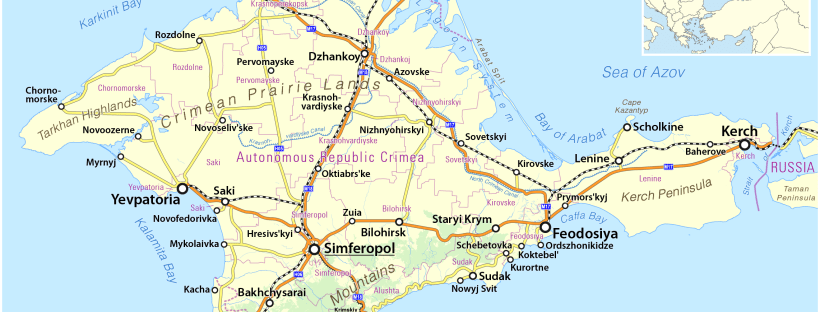
The Crimean Tatars lived in their homeland in the Crimea until 18 May 1944.
*
In 1783 the Crimean State was seized by the Russian Empire.
By 1917, of 4 million Crimean Tatars 120,000 remained.
In 1921 the Crimea became part of the RSFSR with the rights of an autonomous republic. In 1934 the Crimean Autonomous Republic was awarded the Order of Lenin for its economic successes.
*
WARTIME
In 1941 the Crimea was occupied by Hitler’s troops.
In 1942 the native population of the Crimea (the Crimean Tatars) was designated for destruction. The operation of destroying the Crimean Tatars was postponed in view of the unfavourable conditions for the Hitlerites on the war fronts.
In 1944 the Crimea was liberated from the Hitlerites. Soon after liberation the male population of call-up age was mobilized, supposedly to join a field army, but soon found itself in labour camps. And on 18 May 1944 the native population of the Crimea— the Crimean Tatars-was deported to a man from the Crimea. Its property was confiscated.
In the places of forced settlement (reservations) conditions were created for the physical and national dying-out of the people.
As early as 1946, by the day of the publication of the decree of the Supreme Soviet of the USSR, the document accusing the Crimean Tatars of treason in favour of the Hitlerites during the war years, 46.2% of the whole nation had perished.
*
SLANDERERS
In order to conceal these barbarities, unprecedented in their viciousness, a group of slanderers calling themselves historians, writers and poets was knocked together at Crimea Publishers (Krymizdat).
They were under the overall direction of Pavelenko: such men as I. Kozlov, I. Vergasov, A. Perventsev, Degtyarov, Vulf Polkanov, Krupnyakov Nadinsky [1], Chirva, V. Vetlina, Yugov, Shevrov, Saginbayev [2], Vakliabov and so on. A special historical school, devoted to distorting the past and present of the Crimean Tatars, was created.
Hundreds of artistic works and historical essays were published, the total number of published books running to 30 million copies.
The government valued highly the “labour” of the slanderers: A. Perventsev carried off a Stalin prize for his artistic libel Honour from Youth [Chest smolodu].
*
Out of their total population, which reached 238,000 by 1941, the Crimean Tatars provided 52,500 soldiers for the defence of the Homeland; over 40% of these men were awarded orders and medals of the Soviet Union. The services of 11 Crimean Tatar soldiers were distinguished with the lofty title of Hero of the Soviet Union. One of them was decorated with this high distinction on two occasions.
Without listing tens of thousands of facts about evil deeds, it is enough to say that the families of the 11 Heroes of the Soviet Union were deported from the Crimea on 18 May 1944; they are still in exile today. Their property was confiscated.
*
1967 DECREE
The 5 September 1967 decree of the USSR Supreme Soviet politically exculpated the Crimean Tatars. Against the wishes of the people, however, the decree announced that the Crimean Tatars had “put down roots” in their places of settlement: they did not want to return to their Homeland in the Crimea.
Appealing by this letter to progressive humanity, to the UN Committee for the Defence of Civil Rights, and to you personally, Mr Waldheim, we are hoping for, and counting on, your help in resolving our national question.
Our letters and appeals to the Party Central Committee, the USSR Supreme Soviet and the USSR Council of Ministers have brought the people nothing but grief and tears.
We enclose these documents:
- “Incontrovertible Facts about the Life of the Crimean Tatars in the Period 1967 to 1973”.
- The appeal of the Crimean Tatar nation to the 23rd CPSU Congress, March 1966 (CCE 31.10).
- The appeal of the Crimean Tatar nation to the 24th Party Congress [March 1971, CCE 31.12], the Soviet press and all communists. Attached to this appeal are: (a) “A Statement of the Crimean Tatar Nation on the Crimean Question in Connection with the 24th Party Congress”, and (b) “Historical Data”.
- (a) The indictment in the criminal case against Dzheppar Akimov, and b) the verdict.
- Newsletter No. 25, May 1972 (CCE 31.16).
- A protest to the 1st Secretary of the Crimean Regional Committee of the Party.
- To the Politburo of the CPSU Central Committee (CCE 31.17): an inquiry and demands by the Crimean Tatar people concerning their national fate, in connection with the 50th anniversary of the USSR (1972).
(68 signatures)
====================================
NOTES
- Pavel Nadinsky (1894-1961). See CCE 31.13, Note 1.
↩︎ - Author of 1969 book Three Hundred Days Behind Enemy Lines (CCE 18.7).
↩︎
=============================
 A Chronicle of Current Events