This section has mostly been compiled from material in the Chronicle of the Lithuanian Catholic Church [LCC Chronicle] issues 26 (19 March), 27 (28 April) and 28 (29 June).
***
In July 1977 the pre-trial investigation in the case of Vladas Lapienis, arrested in October 1976, came to an end (CCE 43.12, CCE 44.22). His state of health is bad (he is 71 years old). He has asked that no lawyer should be hired on his behalf, as he considers that this could not help him in any way.
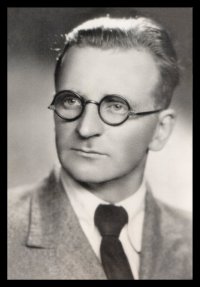
Lapienis
*
Ona Pranskunaite, arrested at the beginning of 1977 (CCE 44.22, CCE 45.10), is also in a weak state of health. KGB officials have visited her relatives, inquiring if she has ever suffered from any nervous illness.
*
In autumn 1976 museum officials from Vilnius visited the cemetery chapel in Gruste. They told the cleaning woman that they wanted to look at the chapel from inside, as an architectural monument. When she opened the door for them, they took seven pictures of the ‘Way of the Cross’ and departed.
*
In May the first issue of yet another samizdat publication Rupintojelis {Man of Sorrows) appeared.
***
Searches and Interrogations
On 10 March 1976 the priest Juozas Zdebskis had his driving licence taken away (CCE 41.3, CCE 44.22).
On 3 May 1976 he had his motor cyclist’s licence taken away. He was subjected to a body search, without a warrant and without any record being made.
In December 1976, he was taken from a car in which he was riding, driven to a police station and subjected to another body search. In answer to his demand for a warrant and a record of the search, he was told that this was not a search.
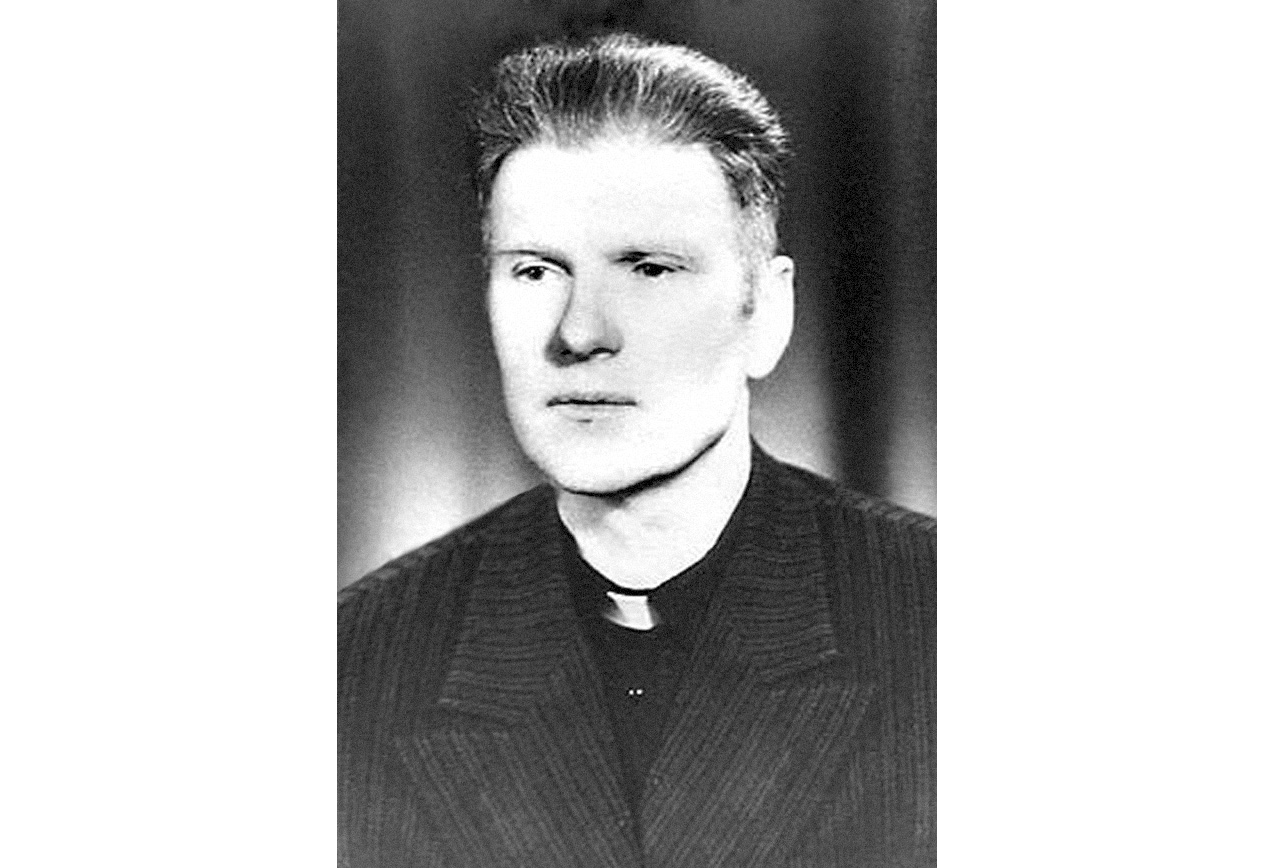
Juozas Zdebskis
(1929-1986)
In the same month, the police twice broke into his house in his absence, without any legal justification.
On 12 July 1977 ten religious believers from Prienai parish appealed to Brezhnev and to the Helsinki Group in a statement praising Zdebskis’s character highly and asking that those responsible for the above actions should be punished and that his driver’s licence should be returned to him.
*
On 7 January 1977, Kazimieras Grinkevicius, a resident of Prienai, was summoned by the State Traffic Inspectorate. From there he was sent to the KGB for interrogation.
He was mainly questioned about his acquaintance Father K. Zilys and about V. Lapienis (CCE 44.22). According to investigator Bankauskas, Grinkevicius once used to drive them both about in his car, but Grinkevicius declared that he did not know Lapienis. Grinkevicius was asked about his acquaintance with other priests, particularly J. Zdebskis, who lives in Prienai. The investigator also asked him about LCC Chronicle. He declared that this publication was inspired by foreign intelligence services and did not believe Grinkevicius, when he said he had not read LCC Chronicle. The investigator told Grinkevicius that in view of his stubbornness he would be questioned in Vilnius.
On 10 January in Vilnius investigator Urbonas asked Grinkevicius if Zilys had given him LCC Chronicle. Urbonas said that if a few thousand Lithuanians were arrested it would be the fault of LCC Chronicle alone. Urbonas threatened Grinkevicius with more severe treatment and also told him he would be exposed when Lapienis and other arrested people began to talk.
*
On 22 February 1977 Father K. Zilys was interrogated in connection with the Lapienis case. On the evening of 18 April unknown persons smashed the side window of Zilys’s parked car and searched it. Nothing was taken.
***
KAUNAS, 19-22 APRIL 1977
The searches and interrogations in Kaunas on 19-22 April were mentioned in CCE 45.10. More detailed information has been provided in LCC Chronicle (27).
On 19 April KGB officials visited the retired teacher Bronius Juska and carried out a search without any warrant. They accused Juska of nationalist propaganda among young people — for example, he had told young people about the battle at Zalgiris (Gruenwald).
On the same day searches were carried out at the homes of Antanas Miklicius, Antanas Patackas, Jonas Repsis and the doctor Povilas Butkevicius. The first two had religious literature, notebooks and tape-recordings confiscated.
At Butkevicius’s home they confiscated LCC Chronicle (25), the Chronicle of Current Events 40, a typewriter, and an article from Ausra 5 which had been typed on it. L. Simutis, who had recently been released from a camp after 22 years’ imprisonment (CCE 44.17-3), arrived during the search. After the search was over, Butkevicius and Simutis were taken away for interrogation.
On the same day Butkevicius children were interrogated.
R. Butkeviciute was called out of a lecture (she is studying at a medical institute) and interrogated, first for three hours at the institute, then for another six hours at KGB headquarters. She was accused of taking part in a reception for Simutis organised on 20 February in Vidukle, and also in a meeting to commemorate the battle of Zalgiris. She was threatened with expulsion from the institute.
V. Butkevicius was interrogated about his participation in ‘illegal meetings’ and excursions. The next day, Ona Butkeviciene, who works as a schoolteacher, was interrogated.
On 19 and 20 April a number of students and a schoolgirl were questioned for a long time about their friendship with the Butkevicius family and their meeting with Simutis. The interrogations were accompanied by threats and insults.
*
On 20 April Viktor Sneska was interrogated for seven hours.
Threats were made that his career in sport would be brought to an end, as well as his trips abroad; they tried to get information out of him about his acquaintances, about the distribution of LCC Chronicle and Ausra (they also accused him of being directly involved in this) and about a group studying Lithuanian history.
*
Povilas Martinaitis, a lecturer at the Polytechnic Institute, was assured that a criminal case would be initiated against him. During interrogation he was accused of “nationalist outbursts” at evening parties.
During her interrogation, Danute Borutiene, a diploma student at the Polytechnic Institute, was given a list of people who participated in ‘illegal meetings’ and was asked to write it out as part of her own evidence.
*
On 21 April Sarunas Boruta was interrogated. He was also accused of distributing Ausra, LCC Chronicle, and nationalist propaganda, particularly during walking-tours. He was asked to give evidence fearlessly, even if only about those who participated in the hikes — after all, no-one was arrested for touring the country.
Juozas Dapkevicius was also interrogated about walking-tours and other young people’s gatherings. On 27 April he was summoned for questioning again.
*
On 22 April in Kulautava a search was carried out at the home of Stase Jasiunaite.
The following were confiscated: two typewritten pamphlets about Romas Kalanta (CCE 26.11, CCE 27.3,) and about the liquidation of Lithuanian independence, the manuscript of an autobiography (620 typewritten pages and some exercise books) and other manuscripts. Major Zarskis, who was in charge of the search, asked Miss Jasiunaite if she would get royalties for her works, asserting that she was going to publish them in Draugas (a Lithuanian journal printed in Chicago).
After the search Jasiunaite was taken to KGB headquarters for interrogation.
***
Persecution of Religious Believers
In November 1976 the Rasieniai District Administrative Commission fined Father A. Svarinskas 50 roubles and Father J. Survilla 30 roubles for organising a procession to the cemetery on All Souls Day.
Svarinskas appealed against the commission’s decision to the people’s court. On 20 December his appeal was rejected; the parishioners were not allowed to be present at the court hearing.
*
Father A. Jokubauskas appealed to the Lithuanian SSR Procurator’s Office against the fine imposed on him and the decision of the people’s court concerning this fine (CCE 44.22). The Procurator’s Office replied that he had been rightly fined. Nevertheless, in April the fine was revoked. The reason given: the time for collecting it had run out.
*
In the village of Levaniskiu the newly-consecrated priest M. Savickas wanted to put up a tent by his allotment on the river bank for the celebration of his first mass. The chairman of the collective farm forbade this. Savickas complained to K. Tumenas, the Commissioner of the Council for Religious Affairs. Soon afterwards the collective farm chairman took back his refusal, saying ‘If it weren’t for foreign opinion, we’d have hanged you all by now!’
*
In February the Sakiai District Administrative Commission demanded an explanation from Father P. Raciunas — why he allowed an unregistered priest to serve in his church? LCC Chronicle 27 includes a statement by Raciunas explaining in detail why he had not broken the *law on cults’; it was rather the authorities who had broken it, by demanding an explanation from him.
*
In the town of Siauliai Father D. Mazanavicius was allowed to ring the bells for Easter at the Church of St Peter and St Paul, on condition that he did not allow children to serve at the altar.
*
On 17 March the Radviliskis District Administrative Commission ‘warned’ Father Vaicekauskas about the fact that children visited him at home.
*
In the village of Zemaitkiemis the eighth-class schoolgirl Roma Slaitaite had her good-conduct mark lowered for taking part in a church procession.
In the village of Kirdeikiai, the sixth-class schoolboys Rimas Kavarskas and Vidas Buividis had their good conduct marks lowered for serving as altar-boys in church. Rimas’s mother, who works as the school cleaner, is being threatened with dismissal.
In the village school at Misuniai, clothes were given out as presents on the eve of the October anniversary. The teacher Mrs Urboniene told three orphans from the Ramonaiciai family:
“If you join the Pioneers, you’ll get your dinner and some presents, but if not — we won’t give you anything, because we give presents only to Soviet children.”’ The children refused.
In the village school at Vystitis, the Pioneer leader Zina Daugeliene, on getting to know that Rimas Vasiliauskas served as an altar-boy in church, began to drag him about by the hair, shouting
“Don’t you know that a Pioneer mustn’t go to church?”
*
In 1975 in Mazeikiai, the teachers Mr and Mrs Skiparis were sacked because their son entered the seminary. For the same reason their daughter was sacked from her job as a kindergarten teacher.
In Mindunai the teacher A. Skiebas was sacked in 1975 for praying at a funeral.
I. Sironiene, a teacher at Valkininkai boarding school, was discovered to be a believer and in February 1976, six months before her pension was due, she was forced to write out her resignation.
In the town of Telsiai Aldona Seduikiene was refused employment in a children’s music school in August 1976 because she and her husband are believers.
In the Ukmerge district the workshop foreman A. Morkunas was relieved of his position as chairman of the local trade union committee for taking part in an Easter Mass in 1976, and was moved from first to last place on the waiting list for apartments.
In Kabeliai Victor Shcherbakov, secretary of the state farm Party organisation, told farm worker Birute Kibirkstiene, “Make your choice — the church or your work!” Not long before, he had suggested that she join the Party.
*
In December 1976 J. Urbonas, deputy chairman of the Vilkaviskis district soviet executive committee, demanded that before every service in the Slabadai chapel, the believers should apply to the committee for permission. In March 1977 he allowed services on only two Sundays. In addition, Urbonas refuses to confirm the composition of the parish council.
Father Tamkevicius also has a complaint against Urbonas: Urbonas reprimanded him for ringing the church bell, for allowing small boys to serve at the altar, for leading a funeral procession on foot, and for allowing another priest to say mass in his church.
*
In 1976, 25 priests died in Lithuania. In the same year nine men graduated from Kaunas seminary.
*
In January 1977 P. Makartsev, a representative of the Council for Religious Affairs, warned Party officials in Lithuania that they must behave more politely to priests. He said that State policy towards the Church was being relaxed.
The town authorities in Siauliai have allowed the Church of St Peter and St Paul to ring its bells for the first time in twenty years (see above also).
At the end of January 1977 the main part of a memorial service for Archbishop Matulevicius was conducted by the banished Bishop Sladkevicius.
Bishop Sladkevicius
In many parishes priests are teaching the children the catechism, and the authorities content themselves with fines.
In recent years the intake at Kaunas seminary has risen from 5 to 19 persons per year.
In view of these facts LCC Chronicle 27 includes an article “New Winds or New Tricks?”
==================================
NOTES
English translations of the Lithuanian Chronicle were published as booklets by the Lithuanian Roman Catholic Priests’ League of America, New York.
Later many language versions of this central underground record (1972-1988) of Lithuania’s struggle to regain independence were put online in German, Italian, Spanish and Russian. For the English version, see https://lkbkronika.lt/index.php/en/ .
*

