NINE ITEMS
[1]
PODRABINEK, FATHER & SON
TARUSA-MOSCOW. Surveillance of people visiting Kronid Lyubarsky and Nina Strokatova continues (CCE 45.12). On 29 May 1977, Pinkhos Abramovich PODRABINEK and his son Kirill, father and brother (respectively) of Alexander Podrabinek, were detained at the Kursk Railway station (Moscow) on their return from Tarusa.
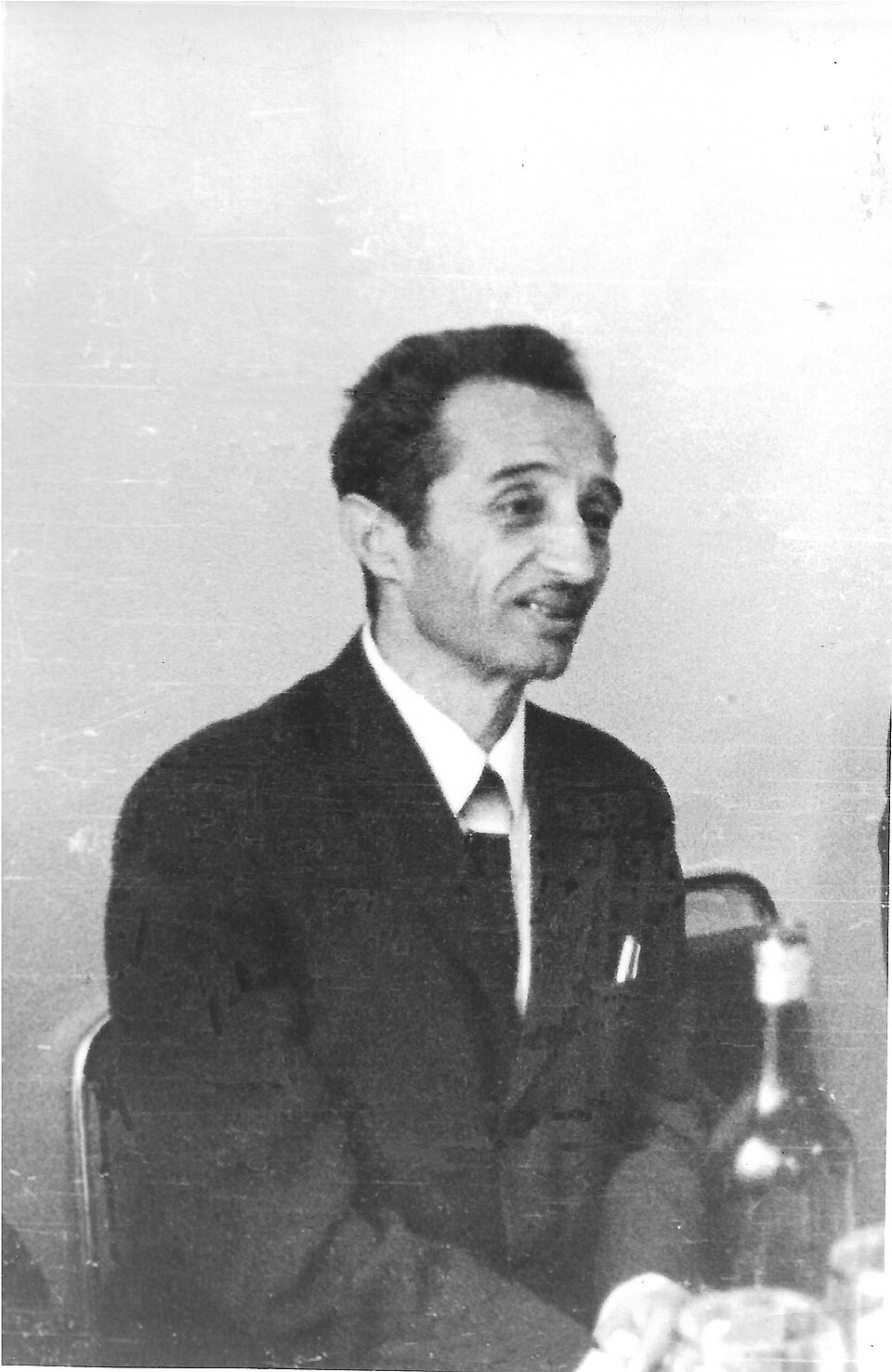
Pinkhos Podrabinek
At the police office on the railway station, they were told that they were suspected of carrying narcotics and body searches were carried out. An outline for a scientific samizdat journal was confiscated.
*
[2]
NEKIPELOV
VLADIMIR REGION. On 27 May 1977, in Moscow, a search was carried out at the home of Felix Serebrov, a member of the Working Commission. During the search, prescriptions for cough tablets, made out by Victor Nekipelov, were found and confiscated: Nekipelov, a pharmacist with a higher education, is at present working in a hospital.
On 3 June 1977, Nekipelov was visited at work (Kameshkovo, Vladimir Region) by Investigator Malyuta of the Krasnopresnensky district internal affairs office (Moscow). Malyuta was accompanied by: an unknown man in civilian clothes from Moscow, who refused to show his identity documents (neither did his name figure in the search record); two officials of the Vladimir city Internal Affairs Department (UVD); and four local policemen and two //women. Malyuta showed Nekipelov a warrant authorising a search to confiscate prescriptions and prescription forms.
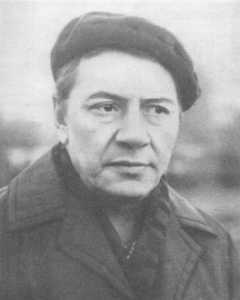
NEKIPELOV Victor Alexandrovich
[1928-1989]
When Malyuta’s Moscow companion refused to show his identity documents, Nekipelov stated that he would not allow the search. On Malyuta’s orders, the policemen seized Nekipelov and took him to the police station. There he was subjected to a body search, his spectacles, braces and shoelaces were taken away, and he was put in a detention cell. Nekipelov was detained for five hours.
During this time his flat was searched. The following were confiscated:
- two issues of the Chronicle (41 and 42, August & October 1976),
- a list of Ukrainian political prisoners in the Mordovian Camps,
- a tamizdat article “Socialist Opposition in Czechoslovakia”; and
- samizdat memoirs of Pyotr Yakir [1].
*
At the police-station two blank prescription forms and the text of a labour-camp song were confiscated from Nekipelov. A search was also carried out at Nekipelov’s place of work, although this was not covered by the warrant. The search record did not refer to the search at the hospital.
When the search was over, Nekipelov was taken to court, but the judge, Shulgin, found no basis for prosecution. On 13 June Nekipelov was summoned to the head doctor’s office, where a police official conveyed to him another decision by Shulgin, back-dated to 3 June:
“On 3 June at 12.40 p.m. representatives of the procurator’s office visited Nekipelov at the hospital and showed him a search warrant. He was asked to allow the search to go ahead. Nekipelov refused; in so doing he openly insulted the police, expressing threats against the life and health of the Soviet police and people’s militia and casting aspersions on their honour.
“These actions contravene the Decree of the Praesidium of the USSR Supreme Soviet, 15 February 1962, on increased liability for threats to life …
“A decision has been taken to fine Nekipelov 10 roubles.”
This was the seventh search Nekipelov had undergone.
*
[3]
POPOVSKY
MOSCOW. On 3 June 1977, KGB Captain Sergei Bogachev and Yelena Mashoshina, investigator for Moscow Kuntsevo district’s UVD, visited the writer Mark Popovsky (CCE 45.17, CCE 46.19) with a search warrant.
They were searching for the diaries of Academician Nikolai Vavilov, they stated, which Popovsky had obtained (according to them) from a private individual ten years previously and had not returned. After a four-hour search, instead of the diaries they took away the manuscript of an unpublished book about Vavilov and 15 kilograms of other manuscripts.
*
[4]
GRIMM
MOSCOW. On 14 June 1977, V. Goryacheva complained to the police that Yury Grimm (CCE 11.2), her upstairs neighbour, was making such a noise and stamping about so much that plaster was falling off her ceiling. The police officials who came at her request found nothing against the law and did not even draw up a record.
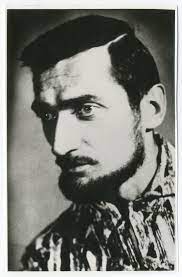
Yury Grimm
(1935-2011)
On 23 June Major V. Ivanov, deputy chief of Police Station No. 1, asked Grimm to come to the police-station for a talk. Goryacheva was already there. Ivanov showed Grimm a police record setting out Goryacheva’s allegations. Grimm was detained and taken to court. Judge Arkhipova of the Moskvoretsky district people’s court decided the ‘case’ in four minutes and, without hearing Grimm’s side, sentenced him to 10 days’ jail.
The same day Grimm protested in a statement to the procurator’s office of the Moskvoretsky district and declared himself on hunger strike for the period of his detention. The procurator refused orally to allow a defence lawyer to appeal against the court’s decision.
Grimm was a political prisoner. Now he is a ‘refusenik’.
*
[5]
KRASNODAR. At the beginning of July 1977 there was a search at the home of Leonid Ivanovich MELNIKOV. A radio receiver, a tape recorder, recordings of “Voice of America” broadcasts, and manuscripts were confiscated. After the search Melnikov was arrested.
*
[6]
ALBREKHT
MOSCOW. On 12 July 1977, Vladimir Albrekht (CCE 44.16, CCE 45.22) was detained under the standard pretext (“Bears a resemblance to . . .”) at Belorusskaya metro station. He was taken to a police station where his brief-case was searched and some manuscripts were confiscated.
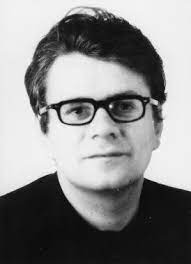
Vladimir Albrekht
Fifteen minutes later, after he had journied from the Belorusskaya to the Water Stadium metro station (Zamoskvoretsky line), Albrekht was again taken off to a police-station and searched. The page of his notebook on which he had written the name of the man who conducted the first search was confiscated.
*
[7]
GRIDASOV
MAGADAN. On 26 May 1977, Victor Gridasov [2] should have been released at the end of a six-month sentence. In April his wife was informed that a new case had been brought against him under Article 190-1 (RSFSR Criminal Code). One of the charges, apparently, concerns an article Gridasov sent to the American newspaper Baltimore Sun.
Interrogations are being conducted in connection with this case.
Gennady Bogolyubov (CCE 40.15 [6], CCE 43.7 [2]) and his wife have been interrogated. Gridasov’s fellow-prisoners in camp have also been questioned.
In Orekhovo-Zuyevo (Moscow Region) Vladimir Stepanovich TYULKOV, a Party member and a worker with 30 years experience, was interrogated. He refused to answer any questions. Tyulkov was suspended from his job but not sacked (He works at the “Respirator” factory.)
*
[8]
KRASNODAR REGION. On 27 November 1976, during a search of passengers’ luggage at Krasnodar airport, carried out with the aim of confiscating explosives and other such substances. A manuscript entitled “My Odyssey” was confiscated from V.M. Pavlov (CCE 43.6; see also “The Orlov Case” CCE 46.5-1).
When he complained, V.A. Kalensky, senior assistant to the procurator of Krasnodar Region, told him on 16 February 1977 that his manuscript had been “found to be undesirable” by the Krasnodar Region Literary Department and had “therefore been confiscated”.
Pavlov has twice before served a term under Article 190-1 (RSFSR Criminal Code).
*
[9]
SWEDISH PENTECOSTALS
On S July 1977, the Swedes B. Sareld and E. Engstrom were detained at the border, as they left the USSR in their car. A few hundred letters from Pentecostal believers, asking for invitations to emigrate, were confiscated from them. Because of this the Belorussian KGB initiated Criminal Case 186.
*
Pentecostal believers, particularly from the town of Valga (Estonian SSR), started to be summoned for interrogation.
On 18 July G.I. Petrenko, a Pentecostal from Latvia, was summoned for interrogation to KGB headquarters in Brest (171,000 pop. 1979; Belorussian SSR). He was shown his letter to relatives in Canada, asking for an invitation. The investigator asked how the arrested Swedes had got hold of it. He told Petrenko that the Swedes were accused of smuggling contraband and that they had been collecting information about military objectives.
On 8 August 1977, in connection with this case a search was carried out at the home of Anatoly Vlasov (Moscow). A Bible, tape-recorder, tapes with religious recordings, and a hectograph copying machine were confiscated. Afterwards Vlasov was interrogated for two days by KGB First Lieutenant V.S. Gutsev.
The Swedes themselves are also Pentecostals. Perhaps ‘contraband’ refers to the Bibles which they brought into the USSR.
*
See also in this issue CCE No. 46:
“Helsinki Groups under Investigation”, “Events in Lithuania”, “Persecution of Believers”, and “The Right to Leave ”.
========================================
NOTES
- Pyotr Yakir wrote and published two volumes of memoirs. One was translated and published abroad: A Childhood in Prison, London: Macmillan, 1972.
↩︎ - On Gridasov, see CCE 40.15 [7], CCE 43.7 [2], CCE 44.17-1 and Name Index.
↩︎
=============================

