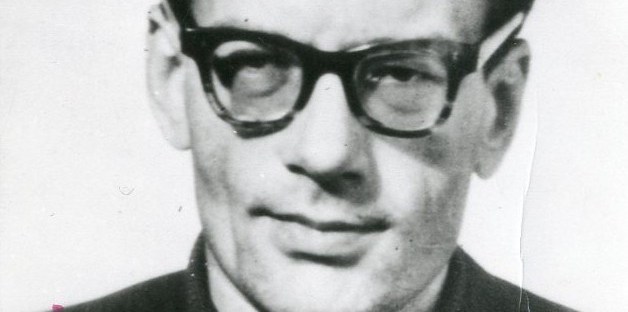
[1]
LYUBARSKY
On 10 May 1977, Kronid Lyubarsky sent a statement (CCE 44.18) to the chairman of the Tarusa town soviet executive committee:
“In January of this year I was forcibly and unlawfully sent to live in Tarusa despite the fact that exile was not part of my sentence. All my complaints and statements about the illegality of this act have been ignored by official persons. Neither did anyone pay attention to my warning that I would not be able to find work for myself in Tarusa.
“My expectations have been fulfilled. I am an astronomer by profession (Moscow University diploma no. 653114), and have the academic degree of a Candidate of Science (diploma no. 006505). The only post in Tarusa where I could work in my profession is that of astronomy teacher at a secondary school. However, to my application to the director of the Tarusa district education department on this matter, I received a refusal. I have been able to find no other post in Tarusa even remotely connected with my profession …
“… I ask you in accordance with point 3 of the RSFSR Supreme Soviet’s Resolution of 7 August 1975 (d. no. 6-24), ‘On the procedure for applying Article 209 of the RSRSR Criminal Code’, to provide me with work, ‘taking into account my professional qualifications’.
[This unpublished resolution can be read in CCE 37.15 [3], Chronicle.]
“If you are not in a position to offer me work corresponding to my professional qualifications then the following alternatives are open to you:
“1. To pay me unemployment benefit.
“2. To consider putting me in the invalid category –taking into account that I have a receded stomach and duodenum, sciatica in acute form, high blood pressure with signs of a crisis condition, severe short-sightedness and a number of other illnesses.
“3. To allow me to register at the District Finance Department for payment of taxes as a private teacher and translator.”
*
The chairman of the town executive committee invited Lyubarsky to see him.
He would be permitted to register as a teacher, the chairman told him, and asked Lyubarsky not to make any further mention of unemployment benefit. At the police station, however, Lyubarsky was told that work as a private teacher “didn’t count”: he was offered a job as cashier in a savings bank.
Each time the police come to Lyubarsky’s home every day after 8 pm to check whether he is there, they try to gain entrance to the house. Lyubarsky shows them his ‘presence’, but does not let them in. The police have threatened to draw up a report on ‘resistance’.
*
Those who travel for the first time to Tarusa as guests of Lyubarsky or Strokatova are ‘checked out’ on the way back.
- Pyotr Vins and Miroslav Marinovich were ‘checked out’ at the railway station in Serpukhov (28 March; see CCE 45.6).
- Ludmila Olkhova was ‘checked out’ in Moscow: when she got off the Serpukhov-Moscow electric train at the Kursk railway station she was suddenly seized and dragged into the station’s police station, where all they did was check her documents (12 April).
- Mykhaylo Osadchy was ‘checked out’ in Moscow on the platform of the Belorussky railway station when he had already travelled by metro from the Kursk to the Belorussky station (24 April).
- Vladimir Sazonov was ‘checked out’ when, having returned to Moscow by excursion bus, he was walking up to his apartment building.
*
[2]
OVSIYENKO
On 31 March 1977 Vasyl Ovsiyenko (CCE 44.17-3) submitted a statement to the head of the district education department in Radomyshl (Zhitomir Region). He asked to be given, within the Region — he is under surveillance — work corresponding to his professional qualifications. He is a teacher of Ukrainian language and literature. The reply was that there were no vacancies.
On 8 April Ovsiyenko sent a similar statement to the UkSSR Minister of Enlightenment [1] and the Procurator of the Ukrainian SSR. In these statements he wrote that KGB officials Boroda (Mordovian camps), Stetsenko (Kiev), and Privalyuk (Zhitomir) had told him that until he changed his views he would not be allowed to work in his profession. “This is in effect a ban on me practising my profession because of my views,” Ovsiyenko wrote.
Since 18 April, under the threat of criminal prosecution for ‘idleness’, Ovsienko has begun work as an artist at a collective farm (wage, 70 roubles per month).
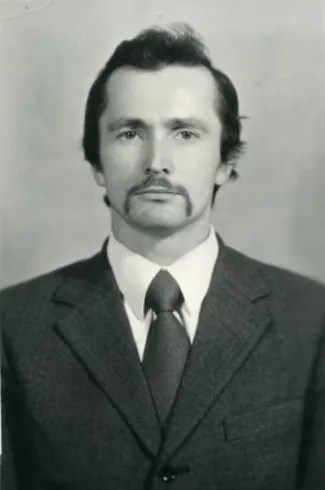
Vasyl Ovsienko (1949-2023)
On 13 May the Zhitomir Region procurator replied to Ovsiyenko’s statement to the Procurator’s Office of the Ukrainian SSR:
“With reference to your being provided with work corresponding to your profession I should explain that, according to Article 41, point 3 of the Code of Labour Laws, the committing of an immoral action by an employee engaged in an educative function (and you have committed such a crime) is not compatible with continuance of the said work. Therefore, the Procurator’s Office finds no grounds for raising the question of offering you work corresponding to your profession; besides this, you are working at the present time.”
On 17 May an official of the Zhitomir Region education department called on Ovsiyenko and again told him that there were no vacancies in the district.
*
[3]
PESTOV & UZLOV
Victor Pestov, released two years ago in May 1975 (CCE 33.6-3, CCE 41.5), is working as a metal-worker in a factory in Sverdlovsk.
At the beginning of April 1977, he was summoned to the office of the Party organization. There he was told by KGB official Gubernsky:
“I have heard that you plan to go on holiday on 24 April. If you do so you will be put under surveillance. Go after Belgrade [conference, October 1977].”
*
On 7 May 1977 his fellow-accused Vladislav Uzlov (CCE 33.6-3), who had been set free back in 1973 and had come from Serov (Sverdlovsk Region) to Sverdlovsk on holiday, was detained as he came out of a cinema.
Uzlov was taken to the KGB. There he was told that if he were now to leave the Urals area a criminal case would be instigated against him by the Department to Combat Theft of Socialist Property (Uzlov is a fitter). “After Belgrade, by all means,” they told him.
*
[4]
At the end of March 1977 surveillance of Ivan Kandyba ended [2].
============================================
NOTES
- As soon as the Bolsheviks seized power, a body (run by Anatoly Lunacharsky, 1917-1929), was created to oversee all types and levels of educational institution.
It was termed the People’s Commissariat of Enlightenment [prosveshchenie]. At the federal and republican levels this name was retained into the 1980s.
↩︎ - On Kandyba, see CCE 42.10, CCE 43.6, CCE 44.5, CCE 45.6 and Name Index.
↩︎
==================================
 A Chronicle of Current Events