9 ITEMS
[1]
TARUSA (Kaluga Region). On 3 August Judge Karpezhnikov again (CCE 46.11) fined Nina Strokata 20 roubles, for not allowing the policeman Yu. Belov, carrying out administrative surveillance on her, to enter her house.
In July or August Karpezhnikov received a Party reprimand for giving ‘soft sentences’. On 19 August, when Karpezhnikov was on holiday, the routine police report on ‘disobedience’ was examined by a judge from the neighbouring (Ferzikovo) district, who refused to impose a fine on Strokata.
At the beginning of November Strokata was issued a formal ‘warning’ (in accordance with Decree of 25 December 1972), as a result of a search carried out at her home in connection with the Ginzburg case (CCE 44.3).
*
[2]
UZHGOROD (West Ukraine). Pavel Kampov (CCE 45.13 [5]) has still not found work.
He applied both to the university, where he worked before his arrest, and to the regional department of education, and to many other places (the shoe factory, the industrial clothing factory, the gas appliances factory, the fire-station, the regional book store, the Voluntary Society assisting the Army, Navy and Air Force) and was refused employment everywhere.
Voloshko, director of teaching enterprise No. 1, told Kampov: “The KGB has forbidden anyone to employ you.”
*
[3]
ALEXANDRIA (Kirovograd Region). On 2 August the surveillance order on Matviyuk (CCE 42.4-4) was cancelled.
*
[4]
KANDYBA
LVOV (West Ukraine). On 23 September, two days after his return from a visit to Moscow, Ivan Alexeyevich KANDYBA (CCE 45.12) was summoned to the Lvov Region Procurator’s Office.
There, after voicing various opinions about Kandyba’s behaviour, the deputy regional procurator Rudenko (brother of the USSR Procurator-General), and General Poluden, head of the Regional KGB administration, suggested that he should express his repentance in the press and on television. In return, he was promised permission to live in Lvov and work in his own specialized field (Kandyba is a lawyer).
Kandyba refused: a surveillance order on him was immediately renewed, to last for eight months.
The reasons given for this order were:
- (1) Kandyba had consistently refused to work;
- (2) he had not lived in the place where he was registered;
- (3) he had been travelling round the districts, towns and cities of the USSR.
The surveillance restrictions were stricter than before (he had to be at home by 8 pm every evening.) Kandyba was taken straight from the procurator’s office to the village of Pustomyty, where he is registered.
Kandyba appealed against the new surveillance order, pointing out that the first charge was false — since June 1977 he had constantly been searching for work in Lvov; the second and third charges were without foundation, as the fact that he had ‘travelled around’ did not constitute “an anti-social way of life”, as stated in the ‘Surveillance Order’. Obviously, Kandyba declared, the authorities did not consider him a free citizen.
In Pustomyty, Kandyba found work and lodgings only with difficulty (his former room had already been taken). He is presently working as a stoker in a school for 75 roubles a month and rents a room for 25 roubles.
*
[5]
ZHITOMIR REGION (central Ukraine). On 5 September 1977 Vasyl Ovsiyenko (CCE 44.17-3), living in the village of Lenino, had his surveillance order prolonged.
The following reasons were given for prolonging it: (1) Ovsiyenko was maintaining links with “anti-Soviet elements in places of imprisonment”; (2) he was connected with Matusevich and Marinovich; (3) he had influenced his niece Lyudmila Ryabukha to give ‘knowingly false testimony’ in the case of Matusevich and Marinovich (see “The Matusevich-Marinovich Case” in the “Helsinki Groups under Investigation” in this issue, CCE 47.3-3).
On 23 September Ovsiyenko wrote a statement to the Procurator of the Ukrainian SSR. In it he objects in detail to the reply he received from the procurator of Zhitomir Region in answer to his letter to the procurator of the Ukrainian SSR on 8 April 1977 (CCE 45.12 [2]); he describes the conditions of surveillance and the threats under which he now lives, and protests with detailed arguments against the prolongation of the surveillance.
*
[6]
KIEV. In June 1977 Nikolai Gorbal (CCE 33.6-2 [28], CCE 44.19) ended a two-year term of exile after five years in the camps. After his marriage he was given a residence permit in Kiev with his wife.
While the permit was being made out, the police chief of Kiev’s Pechorsky district spoke to Gorbal (Ukr. Horbal) very rudely. Horbal protested: “Why are you behaving to me like this? I have not robbed or killed anyone. I served my sentence for writing a poem.” The police chief replied:
“Robbing and killing — that’s nothing. Look, we’ve got a whole list of those cases hanging over there. But you’re the only offender against the State that we have in Pechorsky district.”
On 4 December 1977 Horbal was summoned to the police station to have his finger-prints taken.
*
[7]
Nadezhda SVETLICHNAYA
KIEV. After obtaining a residence permit under administrative surveillance in Kiev, Nadezhda SVETLICHNAYA (CCE 46.11) tried to find work in her own special field (“Ukrainian philology, teaching Ukrainian language and literature”), or at least some job connected with her speciality.
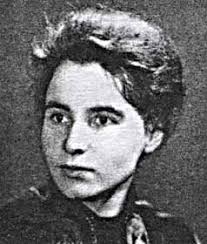
Nadiya Svitlychna (1939-2006)
She was refused work everywhere.
In particular, she was refused a job (“because of her conviction”) as corrector of translations from Russian into Ukrainian at RATAU, the Ukrainian telegraph agency, where she had applied in answer to a newspaper advertisement.
A representative of the district soviet executive committee told Svetlichnaya that she could not work in her specialized field, as she could “creep into the ideological pocket of the State”, but that perhaps she would be allowed to work as a teacher in an infants school, where the children “are still little and don’t understand ideology”. At certain workplaces — for example, as an embroider in a souvenir factory — she was refused work because she had higher education.
*
After being questioned in connection with the cases of Rudenko, Marinovich, Matusevich and Snegiryov, Svetlichnaya began to be summoned in November by the KGB. They wanted to have ‘chats’ about matters in her own dossier: when she refused to come, they threatened to use force.
She was shown her own “maliciously libellous” letters to the Central Committee, to the Ukrainian Helsinki Group and to the Presidium of the Supreme Soviet about her renunciation of Soviet citizenship. Also her translation of the Ukrainian Helsinki Group’s Memorandum No. 2: “authorship and direct participation”.
At these ‘chats’ Svetlichnaya was charged with disseminating these documents, organizing ‘meetings’ at the grave of the artist Alla Horska (Gorskaya); setting up Christmas carol groups and exhibitions of embroidery; and urging young people to commit anti-Soviet activities (particularly Marinovich and Matusevich).
*
Another accusation was that she was bringing up her son incorrectly. He is now seven years old.
She carried on undesirable conversations in front of him, brought him with her to interrogations, took him with her on visits to her brother Ivan Svetlichny in a camp, and travelled to the trial of Rudenko and Tykhy with him. All this, according to the KGB officials, could lead to Svetlichnaya’s son being taken away from her and educated by the State.
*
The ‘chats’ with Svetlichnaya were conducted by Lipovitsky, Investigator from the republican KGB, and security official Grinchuk. At the end of November 1977, they told her that she would soon be informed of the end result of these ‘chats’, and that perhaps she would be facing a charge under Article 62, pt. 2 (UkSSR Criminal Code = Article 70, RSFSR Code).
In November Svetlichnaya was also tried twice for “infringing surveillance regulations”. As the living conditions were not sufficiently good at the place where she was registered, she had gone to live at the home of her brother’s wife. The judge fined her on both occasions.
Three (or more) invitations, sent to Nadezhda Svetlichnaya from abroad, have not been delivered to her.
*
[8]
CHERNIGOV. In a letter to the Presidium of the Supreme Soviet on 24 August 1977, Lev Lukyanenko, a member of the Ukrainian Helsinki Group, describes the conditions he had to live in after his release from a camp (CCE 39.2-2, CCE 43.7 [10]).
He faced administrative surveillance, which in his case could continue throughout his life, according to Soviet law; perusal of his letters, bugged telephone conversations; the impossibility of working in his own field (Lukyanenko is a lawyer). There was a constant threat of his being arrested again. The letter ends as follows (translation from Ukrainian):
“The prospect of working all my life as an electrician and of gazing at my own homeland only from within the borders of one city, Chernigov, and of being imprisoned once more in addition, is not satisfactory to me.
“I ask you: allow me to emigrate from the Soviet Union and reside permanently outside its borders.”
*
[9]
GORKY. On 2 October 1977 the administrative surveillance of Vladlen Pavlenkov was lifted (CCE 42.4-4).
On 3 October, because his place of work was transferred from one organization to another, he was sacked from his job as a boiler-maker. “I don’t need any dissidents at the power-station,” said the engineer in charge, “they might start poisoning the water-supply.”
============================
 A Chronicle of Current Events