- 2-1 (1-4). 1. Case No. 46012; 2. The Journal Poiski (Searches); 3. The Journal Obshchina (Community) and 4. The Arrest of Vladimir Poresh(Leningrad)
- 2-2 (5-9). 5. Igor Guberman; 6. Boris Zubakhin; 7. Enn Tarto (Tartu); 8. Members of FIAWP Council of Representatives; 9. A. Voloshanovich and M. Kovner
*
(5-9)
5. The Guberman Case
On 13 August 1979, Igor Guberman [1] was summoned as a witness to the town of Dmitrov (Moscow Region) in a case concerning the theft of icons.
In Dmitrov he was arrested and taken back to Moscow for a search of his apartment during which three icons were confiscated. Guberman was charged under Article 208, part 3 (RSFSR Criminal Code: “the acquisition or sale of property obtained by deliberately criminal means”). Investigator G.F. Nikitina is conducting the case.
On 14 and 16 August 1979, two further searches were conducted at Guberman’s home during which notebooks, papers and his entire collection of icons and church objects were confiscated.
Guberman was called in for a chat in April, during which he had been asked to write ‘character sketches’ of people working on the samizdat journal Jews in the USSR. He refused. He was then threatened with reprisals in the form of criminal prosecution and told that it would not be difficult to find grounds, since he collected icons. The request was repeated sometime later; Guberman again refused to cooperate with the KGB.
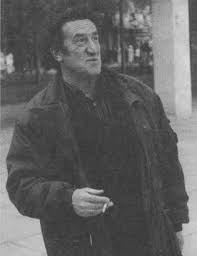
Igor M. Guberman, b. 1936
A week before Guberman’s arrest he was informed by telephone that permission had been granted for him to emigrate from the USSR. He was asked if he could be ready in three weeks. He said that he could. “Then I needn’t worry about you,” said the person he was talking to.
Igor Mironovich GUBERMAN is a writer, author of the books The Third Triumvirate, The Miracles and Tragedies of the Black Box and Bekhterev.
*
Searches have taken place in connection with the Guberman case. Precious objects, the journal Tarbut and other articles of Jewish culture were confiscated from the home of Ts. Raitburd during two searches in September. On 25 September 1979, documents and materials unrelated to the case of buying stolen icons were taken from Victor Brailovsky (CCE 52.4 [5]), an editor of the journal Jews in the USSR.
On 11 October 1979, a search took place at the home of Tatyana Bayeva.
Sixteen ‘icons and antiques’ were taken. On 16 October, Investigator Nikitina interrogated Bayeva, who was threatened with prosecution as an ‘accomplice’. The next day a face-to-face meeting was arranged for her with the arrested thief Gridin. Five icons confiscated from Bayeva were produced. Gridin stated he had stolen them a year ago from empty houses in the suburbs of Dmitrov and then sold to Guberman. The indignant Bayeva refused to participate in the investigation.
In statements to the Procurator of Dmitrov, V.I. Deryabin, and the RSFSR Procurator, Bayeva wrote that she had proof (photographs and witnesses testimony) that everything taken from her had been in her house for many years. She listed the violations of procedure perpetrated by the investigators during the search, interrogation and face-to-face confrontation and demanded protection from the trumped-up charges and the return of the confiscated articles. Bayeva expressed her opinion that the case against Guberman had been “fabricated with the help of false testimony from the criminal N.V. Gridin.”
A reply arrived on 5 November 1979. “There were no violations of the laws on criminal procedure,” it said, “during the investigation of Case No. 16038 concerning the charge against Guberman and others.”
*
6. The Zubakhin Case
On 5 October 1979, Boris Zubakhin (b. 1951) was arrested in Kuibyshev (Volga Okrug).
*
In 1972, Zubakhin became a student at the extramural department of Leningrad University’s Psychology Faculty. On August 1977, during the press discussion of the draft USSR Constitution (cf. CCE 46.18), Zubakhin sent a letter to a Moscow newspaper containing comments, suggestions and questions on the draft. He pointed out the contradiction, for example, between Article 2, which maintains that “All power in the USSR belongs to the people”, and Article 6, which states that the CPSU is “the leading and directing force in Soviet society and the nucleus of its political system”. He pointed out the limitations of political freedoms, stipulating the relevant articles, and assessed Article 52 as an infringement of believers rights. He put forward a number of suggestions aimed at democratizing the Soviet system.
In 1978, the theme of Zubakhin’s graduation essay was not approved and he was refused permission to conduct sociological research on the topic. He was expelled from Leningrad University after the fifth year. From October 1978 to January 1979, Zubakhin lived in Leningrad and was a registered inhabitant of the city, working for a local housing department. Then he resigned and lost the right to live in Leningrad. On 15 June 1979, he moved to Kuibyshev and lived in the flats of his wife and grandmother; in August he began to live in a tent on an island in the river.
*
At the end of August 1979, a policeman came to the island and took Zubakhin to the Krasnoglinsky district internal affairs department to “establish his identity”. On 4 September 1979, he was again taken to the district internal affairs department and warned that he faced a criminal charge under Article 209 (RSFSR Criminal Code: “leading a parasitical existence”). There Zubakhin was told that he had a month to find work. He could not, however, do this, because he was not registered. In the middle of September, he was fined for living for a long period without being registered.
On 5 October 1979, his grandmother’s flat was searched. Zubakhin’s papers, books published in the USSR and abroad, and samizdat were confiscated. Several hours later he himself was arrested. He was charged under Article 209 of the RSFSR Criminal Code (“leading a parasitic way of life”).
On 12-14 October 1979, in connection with the papers confiscated from Zubakhin, KGB officials interrogated the following: O.M. Mukhina, a teacher of Russian Language and Literature at School No. 39; her father (an engineer); S. Eryshev, a university student; G. Konstantinov, a witness in the Bebko case (CCE 53.12); university graduate A. Kolotilin and his wife T. Kolotilina.
On 10 October 1979, Zubakhin’s wife Olga Zubakhina submitted a statement to the Kuibyshev Region Procurator’s office asking them to find an alternative punishment for her husband (1980 trial, CCE 56.12 [2]). On receiving a categorical refusal, she submitted another statement on 30 October: Zubakhin was being kept in custody, she pointed out, without consideration of the seriousness of the charge or the family situation of the accused. The Zubakhins have a three-year-old son.
*
7. The Interrogation of Tarto
On 12 September 1979, Enn Tarto [2] was summoned to the Procurator’s office in Tartu. There Tarto was interrogated about a collective letter on the subject of the 40th anniversary of the Soviet-German Pact (see CCE 54.23-1).
Tarto refused to give any evidence.
*
8. Persecution of the FIAWP Council Members
During the night of 3-4 August 1979, two policemen and seven men in civilian clothes broke down the door and entered the flat of Vsevolod Kuvakin (CCE 48.18, CCE 51.20). There they detained Nikolai Nikitin, Vladimir Borisov and Albina Yakoreva, members of the Council of Representatives of FIAWP (The Free Inter-Trade Association of Working People). The detainees were taken to Police Station 101. (See “The Trial of Nikitin”, CCE 54.12).
*
On the morning of 4 August, Borisov’s wife Irina Kaplun was summoned to the same police station. When Borisov and Kaplun attempted to approach one another the policeman on duty pushed Kaplun away roughly. She was in her eighth month of pregnancy. Borisov declared a hunger-strike from the moment of his arrest and demanded to see the Procurator. His demand was rejected.
On 6 August 1979, a judge sentenced Borisov and Yakoreva to 15 days in jail for “resisting police officials” (their refusal to open the door). Kaplun was again pushed violently by a policeman during the trial: she went into labour prematurely and had to be hospitalized. On 7 August Yakoreva became ill and had to be taken to hospital by ambulance.
*
On 30 September 1979, Vladimir Borisov, Albina Yakoreva and Yevgeny B. Nikolayev were detained on a street near Nikolayev’s home in Moscow.
They were there for a meeting of the FIAWP Council of Representatives (CCE 51.19-2). Three men in civilian clothes and one policeman, without previously showing them any documents, took them to Police Station 137. On the way there, Nikolayev shouted to passers-by that the police and KGB were detaining innocent citizens, and he asked someone to tell his wife. Some person carried out his request. Soon Nikolayev’s wife T. Zaochnaya and her son — later followed by Vsevolod Kuvakin, Valeria Novodvorskaya and Ludmila Agapova — appeared at the station.
Borisov and Yakoreva were detained for three hours, and released after they had signed a statement that they would return to Leningrad, their city of registration. Half-an-hour later the local duty psychiatrist arrived in response to a police summons. He examined Nikolayev, but could find no reason to hospitalize him.
*
9. Voloshanovich and Kovner are Searched
On 4 October 1979, near the rail station in Gorky (Volga District), M. Kovner and Alexander Voloshanovich [3], were searched on suspicion of “speculating in foreign currency”.
A former professor at Gorky University, Kovner was obliged to resign when he handed in his documents for emigration to Israel; Voloshanovich is a consultant to the Working Commission to Investigate the Use of Psychiatry for Political Purposes.
Four books, three in English and the collection Self-Awareness, and notes of his examinations of people who had previously been compulsorily hospitalized, were confiscated from Voloshanovich. He was not given a copy of the record. On 8 October, Voloshanovich sent a statement to the “Review Committee on Psychiatric Abuse” of the World Psychiatric Association:
“… what worries me most of all is the confiscation of my preliminary notes on my psychiatric examinations. The confiscation of these purely medical materials makes me fear that they might be illegally used against the people examined by me. Apart from that, the authorities might try to discredit me in the eyes of the people who came to me for help, using the fact that I have not been able to preserve medical secrets.”
Kovner and Voloshanovich wrote protests to the Gorky City Procurator’s office.
On 31 October 1979, Voloshanovich received an answer saying that the confiscated books and documents (“the handling of which is forbidden”) had been sent “to the KGB Directorate for Moscow City & Region, i.e., to the place of your permanent residence, for a final decision”.
There he was told that the policeman who had refused to give him a copy of the record had “had the incorrectness of his actions explained to him”.
========================================
NOTES
- On Guberman, see 1980 trial CCE 56.12 [3].
↩︎ - On Tarto, see CCE 2.7 [5], 1968 release from camps; CCE 15.1 1970 Gorbanevskaya trial; CCE 47.8-1 [7], 1977 request to leave USSR; CCE 48.3 1978 questioned in Petkus case; CCE 50.5 Petkus trial and Name Index.
↩︎ - On Voloshanovich, see CCE 50.7, CCE 51.19-1 [4], CCE 52.7, and CCE 56.20 [29].
↩︎
===========================
 A Chronicle of Current Events