*
VLADIMIR PRISON. MORDOVIA (Paulaitis). PERM. Nedobora.
*
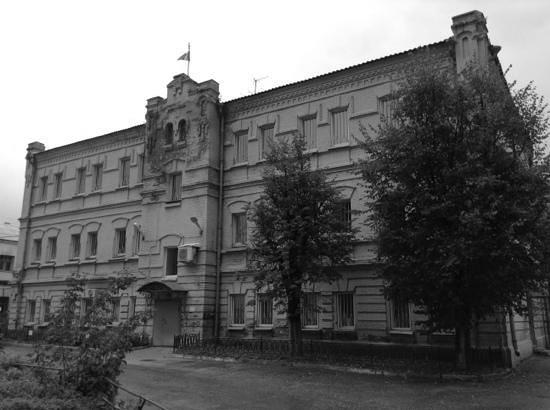
1. Vladimir Prison
Some inmates
There follows a list of forty inmates of Vladimir Prison No 2 (600020, Vladimir, penal institution OD-I/ST-2), who were convicted under Articles of the Criminal Code (64-72) relating to “especially dangerous State crimes”.
(Surnames are listed in Russian alphabetical order, cf. CCE 46.23, 1977).
*
*
[1]
Anatoly Avakov – Article 70 (RSFSR Criminal Code), five years, sentenced at the beginning of 1970 in Komsomolsk-on-Amur (Soviet Far East). He was accused of posting “anti-Soviet” letters to Soviet newspapers and to US President Nixon, and for writing comments on ballot-papers (CCE 18.2 [27]).
*
[2]
Bakhrov – a priest of the True Orthodox Church (TOC). Previously served a term of many years in the Mordovian camps and Vladimir Prison, from which he was released in 1967.
Re-sentenced under Article 70 pt. 2 to ten years, six of them to be served in prison. Has been kept under special regime since July 1972.
*
[3]
Yakov Berg (now Khaimovich, he changed his name in prison) – Article 70, sentenced by Moscow City Court in 1967 in the same case as Vyacheslav Aidov (CCE 14.11 [15], CCE 15.7 [1]) for preparing leaflets for printing, and for constructing a duplicating machine.
Sent to Vladimir Prison at the end of 1969 (CCE 11.4, CCE 18.2, CCE 25.10 [2, 11]).
*
[4]
Yury Belov – Convicted for the second time in 1968 while in exile after a three-year term of imprisonment in the Mordovian camps; sentenced under Article 70 pt. 2 to ten years of strict-regime camps. A court of second instance reduced the term to a five-year sentence.
Was in Vladimir Prison from April 1970 until recently, when he was ruled to be of unsound mind and sent to the Special Psychiatric Hospital in Sychyovka (Smolensk Region).
SPH head doctor Lyamkin has stated that they will treat Belov until he changes his opinions (CCE 9.10 [14], CCE 18.2, CCE 26.5).
*
[5]
Leonid Borodin [1] – history teacher and school headmaster, sentenced in 1968 in the ASCULP case under Articles 70 & 72 to six years imprisonment.
In Vladimir Prison since November 1970. Term of imprisonment expires in February 1973.
*
[6]
Vladimir Bukovsky – Article 70; seven years, two of which are to be served in prison [2].
*
[7]
Boris Bykov – sentenced in Alma-Ata under an Article of the Kazakh SSR Criminal Code (= Article 70, RSFSR Code), six years.
In Vladimir Prison since November 1970 (CCE 18.3).
*
[8]
Bogdan Vtsuta – Article 64 (“Betrayal of the Motherland”), 15 years.
Arrested in 1969 when he tried to cross into Afghanistan while serving in the frontier forces. In Vladimir Prison since the beginning of 1971.
*
[9]
Oleg Vorobyov [3] – Article 70, six years, three of which must be served in prison.
*
[10]
Vladimir Anastasevich GAVRILYUK – convicted in 1969 under the Article [64] relating to “Betrayal of the Motherland”, for crimes committed in the Ukraine during the war (1941-1945), 15 years.
Sent to a camp in August 1972.
*
[11]
Demchishin – convicted for having served in the UPA (Bandera’s Ukrainian Insurgent Army) during the war.
15 years, started in 1969 (see Lushch).
*
[12]
Boris Zalivako – priest; sentenced in 1969 to eight years for crossing the Soviet-Czechoslovak frontier. In Vladimir Prison since spring 1971 (CCE 17.11 [3], CCE 23.3).
*
[13]
Juozas Zelenkevicius – herdsman sentenced in 1969 for having served in the Lithuanian troops which collaborated with the Germans in wartime.
15 years, five of which in prison (CCE 25.10 [3]).
*
[14]
Svyatoslav Karavansky – philologist, Article 70 pt. 2. Held under special-regime [4].
*
[15]
Dmytro Kvetsko – Komsomol district committee instructor, sentenced to 15 years, of which five in prison, for participation in the Ukrainian National Front, CCE 17.7. (See Kulynin and Krasivsky.)
Sent to the Mordovian camps in March 1972.
*
[16]
Vasyl Kindrat – a worker, sentenced in 1962 to 10 years for “nationalist propaganda” [5].
In Vladimir Prison from February 1971 until August 1972, when he was sent to the Mordovian camps.
*
[17]
KRASIVSKY
Zinovy Krasivsky [6], a writer sentenced in the same case as Kvetsko to 12 years, of which five were to be spent in prison.
In December 1971, a ‘‘cell case” was brought against him under Article 70 pt. 2. The charge was one of manufacturing and circulating, orally and in writing, verses of nationalist content, in particular the poem “Apocalypse”.
After a psychiatric examination in the Serbsky Institute in the Spring of 1972 a commission (consisting of A.V. Snezhnevsky, G.V. Morozov, and D.R. Lunts) found him of unsound mind.
Krasivsky is now in the second hospital block of Vladimir Prison, awaiting transfer to a Special Psychiatric Hospital.
*
After the war Krasivsky and his family were deported to Kazakhstan.
On his way into exile Krasivsky escaped, returned to his homeland, and was detained and sentenced to five years imprisonment. On the expiry of his term, he was sent into “exile in perpetuity” in Kazakhstan, where he worked in the mines and became an industrial invalid as a result of a head injury received in an accident.
With great difficulty he obtained permission to return to Ukraine.
*
After graduating from the Philological Faculty of Lvov University he published several bibliographical works. At the time of his arrest in 1967 he had prepared for the press a historical novel about the Zaporozhian Cossacks.
Krasivsky has two children. His wife is a music teacher at a school in the town of Morshino (Lvov Region). Her salary is the sole source of income for the family’s upkeep since existing legislation deprives prisoners of the right to a disability pension.
[Compare the account in “the Dissident Movement in Ukraine“]
*
[18]
Yakov Kryuchkov – Article 64, special-regime.
According to the most recent information, found to be of unsound mind.
*
[19]
V. Kulynin – worker; six years for participation in the Ukrainian National Front (CCE 17.7).
In Vladimir Prison since May 1970. (See Kvetsko and Krasivsky.)
*
[20]
Yury Lazarev – Article 70. Six years, in Vladimir Prison since November 1970.
Term ends in May 1975 (CCE 18.2).
*
[21]
Yaroslav Lesiv – Teacher of physical culture, six years for participation in the Ukrainian National Front (CCE 17.7).
*
[22]
Konstantin Lushch – 15 years in same case as Demchishin. Sent to the camps in early 1969 for “Betrayal of the Motherland” (Article 64), for war crimes; five of 15 years in prison.
*
[23]
Matiash – sentenced in 1969 for “Betrayal of the Motherland” (Article 64), for war crimes; five of 15 years in prison.
*
[24]
Vyacheslav Merkushev – sentenced in 1968 for attempting to cross the Soviet-Turkish frontier (Article 64), where he was serving in the frontier troops. 10 years.
Sent from a camp to Vladimir Prison for three years in spring 1971.
*
[25]
MOROZ
Valentyn Moroz, a historian.
Sentenced to nine years imprisonment of which six were to be served in prison, plus five years in exile. Like all persons convicted for a second time on a charge of anti-Soviet propaganda, Moroz is being held under special-regime.
Criminals confined in the same cell have constantly taunted him and threatened to assault him. One night in July 1972 his cellmates attacked him and inflicted four knife-wounds. Moroz was transferred to the prison hospital in a grave condition [7].
*
[26]
Igor Ogurtsov – translator and leader of ASCULP. Articles 64 & 72. 15 years, of which five in prison, plus five years exile (CCE 1.6, CCE 19.4).
*
[27]
Yevgeny Pashnin – artist, Articles 64 & 15; attempt to cross the frontier, eight years. Sentenced in 1968. Sent to Vladimir Prison for two years in November 1970 (CCE 18.2 [24]).
*
[28]
Valery Petrashko – Articles 70 & 72, six years.
Participating in an organization of 16- and 17-year-old youths who disseminated leaflets and set fire to several buildings in Krasnoyarsk-45 (the law court, procurator’s office, and the private residences of the “city fathers’’), a satellite town of Krasnoyarsk in central Siberia.
Sentenced in 1969 (cf. CCE 15.8 [15]; and see CCE 17.14-2 [30]). Sent to Vladimir Prison in spring 1971.
*
[29]
PETROV-AGATOV
Alexander Petrov (Agatov) – writer, Article 70, seven years.
Verse and stories by Petrov-Agatov were published in 1967-1968 in the official journals Neva (Leningrad) and Prostor (Saratov). His memoirs “Encounters with Convicts” [Arestantskiye vstrechi], which describe his most recent arrest and imprisonment in a camp, are well-known in samizdat: it was for getting his memoirs out of the camps that he was sent to Vladimir Prison in November 1970.
(See also CCE 44.3, “The Arrest of Alexander Ginzburg”).
*
[30]
Anatoly Radygin (CCE 18.2, CCE 22.4 [2], CCE 24.11 [5]). Term ended 12 September 1972.
*
[31]
Gunar Rode (see CCE 18.2, CCE 22.4 [6] and Name Index).
Will be sent to a camp in January 1973.
*
[32]
Alexander Romanov (CCE 12.4, CCE 17.14-2 [16]). In Vladimir Prison until 1974.
*
[33]
Roman Semenyuk – sentenced in 1950, for participation in the Organization of Ukrainian Nationalists (OUN), to 25 years. Three years added for an escape attempt in 1965. Due to be sent to a camp in 1972 (CCE 11.3, CCE 18.2).
*
[34]
Ivan Sokulsky (CCE 12.4, CCE 17.14-2). In Vladimir Prison since the end of 1971.
*
[35]
YAKOV STASYONOK
Yakov Pavlovich STASYONOK from Belorussia.
15 years, of which three in prison. Arrested with his father in 1969 for the murder of a collective-farm chairman in [?] 1969 (by planting a bomb in his home). Article [66] “terrorism”.
Several people have already served terms of punishment in connection with this case, but evidently, they were wrongfully prosecuted for the murder. Stasyonok’s father died in camp 3 (Mordovia) in spring 1971, ageed 85. Yakov Stasyonok was sent from Vladimir Prison to the camps in March 1971 to complete his term.
*
[36]
Vladimir Timofeyev – “Betrayal of the Motherland” (Article 64), the so-called Potsdam case of 1962 (?) when several Soviet soldiers attempted an escape from a prison to the West. 12 years.
*
Vladimir Titov – Article 70 (for a statement renouncing his citizenship). Five years (?). Sent to Vladimir Prison from the camps at the same time as Zalivako.
*
[37]
Leonid Trepov – Sailor, “Betrayal of the Motherland” (Article 64). Attempted to escape in Malta. 12 years (from June 1967). In Vladimir Prison since 1971 and until 1974 (CCE 8 [?not the copy which reached the West] and see CCE 46.23-2).
*
[38]
Fabyshevsky – a Ukrainian, a policeman under the Germans. 15 years. Prison period specified in the sentence.
*
[39]
Semyon Tselyuk – Banderite. Served nine years, freed in 1955 under an amnesty. Sentenced to 15 years; previous nine taken into account. 2 ½ years remain.
*
[40]
Igor Josifovich YURKEVICH (CCE 14.11 [15], CCE 15.7, CCE 17.14-2 [69]). Due for release in May 1973.
*
HUNGER STRIKE
Six inmates of Vladimir Prison went on a hunger strike from 26 June to 6 July 1972: Vladimir Bukovsky, Yakov Berg, Valery Petrashko, Vasyl Kulynin and R. Dragimas [one name omitted here in error].
They were protesting at being confined in a cell designed for four people.
***
MIKHAIL KUKOBAKA
Political prisoner Mikhail Ignatievich KUKOBAKA (b. 1936), a native of the city of Bobruisk (pop. 137,536; 1970) in the Belorussian SSR, was confined for some time in the hospital wing of Vladimir Prison.
Employed as an unskilled worker in a radio factory in Alexandrov (Vladimir Region, Russia), Kukobaka was arrested on 14 April 1970 and charges were brought under Article 190-1 (RSFSR Criminal Code).
Material cited during investigation included entries in Kukobaka’s diary, a draft of a letter by him addressed to Brezhnev, and the testimony of workers to the effect that Kukobaka had spoken of the lack of freedom of speech and the press in the USSR. He was also accused of having made statements criticizing the occupation of Czechoslovakia.
A commission from the Serbsky Institute ruled that Kukobaka was of unsound mind (diagnosis: schizophrenia) and the court sent him for compulsory treatment.
*
2. MORDOVIA
PETRAS PAULAITIS
In one of the Mordovian special-regime camps Petras Paulaitis (b. 1904) is serving a term of punishment (CCE 24.5 text and notes). He studied in Rome and is a Doctor of Philosophy.
During the German occupation of Lithuania Paulaitis taught Latin to the eighth class at a grammar-school in the town of Jurbakas; he also directed the pupils’ underground activities.
On 16 February 1942, Lithuanian Independence Day, his pupils hoisted the national flag over the local Gestapo building. Wherever the young conspirators came across the “new” name of the town, “Georgenburg”, they altered it back to the old name of Jurbarkas.
*
With the arrival of Soviet troops in Lithuania in 1944, 26 of Paulaitis’s pupils joined the Union of Struggle for the Freedom of Lithuania. Paulaitis himself edited the Union’s newspaper To Freedom.
In 1946 a military tribunal sentenced him to 25 years’ imprisonment; in 1956 Paulaitis was released following a review of his case. He returned to Kaunas and worked as a stoker at a cannery. He refused to condemn Lithuanian bourgeois nationalism—this was the condition on which he was promised that he would be allowed to teach.
In 1957 he was re-arrested, charged with conducting subversive activities amongst students at Kaunas Polytechnic Institute, and, with the sanction of Voroshilov, Chairman of the USSR Supreme Soviet, Paulaitis was sent to serve the remainder of his term.
In 1958 criminal proceedings were instituted against him yet again for his connection (in 1957) with students who aimed to re-found the Union of Struggle for the Freedom of Lithuania. On 12 April 1958, the Lithuanian Supreme Court sentenced seven students to various terms from one to ten years, and Paulaitis was again given 25 years.
In connection with the reform of the Criminal Code the term was then reduced to one of 15 years, Paulaitis is due for release on 12 April 1973. He will be 69 years old. 25 of those years will have been spent in camps and six in underground activities, including four during the German occupation.
***
3. PERM
MESHENER & SUSLENSKY
Josif Mishener and Yakov Mikhailovich SUSLENSKY, sentenced on 30 October 1970 in Bendery (Moldavian SSR) to terms of six and seven years respectively under Article 70, have been placed under the supervision of the Perm Administration for Internal Affairs.
Mishener, 37, is a history teacher; Suslensky teaches English.
Both ex-members of the Communist Party, they wrote two letters to the Central Committee, one concerning the execution of Jews in Baghdad, the other about events in Czechoslovakia.
After being dismissed from their jobs, they intended to write to the United Nations, but their letters were confiscated during a search (CCE 15.10 [7], CCE 16.10 [9]).
*
OTHER TRANSFERS TO PERM CAMPS
Also transferred to the Perm Region:
David Chernoglaz, Gilel Butman, Lev Yagman, Yury Vudka (CCE 12.4, CCE 14.7),
Anatoly Altman, Mark Dymshits, Arie Khnokh, Joseph Mendelevich and Vulf Zalmanson (two “aeroplane” trials: CCE 17.6-1, CCE 20.1).
Address: 618263 Perm Region, Chusovoi district, Kopalno post office, post-box UT 389/36 (Perm-36).
***
UKSSR
NEDOBORA
Vladislav Grigorevich NEDOBORA, now in a camp in Ukraine (Zholtye Vody, Dnepropetrovsk Region, penal institution YaEh-308/26-3-32) refused to testify in the case of Leonid Plyushch (CCE 29.6).
Nedobora was removed from his work as an engineer and transferred to general duties.
In reply to a complaint by Nedobora’s wife, the head of the Dnepropetrovsk Region Administration for Internal Affairs stated: “The transfer was occasioned by production requirements.”
Nedobora’s radiculitis, a nervous disease affecting the nerves of the brain, has become acutely aggravated. His March 1970 trial was reported in CCE 13.4: see also CCE 11.4, CCE 17.14-2 [39] and CCE 23.7 [17].
==========================================
NOTES
See 2024 comment “Especially serious ‘State crimes’.“
On 26 February 1973, “The Forced Labour Camps in the USSR Today”, a report by Peter Reddaway, was presented to the press in Brussels by the International Committee for the Defence of Human Rights in the USSR.
ASCULP = Russian Social-Christian Union for the Liberation of the People (CCE 1.6).
*
- On Borodin, see CCE 1.6, CCE 17.12 [9], CCE 19.4, CCE 22.4 [7] and Name Index.
↩︎ - On Bukovsky, see CCE 19.1; CCE 21.5; CCE 23.1; CCE 24.1; CCE 25.11 [6] and Name Index.
In December 1972 the University of Leiden invited Bukovsky to come and study in the Netherlands and offered him a scholarship.
On 8 December three foreigners (Mario Celletti of Italy, Peter Krosbu of Norway and Andre Kientzi of France) handed out leaflets on Moscow’s Revolution Square in Bukovsky’s defence. Detained at once, they were expelled from the USSR two days later. See agency dispatches from Moscow about the incident (AP on 11 December, Reuter on 13 December), and a big attack on the demonstrators in Literaturnaya gazeta, 13 December 1972. (Possev Nos. 1 & 2 (1973) reprinted the Literaturnaya gazeta article.)
↩︎ - On Vorobyov, see CCE 16.10 [6], CCE 17.14-3 [30], CCE 18.10 [1], CCE 21.9 [18] and Name Index.
↩︎ - On Svyatoslav Karavansky, see CCE 11.3; CCE 13.7; CCE 15.4 [3], CCE 18.5 [7] and Name Index.
↩︎ - According to Ivan Kandyba, writing in 1966, this is not quite accurate.
The Ukrainian lawyer and prisoner says that the trial of Kindrat and 19 others for forming a “Ukrainian National Committee’’ took place in Lvov in December 1961. Kindrat, “a young boy, was sentenced to 13 years, whereupon he went mad”. See Browne (ed.), Ferment in the Ukraine (p. 69).
Kandyba’s evidence is supported by CCE 25.10 [3] where Kindrat, spelt there as Kondrata, is described as mentally ill.
↩︎ - On Krasivsky, see CCE 11.3 [7], CCE 17.7, CCE 18.2 [10], CCE 25.10 [2] and Name Index.
↩︎ - In October 1972 the Dutch Historical Association (Utrecht) sent a series of appeals to political leaders in Moscow and Ukraine. Signed by its secretary C.B. Wels, these called for the release of fellow-historians Moroz, Pyotr Yakir, and Andrei Amalrik.
On Moroz, see CCE 14.11 [1], CCE 17.2, CCE 18.5 [8] and Name Index.
↩︎
===========================
 A Chronicle of Current Events