On this day, Tatyana Mikhailovna VELIKANOVA, a veteran participant of the movement to defend the rule of law, and Orthodox priest Gleb Pavlovich YAKUNIN (CCE 54.1-2), a founder-member of the Christian Committee for the Defence of Believers Rights in the USSR, were arrested in Moscow.
Velikanova and Yakunin were sent to Lefortovo, the KGB Investigations Prison.
The investigation is being conducted by the Moscow KGB Investigations Department: Case 515 (Yakunin) by Major Yakovlev and Case 516 (Velikanova) by Captain Katalikov. Major Yakovlev, then a captain, and Captain Katalikov, then a senior lieutenant, were involved in the investigation of the Orlov case (CCE 44-49) [1]).
While these arrests were taking place, during the morning of 1 November, seven searches were conducted in connection with Case 515 and two in connection with Case 516.
Many statements of protest were issued in response to the arrests of Velikanova and Yakunin (see CCE 54.1-3).
*
The Arrest of Tatyana Velikanova
Senior Investigator of the Moscow KGB Captain Kapayev conducted the arrest and subsequent search. (As a senior lieutenant he had also participated in the investigation of the Orlov case and in particular had then interrogated T. Velikanova, CCE 47.3-2).
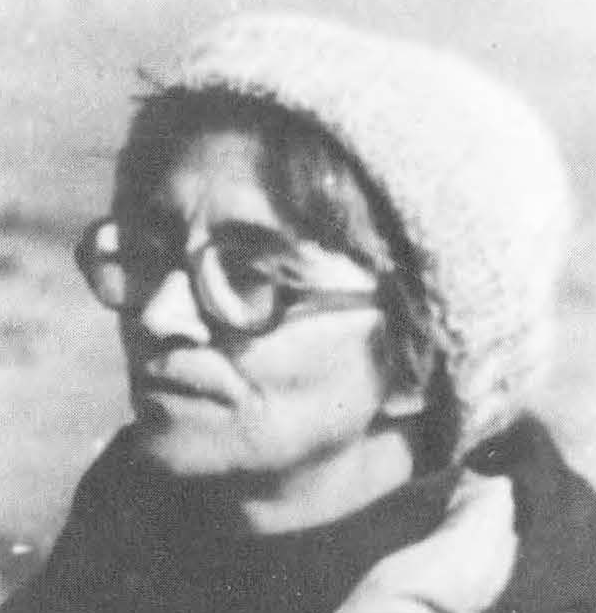
Tatyana Velikanova
(1932-2002)
Arriving with four others at Velikanova’s flat at 8 am, Kapayev made everyone get out of bed: Tatyana Mikhailovna’s daughter and son-in-law Yulia and Vladimir Keidan and their small children were also in the flat.
Kapayev informed Velikanova that she must come “for a chat” and told her “to dress warmly”. She demanded an official explanation and, if this was an arrest or some other legal action, to be shown the appropriate document. Kapayev said: “You can call this our tyranny.” He added that if she would not come of her own accord she would be remove by force. KGB official L.B. Karatayev left to accompany Velikanova: he took part in the search of her home on 11 October (see “Case No. 46012”, this issue CCE 54.2.1) and is not to be confused with B.B. Karatayev (see ‘A Chat with Bakhmin’ in this issue, CCE 54.22).
Only after they left did Kapayev show Vladimir and Yulia Keidan the search warrant “in connection with Case No. 516” signed by Katalikov, and when Karatayev returned they started the search. Shipilov, a vigilante (druzhinnik), also took part in this search, although this was not mentioned on the record, as he had on 11 October. The witness Krymskaya advised the investigator where else to look and translated foreign texts; she carefully inspected Yury Grimm’s passport [ID document] — he had arrived at the flat during the search — claiming that she doubted the authenticity of one of the stamps. A second witness, Sokolov, guarded the front door and also the other flat on the landing, and prevented Velikanova’s neighbour from using the telephone or leaving her flat.
The articles confiscated during the search were listed on a record (74 points) which was slightly more detailed than the record of the 11 October search, but even here there were points like “19 loose sheets of paper with various handwritten notes”. Among the articles confiscated were:
- Moscow Helsinki Group documents; an Information Bulletin of the Working Commission to Investigate the Use of Psychiatry for Political Purposes; Adventist publications (typewritten and printed); typewritten pamphlets in Lithuanian (including the Chronicle of the Lithuanian Catholic Church No. 40);
- Documents and other information about trials and the situation of prisoners; statements in their defence (concerning, for example, M. Kukobaka, A. Rossiisky, M. Plakhotnyuk and Yu. Litvin).
- Russian newspapers and periodicals published abroad; Khronika Press publications (including issues of the Chronicle of Current Events); books and other publications in foreign languages, including G. Vladimov’s Faithful Ruslan (a translation into French) and Amnesty International publications.
- Letters (including some to be mailed to other countries); notes (for example: “Tat. Mikh., if you get any concrete information about what happened to Gorbal, phone me … Yura Yarym-Agayev’); notebooks.
- Paper and carbon paper.
- The forensic psychiatric report on N. E. Gorbanevskaya dated 6 April 1970.
- A collection of tales by Mikhail Bulgakov (Diavoliada and Other Stories).
Vladimir and Yulia Keidan expressed their indignation at the form taken by the search (the behaviour of the witnesses, the intrusion into their neighbour’s flat) and the fact that it took place in the absence of Tatyana Mikhailovna. They refused to sign the record. They questioned Kapayev about what was happening to her, and he gave them Katalikov’s telephone number. Phoning him after the search, they succeeded only in having the fact of the arrest confirmed; Katalikov refused to give them any information about the nature of the charge (‘It’s not convenient for me to talk. I’ve got visitors,” he said. It later turned out that his “visitor” at that moment, who was being interrogated in connection with Case 515, was Larisa Poluektova; see CCE 54.1-2). When, over the next few days, relatives asked him about the nature of the charge, even just to tell them what articles of the Criminal Code were involved, he replied: “Not over the telephone.”
*
At the same time that T. Velikanova was being arrested, two further searches, at the homes of Victor Sokirko and N.P. Lisovskaya, were begun in connection with Case 516.
*
OTHER SEARCHES
They arrived to search the home of Victor Sokirko [2] while his two younger children were being seen off to nursery school. One of the KGB officials took this duty upon himself. The two elder children were not allowed to go to school.
Senior Lieutenant Zotov, conducting the search, replied to Sokirko’s questioning that he did not know what Case 516 consisted of (he told him to address any queries to Deputy Chief of the Moscow KGB Investigations Department Major Trofimov); however, he asked him to surrender voluntarily articles “relevant to the case”, namely literature containing slanderous fabrications, defaming the system, and also large sums of money (over 1,000 roubles). Sokirko stated that he possessed neither such literature nor such sums of money.
As a result of the search a typewriter (the third this year), five notebooks (addresses and phone numbers), collections of abstracts issued “for official use” by the Institute for Information on the Social Sciences, several letters and manuscripts, poems by A. Akhmatova and N. Korzhavin, books by V. Bukovsky and A. Avtorkhanov, annotated photographic negatives and typewritten papers (22 points in all) were confiscated. Sokirko stated that the confiscated items could have no relevance to any breach of the law and noted his protest on the record. His wife L. Tkachenko also wrote a protest — against herself and her children being detained in the flat.
*
Senior Lieutenant Nikitin conducted the search at the home of N.P. Lisovskaya. He showed her a search warrant stating that she was “under suspicion for possession of slanderous literature and other materials connected with the case” (No. 516). Instead of answering Lisovskaya’s question about the nature of Case 516, Nikitin asked her whether she would hand over the “literature and materials” herself. Lisovskaya made no reply to this, but afterwards read in the record: “She stated that she had nothing’. She did not sign the record.
Books (including Berdyaev’s The Russian Idea and M. Popovsky’s The Life and Times of Voino-Yasenetsky); Chronicle No. 52; a large number of handwritten papers; lists of political prisoners and exiles, and notes about help sent to them were confiscated at the search. A typewriter and a camera were also taken.
Lisovskaya writes:
“The people carrying out the search worked in a business-like fashion and behaved correctly. At the end I read the record, point for point (there were 76 in all), and they placed the appropriate articles in their bag.
“If they had been engaged in any other task one could have admired their work, erudition and even their appearance (they knew English, could distinguish the poetry of Akhmatova, Mandelstam and others at a glance, and were young, tall, good-looking and well- dressed) … If only they were engaged in something else …”
Nina P. LISOVSKAYA (b. 1917) is a Doctor of Biological Sciences and a Senior Research Officer at the All-Union Vitamin Research Institute. For a long time she has participated in activities to defend the rule of law (CCE 25.2, CCE 32.19 & CCE 39.11) and in helping political prisoners. In 1970 she was dismissed from the USSR Academy of Sciences Biochemistry Institute.
==========================================
NOTES
- On the Orlov case, see CCE 44.7, CCE 45.4, CCE 46.5-1, CCE 47.3-2, CCE 48.2 & CCE 49.6.
↩︎ - On Victor Sokirko, see CCE 7.12; CCE 29.11 [10]; CCE 46.18-1, CCE 47.16-2; CCE 49.20, CCE 51.21; CCE 52.17 & CCE 53.15.
↩︎
=========================

