HELSINKI GROUPS UNDER INVESTIGATION
- 3-1. (1) The case of Alexander GINZBURG
- 3-2. (2) Yury Orlov; (3) Persecution of the Working Commission
- 3-3. (4) Anatoly SHCHARANSKY; (5) Matusevich and Marinovich
*
TWO SECTIONS
2. Orlov Case
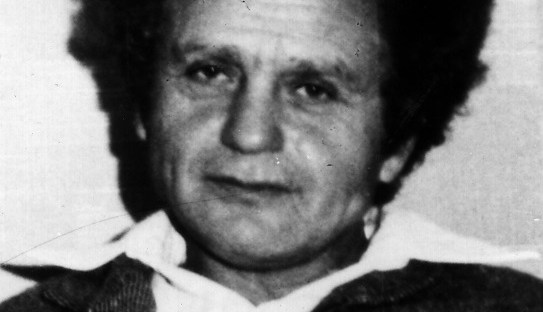
Besides Irina Valitova, Orlov’s third and present wife (CCE 46.5-1), his first and second wives have also been interrogated. They were asked: whether Yury Orlov (feature photo) helped his children; where he found the money to help them; and what attracted them to him. Both spoke favourably of Orlov.
An investigator from the Moscow KGB, Senior Lieutenant V.N. Kapayev, interrogated Orlov’s 25-year-old son. Dmitry Orlov refused to answer questions about his father, He stated:
“… My father has a highly developed sense of moral and social responsibility. I regard the investigation of such a man as my father to be amoral.”
Investigators Kapayev and Yeropa interrogated Orlov’s other son, Alexander Orlov who is 23.
They asked him whether his father helped him, how this help was expressed, whether his father had not given him money certificates. Alexander replied that his father gave him ordinary Soviet money and bought him things. Asked whether his father had not given him documents of the Helsinki Group to read, Alexander replied that his father gave him fiction and non-fiction.
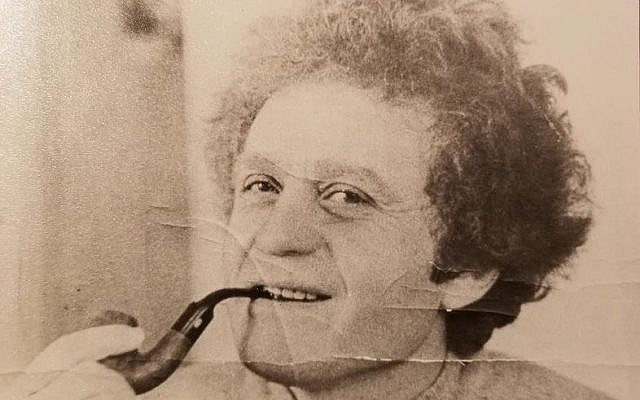
Yury Orlov
(1924-2020)
*
The writer Vladimir Kornilov (CCE 46.19) was asked at an interrogation by an investigator of the Moscow KGB, Senior Lieutenant V.V. Katalikov, to give a character reference for Yury Orlov.
Kornilov replied that he knew Orlov as a noble, honourable man, a real Russian intellectual. Asked whether Orlov had not given him Kontinent to read, Kornilov replied that as he had been printed in the journal himself, there was no point in Orlov doing this.
Asked whether Orlov had not composed the text of the statement on the subject of explosions in the Moscow metro (CCE 44.16), signed amongst others by Orlov and Kornilov, Kornilov replied that he did not know.
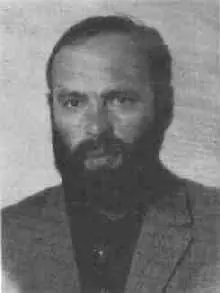
Vladimir Kornilov
*
Investigator Katalikov interrogated E.K. Tarasov, head of a laboratory at the Institute of Theoretical & Experimental Physics (USSR Academy of Sciences). A doctor of physical and mathematical sciences Tarasov had worked there with Orlov up until 1956: he characterized Orlov as a talented scientist and a wonderful person.
“What can you say about the political activities of Orlov?”
“I know nothing about Orlov’s political activities.”
“What, you don’t listen to the radio?”
“No, I don’t.”
“Orlov testified to us that you took books from him. Did he give you Kontinent, the novel by Hermann Hesse The Glass Bead Game, and articles by Burzhuademov?”
*No, he didn’t.”
“What money did Orlov live on?”
“He gave lessons.”
“You can’t live on that.”
*
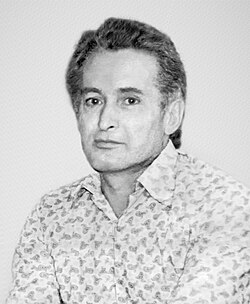
Yury Golfand
A close friend of Orlov Yu.A. Golfand, a long-term ‘refusenik’ and D.Sc. (physico-mathematical sciences), said at an interrogation that Yury Orlov was a great, talented scientist and a remarkable person.
“I am ashamed that people like Orlov are behind bars.”
“What can you say about Orlov’s activities in the so-called Helsinki Group?”
“I approve of them and support them.”
“What money did Orlov live on?”
“He gave lessons to schoolchildren.”
“Didn’t you see dollars or money certificates at his home?”
“No, never.”
*
Investigators Katalikov and Kapayev interrogated an acquaintance of Orlov, Igor Virko, who works in the Znanie publishing-house.
Asked what he knew about the anti-Soviet activities of Yu. Orlov, Virko had nothing to say in reply. He was asked whether he had seen foreigners at Orlov’s house, and whom he had met there. Virko remembered Gastev and Turchin. On this occasion, too, the interrogators were interested in what money Orlov lived on. Virko said that he had seen a girl pupil leaving Orlov’s house.
An old acquaintance of Orlov, the poet Mikhail Kaplan, was interrogated at a police station.
They asked him to give a character reference for Orlov, and once more asked what money he lived on, Kaplan spoke about Orlov in superlative tones and again indicated lessons to schoolchildren as the source of his income.
*
In Kiev, a member of the Ukrainian Helsinki Group, Oksana Meshko, was interrogated in the Orlov case.
In eastern Siberia (Chita, Transbaikal Region) Malva Landa (CCE 46.1) was summoned to an interrogation in the Orlov case [correction CCE 48.25].
On 2 August Odessa KGB Investigator Shumilo interrogated Leonid Sery (CCE 42.3) in Odessa — in the case, as Shumilo said, “of Turchin and Orlov”.
Asked whether he knew Turchin and Orlov, Sery replied that he had heard of Orlov on the radio. Shumilo recorded this answer in the protocol as follows: ‘Sery knows Orlov but refuses to say when he became acquainted with him’. After this Sery stopped talking to the investigator and wrote a statement about his refusal to give evidence.
*
On 29 August 1977 Investigator Katalikov summoned Tatyana Velikanova to an interrogation. She refused to give evidence.
The same day Investigator Kapayev interrogated Leonard Ternovsky.
On 30 August Investigator Katalikov interrogated Alexander Lavut.
Lavut stated that the criminal persecution of Orlov was aiding the violation of human rights in the Soviet Union, and refused to give evidence. Nevertheless, Katalikov put several questions on the subject of a number of documents (in defence of Mustafa Dzhemilev, Sergei Kovalyov, Pyotr Starchik, Yury Gastev), signed, amongst others, by Lavut and Orlov.
Lavut repeated his refusal to give evidence and remarked that some of the questions posed, in accordance with the practice that had grown up, looked like questions not to a witness but to a potential defendant.
*
On 6 October 1977 Investigator Kapayev interrogated Yury Gastev.
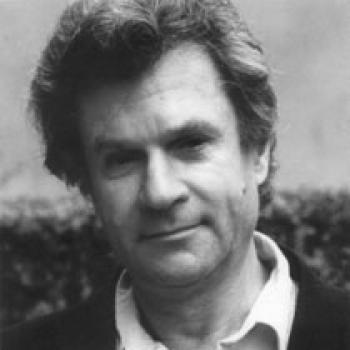
Yury Gastev
Kapayev refused to confirm that Orlov was charged under Article 190-1 of the RSFSR Criminal Code [1]. Gastev was asked about his relation to the Moscow Helsinki Group. The question provoked by his answer (“If that’s your attitude to the activities of the Group, why didn’t you join it yourself?”) was not included in the protocol. On the subject of a number of documents signed, amongst others, by Gastev and Orlov, he was asked when, where and under what circumstances he had come to sign the given document.
To the first of these questions Gastev each time advised them to look at the date of publication; to the second he replied “in Moscow,” to the third he refused to answer (Kapayev wrote “I don’t remember” in the protocol). Colleagues of Kapayev, Investigators Katalikov and Yu.S. Yakovlev, ‘advised’ Gastev: “It wouldn’t be a good idea to tell anyone about the contents of the interrogation or the very fact you have been summoned,” “To avoid any unpleasantness, keep a bit further away from Sakharov and his entourage”, “If you don’t like it here so much, why don’t you look for a freer country to live in?”
*
On 21 October 1977 a member of the Moscow Helsinki Group, Alexander Korchak, was interrogated in the Orlov case.
The interrogation lasted seven hours. The questions concerned not only Orlov, but also Alexander Ginzburg and Anatoly Shcharansky. Korchak confirmed that it was his signature under documents of the Group, but refused to answer the other questions. The investigator threatened Korchak with arrest: “Don’t imagine you’ll end up in a political camp. It’ll be a criminal one. And they’ll bash your head in there.”
*
On 21 and 22 November 1977 Vladimir Albrekht was interrogated in the Orlov case.
*
It was suggested to A.F. Barabanov, an acquaintance of Yury Orlov, by the head of his laboratory that he dissociate himself in writing from the political views of Orlov. (Barabanov is a junior scientific research officer at the Institute of Solid-State Physics, USSR Academy of Sciences.) In the course of this exchange Barabanov was warned that they wanted to make him a senior scientific research officer. Having said that his relations with Orlov were his own private affair, Barabanov declined to write anything.
*
In the presence of the secretary of the Party bureau and an ‘unknown person’, the director of the Institute of Theoretical & Experimental Physics (USSR Academy of Sciences) asked L.B. Okun, a corresponding-member of the Academy, whether he was intending to speak out in defence of Orlov. Okun replied that he had no such intention.
*
3. Persecution of the Working Commission
On 10 October 1977 seven searches were carried out in Case No. 474 (the case of Yu. Orlov) by KGB officials from the organisation’s Moscow City & Region Department.
They searched premises occupied by members of the “Working Commission to Investigate the Use of Psychiatry for Political Purposes”: the homes of Vyacheslav Bakhmin and Irina Kaplun; and places and people associated with Alexander Podrabinek — his temporary flat in Moscow; the Elektrostal home of his brother Kirill; Kirill’s work-place (a railway crossing, where he is a guard); and the home in Elektrostal of Lydia Ivanova, the wife of Pinkhos Podrabinek; and the home of Tatyana Yakubovskaya, a friend of Alexander Podrabinek, in the Moscow suburb of Malakhovka.
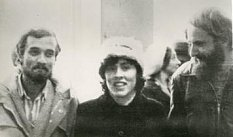
Podrabinek, Kaplun and Bakhmin
The searches at the homes of Bakhmin and Kaplun were carried out on a warrant of KGB Captain Yakovlev; the other searches were made on a warrant of KGB Senior Lieutenant Kapayev. In the search warrants for Bakhmin and Kaplun it said that the search was being carried out “with the aim of confiscating documents belonging to Alexander Podrabinek”.
At Bakhmin’s home a card-index of the Working Commission, a verbatim record of the 17th Party Congress (1933-1934), and poems by Gumilyov were confiscated.
At Kaplun’s home, the searchers took documents of the Working Commission and the Helsinki Group, cuttings from Soviet newspapers, Robert Conquest’s The Great Terror (1968) and a copy of the Soviet edition of Mandelstam’s works.
At the home of Alexander Podrabinek, the searchers confiscated a typewritten copy of his book Punitive Medicine, documents of the Working Commission and of Amnesty International, The Gulag Archipelago and a typewriter. The search finished at 10.55 pm, after which Podrabinek was taken to Moscow KGB headquarters (Malaya Lubyanka). There he was interrogated by Captain Yakovlev. Before the start Podrabinek refused to answer any questions: he considered a night interrogation inadmissible in this instance. The interrogation finished at 12.30 am.
*
At the home of Podrabinek’s step-mother Lydia Ivanova, the searchers took the almanac 20th Century, materials of the samizdat scientific journal Researcher, notebooks and a photograph of Solzhenitsyn (in the search protocol “a photograph of a man with a moustache and beard behind a microphone”).
*
At Tatyana Yakubovskaya’s home, notebooks belonging to Alexander Podrabinek were confiscated, as were four small-calibre cartridges and one rifle cartridge were confiscated.
On 18 October Yakubovskaya was summoned to an interrogation at the Moscow KGB. She testified that the five cartridges confiscated at the search at her house belonged to Alexander Podrabinek: he had brought them to her several years ago, having kept them since the time he engaged in shooting as a sport during his schooldays.
*
At the home of Kirill Podrabinek, where Alexander Podrabinek is officially registered, the searchers confiscated Solzhenitsyn’s novel Cancer Ward and materials of the journal Researcher. The search protocol listed three items in all.
Kirill Podrabinek
At Kirill Podrabinek’s place of work the searchers took his article on the new 1977 Constitution, the second issue of the bulletin “Concerning the Draft Constitution of the USSR” (CCE 46.18), a harpoon gun for underwater fishing and 127 small-calibre cartridges.
*
On 14 October another search was carried out at Alexander Podrabinek’s flat.
The search proceeded thus: after presenting a search warrant, Lieutenant Zotov went up to a wardrobe, opened it, put his hand into a jacket hanging there and pulled it out clutching two small-calibre cartridges in his fist; at this point the search came to an end.
Zotov would not allow Kirill Podrabinek to make any remarks on the protocol: “Statements and remarks on the subject of the search from persons taking part in the search and present during it were not forthcoming,” he wrote.
On 23 October 1977 Kirill Podrabinek issued a statement:
“During the last year I have become friends with certain Moscow dissidents, and have signed various appeals and statements. The possibility of a criminal case being brought against me on the charge of illegally possessing a weapon and ammunition could cast aspersions on the whole democratic movement and, in particular, on my brother, even though it is perfectly clear that the basis of the case is a political charge.
“For a number of reasons, I cannot at the present time comment on what has happened, confirm or deny that the things confiscated at the search on 10 October belong to me. I therefore ask my friends and well-wishers to refrain also from commenting on these questions. I shall do this myself when I consider it necessary.”
On the night of 27-28 October, according to his work schedule Kirill Podrabinek should have been on duty at the railway crossing.
Because he was ill another man was on duty there. During the night two well-dressed young people knocked at the sentry-box. For the time of year and the hour this was without precedent (it is 30 minutes walk from the crossing to the nearest inhabited point). The people who came in asked the guard for a glass. When he turned around to carry out their request, they hit him a blow on the head with some heavy object. He fell unconscious. He came round only seven hours later. If the blow had been inflicted a few centimetres from the place where it fell, it probably would have been fatal. The strangers at the crossing did not take anything.
In a statement on 5 November Kirill Podrabinek writes:
“There is no exact proof that the two attackers were my ‘friends’ from the KGB, but there are grounds for thinking this.
“In any event my colleagues are frightened of going on duty at the crossing. And I would not be surprised if at the next search at my place of work a machine-gun was discovered.”
Podrabinek was dismissed from this job.
*
The following issued an appeal in his defence: Irina Kaplun, Pinkhos and Alexander Podrabinek, Tatyana Osipova, Maria Petrenko (Podyapolskaya), Pyotr and Zinaida Grigorenko, Naum Meiman, Vladimir Slepak, Father Gleb Yakunin, Victor Kapitanchuk, Reshat Dzhemilev, Alexander Lavut and Tatyana Velikanova.
“In Defence of Kirill Podrabinek
“In the last few years purely criminal methods of reprisal against dissenters have been applied more and more often in the USSR: blackmail, acts of provocation, beating, murder.
“The specific character of these crimes is such that in each individual instance it is very difficult to obtain direct evidence. Law and order agencies show no interest in investigating them, whilst individuals arc deprived of the possibility of conducting an investigation.
“The last instance of this type to become known is the attempted murder of Kirill Podrabinek …
“We fear for the life of Kirill Podrabinek. We fear the repetition of such actions in regard to other persons who displease the authorities.
“. . . We call for . . . a full and open investigation, remembering that the defencelessness of the victims and the impunity of the criminals untie the latter’s hands for new crimes” [2].
============================================
NOTES
- On 6 February 1978 Orlov’s wife Valitova was told that Yury Orlov was now being charged under Article 70 (“Anti-Soviet agitation and propaganda”).
↩︎ - On 29 December 1977 Kirill Podrabinek was arrested (CCE 48.7). He was put on trial and on 14 March 1978 sentenced to two and a half years in a camp for criminal offenders (CCE 49.1).
↩︎
===============================

