- 1-1. Part One
- 1-2. Part Two
*
PART ONE
From 15 to 18 May the Moscow City Court heard the case of Yury Orlov, charged under Article 70 (RSFSR Criminal Code).[1]
Judge V.G. Lubentsova presided over the court: she judged the Red Square ‘demonstrators’ in October 1968 (CCE 4.1). The lay assessors were G.N. Tsvetkov and A.N. Lebedev. The prosecutor was the Moscow Deputy Procurator, S.A. Yemelyanov. The defence lawyer was E.S. Shalman.
Orlov was arrested on 10 February 1977 (CCE 44.7). For a detailed account of the investigation of his case, see CCE 44-49 [2].
*
BIOGRAPHY
Yury Fyodorovich ORLOV was born in 1924. His father was a driver and metal worker; he died in 1933 of tuberculosis at the age of 33. His stepfather was also a worker; he died at the front in 1942.
Orlov spent his early childhood in a village near Smolensk and subsequently lived in Moscow. At the beginning of the war, without completing his schooling, he got a job as a lathe operator in a factory. In his autobiography Orlov remembers being struck by something his uncle said to him at this time: “I hope that our alliance with democratic countries during this war will lead to the democratization of our country after the war.”
Early in 1944 Orlov was drafted into the army and sent to a military academy. At the academy Orlov became a candidate member of the Communist Party. A month before the end of the war he was sent to the front.
After the war, while continuing to serve in the army, Orlov studied intensively the ‘Marxist classics’ and the works of Hegel. He recalls that already at this time, in conversation with close friends, he spoke out against ‘bureaucratic dictatorship’ and in favour of “a return to the ideas of Marxism”. The security organs invited him to work for them on secret assignments — Orlov firmly refused.
At the end of 1946 Orlov was demobilized; he completed his schooling as an external student and entered Moscow University. In 1948 he became a member of the Communist Party. In 1952 Orlov completed his course in physics at Moscow University.
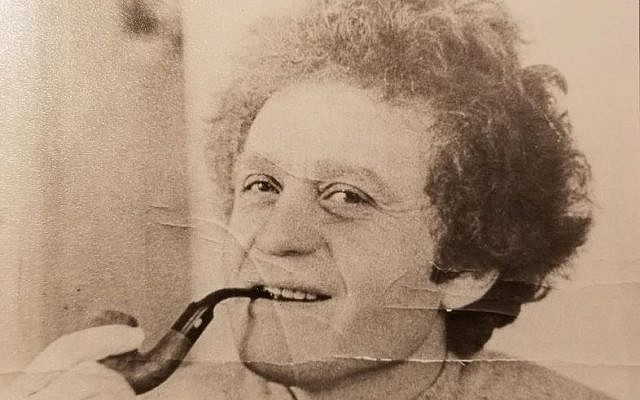
Yury Orlov, 1924-2020
In 1953 Orlov started work at the USSR Academy of Sciences’ Institute of Theoretical and Experimental Physics (ITEF), of which Academician Abram I. Alikhanov was the director.
In early 1956 he finished his master’s thesis; at the same time his first scientific publications appeared, and his work was presented in five papers sent to an international conference in Geneva.
*
CRITICAL REMARKS
In March 1956, at an institute Party meeting held to discuss the documents of the 20th Party Congress, Yu. Orlov spoke out in criticism of the Party’s past policies. He spoke about the general decline of honour and morality, about the need for democratic changes. Sharp criticism was also voiced by several other people at the meeting.
On 5 April Pravda published an article highly critical of this meeting (without mentioning the institute by name); there was also a “confidential letter from the Central Committee”. In accordance with a decision taken by the Central Committee, Yu. Orlov and three others were expelled from the Party and dismissed from their jobs. Orlov’s name was removed from all reports and articles and he was not allowed to defend his doctoral thesis.
For six months Orlov was unable to find a job. In many physics institutes in Moscow money was collected for him and for those of his colleagues who were in a similar position.
At the suggestion of Artyom I. Alikhanyan, a corresponding member of the USSR Academy of Sciences (and brother of A.I. Alikhanov), Orlov moved to Armenia, where he worked at the Yerevan Physics Institute. There in 1958 he defended a master’s thesis, in 1963 his doctoral thesis. In 1968 he was elected a corresponding member of the Armenian Academy of Sciences.
*
RETURN TO MOSCOW
In 1972 Orlov returned to Moscow. Academician L.A. Artsimovich tried — and after six months, with difficulty, succeeded — in getting Orlov a post at the USSR Academy of Sciences’ Institute of Earth Magnetism and Diffusion of Radio Waves (IZMIRAN).
On moving to Moscow, Orlov began to take an active part in the human rights movement. In September 1973 he wrote an open letter to Brezhnev in defence of Andrei Sakharov. In October 1973, Orlov became a founding member of the Soviet group of Amnesty International.
On 1 January 1974, Orlov was again dismissed from his job. From then onwards he lived by giving private lessons in mathematics and physics, and continuing his scientific work at home. During the next few years Orlov presided over regular seminars on physics, held in his flat.
In February 1974, Orlov protested against the deportation of Solzhenitsyn. In June 1974, in connection with the international symposium organized by A. Voronel (CCE 32.12) Orlov was kept under house arrest for nine days.
In 1976 Orlov’s article “Is Socialism of a Non-Totalitarian Kind Possible?” appeared, both in samizdat and in the collection Self-Awareness (Khronika Press: New York). The article demonstrates that the concentration of political and economic power in the hands of a centralized bureaucracy inevitably leads to the loss of individual freedoms (CCE 38.20).
In May 1976 Orlov organized and led the “Group to Assist the Implementation of the Helsinki Agreements in the USSR”, the Moscow Helsinki Group (CCE 40.14). Later, Helsinki groups were organized in Lithuania (CCE 43.12), Ukraine (CCE 43.6), Georgia (CCE 44.10) and Armenia (CCE 46.15 [13]).
*
Trial
Orlov’s trial took place in the people’s court building in the Lyublino district of Moscow (14 Yegorevskaya St.), where Anatoly Krasnov-Levitin (CCE 20.7), Vladimir Bukovsky (CCE 23.1) and Andrei Tverdokhlebov (CCE 40.2) were also tried.
Orlov’s many friends and acquaintances had gathered in front of the court building long before the trial began but none of them were allowed into the courtroom; as usual, this was ‘because there is no room’. Only Orlov’s wife, Irina Anatolyevna VALITOVA, and his sons (by his first marriage) Alexander and Dmitry Orlov, were admitted. On the very first day of the trial their tape recorders were confiscated; they were forbidden to take notes, to leave the courtroom during the breaks, or even to go near the windows. Before and after each hearing they were given body searches; in the process the sons were also beaten up twice and the wife was stripped naked in the presence of three men, KGB officials.
When “establishing the identity” of the defendant, Judge Lubentsova emphasized the fact that Orlov “had not worked” since 1974. Several times she interrupted Orlov when he, in answer, was explaining that as a professional scientist, and independently of his regular job, he was consistently active in the scientific field, writing and publishing articles, and that he was also doing voluntary work at the Yerevan Physics Institute.
Orlov then submitted several petitions to the court. His explanations of the reasons for these petitions, like everything he subsequently said throughout the trial, were interrupted by shouts from the Judge: “No one is asking you (about this or that)!” “Stand up straight, don’t prop yourself up!” “You’re not giving a lecture!” and so on.
Orlov asked that the English lawyer J. MacDonald, to whom his wife had entrusted his defence (CCE 45.4) be invited to the trial. Orlov petitioned for additional witnesses to be summoned.
Among the witnesses Orlov asked to be called were: Leonid Sery (CCE 42.3 & CCE 43.6-1), Vladimir Pavlov (CCE 43.13), Vladimir Khailo (CCE 36.8 & CCE 48.16-2), Nadiya Svetlichnaya (Svitlychna), Nina Strokatova (Ukr. Strokata), Oksana Meshko and Svyatoslav Karavansky, all of whom feature in the Moscow Helsinki group documents which formed part of the basis of the criminal charges against Orlov. (Pavlov and Khailo had come to Moscow that day and were outside the court building).
There were also several research scientists from Moscow and Yerevan who could have testified to Orlov’s scientific capabilities. Orlov asked that V.V. Migulin, director of IZMIRAN and a corresponding member of the USSR Academy of Sciences, be summoned, since his letters to the KGB had influenced the formulation of the charges; he also asked for S. Lipavsky (this issue, CCE 50.4) and A. Gradoboyev (this issue, CCE 50.3), whose testimony was included in Orlov’s case file (Orlov did not know Gradoboyev and he had seen Lipavsky once only, at the entrance to his own apartment).
Orlov asked that Vladimir Slepak, a member of the Moscow Helsinki Group, be summoned before the court (with reference to MHG doc. No. 9 about the Jews from the village of Ilynka (CCE 43.6 [1]); Vladimir Albrekht, secretary of the Soviet group of Amnesty International; A.V. Snezhnevsky, director of the USSR Academy of Medical Sciences’ Institute of Psychiatry (with reference to an incident involving Leonid Plyushch, CCE 36.5); and translator Antonova, who had translated Orlov’s interview with the Italian journalist M. Zoppelli.
Orlov asked for inclusion in the case of additional documents. Lawyer Shalman petitioned for the inclusion of Orlov’s scientific articles, published in the USSR and abroad in 1974-1978, and certificates and testimonials concerning Orlov’s scientific work. He asked that a number of people be summoned to court who could give evidence about Orlov’s efforts to obtain a regular job in Moscow and Yerevan.
The court rejected all the petitions of the accused and his lawyer. Lubentsova said that Antonova, Gradoboyev and Snezhnevsky could not appear due to illness (it is known that on that day Snezhnevsky was examining patients in a clinic); on the following days Lubentsova said that Snezhnevsky had gone away on an official trip.
*
The indictment
The indictment (40 pages) was then read. It stated that Orlov, who had not worked as a scientist for a long time, being of a hostile disposition, had tried to undermine the foundations of the Soviet system.
He had on several occasions given interviews to foreign correspondents, in which he had defamed the Soviet political and social system; he had compiled anti-Soviet, slanderous documents, which he had transmitted to hostile radio stations through foreign correspondents and also to the embassies and governments of Western countries (signatories to the Helsinki Agreement, Chronicle). For all of these he received payment in the form of money and parcels, the contents of which he gave to commission shops to sell for him.
Orlov was charged with preparing and disseminating:
- Documents 3, 4, 6-9 and 11-14 (CCE 43.6), and the supplements to documents 7, 11, 14, 17 (CCE 41-44) of the Moscow Helsinki Group; the Group’s documents “An Evaluation of the Influence of the Conference on Security and Cooperation in Europe [CSCE], with Particular Reference to Human Rights in the USSR” (CCE 41.8) and “Repressive measures at Christmas” (about searches in the homes of five members of the Ukrainian Helsinki Group, CCE 43.7 [10]);
- a letter to Brezhnev (1973);
- the letters “On the Rights of Scientists”, “To Scientists of the World”, “Open Letter to Artists”;
- a letter to the BBC and Voice of America radio stations;
- the “Moscow Appeal” (13 February 1974), concerning Solzhenitsyn (CCE 32.1) and an appeal by Moscow scientists on behalf of Sergei Kovalyov;
- a statement concerning Anatoly Marchenko’s hunger-strike (in 1975, CCE 35.2), a statement concerning Pyotr Starchik (CCE 42.1, CCE 43.8) and a statement in defence of the pilot Zosimov (CCE 43.13).
- the statements entitled “10 December — International Human Rights Day” and “30 October — Political Prisoners’ Day” (1975 and 1976);
- the article “Is Socialism of a Non-Totalitarian Kind Possible?”
Orlov was also charged with having the Gulag Archipelago in his possession.
The indictment stated that these documents contained ‘slanderous fabrications’ to the effect that there are no democratic freedoms in the Soviet Union, that international human rights agreements are constantly violated, that ‘psychiatric repressions” take place, that people are persecuted for their political and religious beliefs, and that those wishing to leave the USSR are harassed.
Both in the indictment and in the court hearings reference to the Helsinki Group by name was carefully avoided; occasionally “Orlov and a group of others” were mentioned.
To the question: did he understand the indictment? Orlov answered in the negative. To the question: did he admit his guilt? Orlov expressed the wish to give an explanation before answering. His request was granted, after he had stated that he would otherwise refuse to take any further part in the trial.
*
Orlov’s testimony
In his ‘explanatory’ speech Orlov said that he was in favour of gradual democratic changes in Soviet society, that he had not in any way advocated undermining the system, and that his attitude to the existing order, as to any other State system, was critical.
This was well known from the letter to Brezhnev with which he had been charged. In this letter he did not, as alleged in the indictment, refer to our society as one of slavery and feudalism, but only pointed out a few characteristics of slavery (15-20 million people who //were in Stalin’s camps [3], the tying of peasants to collective farms). Neither did he refer to the Soviet system as a Nazi one; he only compared the imprisonment of dissenters in psychiatric hospitals with the practices of Nazi doctors. Orlov asked the court to read out his letter to Brezhnev.
Referring to the charges in connection with the Plyushch case, Orlov recalled his visit (with Plyushch’s wife) to Professor Snezhnevsky (CCE 36.5). The latter had said to them: “Surely you don’t think that Plyushch would be better off in a camp than in a hospital?” It was precisely for this reason that Orlov had asked that Snezhnevsky be summoned as a witness. Orlov reminded the court that Kovalyov and Tverdokhlebov had faced charges in connection with the Plyushch case, long after it had been concluded. Later, he said, those who maintained that Orlov’s trial was political and not criminal would also be brought to trial. “This is a vicious circle, a circle of lies, from which you will never emerge.”
Discussing those passages in the indictment referring to MHG documents on the right to emigrate (Nos. 9 and 11-14) Orlov insisted that No. 5, with which he had not been charged and which cited many facts about the persecution of believers, be included in the evidence. Regarding demands to emigrate for political and economic reasons, Orlov stated that he did not, as stated in the indictment, “assign” such intentions to anyone. He said: “I was approached by people who told me such things openly. What can I say? That they want to emigrate ‘because of family circumstances’?” Orlov asked that the relevant MHG document, based on the trustworthy evidence of real people (among them V. Pavlov and L. Sery) be read out. Judge Lubentsova gave the standard response: “The court is familiar with the contents of this document.”
As regards the charges of ‘slander’ with reference to conditions in Vladimir Prison and in the camps, Orlov said that members of the Helsinki Group spoke out primarily against torture through cold and hunger. He gave details of the food norms and told how Sergiyenko, who was ill with tuberculosis, was placed in a punishment cell; he asked that Sergiyenko’s mother, Oksana Meshko, be summoned to testify about the conduct of the camp doctors.
Regarding the charges relating to the newspaper cuttings and the transcript of a Radio Liberty programme which were found during a search of his home, Orlov explained that he had asked journalists he knew to send him cuttings and other materials on problems of human rights. “I wish to know how the question of human rights is treated in other countries.” He protested against the term ‘criminal’ being applied — with the help of the word ‘contact’ — to his acquaintance with foreign journalists.
Orlov talked about an interview he gave to a Norwegian journalist. In actual fact, the interview never took place, since the Norwegian knew neither Russian nor English. Yet the content of the Norwegian’s article, which had appeared in Possev and some other publication, formed part of the charges against Orlov. Orlov said that if the court had been interested in what he actually said to journalists it should have summoned the translator Antonova as a witness, since the previously mentioned translation of Zoppelli’s article formed part of the ‘case’.
At the end of his explanatory speech Orlov said: The work of the Helsinki Group has been based on trust in the people who have turned to us for help and it is my opinion that this principle has been thoroughly vindicated.
============================================
NOTES
- The sequence of trials — Orlov and the “repentant” Gamsakhurdia simultaneously in May, then Ginzburg and Shcharansky in July — was devised on the recommendation of Andropov and Rudenko (see 1 April 1978, 785-A* memorandum).
↩︎ - For the investigation of the Orlov case, see CCE 44.7, CCE 45.4, CCE 46.5-1, CCE 47.3-2, CCE 48.2, and CCE 49.6. For Orlov himself, see CCE 32.1 [12], CCE 38.20 [2], CCE 44.7 and Name Index.
↩︎ - A key figure: did it mean the numbers in the camps at any one time (i.e., a third of the adult male population)? Or the total who had been sent to the camps since 1929?
↩︎
=======================
 A Chronicle of Current Events