On 18 April 1975 Andrei Tverdokhlebov, an active participant in the human rights movement, was arrested in Moscow [1]. The arrest was carried out by the Moscow procurator’s office. Tverdokhlebov is charged under Article 190-1 (RSFSR Criminal Code). The investigation is headed by Senior Investigator Gusev of the Moscow Procurator’s Office.
*
Together with Andrei Sakharov and Valery Chalidze, Andrei Nikolayevich TVERDOKHLEBOV (b. 1940) took part in founding the Moscow Human Rights Committee (1970; CCE 17.4); he was a member of the committee until December 1972 (CCE 29.11 [22]).
During 1972-3 Tverdokhlebov published samizdat miscellanies titled “Amnesty International” (CCE 30.15 [1-4]). In 1973 he was one of the founders of “Group 73” (CCE 30.14 [7]). Set up to study the problems of aid to prisoners of conscience, the Group was associated with the International Federation for the Rights of Man (FIDH) which has its bureau in Paris. Tverdokhlebov is a co-founder and the secretary of the Soviet group of Amnesty International, which has been functioning since October 1973.
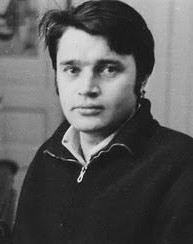
Andrei Tverdokhlebov, 1940-2011
Previous issues of the Chronicle have given details about the many declarations sent by Tverdokhlebov to various official bodies, in support of people subjected to persecution on ideological grounds and concerning conditions of detention in places of imprisonment [2].
In 1974 the Khronika Press (New York) published the collection Andrei Tverdokhlebov in Defence of Human Rights (editor, Valery Chalidze). In the foreword the publishers state that Tverdokhlebov’s permission for its publication had not been sought, but they felt that “his rights have not been infringed by this, as all the texts included in the collection are already available for public use”.
The collection includes some statements by Tverdokhlebov on the subject of ideologically motivated persecution; materials concerning his activity in the Moscow Human Rights Committee; documents on the activities of “Group 73”; a selection of material compiled by Tverdokhlebov, “On Prisoners’ Conditions” (CCE 33.9); an index of material contained in the four “Amnesty International” collections; and some practical recommendations compiled by Tverdokhlebov, “On Serving the Needs of Prisoners of Conscience”.
*
“Two Searches and Four Interrogations”
On 27-28 November 1974, on the instructions of the Lithuanian KGB, a search was carried out at Tverdokhlebov’s home, in connection with “Case 345”, concerning the Chronicle of the Lithuanian Catholic Church (CCE 34.6).
On 23 December another search took place at Tverdokhlebov’s home in connection with the same case (CCE 34.7). On 23, 24 and 25 December, Tverdokhlebov was interrogated for three consecutive days about Case 345.
On 9 January 1975 Tverdokhlebov was interrogated about “Case 38”, concerning the journal Veche. On 9 February Tverdokhlebov issued in samizdat (CCE 35.12) an article called “Two Searches and Four Interrogations”. It appeared with nine appendices, two of them annotated in the “Letters and Statements” (CCE 35.9).
The author arrives at the following conclusions:
- “Belief in the investigators’ integrity is all too quickly destroyed”;
- “it is morally impermissible to give evidence about other people, even to mention names which have hitherto not been cited by the investigator”;
- “refusal to give evidence as a witness may result in a summons to appear as a defendant in the same case or a similar one”.
*
On 9 April 1975 Tverdokhlebov sent a letter to Investigator Yu. Chuprov at the Vladimir KGB headquarters. Confirming that he had received a message summoning him for interrogation on 10 April, he wrote:
“I ask you not to summon me any more as a witness in Case 38. During your earlier interrogation in Moscow I answered your questions more fully than was called for, and in my opinion this has exhausted my role as a witness in this case …. You may use this letter as a statement of refusal to give evidence for the above-mentioned reason.”
On 18 April, in the early morning, Andrei Tverdokhlebov was arrested at his apartment in Moscow.
===========================================
NOTES
- The need to arrest and prosecute Tverdokhlebov was outlined a week earlier (12 April 1975, 878-A [R]) in a memorandum to the Central Committee signed by Andropov and Rudenko.
↩︎ - On conditions of detention in places of imprisonment, see, e.g., //CCE 29, CCE 30.8, CCE 32.12, CCE 33.4, CCE 33.5-1, CCE 33.5-2 and CCE Contents (14. political prisoners).
↩︎
=========================
 A Chronicle of Current Events