FIVE ITEMS
[1]
On 1 March Sandor Fodo, Lecturer in Hungarian Philology at Uzhgorod University (West Ukraine) on the Czechoslovak border, was dismissed from his job.
The order, signed by L. Chepuro, rector of the university, gives the grounds for his dismissal as absenteeism and an attempt to bring anti-Soviet literature across the frontier. The “absenteeism” was an approved journey to Hungary by Fodo during the student vacation; the “anti-Soviet literature” was seven issues of New Symposium, a Yugoslav journal appearing in Hungarian, which Fodo had voluntarily given up to customs officials at the station of Chop.
A less superficial reason for Fodo’s dismissal is the inimical attitude on the part of the Uzhgorod authorities towards the cultural enterprises of the local Hungarian intelligentsia (Fodo had formed a Hungarian folk-song ensemble).
*
Magyars make up a large group of the population of the Trans-Carpathian Region (approximately 160,000 people). Until the Second World War this Region was part of Czechoslovakia, and the Ukrainians and Magyars who had settled there enjoyed cultural autonomy. Under the Czechoslovak-Soviet peace treaty of 1946 Trans-Carpathia became part of the Ukraine. Mass deportation of the male Magyar population to the interior of the country began at the same time.
Only in recent years have the Magyar inhabitants of Trans-Carpathia been able to send their children to Magyar schools (there are now 18 Magyar secondary schools in Trans-Carpathia); a Hungarian-language newspaper began to appear (differing in content from Trans-Carpathian Pravda, the Regional newspaper which appears in Russian and Ukrainian), and a Magyar department was established at Uzhgorod University, preparing teachers of Hungarian language and literature (up to ten persons are accepted annually).
*
[2]
Vladimir Aks of Sverdlovsk (Urals District) has been dismissed from his job under Article 47-e of the Code of Labour Legislation (absenteeism) after submitting documents for emigration to Israel.
*
[3]
Igor Alexeyevich ADAMATSKY, an employee of the Leningrad section of the “Knowledge” [Znanie] society, was dismissed on 27 April 1971 “at his own request”.
Adamatsky was a witness at the trial of Pimenov, Vail and Zinovieva (in October 1970, CCE 16.2). After the trial a case was instituted against him “for giving false testimony”, but the proceedings were terminated before a charge had been brought.
In April 1971 Adamatsky was expelled from the Party, after which the trade-union committee considered the management’s petition to dismiss him (under Article 106, part 4 of The Bases of Labour Legislation) and agreed to his dismissal.
The article in question provides that “employees performing educative functions” may be dismissed “should they commit an immoral act incompatible with their retention of the post”.
*
[4]
Professor Victor Davydovich LEVIN (D.Sc., Philology), has been illegally removed, with effect from 1 April 1971, from the competitive post of head of the Department of Stylistics and Literary Language at the Russian Language Institute (USSR Academy of Sciences). The basis for his removal was a decision of the administration. A few days previously he was dismissed from the Philology Faculty of Moscow University, where he was employed simultaneously to give a course of lectures.
The immediate pretext for V. D. Levin’s dismissal from Moscow University, and his removal from the post of Head of Department at the Russian Language Institute, was a speech he had made at a trade-union meeting held at the Institute to hear reports and elect new officers.
At a Party meeting at the Institute V. D. Levin was told that his speech “had objectively helped to justify persons who had signed letters which had been exploited abroad for anti-Soviet purposes”.
By decision of the Lenin district Party committee V. D. Levin was expelled from the Party. The district committee had already recommended the director of the Russian Language Institute to remove V. D. Levin from the post of Head of Department.
*
[5]
On 29 April 1971 Tatyana Sergeyevna KHODOROVICH, junior research officer at the Russian Language Institute (USSR Academy of Sciences), was not re-elected for a further term by the Academic Council. Under the system of the Academy of Sciences this is a form of dismissal. Khodorovich [1], a member of the Action Group, signed the 1969 Appeal to the Human Rights Commission of the United Nations (CCE 8.10).
*
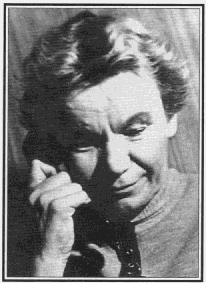
Tatyana Khodorovich (1921-2015)
*
Professor R. I. Avanesov (Corresponding Member, USSR Academy of Sciences), head of the department in which Khodorovich worked, and Professor F. P. Filin (also Corresponding Member, USSR Academy of Sciences) director of the Russian Language Institute, stated plainly in their addresses to the Academic Council that they had no fault to find with the actual research work done by T.S. Khodorovich, who had worked at the Institute for 18 years.
Said Professor Avanesov:
“By writing a letter to the UN, to the Commission for the Defence of Human Rights, which does not include the Soviet Union but which does include our enemies, by writing to a hostile organisation, Khodorovich has committed an anti-Soviet act incompatible with the title of scholar”.
F. P. Filin, director of the Institute, stated that the Appeal to the UN, which contained complaints about violations of legality and infringements of human rights in the USSR, was a “grave anti-Soviet crime”.
*
Khodorovich’s report on her research work was heard by the Academic Council without arousing any opposition on the part of the members. In a secret ballot four members voted for T.S. Khodorovich’s re-election and 20 against. On 27 April, two days before the Academic Council met, a meeting of the department where Khodorovich worked took place.
A few years earlier, I. F. Protchenko (Cand.Sci., Philological Sciences) came from the Research Department of the CPSU Central Committee to take up the post of deputy director at the Institute. He was present at the meeting in addition to the staff of the department.
At this meeting Professor R. I. Avanesov noted that all were unanimous in their positive evaluation of the research work conducted by Khodorovich, but that “serious accusations of a political nature’’ were being made against her. When a woman staff-member asked why in that case Khodorovich’s report on her work was being heard, a great linguistic scholar replied: “Because we have a truly democratic system. That’s how we’re supposed to do it.”
Khodorovich said that the issue of her political opinions and beliefs could have nothing to do with any appraisal of her as a scholar. She also stated that an appeal to an international organisation whose authority was recognised by the government of our country could not be regarded as an appeal to the enemies of the Soviet Union.
“As I have already said at the open Party meeting, the Appeal which I signed contains nothing libellous. It discusses cases of violation of legality and of infringement of human rights.
“I insist, as I always have done, on my right to struggle for freedom of speech, which is guaranteed by the Constitution of the USSR in the interests of the People. It can be in nobody’s interests for the agencies of investigation and justice to exploit our laws, by means of their arbitrary interpretation, as a weapon in the struggle against dissent.”
Khodorovich repeatedly expressed this point of view when subjected to every kind of “working-over” during the last two years at the Russian Language Institute.
During discussion at the departmental meeting of Khodorovich’s “anti-Soviet act”, I. F. Protchenko expressed surprise at the lack of unanimity whether or not to recommend the Academic Council to re-elect Khodorovich for a further term. “There cannot be two opinions on this question,” he said. At an open ballot on 27 April, 12 department members voted to recommend to the Institute’s Academic Council that T.S. Khodorovich be re-elected to the post of junior research officer: 20 members voted against.
*
In all, 17 people at the Russian Language Institute (USSR Academy of Sciences) have signed various letters about cases of violation of legality.
Of these only Khodorovich signed the Appeal to the UN, the remainder addressing themselves to domestic Soviet bodies. Beginning in early 1971 a series of meetings were held at the Institute at which persons who had signed the collective letters of 1966-1968 were condemned. On 28 January 1971 the Academic Council of the Institute passed a resolution categorically condemning the “negative” (‘politically harmful’, in F. P. Filin’s definition) attitudes of certain of the Institute’s employees and the collective appeals, since these letters “are exploited abroad for anti-Soviet purposes”. The resolution also spoke of the need to
“intensify work on the preparation and publication of research in the field of the critique of bourgeois ideology in linguistics”.
At departmental discussions of this issue Filin, the Institute director, said frankly that persons who failed to change their point of view and withdraw their signatures from the letters would not be allowed to defend their dissertations; nor would they be promoted to higher research posts or sent abroad, irrespective of their academic achievements. T.S. Khodorovich is the first to have been dismissed from the Institute in the course of this campaign. Her principled position — she was the only person to vote against the resolution of the Academic Council mentioned above — and her Appeal to the UN provoked the particular annoyance of the Institute’s administration and Party organisation.
*
Tatyana Sergeyevna Khodorovich, the mother of four, has worked at the Institute for 18 years. Her profession is that of linguist and dialectologist. Her work in compiling specialist maps for an atlas of Russian dialects, as well as her participation in drawing up a projected new programme for a Russian language course for schools, have earned the high praise of many of her colleagues, not least during the discussion of her last report on her work.
Besides the Appeal to the UN, which Khodorovich signed as a member of the Action Group, she has also signed a number of letters in defence of persons suffering for their beliefs. These letters were sent to Soviet public and governmental organisations.
The dismissal of Khodorovich is a case in which the dismissal of a researcher for her beliefs has been carried out in a completely undisguised manner, without the substitution of spurious grounds.
==============================================
NOTES
- On Khodorovich, see CCE 24.1, CCE 24.10 [7], CCE 28.0 and Name Index.
↩︎
=============================
 A Chronicle of Current Events