The trial of Andrei AMALRIK [1] and Lev UBOZHKO [2] was held in Sverdlovsk on 11-12 November 1970.
The Judge was A. Shalayev; the Lay Assessors were Korobeinikova and Orlov.
The defence counsels were V. Shveisky for Amalrik and Khardin for Ubozhko. The prosecutor was Procurator Zyryanov.
They were charged under Article 190-1 (RSFSR Criminal Code).
Of the relatives and friends of the accused, only Ubozhko’s mother was admitted to the first session.
*
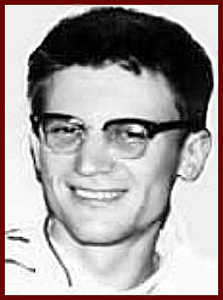
Andrei Amalrik (1938-1980)
*
AMALRIK
RESPONSE TO INDICTMENT
Amalrik was accused of writing and circulating: Will the Soviet Union Survive Until 1984? An Involuntary Journey to Siberia, “A Letter to A. Kuznetsov” [3], and Russian Painting of the Last Ten Years, and also of giving an interview to foreign correspondents.
Amalrik refused to take part in the trial, submitting the following note addressed to the chairman of the court:
“An answer to the question whether I plead guilty.
“The charges brought against me concern the dissemination by me, verbally and in print, of views which are here called false and slanderous. I do not consider either the interview given by me or my articles and books to be slanderous.
“I also think that the truth or falseness of publicly-expressed views can be ascertained by free and open discussion, but not by a judicial investigation. No criminal court has the moral right to try anyone for the views he has expressed. To oppose ideas — irrespective of whether they are true or false — with a judicial criminal penalty seems to me to be a crime in itself.
“This point of view is not only natural for everyone who has his own opinions and who needs creative freedom; it also finds legal expression both in the Constitution of the USSR (Article 125) [4] and in the Universal Declaration of Human Rights, which all the signatory-nations have promised to put into effect.
“Thus as a man to whom creative freedom is essential, and as the citizen of a country which has signed the Universal Declaration of Human Rights, I consider that this court is not entitled to try me, and therefore I shall not enter into any discussion of my views with the court, I shall not give any evidence and I shall not answer any of the court’s questions. I do not plead guilty to circulating ‘falsehood and slanderous fabrications’, and I shall not attempt to prove my innocence here, since the very principle of freedom of speech excludes the possibility of my guilt.
“If during the trial I wish to add anything to what I have said, I shall avail myself of my right to make a final address.”
*
Two persons gave evidence in Amalrik’s case: his wife Gyuzel Makudinova and a customs official from Moscow’s Sheremetyevo airport.
Makudinova stated that she considered the prosecution of her husband for his works and his interview to be unlawful. The customs official confirmed the fact that a tape-recording of the interview given by Amalrik, together with films of the interview [5], had been confiscated from a foreign correspondent. Part of the tape-recording was played in court.
*
UBOZHKO
PROSECUTION
The case against Ubozhko had been instituted after a statement to State Security by a Mr. and Mrs. Ustinov — Ustinov is a literary correspondent of the newspaper Evening Sverdlovsk, his wife is a geologist — and by Khodakov, a doctor.
On the basis of their testimony Lev Ubozhko was accused of circulating the following documents: issues 5 and 6 of the Chronicle of Current Events, the article “To Hope or to Act?” [6], Academician A.D. Sakharov’s booklet Reflections on Progress and Intellectual Freedom, Amalrik’s letter to the writer Anatoly Kuznetsov and Aleksandr Solzhenitsyn’s novel The First Circle.
Three other witnesses confirmed that they had received samizdat literature from Ubozhko. Ubozhko’s superior at his place of work limited his evidence to a negative testimonial.
In relation to the accused Lev Ubozhko, the Procurator, repeated the items in the charge and referred to the witnesses’ testimony.
*
Dealing with the works mentioned in the charge against Amalrik, State prosecutor Zyryanov attempted to prove their slanderous nature by alluding to the achievements of our country, acknowledged even abroad: he gave examples from the broadcasts of Radio Liberty, from President Pompidou of France and from an Iranian left-wing newspaper.
The Procurator demanded for the accused sentences of three years of ordinary-regime corrective-labour camps.
*
DEFENCE
In his address defence counsel Khardin tried to direct the attention of the court to Ubozhko’s mental instability, to his almost pathological striving for justice, although he did not throw doubt on Ubozhko’s soundness of mind, which had been confirmed by psychiatric examination.
Indirectly admitting the guilt of his client, defence counsel asked the court to take into account the complex and difficult circumstances of Ubozhko’s personal and social life. Defence counsel asked that the period spent by Ubozhko in preliminary detention (three months) be regarded as sufficient punishment for him.
*
Defence counsel V. Shveisky attempted to demonstrate the absence of deliberate falsehood in Amalrik’s works, and asked the court for an acquittal on the grounds that there was no case to answer.
*
FINAL WORDS
In his final address, which lasted 2 ½ hours, Lev Ubozhko talked in detail of the difficulties and complexities of his life.
*
AMALRIK
Andrei Amalrik‘s Final Words to the court were as follows:
“The criminal prosecution of people for their statements or opinions reminds me of the middle ages with their ‘witch trials’ and indexes of forbidden books. But if the mediaeval struggle against heretical ideas could be partially explained by religious fanaticism, everything that is happening now is due only to the cowardice of a regime which perceives danger in the dissemination of any thought or any idea alien to the upper strata of the bureaucracy.
“These people understand that the collapse of any regime is first preceded by its ideological capitulation. But, while holding forth about an ideological struggle, they can in reality oppose ideas only with the threat of criminal prosecution. Conscious of their ideological helplessness, they clutch fearfully at the criminal code, prisons, camps and psychiatric hospitals.
“It is precisely this fear of the thoughts I have expressed, and of the facts I adduce in my books, which forces these people to put me in the dock like a criminal. This fear has reached such proportions that they were even afraid to try me in Moscow and brought me here, calculating that here my trial would attract less attention.
“But it is just these manifestations of fear which prove best of all the strength and correctness of my opinions. My books will be none the worse for the abusive epithets with which they have here been described. The opinions I have expressed will not become less correct if I am imprisoned for a few years because of them. On the contrary, this can only impart greater strength to my convictions. The trick which says that people are tried not for their convictions but for circulating them seems to me to be empty sophistry, since convictions which do not manifest themselves in any way are not genuine convictions.
“As I have already said, I shall not here enter into a discussion of my opinions, since a court is not the place for that. I wish only to answer the assertion that several of my statements are directed against my people and my country. It seems to me that my country’s principal task at present is to throw off the burden of its hard past, for which, above all, it needs criticism and not eulogies. I think I am a better patriot than those who loudly hold forth about love for their country, meaning by that- — love for their own privileges.
“Neither the ‘witch-hunt’ conducted by the regime nor this trial — an individual example of it — produces in me the slightest respect, nor even fear. I understand, of course, that trials like this are calculated to intimidate many, and many will be intimidated — but I still think that the process of ideological liberation which has now begun is irreversible.
“I have no requests to make of the court.”
*
The court sentenced Amalrik to three years in hard-regime [usilyonnyi rezhim] corrective-labour camps, and Ubozhko to three years in ordinary-regime camps.
Andrei Amalrik is at present being held in the prison at Kamyshlov (Sverdlovsk Region).
=============================
NOTES
- On Amalrik, see CCE 13.10 [21], CCE 14.1, CCE 16.3, CCE 29.7, CCE 30.14 [9] and Name Index.
↩︎ - On Ubozhko, see CCE 13.10 [2], CCE 15.10 [4], CCE 37.13 [10], CCE 54.15.
↩︎ - Amalrik’s “Letter to Anatoly Kuznetsov” (CCE 11.14 [1]) was published on 10 August 1969 in The Daily Telegraph (London). It was printed in Survey (London, No. 74-75, 1970), and included in the British edition of Will the Soviet Union Survive Until 1984? (1970).
↩︎ - “In conformity with the interests of the working people, and in order to strengthen the socialist system” (reads Article 125 of the 1936 Constitution) “the citizens of the U.S.S.R. are guaranteed by law: freedom of speech; freedom of the press; freedom of assembly, including the holding of mass meetings; freedom of street processions and demonstrations.” (See CCE 12.8, note 1.)
↩︎ - Parts of Amalrik’s TV interview with Bill Cole were not confiscated. They were shown on CBS in the USA on 28 July 1970 and in Britain on BBC 1 on 28 August 1970. (See text in Survey No. 77, 1970.)
↩︎ - Estonian response to Sakharov’s “Reflections on Progress”, CCE 5.1 [6].
↩︎
================================
 A Chronicle of Current Events