<< Issue No 2 : 30 June 1968 >>
To World Public Opinion.
“21 June 1968.
“In 1944 THE WHOLE OF OUR NATION was slanderously accused of betraying the Soviet Мotherland and was forcibly deported from the Crimea.
“All adult men were at the front; able-bodied older men and youngsters were in the labour corps.
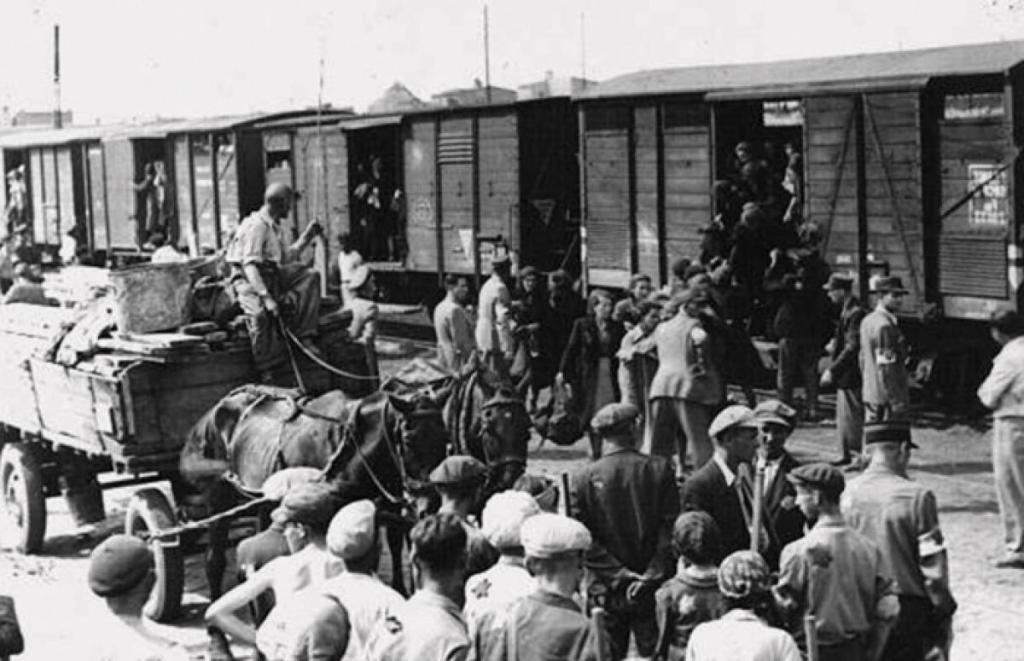
“In one single day, 18 May, without warning, about 200,000 defenceless women, children and infirm persons were driven out of their homes by KGB troops, loaded onto troop trains and removed under escort to reservations. The operation was directed by Marshal Voroshilov.
“For about three weeks they were transported in closed trucks, almost without food or clothing, to Central Asia. After the war was over the men who returned from the front were sent to the same destination. As a result of the inhuman deportation and the intolerable conditions in which we found ourselves more than half of all our people perished in these first years [1].
Simultaneously, our national autonomy was extinguished, our national culture completely destroyed, our monuments pulled down, and the graves of our ancestors defiled and wiped off the face of the earth.
*
*
“During the next twelve years we lived as exiles and were discriminated against.
“Our children, even those born in exile, were branded as ‘traitors’; slanderous stories were published about us and are still being read to this day by Soviet people.
“Following the 20th Party Congress [1956] our nation was relieved of the exile regime, but the accusation of having betrayed the Motherland was not dropped, and, as previously, we were not allowed to return to the Crimea.
“From 1957 until 1967 we sent hundreds of thousands of collective and individual letters to the CPSU Central Committee and the Presidium of the USSR Supreme Soviet, calling for an end to this injustice. After persistent requests, our nation’s representatives in Moscow [2] were received on several occasions by Party and government leaders (Mikoyan, Georgadze, Andropov and Shcholokov [3]). On each occasion we were promised a speedy solution of the Crimean Tatar problem, but instead there followed arrests, deportations, dismissals from employment and expulsions from the Party.
“Finally, on 5 September 1967, there appeared a Decree of the Presidium of the USSR Supreme Soviet which cleared us of the charge of treason, but described us not as Crimean Tatars but as ‘citizens of Tatar nationality formerly resident in the Crimea’, thus legitimizing our banishment from our home country and liquidating us as a nation.
“We did not grasp the significance of the decree immediately. After it was published, several thousand people travelled to the Crimea but once again were forcibly expelled. The protest which our People sent to the CPSU Central Committee was left unanswered, as also were the protests of representatives of the Soviet public who supported us.
“The authorities replied to us only with persecution and court cases.
“Since 1959 more than two hundred of our most active and courageous representatives have been sentenced to terms of up to seven years although they have always acted within the limits of the Soviet Constitution.
“Repressive action against us has been specially intensified recently. On 21 April 1968, in the town of Chirchik (Tashkent Region, Uzbekistan), Crimean Tatars who assembled to celebrate Lenin’s birthday were dispersed by troops and policemen [4], and more than three hundred persons were arrested.
“In May 800 representatives of our nation travelled to Moscow to hand the Party Central Committee a letter calling for the People to be allowed back to the Crimea. On 16 and 17 May almost all the representatives were arrested and deported under escort to Uzbekistan [5]. At the same time four representatives of our intelligentsia were sentenced in Tashkent to various terms of imprisonment [6]. Every day dozens of people are summoned to appear at their local KGB offices: there they are pressured by blackmail and threats to renounce a return to our Homeland.
“The calumny is spread around that we want to return to the Crimea in order to expel those who are now living there. This is untrue. We are a peaceful nation and have always lived and will live in friendship with the multi-national population of the Crimea; we are not threatening anyone – it is we who are constantly being threatened with national extinction.
“What people are doing to us has a quite specific name – GENOCIDE.
“In the course of our struggle a total of more than three million signatures have been collected on the letters sent by our People to the Soviet Government. This means that each adult Crimean Tatar has affixed his signature to them at least ten times. But the appeal of 300,000 people, repeated ten times over, has echoed in vain. Not a single Party or government body has ever given us a reply; not a single Soviet newspaper has ever once referred to our struggle.
*
“We appeal accordingly to the world public.
- “We appeal to all the nations of the USSR as a small independent nation appeals to brother nations.
- “We appeal to all the Peoples of the World, above all to those who have personally experienced the meaning of national inequality of rights and oppression.
- “We appeal to all people of goodwill in the hope that you will help us.
“HELP US TO RETURN TO THE LAND OF OUR FATHERS!”
*
The letter is signed by the following representatives of the Crimean Tatar People who hold a mandate authorizing them to fight on behalf of the nation for return to the Homeland by all lawful methods:
- 1. Zampira Asanova, doctor, Bekabad (Uzbekistan)
- 2. Rollan Kadiyev, theoretical physicist, Samarkand (Uzbekistan)
- 3. Reshat Bairamov, electrician, Melitopol (south Ukraine)
- 4. Murat Voyenny, builder, Tashkent (Uzbekistan)
- 5. Zera Khalilova, teacher, Tashkent
- 6. Mustafa Ibrish, engineer, Bekabad
- 7. Eldar Shabanov, driver, Namangan (Uzbekistan)
- 8. Ayshe Bekirova, teacher, Bekabad
- 9. Ramazan Muratov, worker, Bekabad
and so on …
In all, there are 118 signatures of doctors, engineers, manual workers of all specialities, pensioners, students, office-workers, and housewives.
They come from Uzbekistan (Tashkent, Samarkand, Fergana, Chirchik, Margelan, Sovetabad, Andizhan, Angren, Begovat, Leninabad, etc.); from the Kirghiz Republic (Central Asia); and from the towns of Leninsk and Novorossiysk in the Krasnodar Region (RSFSR).
And see CCE 2.4-1: Commentary to “Crimean Tatar Appeal”
============================
NOTES
Ten days earlier, the KGB sent a Memorandum to the Central Committee (10 June 1968*, 1342-A) noting the Crimean Tatars’ intention to appeal to the United Nations.
*
The Chronicle added notes of its own to this appeal (see above, CCE 2.4-1).
In 1969 Lieutenant-General (reserves) Pyotr Grigorenko prepared to speak at the ‘Trial of Ten’ in Tashkent (CCE 9.2). His unpublished speech includes the following comment:
“Genocide was one of the terrible products of the two accursed führers of the 20th century. The frenzied Adolf fell at once upon nations numbering hundreds of millions; the ‘Marxist’ Stalin preferred to ‘get a little training’ on the small nations.
“Among these nations fate included the Crimean Tatars.”
(Quoted in Peter Reddaway, Uncensored Russia (1972)
Chapter 12: “The Crimean Tatars”)
*
The Chronicle reported regularly over the next 14 years on the Crimean Tatars’ non-violent movement for a return to their historic Homeland. Their Newsletter or Bulletin was one model for the Chronicle itself as a publication (another was the regular journal for relatives of Baptist camp prisoners, CECB).
*
- The proportion who died is given in almost all other Tatar sources as 46 %.
↩︎ - “The permanent unofficial delegation of the Crimean Tatar nation in Moscow has been in existence since 1964,” noted the Chronicle. “Representatives replace one another constantly and hold mandates signed by the residents of the towns and villages” which sent them to the Soviet capital.
“They are trying to secure a solution to the national problem of their people,” the Chronicle continued, “to obtain hearings with government and Party leaders, and they publish an information bulletin / newsletter.”
↩︎ - Georgadze was secretary to the Presidium of the USSR Supreme Soviet; Andropov was KGB head; Shcholokhov was Minister for Internal Affairs (renamed during the Khrushchev years the ‘Ministry for the Preservation of Public Order’).
↩︎ - “The persons directly responsible for the Chirchik excesses” wrote the Chronicle “were Yakubov, secretary of the Party’s city committee, who banned the peaceful Sunday outing, and Major-General Sheraliyev, who summoned the troops to Chirchik.”
↩︎ - “Your problem has been fully and finally settled,” Moscow’s deputy procurator Stasenkov told the delegates, “and will be given no further consideration.” Demanding the departure of all the representatives, the Chronicle continued, Stasenkov threatened that force would be used, and it was.
↩︎ - CCE Issue 2 (30 June 1968) notes that Crimean Tatars arrested in Chirchik were sentenced to two-three years imprisonment. Issue 4 adds (CCE 4.7 [5], 31 October 1968) that members of the Crimean Tatar movement were prosecuted under Article 190-1 for the account in their Bulletin No. 66 of events in Chirchik and publication of an appeal to leading figures in the arts.
↩︎
=================================
 A Chronicle of Current Events