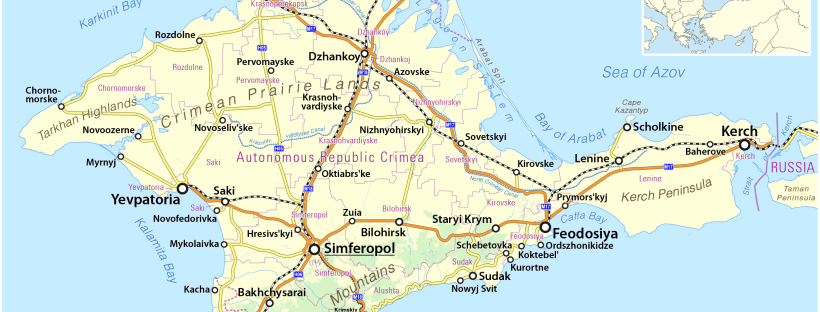
In 1978 there were about 700 unregistered Crimean Tatar families in the Crimea (CCE 51.13); in 1980 approximately 60 families remain. Those who are registered cannot find work in the fields for which they are trained; not one example is known where a Crimean Tatar with higher education has worked in an area appropriate to his qualifications.
In 1977 there were around fifty unregistered families in the Saki district; now nine are left. At the beginning of May all unregistered Tatars were informed in writing that they did not have the right to plant kitchen-gardens. In June six families were registered in the village of Voinka (Krasnoperekopsk district).
Village Soviet Chairman B.G. Peleshko issued summonses to the family of Zeki Khalilov (Zhuravli village, Saki district) and Zevri IbaduIIayev (Mikheyevo village). The summons read:
“I ask you and all the members of your family to come to the village Soviet at 9.30 am on 4 June 1980 to discuss the question of your residence permit with passport officials. Bring with you some proof of identity.”
When they arrived they were met by: Plyuta, head of the Saki district police; Zaitsev, head of the passport office; V. G. Eshkov, deputy head of the passport office; and S.I. Dudchenko, an official of the local internal affairs office (OVD).
They were informed that in connection with their violation of residence regulations they were being expelled from the Crimea. Zeki Khalilov, his wife Alia and Zevri Ibadullayev were taken to the district police offices. Thirteen-year-old Alim Khalilov was also brought there from home. They were then all taken to Simferopol and put in a special detention centre.
On the evening of 5 June 1980, they were put on the Simferopol-Baku train.
The Khalilovs were given a “group ticket by written order”, valid for travel to Tashkent in an ordinary coach; “expelled from the Crimean Region” was written on the ticket. Ibadullayev was given a similar ticket. Two policemen escorted them as far as Kerch. Their personal possessions, and money which had been taken from them when they were detained, were returned to them. The policemen were polite.
At the same time local vigilantes were driven to their houses and told that they would be having lessons in civil defence there. The things from the houses were driven away and put into store, the houses were locked and no one was allowed in.
IbaduIIayev returned. Dudchenko informed Ibadullayev that there was no appeal against the decision of the Saki district executive committee; he could live anywhere except in the Crimea. A KGB official told him to come to him if he had problems with work or registration — they would set him up straight away.
*
On 20 May Musa Aripov (Zhuravki village, Kirov district) was told to take back the money for the house he had bought from the former owner — a year ago a court had ruled that the sale of the house had been illegal — but Aripov refused. On 28 May two policemen evicted Aripov and his wife. The latter returned and moved into the boiler-room (they are no longer allowed into the house).
*
In the village of Marino (Simferopol district), Ikzakirova and her little daughter were evicted in February. They returned. On 12 May the previous owner of the house was forced to sell it to someone else. A new family moved into the house and Ikzakirova’s things were taken outside.
*
Invalids of the Great Patriotic War have now been trying to register for four years.They include: Dani Osan who lost both legs and today lives in the village of Balki (Belogorsk district); Ismail Isatov, who walks on crutches and lives in Belogorsk; and also war veteran Gafur Tukhtarov.
A court recently decided to fine Tukhtarov for the illegal purchase of a house for 1,200 roubles; he was told to sell the house and leave.
*
Eldar Shabanov’s sentence (trial, CCE 53.22-2) was reduced to one year following his supervisory complaint. In March 1980 he was released. He was immediately given a residence permit, but it took him two months to find work as a driver. His wife, a physics lecturer was asked by the district Education Department to work as a technician (see also “The Case of Lavut”, CCE 57.7).
***
At the end of January 1980, Mukhsim Osmanov [note i](CCEs 13, 31, 38, 42, 53) began to receive anonymous letters.
Head of the Crimean KGB operations section, Colonel Pavlenko, visited Osmanov. If there was any more Crimean Tatar activities anywhere, Pavlenko told Osmanov, he would have to answer for it, since he was always surrounded by people and he sat and gave advice to them.
On 13 April 1980, Osmanov was visited by Ablyamid Umerov, master of ceremonies of a Crimean Tatar entertainment troupe in Central Asia. Umerov read Osmanov a letter from Communists to Brezhnev asking him to solve the Crimean Tatar question once and for all and to give Crimean Tatars the right to live normally. He spent only an hour at Osmanov’s home. When he left, he was arrested and taken to the police station. There the letter was taken from him and he was told to explain in writing what he had been doing at Osmanov’s home.
The following day Osmanov was summoned to the procurator’s office. There he was interviewed by E.A. llinov, head of the Belogorsk district KGB (CCEs 42, 44, 46, 49, 51-3). llinov screamed at Osmanov, beating with his fist and stamping:
“There’s all sorts coming to consult you — we’re sick of it! You’re leading young people astray.”
“After the Lenin Holiday [April] we’re going to call the Soviet executive committee together and we’re going to pass a resolution,” llinov told Osmanov’s wife: “we’ll send in a bulldozer, evict your family and demolish your house. We consider you a respectable woman, but even you are helping him.”
*
Osmanov sent telegrams to Brezhnev, Kosygin and Andropov complaining about llinov’s behaviour.
In reply to the telegram to Andropov, Osmanov was summoned to see Rumyantsev, one of the Crimean KGB deputy chairmen.
Rumyantsev said that Osmanov was inciting people and organizing mass trips to Moscow. “We’ve thrown you a life-belt,” he said. “If you don’t stop, you may find yourself beyond the borders of the Crimea.” Rumyantsev took two subordinates to his talk with Osmanov, as witnesses: “Or you’ll be complaining again that we’re shouting at you!” Rumyantsev said that Osmanov and others were saying that they sent letters to Soviet agencies. In fact, they were redirecting them to the West via Sakharov. Rumyantsev told Osmanov’s wife: “We felt sorry for you, so we let you register in the Crimea. Your husband’s disabled [Osmanov is blind], but if this carries on, we’ll have no pity for your children or your husband.”
In reply to the telegram to Kosygin, a letter came to Osmanov from V.M. Kuptsov, Crimean Regional deputy procurator:
“Despite the official warning issued on 11 May 1979, you persist in engaging in anti-social activities. Because of this you were again interviewed on 24 January 1980. At the time you expressed no dissatisfaction and made no complaints about the visit to your house.
“There have been no violations of socialist legality in the actions of the officials involved.”
=================================
NOTES
note //
 A Chronicle of Current Events