- 23-1. Letters, Statements & Documents: Catholic Committee (31 entries)
- 23-2. MHG Documents 99-111
*
BALTIC & EASTERN EUROPE (1-5)
[1]
Ona Lukauskaite-Poskiene
- ‘To The UN Secretary-General;
- the 34th session of the UN; and
- the Special Committee on Progress in the Application of the Declaration on Granting Independence to Colonial Countries and Peoples’
(22 August 1979)
23 August 1979 was the 40th anniversary of the signing of the Agreement of Non-Aggression between Germany and the USSR. Annexed to this agreement were secret protocols containing plans for the occupation of Lithuania, Latvia and Estonia. In 1940 the occupation took place.
The author, a member of the Lithuanian Helsinki Group, requests on behalf of the Group that
“the necessary measures be taken without delay to eliminate colonialism once and for all in Lithuania and in other enslaved Baltic countries …
“We also ask that all member-States of the UN be called on to lend us moral, political and material support in our just struggle.
“In addition, we ask that all States, specialized agencies and international organizations refrain from giving any kind of assistance to the government of the USSR, until it renounces its policy of colonial rule in Lithuania, Latvia and Estonia.“
*
[2]
48 Signatures
- To the Governments of the USSR, West Germany, and East Germany;
- to the Governments of countries signatory to the North Atlantic Charter [NATO];
- To the UN Secretary-General
(23 August 1979)
48 Lithuanians, Latvians and Estonians appeal to the governments of the USSR, West Germany and East Germany, requesting that they publish the full text of the Soviet-German Agreement of Non-Aggression and the secret protocols attached to it, and declare them inoperative as from the time of their signing; they appeal to the governments of countries signatory to the North Atlantic Charter, requesting that they condemn the agreement and its consequences.
They appeal to the Secretary-General of the UN, requesting that he raise this question at the UN General Assembly.
The appeal is supported by Andrei Sakharov and by the following members of the [Moscow] Helsinki Group: Yelena Bonner, Sophia Kalistratova, Malva Landa, Victor Nekipelov, Tatyana Osipova.
Ivan Kovalyov, Leonard Ternovsky, Irina Zholkovskaya, Tatyana Velikanova, Alexander Lavut and Yury Belov have also given their support.
*
[3]
The International Year of the Child
Doc. No. 17 of the Lithuanian Helsinki Group (15 October 1979)
“We consider that the child’s greatest enemy in our Lithuanian Republic is alcoholism, which is increasing as the level of culture among the people decreases …
“Despite this, the present Lithuanian authorities try to sell as much alcohol as possible to the people.
“And on the whole … the anti-alcohol campaign is regarded as anti-Soviet in Lithuania.
“This is why, under the weight of a foreign yoke since 15 July 1940, the Lithuanian people have been unable to raise their general level of culture or even to stop its decay.
“Children’s rights are violated in many respects. The educational system is built on atheist foundations.
“Lately, the Russian language has begun to be imposed to an even greater extent in secondary, middle and even nursery schools.
“In middle schools in Lithuania several subjects are given only superficial treatment. In textbooks the history of Lithuania is distorted and the number of Lithuanian language classes is constantly being reduced.
“Two months ago 50 Lithuanians, Latvians and Estonians, together with a group of Muscovites … appealed to the USSR Government to condemn the shameful Stalin-Hitler Pact [CCE //]. But, as yet, the Soviet Government has made no reply. Instead of meeting their lawful demands, it has begun persecuting those who signed the appeal.
“Therefore, … we ask you to spare no effort to obtain by the end of this year the basic pre-condition for the development of our peoples and, hence, their children … the granting of full independence to Lithuania, Latvia and Estonia.“
The document was signed by four people: Ona Lukauskaite-Poskiene, Bronius Laurinavicius, Algirdas Statkevičius and Mečislovas Jurevicius.
*
[4]
The Public Self-Defence Committee (Poland), 21 signatures (USSR):
‘Appeal’ (31 July 1979)
“... We appeal for support in defending the Czech and Slovak campaigners for the rule of law who signed Charter-77 and have been illegally arrested by the Czechoslovak authorities.“
*
[5]
Andrei Sakharov
‘Open Appeal’ (24 October 1979)
The author calls on the Czechoslovak leadership to review the sentences imposed on Czech campaigners for the rule of law (see Pravda, 25 October). He also writes:
“I appeal for an open society, for international trust and security. I call for the review of unjust sentences in Czechoslovakia, the USSR, China and throughout the world. I call for an amnesty for prisoners of conscience in all countries …“
*
CHINA (6-7)
[6]
Editors of the free Moscow journal Poiski [Searches]
“Open Letter to the editors of the independent Chinese journal Explorations” [1]
(16 October 1979)
“All the editors and contributors to the unofficial Moscow journal Searches have today been deeply shocked by the extraordinary sentences of 15 years’ imprisonment imposed by a Peking court on your editor-in-chief Wei Jingsheng …
“In his defence of democracy against the one-party system, Wei Jingsheng pointed out the deep-rooted evil of a political system shared by both China and the USSR …
“According to information received, Wei was sentenced for publishing the number of victims of the China-Vietnam conflict …“
*
[7]
Andrei Sakharov
‘To Hua Guofeng, Premier of the State Council of the Chinese People’s Republic’ (17 October 1979)
“… I ask you to use your influence to obtain a review of the sentence imposed on Wei Jingsheng …“
***
(8-12)
Five letters and statements by Andrei Sakharov
8.
To L. I. Brezhnev, Chairman of the Presidium of the Supreme Soviet (13 November 1979)
“… Now that each new day of delay means death from starvation and illness for thousands of people, I appeal to you to use your personal authority and that of the USSR to influence the position of the governments of Kampuchea and the Socialist Republic of Vietnam to provide conditions for effective international aid to the starving.
“Saving the lives of starving people must take absolute priority over all political and military problems.“
*
9.
“To the Sakharov Hearings of 1979” [2]
5 September 1979
“… One of the basic contradictions of this epoch is that between society’s tendency to develop towards pluralism (economic, cultural and ideological) and its development in the opposite direction towards totalitarianism, dictatorship and the use of violence.
“The expansion of totalitarianism is one of the basic dangers of the modern era … I consider two principles to be particularly important: first, political and ideological impartiality, that is, the application of equal criteria for all Regions of the world, all countries, all people of all races, nationalities, convictions and creeds; and second, the use of non-violent methods, such as publicity, as a fundamental constraint and the chief instrument in the defence of human rights.“
The author touches briefly on a number of questions included in the programme for the Sakharov hearings.
*
10.
“Speech for the New York Academy of Sciences Assembly” [3]
Text prepared for delivery at the Assembly to award the New York Academy of Sciences Prize to A. D. Sakharov. The meeting is planned for December.
*
11.
“On the questions set by the Moscow University Faculty of Applied Mathematics for Jewish final-year students” (12 July 1979)
Concerning the pamphlet “Selected Questions from the Oral Examination in Mathematics, Mechanics & Mathematics Faculty, Moscow State University, 1978” (CCE 51.21 [9]), Sakharov writes:
“… In my view, to set these questions for examination purposes is totally inadmissible.
“If we compare these questions with those set for students who have not been singled out in advance for failure in their final exams, the examiners’ discriminatory intentions become clear.
“It should be added, in conclusion, that planned discrimination is applied at exams with respect not only to Jewish final year students, but also to other categories of examinee, dissidents’ children in particular.“
*
12.
To the Tolstoy Fund, New York, USA (27 September 1979)
“The death of Alexandra Lvovna Tolstoy is a grave loss for us all.
“Her compatriots throughout the world, together with many other people, are acquainted with her wise, humanitarian work and her inexhaustible, active goodness, which eased the lot of so many.
“People will not forget Alexandra Lvovna.“
*
[13]
Victor Nekipelov
‘To the Procurator of the Vladimir Region’ (28 September 1979)
The author requests that a criminal case be opened against P. Yevseyev, an officer of the Vladimir KGB, and A. A. Fokin, Serbsky Institute staff member, under Article 170, pt. 2 (RSFSR Criminal Code: “Abuse of Authority or official position”).
In 1970 Major Yevseyev, a Senior Investigator of the Vladimir KGB, proposed to Mikhail Kukobaka, who was at the time under arrest, that in exchange for his release he sign a false testimony stating that he had met an official of the West German Embassy. Kukobaka refused. “Ah, so!” exclaimed Yevseyev, “You don’t agree? Well, here’s what I’ll do for you. You won’t forget this as long as you live!”
Yevseyev sent Kukobaka for psychiatric examination to the Serbsky Institute, where ‘paranoid schizophrenia’ was diagnosed, and he was ruled not responsible. The reporting doctor at the examination commission was A. A. Fokin. In April 1979 a Serbsky Institute examination ruled Kukobaka responsible.
All this is set out in the document “Who Will Answer for the Crime?” and in Kukobaka’s ‘Testimony’, both attached to Nekipelov’s statement.
*
[14]
Yuly Daniel
“To the Administrators of the Political Prisoners’ Relief Fund” (12 November 1979)
The author replies to a letter signed ‘Tverdov’ (a pseudonym), containing accusations against the Fund’s administrators. One of the charges was that the Fund did not help Yu. Daniel. The author writes that he did not require aid from social organizations.
“I did not, do not and cannot have any claims on the Fund.
“I do not know the name of the person or persons who wrote the letters under the pseudonym of Tverdov. but I assume that their sole aim is to make us all quarrel with one another.“
A large number of dissidents received a copy of Tverdov’s letter through the post. Yu. Daniel did not receive one.
*
[15]
Irina Zholkovskaya
‘To Marshal Ustinov, USSR Minister of Defence’ (10 September 1979)
Following the blunt refusal of the commander of the military unit in which Sergei Shibayev is serving to reply to her enquiries about Shibayev’s state of health, Zholkovskaya [1] requests the Minister to point out the inadmissibility of this behaviour to the unit command, and [2] demands information as to Shibayev’s whereabouts and state of health.
*
[16]
A. Podrabinek, A. Khromova, N. Ostrovskaya, L. Ostrovsky
‘To Mrs Margaret Smith’ (9 June 1979)
Western correspondents visited the settlement of Ust-Nera, the Oimyakon district centre in the Yakut ASSR. Two months later the local newspaper Northern Dawn [Severnaya zarya] published a translation of an article by Margaret Smith entitled “Everyone Calls it the Cold Pole” [4].
Alexander Podrabinek, currently serving a period of exile in Ust-Nera (CCE 53.20), his wife Alla Khromova and the couple who own the house where they live (Natalya and Leonid Ostrovsky, see CCE 54.22 [9]) explain to Mrs Smith that her article does not give an accurate picture of the situation in Ust-Nera: the authorities deliberately led her astray. For instance, “for each working citizen in Ust-Nera,” state the authors, “4 kilograms of meat and 400 grams of butter are sold per month in the shops, in return for ration vouchers”.
*
[17]
Vasyl Romanyuk
‘To the National Council of Churches of the USA’
In exile, Father Vasily Romanyuk (CCE 52.5-1) has confirmed his statement of 1 July 1976 renouncing Soviet citizenship and requesting American citizenship (CCE 42.4-3).
He asks Christians in the USA to help him obtain the latter.
*
[18]
M. Romanyuk-Antonyuk
Two letters
- “To the Secretary-General of the World Council of Churches”;
- “to the Pope of Rome”
(August 1979)
The wife of Vasily Romanyuk is asking for help to secure the release of her sick husband from exile.
***
KONOVALIKHIN (19-20)
[19]
Vadim Konovalikhin
“To L. I. Brezhnev, Chairman of the USSR Supreme Soviet Presidium,” (1 May 1979)
In connection with the pre-May ‘political amnesties’ (//CCE 53), the exiled Vadim Konovalikhin (CCE 52.6) appeals for the “release of all political prisoners in the Soviet Union”.
*
[20]
Vadim Konovalikhin
“To L. I. Brezhnev, Chairman of the USSR Supreme Soviet Presidium” (5 September 1979)
” … Today … on the Day of Remembrance for the victims of the Red Terror, I am sending the executioners an angry message: ‘Damn you, Red Executioners!’
“I also declare that I do not wish to remain a citizen of the USSR, as the title ‘Soviet Citizen’ obliges one to be party to the misdeeds committed by the CPSU against freedom-loving citizens of our country.“
***
[21]
Reply to a complaint lodged by the exiled Yevgeny Pashnin
“The Procuracy of the town of Vorkuta has examined your complaint about the incorrect action of police-officer Lebedev in checking your documents early in the morning at your place of residence. ‘Under the regulations in force, town OVD officials are authorized to check exiles from 6.00 am to 10 pm.
“Lebedev is not, therefore, considered to have acted in violation of the regulations. The fact that his behaviour was tactless has been taken up by the town OVD administration, and Lebedev has been told in strong terms that such behaviour is inadmissible.“
“A. V. Moiseyev, Deputy Procurator of Vorkuta and Junior Legal Counsellor“
(“Tactless behaviour” refers to the use of ‘thou’ [ты], the familiar form of address.)
*
[22]
Lev Gendin & Igor Zhiv
‘Joint Press Statement’ [5] 15 August 1979
“... We have been questioned on a number of occasions at the Lefortovo KGB Prison in connection with the Morozov case [CCE 51.8, CCE 52.4-2].
“We have been subjected to criminal threats and blackmail from the investigation brigade headed by KGB Major N. N. Belyaev, and asked to give evidence which could be used to have us arrested. Moreover, Lev Gendin was told that refusal to cooperate with the KGB constituted ‘an insurmountable obstacle to his obtaining permission to join his family in Israel’. (L. Gendin has been separated from his wife, who lives in Israel, for over seven years.)
“Many different forms of extrajudicial persecution have been used to put pressure on us. These include an abortive attempt to press false charges of attempted murder against Igor Zhiv and telephone calls from KGB officers at work which created an unbearable atmosphere and led to his dismissal. Throughout a long period a campaign of psychological pressure was conducted, including, among many other harassments, large-scale open shadowing not only of us, but also of our relatives and friends.
“In addition, KGB Major Belyaev openly told Igor Zhiv that a special investigations brigade had been set up to fabricate a criminal case against him.
“Lastly, in August 1979 an attempt was made to have us arrested in the settlement of Nebolchi, Novgorod Region (about 550 kilometres from Moscow). Typically, in order to divert attention away from what was happening to us, and at the same time as the attempted arrest, the KGB in Moscow started rumours that Lev Gendin was being given an exit visa for Israel.
“By tremendous efforts, we have managed to evade arrest in the Novgorod Region and get to Moscow. Hungry and exhausted in the pouring rain, we have made our way through 100 kilometres of swampy, almost impenetrable forest, with the sole aim of bringing the acts of lawlessness and tyranny perpetrated against us by the KGB and the police to the attention of the media and world public opinion …“
*
[23]
Oksana Meshko
“To V. V. Fedorchuk, Chairman of the Ukrainian KGB” (31 August 1979)
On 30 August 1979, Oksana Yakovlevna MESHKO was summoned for questioning by the Kiev KGB.
In her statement she writes that she refuses (translation from Ukrainian) to take part in KGB pre-trial investigations and closed trials of people brought to trial for their views, beliefs, or faith, or of members of the Ukrainian Helsinki Group.
*
[24]
V. Sysoyev
“To the Working Commission” (August 1979)
The artist Vyacheslav Sysoyev (CCE 53.29) writes:
“The authorities do not like my drawings [6]. Through cartoons and satirical drawings — which I consider to have social, but not anti-Soviet content — I try to prove to people that one cannot live in the world with lies and baseness … I refuse to appear for questioning. B. S. Bode was forcibly taken for questioning, and they have not forgotten to ‘visit’ my 70-year-old mother.
“In June this year the authorities sent some of my drawings for examination, as far as I know, to the Grabar All-Union Arts Restoration Centre. After examining their artistic content, the investigation decided to bring psychiatrists from the Gannushkin Hospital in to the ‘Sysoyev case’.
“It is my view that this development in the investigation means that I am threatened with internment in a psychiatric hospital.
“But can a creative person cease his work or change it, merely because this is required by those who want everyone to ‘sit quietly and talk quietly’?“
*
[25]
Valery Fefyolov & Olga Zaitseva
“To the editors of [émigré newspapers] Russkaya Mysl and Novoye Russkoye Slovo”
(September 1979)
Fefyolov, member of the Disabled Action Group, and his wife Olga Zaitseva describe the destitution and lack of rights of the disabled in the USSR.
*
(26-31)
The Catholic Committee
DOCUMENTS
No. 19 (15 August 1979): The assault on Dana Kelmeliene and the detention of Angele Ramanauskaite (CCE 54.18). Describes the situation of Catholics in Moldavia (CCE 47.6, CCE 48.16-1, CCE 53.24).
No. 20 (15 August 1979): Appeal in connection with the forthcoming 600th anniversary of the conversion of Lithuania to Christianity, and the 500th anniversary of the death of St Kazimir.
No. 21 (12 September 1979): The interference by the authorities in the election of church committees (CCE 54.18).
No. 22 (12 September 1979): The fate of Pentecostal believer Victor Vasilyev (CCE 54.20-2).
No. 23 (23 September 1979): The right of believers to give their children religious education. The trial of Angele Ramanauskaite (CCE 54.18).
No. 24 (13 November 1979): On the publication of catechisms.
===========================================
NOTES
- On Wei Jing Seng’s case, see the special issue on China of Index on Censorship, London, 1980, No. 1.
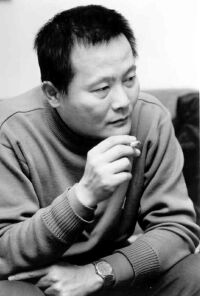
Wei Jinsheng (b. 1950) was imprisoned from 1979 to 1993; and again from 1994 to 1997 when he was deported to the USA. (Jingsheng is depicted in 1997 in the feature photo attached to this report.)
↩︎ - The full text of Sakharov’s address was published in A Chronicle of Human Rights in the USSR (CHR), New York, 1979, No. 35. The 3rd Sakharov Hearings took place in Washington D.C. on 26-29 September 1979.
↩︎ - The full text of Sakharov’s speech was published in CHR, 1979, No. 36 (pp. 25-26).
↩︎ - Place of publication in English unknown. But see an account in The Washington Post (8 April 1979) by Kevin Klose of the 10-day visit by a group of American journalists.
↩︎ - Igor Zhiv was eventually allowed to emigrate (CCE 56.20) in April 1980.
↩︎ - Many of Sysoyev’s drawings appeared in L’Alternative: Pour les Droits et les Libertes Démocratiques en Europe de L’Est (Paris), 1980, Nos. 3 and 4-5.
↩︎
===============================
 A Chronicle of Current Events