<< No. 43 : 31 December 1976 >>
This section is largely based on a report by the Action Group, issued on 8 December 1976: “Some Known Cases of Psychiatric Repression in Recent Months”.
*
As CCE 42.5 already reported, a medical commission recommended that compulsory treatment of Vyacheslav Igrunov (CCE 40.5) should be ended.
It has become known that the commission met on 9 September. Igrunov told the commission that he had not changed his views — he still did not consider that the literature he had distributed had been anti-Soviet; he considered that the measures taken against him were contrary to the principle of free exchange of information but said that he did not intend to distribute such literature in future, so as not to end up in a psychiatric hospital again. The commission’s diagnosis was ‘Schizophrenia: in effect healthy’.
In September, the Regional Court would not accept the Igrunov case ‘because of a mistake in spelling the patient’s name’. On 7 October, the documents were sent back to the court by the hospital. On 24 December, the Odessa court decided to end the compulsory treatment. Vyacheslav Igrunov is still in hospital.
*
On 9 November Vasily Zhigalkin was detained by police for trying to meet the American consul in Moscow and sent to city psychiatric hospital No. 3, section 14 (on Matrosskaya Tishina street). On 2 December Zhigalkin was released into the care of his mother.
*
On 2 November 1976, the poet Josif Mikhailovich TERELYA was forcibly placed in the Vinnitsa psychiatric hospital.
The doctor in charge of his section refused to tell Terelya’s wife his diagnosis. He said: ‘We have sent an enquiry to the Serbsky Institute asking them to send us a report of his medical history.’ Then, according to him, an expert commission would be appointed to decide how he should be treated. There are 38 patients in Terelya’s ward, three to five of them seriously ill.
On 30 November Terelya was released from the hospital.
Before his hospitalization Terelya had been summoned more than once by the police and accused of parasitism. However, as soon as he got a job as a church caretaker, an order was Issued for his dismissal. For some time, he was unemployed. Later he obtained work as a joiner in the district hospital where his wife works as a doctor.
M. Terelya is 33 years old.
He has spent 14 years in camps, prisons and Special Psychiatric Hospitals (SPHs). There he became an invalid (he fractured his spine) but was not awarded invalid status. In April 1976 he was released after a lengthy term in Sychovka SPH and declared to be capable of working, even of military service.
*
Nikolai Plakhotnyuk (CCE 28.7 [1]) has been transferred from the Dnepropetrovsk SPH to the Kazan SPH. The reasons for this transfer are not clear. The Kazan SPH stated that Plakhotnyuk had been transferred because at Dnepropetrovsk “the section he’s in is to be closed”. When enquiries were made by telephone to Dnepropetrovsk SPH (“Why was Plakhotnyuk transferred to Kazan?”) the reply was “We only answer enquiries from relatives”.
Nikolai Plakhotnyuk has tuberculosis but has not received the treatment he needs; it seems he is not going to receive it, as the only tuberculosis unit in the SPH system is at Oryol SPH.
*
KOPYSOV
On 10 November 1976, Ivan Pavlovich KOPYSOV, a journalist from the town of Bobrov (Voronezh Region), went to the reception room of the Presidium of the USSR Supreme Soviet. He wanted to inquire about the fate of a letter he had handed in to the Presidium office at the beginning of November.
Kopysov was asked to step into room No. 10. He was received by a female official who spoke to him benevolently, asking him to tell her what he had written about in the letter, and then asked him to wait in the corridor. A quarter of an hour later he was called into the room again. Now there were three men there. They led Kopysov out by force through another entrance, put him in a car and look him to psychiatric hospital No. 7. (This is a hospital for people from out of town, a ‘transit hospital’. Many people are sent there from the ante-rooms of various official institutions, including room No. 10 at the Presidium.)
On 23 November 1976, Kopysov was transferred to a hospital in Voronezh Region; in the middle of December, he was released.
*
On the second or third day after Kopysov had been interned the doctor at hospital No. 7 explained to Kopysov’s friends that “he imagines that someone is persecuting him”.
In his letter Kopysov does indeed write that he is being persecuted by the KGB. After he wrote two or three letters to Solzhenitsyn in 1968, he was placed under surveillance. In June 1972 he was sacked from his job on the district paper. Since then, he has been almost permanently unemployed. He has been subjected to searches, manuscripts have been confiscated from him, he and his relatives and friends have been interrogated, silly rumours have been spread about him (Bobrov is a small town). Kopysov has had to wander about in search of work, hoping to escape from this baiting. His many complaints to the procurator’s office and to Party organizations have not helped him.
Kopysov, relying on his professional experience, also writes of how decency and humanity are fading out of people’s relationships. This is accompanied by a growth in general spitefulness, nourished by the indifference of leaders to human fates. The letter ends as follows:
“There is only one way out — to flee. So I ask you to allow me to leave the USSR. I love my Motherland. But what can I do if it has become a stepmother in the image of the KGB?
“I have no relatives abroad who could send me an invitation. However, I think I will find a country that would accept me. I am capable of earning my own living. Here at home, I am deprived of doing even that.“
*
KUKOBAKA
Mikhail Ignatievich Kukobaka [1], who has been living in Bobruisk since his release, was taken by force to a psycho-neurological clinic on 1 November 1976; from there he was transferred to the Mogilyov Regional psychiatric hospital.
He was taken from his place of work — he works as an electrician and joiner in the Central Electric Power Station — with the help of the police. In the process of his formal committal to hospital by the clinic, it was noted down that, according to the KGB, he had been disseminating anti-Soviet literature, was suffering from an illusion that he could reform society and was dangerous to the public.
In reality, the reason for Kukobaka’s hospitalization was his distribution of the 1948 Universal Declaration of Human Rights to workers, as well as a conflict with the local administrative authorities. (Kukobaka had defended a woman who had been driven by her unjust treatment to attempt suicide.)
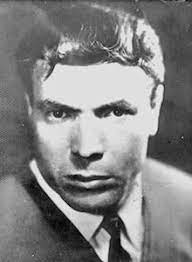
Mikhail Kukobaka, b. 1936
*
PODRABINEK INTERVENES
At the end of November, the Muscovite Alexander Podrabinek, an ambulance worker, visited the Mogilyov hospital with the aim of helping Kukobaka. On 25 November he talked to V. M. Mylnikov, head doctor of his section.
Mylnikov said that only the clinic knew the exact reasons for the hospitalization, and the clinic’s recommendation was enough for the hospital; Kukobaka had been diagnosed as schizophrenic. Podrabinek objected that schizophrenia was not a reason for urgent hospitalization and that Kukobaka was not suffering from any of the symptoms listed in the 1971 Directives on Immediate Hospitalization (CCE 28.9). In addition, a hospital decided itself the question of hospital treatment, regardless of recommendations.
“You must understand, he’s a special case,” Mylnikov said: “we don’t decide anything here.”
Podrabinek said that people in Moscow, who had heard that Kukobaka had been put in a psychiatric hospital for distributing the 1948 Universal Declaration of Human Rights, were preparing to send complaints about these actions to the highest authorities and to appeal to public opinion:
“This incident is a huge mistake on your part. Brezhnev spoke of the great significance of the Declaration, in a recent speech he made in Alma-Ata.”
On the same day, a commission met at the hospital. A little later Podrabinek met I. S. Kassirov, the deputy head doctor.
Kassirov said that Kukobaka’s condition was good and explained his committal thus:
(Kassirov) “It was because of his incorrect, anti-Soviet behaviour. Some sort of discussions or complaints — I don’t know exactly.”
(Podrabinek) “I can tell you. He was accused of disseminating the Universal Declaration of Human Rights.”
(Kassirov) “Well, you see, I told you so — he’s a sick man!”
Kassirov said that the commission had not made a final decision as to whether Kukobaka needed treatment; they still had to get some details from Bobruisk. The next day, 26 November, he informed Podrabinek that he would make an exception and release Kukobaka “on his own personal responsibility”. He added:
“Your coming here was unnecessary, it’s simply time for him to be discharged. But I should warn you that if he does the same thing in future, he’ll end up here again, and then he won’t get away with only a month.”
*
On 28 November 1976, Kukobaka left the hospital and returned to Bobruisk. On 2 December he sent a complaint to Andropov, head of the KGB, in which he wrote:
“On 1 November, at the orders of officials of the Bobruisk KGB, I was seized at my place of work and taken straight to the Regional psychiatric hospital in Mogilev. Twenty minutes after my arrest (I call things by their proper names) two local KGB officials carried out a pogrom in the hostel room I lived in. When I was finally released a month later, many of my belongings were missing.
“The objects confiscated included: the printed text of the Declaration, a handwritten text of the Declaration in a school exercise-book and a notebook, and two photographs in a frame — Academician Sakharov and General Grigorenko … Personal letters were confiscated … A cross and a small icon, bought for 50 kopecks in a church shop, were taken, together with a map of the metro, a notebook containing a railway timetable, a children’s book about pirates in Gcnnan bought at the Druzhba shop, 5 issues of the journal America, handwritten diary notes from seven years ago, partly typed. These notes had been checked once already by the Vladimir KGB and returned. Perhaps their colleagues in Bobruisk have their own methods of ‘witch-hunting?’ A few articles on questions of morality had also disappeared. Does all the material confiscated really constitute a threat to the Soviet State?
“The actions of your officials are not those of servants of the State upholding the law. People who behave like this are usually burglars, who break into other people’s flats, feeling themselves free of any controls and immune from any punishment.
“Such criminal activity by these KGB officials radically contradicts the provisions of the Constitution; I therefore demand that you make them behave themselves decently and return my confiscated property.”
*
The Release of Pyotr Starchik
The preceding issue of the Chronicle reported the forcible incarceration of Pyotr Starchik [2] in a psychiatric hospital and the many protests on his behalf (CCE 42.1, “Sent to Hospital for his Songs”).
On 14 October 1976, a public committee was set up, known by the slogan “Freedom for Pyotr Starchik!” The committee included Tatyana Velikanova, Alexander Ginzburg, Father Sergy Zheludkov, Victor Kapitanchuk, Lev Regelson, Hierodeacon Varsonofy (Khaibulin), Tatyana Khodorovich and Father Gleb Yakunin. The members of the committee sent letters to various public and State organizations abroad, in particular, to the World Council of Churches and the US Congress.
In its appeals the committee also defended other victims of psychiatric repression. among them Eduard Fedotov (released on 17 November, CCE 43.6).
On 15 October 1976, 56 people signed an appeal to the President of France.
The President was asked to intervene and to help to save Starchik. These appeals and protests reinforced the already significant reaction which the ‘Starchik case’ had aroused abroad. Soon Starchik’s course of ‘treatment’ with neuroleptic drugs was ended.
*
At the beginning of November V. P. Kotov, the chief psychiatrist of Moscow, had a talk with Starchik in hospital.
At his request Starchik sang him some of his songs. Kotov praised his songs and expressed his interest in the future of the ‘Friday concerts’ (CCE 42.1). Starchik replied that he had already, before his forcible hospitalization, decided to end them. Kotov sighed with relief.
On 12 November Pyotr Starchik was released. In hospital he had composed over 30 songs. After his release Starchik visited Kotov, at his request, Kotov apologized to Starchik for his incorrect conversation with his wife in October.
He said that he had not given permission for Starchik’s hospitalization and agreed that it had infringed the existing norms.
=======================================
NOTES
- On Kukobaka, see CCE 27.5, CCE 34.9, CCE 39.3, CCE 40.15 [21] and Name Index.
↩︎ - On Starchik, see CCE 25.2 [1], CCE 28.5; CCE 35.10 [9], and Name Index.
↩︎
===============================
 A Chronicle of Current Events