- 11-1 Prisons and Camps
- 11-2 A Statute for Political Prisoners
- 11-3 Letters and Statements; Releases
*
5. Political Prisoner Status
(1-5)
[1]
The movement of political prisoners demanding recognition of their special status vis-à-vis common criminals began in 1974 (CCE 33.5-2 [3]). Dozens of political prisoners began to define their behaviour with regard to camp and prison regimes by this status (they “adopted the status”) and for this were subjected to severe punishments [1].
A draft Statute on this status was appended to an appeal recently sent on 17 January 1977 by three political prisoners of the Mordovian camps to the Presidium of the USSR Supreme Soviet. (They sent a similar appeal to the USSR Procurator-General.)
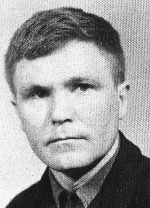
Vladimir N. Osipov (1938-2020)
The obligations on human rights accepted by the Soviet Union, they write, make “the necessity of freeing all Soviet political prisoners” a topical issue.
Recognising that this will require a certain period of time, they suggest that for this period statutes on the regime for confinement of political prisoners be made law.
These should be drafted on the basis of the Statute they attach, which conforms to the international documents on human rights and is approved by the majority of political prisoners. The appeal is signed by:
- AIRIKYAN, Paruir Arshavirovich, secretary of the National United Party, an organization for Armenian independence;
- OSIPOV, Vladimir Nikolayevich, editor of the Russian Christian-patriotic journals Veche and The Earth,
- CHORNOVIL, Viacheslav Maximovich, editor of the journal Ukrainian Herald (1970-1972).
*
[2]
The Statute on Political Prisoners in the USSR.
A short summary.
The Statute consists of 40 paragraphs:
Section I (paras. 1-5)
“Political Prisoner”, a definition.
Apart from persons sentenced for circulating beliefs, participating in associations (not designed to commit criminal offences) and for attempts to escape from the USSR for political motives. Political Prisoners also include those sentenced for participation in guerrilla and underground movements of national liberation — but not members of punishment brigades under the authority of the German occupation forces.
In relation to present legislation all those may be considered Political Prisoners who were sentenced under Articles 70 and 190-1, some of those sentenced under Articles 64, 72, 190-2 and 190-3 (of the RSFSR Criminal Code), and also those sentenced on fabricated criminal charges when the real motives of the prosecution were political.
Section II
“The legal position of the Political Prisoner”.
First of all, this rejects as “contrary to law” (para. 6) intra-departmental secret orders and instructions regulating the regime of confinement of prisoners.
Para. 7 explains the demand for the distinguishing of the Political Prisoner regime from the regime for common criminals by the fact that Political Prisoners “for the most part are not criminals but persons imprisoned by the existing order out of its fear of the spread of dissent”.
Section III
“The places of confinement of Political Prisoners”.
Demands that Political Prisoners should be held on the territory of their own republics, in separate concentration camps and prisons, and that they should be transported in normal forms of transport, not in prison railway trucks and not via transit prisons.
Section IV
“Living conditions and the regime of confinement for Political Prisoners”.
Here the following norms are defined: cells that are not cramped (five square metres per person) and do not hold more than five people; free movement between cells, corridors and recreational and living quarters; for each prisoner there should be a bunk, a small cupboard and a table lamp; and there should be civilized sanitary conditions (para. 11).
- In accordance with the ILO Convention, forced labour should be banned (para. 17).
- Weekly short visits. The administration is not entitled to forbid anyone to visit a Political Prisoner, or to determine the language of conversation, or to intrude on a conversation or interrupt a visit (para. 18).
- Long visits (with close relatives): three times a year for not less than three days (para. 19).
- Unlimited right to uncensored correspondence, and to receipt of parcels and money transfers (para. 20).
- The administration is not entitled to deprive a Political Prisoner of visits, correspondence, or the right to buy essential provisions and articles.
- Incarceration in solitary or a punishment cell to be applied in exceptional circumstances, with the sanction of the procurator and with the right of appeal (para. 21).
The degrading and demoralising practice of the administration giving inducements to prisoners should be banned (para. 22). - Medical services should be independent of the administration. The Political Prisoner is entitled to use medicines sent to him and to consult doctors invited from outside the camp (para. 23).
In the event of a Political Prisoner’s death his relatives to be able to bury his body where they wish (para. 24). - Para. 25 defines a hunger-strike as “an admissible form of protest against illegality and the ignoring of human rights”. The administration has no right “to break a Political Prisoner’s hunger-strike by artificial feeding”.
- Para. 26 prescribes an unlimited right to legal assistance, which may be given by any lawyer or organization, including those abroad (non-governmental).
- Para. 27 concerns Political Prisoner’s right to association.
Section V
“The right to education and creative labour”.
prescribes: the right to be an external student of an institution of higher education; a ban on depriving Political Prisoners of access to information of whatever kind; a guarantee of religious rights; and a ban on ideological indoctrination.
Section VI
“Exile”.
Demands in essence that a limit on the exile’s movements should be the only restriction.
*
The last three paragraphs are not in sections:
para. 38 concerns the right of the Political Prisoner who has served his term to make his own choice (if persecution for dissent continues to be practised) between emigration and renewed imprisonment;
para. 39, “… every Political Prisoner, when defending his rights, may refer to this Statute”;
para. 40 says that alterations or additions to the Statute may be necessitated by changes in legislation or in general conditions in the country.
*
[3]
The following document is published in full.
USSR Ministry of Internal Affairs, Main Administration
25 February 1977,
6/3-Zh-2170, 2175, 2176
Comrade V.F. Novikov, Deputy Head of institution ZhKh/385,
Yavas, Mordovian ASSR,
A Reply to the letters of convicts Chornovil, Osipov and Airikyan.
Please inform convicts Chornovil, Osipov and Airikyan that their statements addressed to the President of the Presidium of the USSR Supreme Soviet have been considered, after referral by the appropriate bodies, by the Main Administration of the USSR Ministry of Internal Affairs (MVD).
Explain to the authors of the statement that in accordance with present legislation the crimes covered by Articles 64-88 of the RSFSR Criminal Code (and by the corresponding Articles of the Criminal Codes of the Union Republics) are in the category of State Crimes. The criminal offences committed by convicts Chornovil, Osipov and Airikyan also belong to this category of crimes.
The law in this case lays down criminal answerability not for so-called ‘beliefs’ (as the authors assert in their letters), but for concrete criminal actions, expressed in Anti-Soviet Agitation & Propaganda, the circulation of slanderous fabrications which defame the Soviet political and social order, and the preparation or possession of literature of anti-Soviet content. Besides this, the law is applied in such cases if the above-mentioned actions had the aim of subversion or weakening of the Soviet regime.
The corrective-labour legislation currently in force does not provide for any distinctions in the conditions of confinement between persons convicted of State Crimes and those convicted for other crimes covered by the Criminal Codes of the Union Republics, with the exception of the separate confinement of the first category of above-mentioned persons from the second.
In this connection the arguments of the authors about the so-called “Statute on Political Prisoners” are unfounded and can have only a personal nature.
When Chornovil, Osipov and Airikyan have been acquainted with this reply, please add it to the personal files of the convicts.
N. Vasilyev
Departmental Head
Entry No. 380, 28 February 1977;
Entry No. 855, 3 March 1977
*
[4]
On 15 February 1977 Razmik Markosyan (Mordovian Camp 19) supported the initiative of Airikyan, Osipov and Chornovil in a statement sent to the Chairman of the Presidium of the USSR Supreme Soviet. He writes:
“The situation in which the conditions of confinement of common criminals are the same as those of prisoners of conscience cannot be tolerated …
“Yet more monstrous is the existence in the USSR of secret penal legislation, of all these orders, instructions, and prescriptions applied to us but hidden not only from us but from the public at large.”
Markosyan demands that the Statute on Political Prisoners be transmitted to the Belgrade Conference.
*
[5]
On 21 April 1977 Andrei Sakharov, Malva Landa, Yelena Bonner and Tatyana Khodorovich published a declaration: “A 100-day Hunger-Strike by the Political Prisoners of the Mordovian Camps, demanding the Status of Political Prisoner”.
The statement said that the hunger-strike declared on that day would continue until the CSCE meeting in Belgrade began. Participants in the hunger-strike intended to conduct it in turns.
The known participants are Viacheslav Chornovil, Vladimir Osipov, Paruir Airikyan, Razmik Markosyan, Mikhail Kheifets, Sergei Soldatov, Artyom Yuskevich, Nikolai Budulak-Sharygin and Babur Shakirov. They have announced that they are adopting political status unilaterally.
*
The declaration describes the appeals sent by Airikyan, Osipov, Chornovil and Markosyan, and sets out the basic proposals in their draft Statute. The authors note that similar demands are also being made in other corrective-labour institutions of the Soviet Union.
The declaration ends with the words:
“… we express our compassion and great concern over the situation of prisoners of conscience in the USSR. We emphasize that in a number of cases the legal situation of political prisoners and the conditions of their confinement are in fact even worse than those of people convicted of common crimes. We note that in our opinion the basic principles of the Statute should be observed in relation to all prisoners, both criminal and political.
“We state again and again that criminal persecution for beliefs and harsh, inhuman behaviour towards prisoners is a flagrant violation of the human rights acknowledged by the civilized world and a violation of the humanitarian Articles of the Helsinki Agreement.”
=========================================
NOTES
- Prisoners were subjected to severe punishments for adopting ‘political status’: CCE 34.8 [4, 11-14], CCE 35.7, CCE 37.5-1, CCE 38.12-1, CCE 39.2-1 and CCE 44.17-1.
↩︎
========================
 A Chronicle of Current Events