AND
Releases (Oct 1976 to Feb 1977)
- 17-1 Vladimir Prison. Mordovia. Perm. Other Camps
- 17-2 Letters and Statements of Political Prisoners
- 17-3 In Defence of Political Prisoners; Releases
- 17-4 Political Prisoners in Vladimir Prison
*
5. In Defence of Political Prisoners
5 ITEMS
[1]
Nina A. Strokata (Karavanskaya)
“To the Chairman of the KGB, Yu. Andropov.” Copy to Professor Yury F. Orlov (December 1976).
(The letter was confiscated during a search on 4 January 1977 at the homes of members of the Moscow Helsinki group. Reconstructed from memory.)
“The Illegal Actions of the KGB Satraps in the Mordovian Camp Complex
“As the wife of a prisoner in Camp ZhKh 385/1-6, I demand you conduct an urgent investigation into the actions of your commanding and executive officers at Corrective-Labour Institution 385.
“1. On 6 August this year, the day of my arrival for a short visit to my husband Svyatoslav Josyfovych Karavansky, KGB Captain Tyurin warned me that I would be allowed to see my husband only if I promised in advance that I would talk in Russian at the meeting, and not in our native Ukrainian language.
“As someone who has served punishment for political reasons and who is under administrative surveillance [this issue, CCE 44.18], my status deprived me of the possibility of refusing a meeting granted on such humiliating conditions. If I had left the camp to obtain permission from you to speak with my husband in our native tongue, I might not have received permission from the supervisory body for a return visit to the camp;
“2. Colonel Drotenko knows from the inspected mail of convicted persons that my husband devotes time free from compulsory labour to literary pursuits of various sorts.
“Prisoner Karavansky is above all a poet. Therefore, the Mordovian satrap of the USSR KGB, Colonel Drotenko, without particular difficulty invented yet another form of punishment for Karavansky.
“The KGB Colonel forbade the convicted poet to write his verses in letters to his wife. This ban of the most responsible of your officers induced Karavansky to declare a hunger-strike in protest. Yet the camp administration, which likes to appear to act independently of the KGB, could easily consider the hunger-strike of a convicted prisoner a violation of the rules, and for that he might be deprived of his next visit.
“Svyatoslav Karavansky has been deprived of his next (long) visit, which should have taken place in February 1977.”
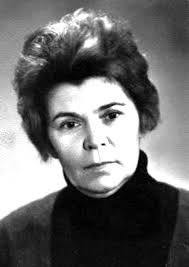
Nina Strokata (1926-1998)
*
[2]
Valentina Mashkova
“To KGB Chairman, Citizen Yu.V. Andropov” (7 December 1976)
May I remind you that on 30 April 1974 you issued a written instruction to bring a case against my husband, Vladimir Nikolayevich OSIPOV. I also wish to remind you that this instruction in your hand defines Osipov’s samizdat activities as anti-Soviet.
The high authorization by you, as KGB chairman and a member of the Politburo, of the prosecution of Osipov ‘for anti-Soviet activities’, it goes without saying, predetermined the character of the charges and the extremely harsh sentence. Moreover, it has effectively deprived Osipov of the right of complaint through judicial bodies or the procurator’s supervision. Evidently, Osipov is left with only one course: to appeal to the Central Committee Politburo, demanding the restriction of your dual authority.
“It is juridically obvious that were you not a member of the highest Party body, Osipov’s appeal could have been sympathetically received at the level of the Procurator-General and, perhaps, of the USSR’s Procurator’s Office. In the present state of affairs, his appeal cannot be accepted anywhere — and this in the absence of a corpus delicti!
“At the present time I am in possession of Osipov’s statement to the members of the Politburo. However, before sending copies of it to the addressees, I have considered it necessary to enquire of you, on my own initiative, as to how certain you are about the justice of the sentence passed on Vladimir Osipov. Do you not consider that the original mistake out of which the Osipov case grew was committed by you?
“If you consider your position in relation to Osipov’s samizdat activities to be in any measure mistaken then I request you to inform me what hopes we may cherish for a rectification of the mistakes by you personally, without the intervention of the other members of the Politburo.”
The section of the USSR Procurator’s Office for Supervising Investigations by KGB agencies replied to Mashkova on 27 December 1976: Osipov, it said, had been “correctly convicted.”
*
[3]
Raisa Moroz
“To the Chairman of USSR State Security, Andropov” (25 January 1977)
Raisa Moroz, the wife of Valentyn Moroz (CCE 33.9), who is in Mordovian Camp 1 (special-regime), complains about the confiscation of her husband’s personal and literary notes when he was searched.
*
[4]
Efrem Yankelevich
“Letter to the editorial board of the journal Science” (7 January 1977)
Yankelevich writes about the article “Sergei Kovalyov: A Biologist Denied Due Process and Medical Care” by N. Wade, published on 5 November 1976 in the US journal Science. Yankelevich evaluates highly the selection of material and the accuracy of the exposition. He reports on conditions in camp, in particular, on the strict limitation of his correspondence: “Evidently, Kovalyov did not receive the letter from Dr Stone mentioned in the article,” (this issue CCE 44.17-1). Yankelevich concludes:
“The efforts of American scientific public opinion and of friends of Kovalyov in Russia, including Academician Sakharov, have not as yet changed Dr Kovalyov’s situation, but I am convinced that this can happen in the future.
“Observing the reaction of the Soviet authorities to international public opinion, it may be noted that this reaction has a threshold and cumulative character. In other words, this reaction may be the result of lengthy and intensive pressure.”
*
[5]
The children of Georgy Vins
“To President James Carter, The White House, Washington, USA”
“Dear Mr President,
“We beg you to intervene in the fate of our father, Baptist pastor Georgy Vins, convicted for the second time for remaining true to God, in January 1975, to 10 years’ imprisonment. His extremely poor health forces us to worry about his staying any longer in the corrective-labour camp in Yakutia.
“Support us in our petition to the Soviet government to release our father in order to avert a repeat of the tragic fate of our grandfather Pastor Pyotr Vins, a former US citizen, who died in a corrective-labour camp in 1943 and was posthumously exculpated.
“[Signed] Vins’s children: Natalya, Pyotr, Yelizaveta, Yevgenia and Alexander”
(Vins’s sentence: five years of camps and five years of exile, Chronicle.)
*
6. Releases
(Oct 1976 to Feb 1977)
In October 1976 Dmitry Mikheyev (CCE 21.2) was released from Mordovian Camp 19 after serving six years. After a petition for a pardon was sent, his sentence was reduced by two years (CCE 36.6-1).
*
At the end of 1976 Ashot Navasardyan (CCE 34.4) was pardoned and released by decree of the Presidium of the Armenian SSR’s Supreme Soviet.
Evidently, after ‘educational’ chats held with him in Yerevan [1] he agreed (despite the report in CCE 43.3) to repudiate his membership of the National United Party of Armenia and to make some form of recantation. Of the seven years designated in his sentence, he had served three.
*
On 13 January 1977 Ivan Yermilovich KOVALENKO (b. 1918), a teacher by profession (CCE 27.1-1), was released after serving a five-year sentence. In the camps Kovalenko became a Group II invalid. Today he is living in Boyarka village (Kiev Region).
*
On 17 January 1977 Kronid Lyubarsky (CCE 28.4) left Vladimir Prison after serving a five-year sentence. Before his release they attempted to take his fingerprints, but after his categorical refusal did not insist further.
(His subsequent experiences are described inthis issue CCE 44.18).
*
At the end of January Yakov Suslensky (CCE 27.5) was released at the end of his seven-year sentence. Prior to this he was transferred from Vladimir Prison to Moldavia, where he was released.
*
In February 1977 Nikolai Siryk (b. 1954) was released from Mordovian Camp 19. In 1970 he landed in an educational labour camp under a criminal article.
There he received a second sentence (four years) under Article 62 (UkSSR Criminal Code = Article 70, RSFSR Code) for re-writing songs of ‘anti-Soviet content’ in an exercise book. He served this term in Mordovia. He was twice put in the punishment block, for six months each time.
*
At the beginning of February 1977 Vasyl Ovsiyenko (CCE 32.12) was transferred from Mordovian Camp 19 to Zhitomir (central Ukraine).
On 5 March, after serving a four-year sentence, Ovsiyenko was released. He was sent to live in the village of Lenino (Radomyshl district, Zhitomir Region), where his 67-year-old mother lives. He was immediately placed under surveillance. Ovsiyenko is a philologist; before his arrest he was working as a schoolteacher.
*
On 3 February 1977 Liudvikas Simutis [2] left Mordovian Camp 19 on a pardon.
*
On 7 February 1977 Mikhail Sh. Shtern (CCE 34.5, CCE 40.9-2) was placed in the cooler for 10 days for “slandering the camp administration”: in a letter to his wife Shtern had described the administration’s attitude towards him.
In 1975 Shtern was examined by the Medical Commission of the Main Administration for Corrective-Labour Institutions (Kharkov Region section). It found him to be ill with pulmonary tuberculosis, a duodenal ulcer, stones in the bladder, narrowing of the coronary arteries, and a serious illness of the spine. Work which involved his remaining in one position for a long time was contra-indicated. In a recent conversation with Shtern’s wife, Camp Commandant Major Proshchin said that the camp doctor had annulled the conclusion of this commission.
A session of an international tribunal was scheduled to consider Shtern’s case on 25 March 1977. The tribunal chairman would have been Telford Taylor, US prosecutor at the Nuremberg trials [3].
The chairman of the USSR Supreme Soviet, L.N. Smirnov, urged the Soviet Association of Lawyers to organize counter-propaganda. On 14 March 1977 TASS reported to the West that the USSR Supreme Court had reviewed Shtern’s case as part of a supervisory procedure. It ruled that the original sentence was lawful but, taking into consideration Shtern’s good conduct, old age and state of health, the Court had reduced his sentence to two years, nine months, i.e., what he had already served.
Shtern was released.
=======================================
NOTES
- On Ashot Navasardyan, see CCE 34.4, CCE 41.6-2, CCE 42.4-2, CCE 43.3 and Name Index.
↩︎ - On Liudvikas Simutis, see CCE 18.3, CCE 25.10 [4], CCE 32.12, CCE 41.6-1.
↩︎ - Taylor was assistant to Robert Jackson, chief US counsel at the first Nuremberg Trial (1945-1946). He headed the prosecution at 12 subsequent trials of German war criminals.
↩︎
===========================
 A Chronicle of Current Events