6 ENTRIES
*
[1]
The Arrest of Gely Snegiryov
On 22 September 1977 the writer and cinematographer Gely Ivanovich SNEGIRYOV (b. 1927) was arrested in Kiev.
*
In 1974 Snegiryov was expelled from the Party, the Union of Writers and the Union of Cinematographers.
In 1974-1976 Snegiryov’s heart condition became acute: haemorrhages occurred in the retinas of both eyes, and his vision was reduced to a hundredth of the norm. A medical commission classified him as a Group II invalid.
A Parisian hospital administration invited Snegiryov for treatment, but the USSR Ministry of Health announced that it “did not have agreements with capitalist countries” on exchange of patients for treatment. On 4 July 1977 Snegiryov addressed the Visa & Registration Department (OVIR) in Kiev with a request to allow him to leave privately for treatment.
After publication of the 1977 Draft Constitution, Snegiryov sent a letter to the Presidium of the USSR Supreme Soviet, expressing his total disagreement with the draft and rejected Soviet citizenship. Snegiryov sent off his passport.
Uninterrupted shadowing of Snegiryov began. Letters from ‘indignant patriots’ containing abuse and threats appeared in his letter box. He was suddenly summoned to a medical commission to decide the question of his pension payments, even though he had gone through this procedure not long before.
In June 1977 Snegiryov handed foreign correspondents a letter to the President of the USA:
“I am convinced that the decisive hour has come in which either the social-political monster called the Socialist Superpower will gain the upper hand over Human Reason once and for all, or Human Reason will conquer . ..
“Our Superpower appears to me to resemble a wagon rushing down a slope …
“It would seem, Mr President, that the peoples of the world are burdened by freedom. The peoples of the world are ready to arrange a quiet funeral for Freedom and to set off singing into slavery.
“May God give you the strength to stop the wagon.”
In August he published an “Appeal to the Leader: A pamphlet with an optimistic finale”. In the pamphlet a programme for the radical reconstruction of our society is advanced. The pamphlet concludes thus:
“The black carriage is thundering along. The reins are trailing. Make an incredible effort, reach out for the reins, grasp them firmly — and you will remain in the times ‘blessed by Leonid’, Otherwise — dead or alive — you will be flung out on to the road, somersault into a putrid pit, and curses will rush after you.”
On 6 September the newspaper Literary Ukraine printed a large feuilleton, ‘Alphonse’. In this feuilleton, without mincing words, the paper flings mud at Snegiryov.
On 9 October Snegiryov sent a letter to the editorial board of the newspaper. (He also sent copies of the letter to journals in which he had been printed, and to certain literary colleagues):
“Dear editorial board,
“I am touched by your attention to my modest person. In truth, I did not doubt that Literary Ukraine would not forget my 50th birthday in October of this year and celebrate my jubilee fittingly.
“I am grateful for the colourful publicity placed in the pages of Literary Ukraine for my socio-political activities and my work about Ukrainian bourgeois nationalists in the World Congress of Free Ukrainians. It is especially pleasant that my fame will spread not only through the length and breadth of the Ukraine, but will splash abroad as well, where not a few readers of your respected outlet reside.
“I am grateful as well to the ideological departments of the KGB and Central Committee of the Ukrainian Communist Party for prompting you to arrange this publicity on time. Right on time, as I was informed at this very period that ‘Cartridges for the Execution (Mama, My Mama . . .)’ had come out in Ukrainian foreign publishing-houses to meet the glorious 60th anniversary of Great October. [This story was also published in Nos. 11 & 12 of the journal Kontinent, Chronicle].
“I am only annoyed that in the panegyric published there was not even a single sentence to illuminate my rejection of Soviet citizenship because of my disagreement with the new Constitution. In a statement to the Presidium of the USSR Supreme Soviet I wrote, specifically: ‘Your whole Constitution is a lie from start to finish.’
“I hope that in subsequent publications for my jubilee you will manage to correct this mistake and to tell the readers about yet another disgraceful action ‘of the righteous Christian’.
“Sincerely,
“Gely Snegiryov
“PS — I almost forgot.
“In subsequent publications for my 50th birthday please announce that the person celebrating the anniversary was head of the section of socio-political journalism and fiction in your respected outlet in 1956-1957.
And then, having received the blessing of suitable educators and rising ever higher above himself, he landed up on the so-called ‘Central Committee nomenklatura’ [1], with the corresponding character references and recommendations from Literary Ukraine and the Union of Writers he sat in the chair of the chief editor of the ‘Ukrainian Studio of Newsreel & Documentary Films’ and worked at this responsible job for 7 (seven) whole years.
G.S.”
*
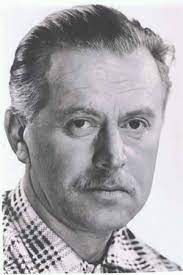
Snegiryov handed in an application for an exit visa from the USSR. On 22 September he was arrested.
On 12 October 1977 members of the Moscow and Ukrainian Helsinki Groups published an “Appeal to the governments and democratic public opinion of participant countries of the Conference on Security & Cooperation in Europe” with a request that they speak out for the release of Gely Snegiryov and members of the Helsinki Groups arrested earlier.
Another 15 people added their signatures to the appeal.
*
[2]
The Arrest of Valentina Pailodze
On 7 April 1977, the day that Zviad Gamsakhurdia and Merab Kostava were arrested (CCE 45.9).
A search was carried out at the home of religious worker Valentina Pailodze, a member of the Action Group for the Defence of Human Rights in Georgia (CCE 32.11). Six copies of the samizdat journal Georgian Herald (CCE 45.20 [7]) were found at her home.
On 6 November Valentina Pailodze and her friend Taso Berikashvili were forced to get out of a bus.
Pailodze was accused of having stolen 500 roubles from some woman. They were taken to Police Station 26 and searched. Religious literature was ‘found’ on Pailodze. Pailodze and Berikashvili were placed in a dark cellar. They declared a hunger strike. On 8 November 1977 Pailodze was taken away somewhere. Then Berikashvili was released. To a question about the reason for her arrest Berikashvili was told: “You’re guilty yourself! Why are you friends with such a woman? Go, and don’t tell anyone about what has happened and don’t have anything more to do with the family of Pailodze.”
*
On 6 November 1977, when Pailodze and Berikashvili were already under arrest, a man calling himself Grigory Tsintsadze (Berikashvili does not know a man of that name) dropped in to see Berikashvili at home.
A friend of Berikashvili was in the room. The visitor said that he would come back in 20 minutes and left. After he had gone the friend of Berikashvili discovered a batch of leaflets with a Russian text on the table. Scared by this, she took the leaflets to the house of Pailodze to show them to her. When she was in Pailodze’s flat police arrived to make a search. They did not find anything in the room, but on searching the guest they found the leaflets. They drew up a statement in which it was written that Pailodze and Berikashvili had given the leaflets to her. By threatening her with arrest, they forced this woman to sign the statement.
When the members of Pailodze’s family started to protest, those carrying out the search replied that they were carrying out the personal order of Shevardnadze to arrest Pailodze on any pretext.
*
[3]
Case No. 186
CCE 46.6 reported that Bengt-Gunnar Sareld and Nils-Erik Engstrom, Swedes returning from the Soviet Union in their car, were detained at the frontier.
A number of errors were made in this account. The incident took place on 5 June 1977. The Swedes were in fact arrested, not detained. During the search not only letters of Pentecostalists requesting that an invitation to emigrate be sent were discovered in their possession, but also documents about the emigration of Pentecostalists and Baptists, and in particular the book Leave, O My People (CCE 44.24 [2], CCE 45.22).
*
The arrested Swedes were held under investigation in Minsk.
Soon they began to give extensive evidence about the Christian believers they had met while travelling around the Soviet Union. As a result of this evidence numerous searches and interrogations started to occur.
*
MOSCOW. On 8 August 1977 in Case No. 186 searches were carried out at the homes of Pentecostalist Anatoly Vlasov (CCE 46.6) and Baptists Alexander Semchenko, Natalya Varfolomeyeva and Victor Strelnikov (Ramenskoye, Moscow Region).
Sixty Bibles were confiscated from Semchenko. At the house of Strelnikov a sound-recording studio, in which religious songs were recorded, was discovered and the equipment confiscated.

While they were in Moscow, Engstrom and Sareld were at Strelnikov’s home; they inspected the equipment of the studio and got to know the people who worked there. They told the investigators about this. Altogether ten members of the Moscow congregation of Evangelical Christians & Baptists [ECB] who worked in the studio were interrogated in connection with Case 186.
*
Semchenko, Strelnikov and Varfolomeyeva were interrogated in Moscow and then summoned to an interrogation in Minsk.
After a five-day interrogation in Minsk, Alexander Semchenko was interrogated again in Moscow on 21 September 1977. Two investigators from Minsk, Lieutenant-Colonel I.D. Savenkov and Captain G.T. Dorogin, conducted the interrogation.
As became clear, on 15 September Sareld had additionally testified that he and Semchenko had together been to a Beryozka (hard-currency) shop and bought an apparatus so that Semchenko could show Biblical films sent to him by the ‘Slavic Mission’. The investigators threatened Semchenko with a term of imprisonment.
Pentecostalists Pyotr Razumovsky from the village of Khotkovo (Moscow Region) and Valentina Fedotova from Maloyaroslavets (Kaluga Region) were also summoned to interrogations in Minsk. In addition, Pentecostalist Nikolai Romanyuk was interrogated in Moscow. The Swedes testified that they had seen all three at Vlasov’s flat in Moscow.
In August, on the evidence of the Swedes, following Anatoly Vlasov’s interrogations, his wife Valentina Vlasova was also interrogated.
In Moscow Orthodox believers Vadim and Zarina Shcheglov were also summoned in this Case.
*
KIEV. On 25 August 1977 Pentecostalists Ya.S. Gavrilev and A.S. Prudnikova and Baptists T.A. Dubinin and V.P. Shuportyak were searched in the Case of the Swedes (No. 186). Documents of the Council of Churches and materials of the “Council of Relatives of ECB Prisoners” were taken from the Baptists.
In addition, a search was carried out at the home of Pentecostalist Adam Ozerchuk. Religious literature was confiscated from him.
In all, six searches in this Case took place in Kiev.
From 26 to 29 August 1977 Senior Investigator Captain Basalyga, who had come from Moscow, interrogated eight believers. It is known that the Pentecostalists refused to confirm that they were acquainted with Sareld and Engstrom.
*
STAROTITAROVSKAYA CANTONMENT (Krasnodar Region [Krai]).
On 31 August 1977 a search was carried out at the home of Nikolai Goretoi and Bibikov in the Case of Engstrom and Sareld (No. 186). Religious literature and books by Shelkov were confiscated. On 1 September Goretoi and Bibikov were interrogated.
LENINGRAD. In September 1977 a presbyter of the Leningrad ECB congregation, Makhovitsky, was searched in Case No. 186; 120 Bibles were confiscated from him.
TALLINN. In September a search was carried out here at the home of Methodist Janus Karner.
*
Face-to-Face Confrontations
On 18 October 1977 Anatoly Vlasov was summoned to an interrogation in Minsk.
Investigator Dorogin tried to persuade Vlasov to confirm that he had met the Swedes and conveyed to the West through them the book Leave it, O My People. After Vlasov had refused to give evidence, confrontations with Engstrom and Sareld were arranged for him.
*
On 18 October in the afternoon an identification parade was held. Of the three people sitting next to each other, Engstrom pointed to Vlasov and said that on 2 June 1977 he had received two parcels of documents from him.
On 19 October a face-to-face confrontation between Vlasov and Bengt Sareld was held. The investigators were Slidinsky and Dorogin. (There was no translator as Sareld speaks Russian well.)
On seeing Vlasov, Sareld burst into tears: “After all, he has children just like me!”
The investigators calmed him down and asked whether he knew Vlasov.
Sareld replied that he knew him and that they were Brothers in Christ. Vlasov replied, to a similar question, that he did not know (and did not want to know), such brothers who betrayed their brothers, for they were Judases.
Sareld felt faint and was given water.
When he had recovered, he turned to the investigators: “But you told me that you would not summon anyone, that nothing would happen to anyone.”
Vlasov to Sareld: “You were deceived, you don’t know all the KGB’s devices.”
The investigators forbade Vlasov to speak. Sareld asked the investigator to confirm that nothing would happen to Vlasov. The investigator confirmed this.
Then Sareld testified that he had been given a task by the ‘Slavic Mission’ to find out whether Vlasov was connected with the ‘Sakharov group’; he was at Vlasov’s house and took documents about emigration from him. He did not then know the contents of the documents he had taken. He had become familiar with them only at the investigation: he now expressed regret that these documents had turned out to be anti-Soviet and slanderous and that Vlasov had given him such documents.
Vlasov retorted: “But isn’t it the truth that our brothers were imprisoned for 20 years, that it’s the fault of the NKVD that I’m fatherless and was myself imprisoned for five years under Khrushchev?”
The investigator interrupted Vlasov, saying that this was not a press conference and that he must keep quiet, since he had refused to give evidence.
Then Sareld testified as to who from Sweden had visited Vlasov and when, and told how in 1975 they had brought Vlasov a duplicating machine. He also told how on one of his previous visits to Moscow he had suggested to Vlasov that he compile reviews of the Soviet press for the ‘Slavic Mission’ and, as he knew, Vlasov had handled this job well.
On parting from Vlasov Sareld said of himself that he was like an evangelist who wanted to build a tower but overestimated his strength.
*
The same day after lunch a face-to-face confrontation was arranged for Vlasov with Engstrom. (The interpreter was Parkhomenko.)
Engstrom confirmed that he and Sareld had taken two parcels of documents from Vlasov, which had turned out to be slanderous and harmful to citizens of the USSR and the State.
During the confrontation other KGB officers came in and asked about the interview Vlasov had given at Alexander Ginzburg’s flat on 2 February 1977. Vlasov said that he had given the interview in the interests of justice.
The following day, 20 October, Vlasov was interrogated in the presence of Shevarov, an Assistant Procurator of Belorussia.
Asked whether he knew the Swedes, whether he knew Alexander Ginzburg and Yury Mnyukh, and where the duplicating machine was that had been supplied to him from Sweden in 1975, Vlasov refused to reply. Asked whether he knew about the ‘Slavic Mission’, Vlasov replied: “What they write in the Soviet press.” Then he was asked what the reason was for his refusal to give evidence. Vlasov replied: “I can’t be a Judas.” On the advice of the Procurator the investigator recorded in the protocol: “I can’t be a Judas in regard to the circle of my acquaintances.”
Vlasov was told that a Case against him for refusing to give evidence would be handed to the Moscow City Procurator’s Office.
In a conversation not recorded in the protocol Colonel Savenkov told Vlasov that he could be charged under Article 70 (RSFSR Criminal Code) for possessing and passing to the Swedes anti-Soviet slanderous materials and, as he had refused to give evidence, he would be given the maximum sentence.
Sareld and Engstrom had one meeting with their consul. According to the regulations, consular officials “can regularly visit” foreigners under investigation. In fact, usually one meeting a month is given. In this instance the consulate was refused any further meetings.
According to rumours the Swedes were due to be released in mid-November 1977 [2].
***
[4]
ARMENIAN HELSINKI GROUP
YEREVAN. On 9 June, during an attempt by a member of the Armenian Helsinki Group, deacon Robert Nazaryan (CCE 46.15 [13]) to fly to Moscow, he was searched at the airport.
The following items were taken away from him: his passport (ID document), a congratulatory letter to President Carter, an appeal for donations to meet the needs of families of political prisoners, a Russian translation of the feuilleton about Nazaryan “False Prophet” (published in the newspaper Sovetakan Aiastan on 5 May 1977) and a number of other documents. Nazaryan was refused a copy of the record of the documents confiscated from him.
TBILISI-YEREVAN. On 11 June 1977, during an attempt to fly to Moscow, Shagen Arutyunyan was searched at Tbilisi airport. (A year ago, Arutyunyan repudiated his Soviet citizenship and addressed the West German consulate with a request for political asylum.) The searchers took away: his passport, a statement to the consulate, an address to the German committee of human rights and other documents. After this Arutyunyan was arrested and taken to Erivan. There he was kept in the cellar at a police station for another 24 hours.
After discovering telephone numbers of foreign correspondents on Shagen Arutyunyan, KGB officers told him that the members of the Armenian Helsinki group would be arrested and they would deal with each of them in their own way: for example, Eduard Arutyunyan was mad, and consequently it was clear how they would act with him; a three-year term of imprisonment for circulating slander awaited Robert Nazaryan. Foreign correspondents were spies, Shagen Arutyunyan was told, and the American embassy was a centre for spies. They suggested to him that he drop his plan to emigrate to Germany and take back his 500 roubles from OVIR.
*
MOSCOW. On 13 June Beniamin Ovakimyan was detained and searched here. Taken away from him, in particular, was a report from the Armenian Helsinki Group to the Belgrade conference. They would not give him a copy of the record of confiscation.
***
KALUGA REGION. On 16 August Vitaly Pomazov (see “The Case of Ginzburg” in this issue CCE 47.3-1 concerning Pomozov) was summoned as a witness to the Serpukhov district division of the KGB. There the division head V.A. Shipovsky and Captain V.V. Rudavin conducted a conversation with him. It was explained that there was evidence from his Gorky acquaintance Vyacheslav Ulanov against Pomozov, saying that he “circulated the works of Solzhenitsyn”.
Pomozov refused to reply to specific questions from the investigators.
He was read a warning that he would be criminally charged “in the event of his continuing anti-State activities, expressed in the circulation of politically harmful literature”.
***
[5]
BALTIC AREA
RIGA. On 23 August 1977, the day of the arrest of Viktoras Petkus (CEE 47.5), a search was carried out at the home of former political prisoner Inc Calitis, formally as part of the Case of Gajauskas (CCE 45.10), which is being conducted by the Lithuanian KGB. At the search, documents of the “Head Committee of the National Movement of Estonia, Latvia and Lithuania” were confiscated.
The same day Victor Kalnins (CCE 41.5 [6], CCE 46.5-1) was detained at the rail station.
Calitis and Kalnins were summoned several times to interrogations about the Case of Petkus, but were interrogated mainly about the Committee. Kalnins testified that at the request of Petkus, who had come to Riga, he had translated the documents of the Committee from Russian into Latvian (the documents of the Committee confiscated during the search at the home of Calitis were in Kalnins’s handwriting).
*
TARTU. On 25 August Mart Niklus (CCE 42.3, CCE 43.7) was removed from a Tallinn-Moscow train and taken off to a search. At the search, which was conducted by KGB Investigator Oc, a camera, blank cassettes and several copies of his autobiography were confiscated. After the search Niklus was interrogated about the Head Committee.
Niklus wrote to the Lithuanian KGB demanding that the confiscated things be returned to him. In the reply, signed by Investigator Lazarevicius, it said that they were needed in the Case of Petkus. (See also below, at the end of the section.)
*
[6]
OTHER AREAS & INDIVIDUALS
TBILISI. On 12 September at 8 pm, a foreign citizen was arrested distributing leaflets near the Philharmonic building. In leaflets on behalf of the Committee of Young Flemings, the programme of the NTS (People’s Labour Alliance, an emigre Russian group) was set forth in the Georgian language. The next day the following report was published in the newspaper Evening Tbilisi:
“On 12 September this year a tourist from France, Jean-Jaques Pauly (b. 1954) was detained when distributing anti-Soviet leaflets of a subversive character in Tbilisi. An investigation is under way” [3].
*
V.S. GERASIMOV
VORONEZH. In May-June 1977 history teacher Valery Semyonovich GERASIMOV was summoned to the KGB six times ‘for a chat’. During the chat, he was accused of having a ‘bad influence’ on young people, listening to foreign radio broadcasts, and reading The Gulag Archipelago. It was demanded from Gerasimov that he “confess” and talk about his ‘activities’. Gerasimov said that he did not consider himself guilty of anything.
V.S. Gerasimov (b. 1946) was dismissed from his job at a school in 1970 (he was at that time a ‘discharged Komsomol organizer’) for “demoralizing conversations”. Then he worked for a long time as a nightwatchman, etc.
Acquaintances of Gerasimov were also summoned to ‘chats’: second-year student at the philological faculty of Voronezh university, Victor Goncharuk; second-year student at the historical faculty of Voronezh university, Georgy Olkhov; and third-year student of the philological faculty of Moscow university, Mikhail Zherebyatev.
On 19 September Gerasimov was summoned for a repeat medical examination to the military registration and enlistment office and was placed in the neurological section of the military hospital for examination. Ten days later he was discharged with a diagnosis of “paranoid psychopathy” and sent to the Regional psychiatric hospital for an inpatient examination.
*
KIROVOGRAD REGION (Ukraine). In August Kuzma Matviyuk (CCE 42.4-4, CCE 44.27) was interrogated at the KGB in the Case of the English tourist Andrey Klymchuk, arrested in Lvov [4]. In the republican newspaper Radyanska Ukraina (27 September 1977) it was written that Klymchuk had brought tapes to Ukraine with coded messages about subversive activities, a large sum of money and addresses. Matviyuk was asked: “Didn’t anyone come to see you from Klymchuk?”, “Would you be glad if Klymchuk turned out to have your address?”
*
RYAZAN. On 13 September 1977 Ivan Danilyuk (CCE 45.11-3) was seized on the street and taken to the internal affairs office in the Sovetsky district. There he was shown a statement signed by a ‘neighbour’ and told that he was suspected of buying stolen goods, of drinking bouts and an amoral way of life.
He was searched and the following items were taken: 17 copies of an open letter to the chief editor of the newspaper Pravda (in this letter legal expert Danilyuk enumerates 22 violations of the law committed in 1974 in his ‘Case’); seven copies of a letter he had written to the UN Commission on Human Rights proposing that those guilty of mass murders of foreign citizens in Stalinist times be brought before an international court; and eight copies of a letter to the USSR Ministry of Health about Sergei Purtov (CCE 26.2). The verdict in his Case and a copy of the indictment was also taken from Danilyuk. Danilyuk would not sign the protocol on the confiscation.
The day before, a secret search had been carried out at his flat in his absence.
*
SUROVTSEVA
UMAN (Cherkassk Region). On 28 September 1977 the police carried out a search at the home of Nadezhda Surovtseva. The pretext was a statement allegedly received that N.V. Surovtseva was manufacturing false money. At the search, materials from the archive of Nadezhda Surovtseva were confiscated, manuscripts of her memoirs.
Nadezhda Vitalyevna SUROVTSEVA is a Ukrainian writer, historian and art critic. She is 81 years old.
From 1922 to 1956 Surovtseva was subjected to constant acts of repression on charges of anti-Soviet activities; she spent more than 30 years in prisons, camps and exile. Surovtseva is often mentioned in Solzhenitsyn’s Gulag Archipelago, where fragments of her memoirs are quoted.
In 1972-1974 searches were repeatedly carried out at the apartment of Surovtseva and her sister-in-law (the late Yekaterina Olitskaya, CCE 34.18 [26], who lived with her), in connection with the arrests of Leonid Plyushch, Kuzma Matviyuk, B. Chernomaz and Victor Nekipelov.
*
LENINGRAD. On 6 October 1977 KGB officials searched the room at the hostel where Pyotr Draga lives, a student of the philological faculty of Leningrad University. They confiscated the Vestnik RKhD (Herald of the Russian Christian Movement), the book by Andrei Sakharov My Country and the World, and a collection of articles about Solzhenitsyn’s letter “To the Leaders of the Soviet Union”.
After the search Draga was taken to the district soviet executive committee for a ‘chat’ which lasted several hours. He was threatened with expulsion from the university.
*
MOSCOW. In October secret searches were carried out at the flat of Ruth G. Bonner, the mother-in-law of Andrei Sakharov, and at the flat in which Sakharov and his wife Yelena G. Bonner (CCE 44.26-1) are registered.
At the second of these flats those carrying out the search did not even attempt to conceal the traces of their visit.
*
TALLINN. On 16 November 1977, in accordance with a resolution signed by Major Lazarevicius of the Lithuanian KGB, a search was carried out here in Case 47 (Petkus) at the home of Erik Udam (CCE 46.17). A notebook was taken on the grounds that it contained the address of Petkus.
*
TARTU. The same day a search was carried out in the same case at the home of Mart Niklus.
The evening before, he had been brought a summons to attend an interrogation at the KGB on the morning of 16 November 1977. When Niklus appeared at the KGB, he was asked to wait. After waiting two hours, Niklus began to protest. During this time a search was being carried out at his flat.
Having discovered that Niklus’s room was locked, the investigator carrying out the search returned to the KGB offices and took Niklus back for the search. During the search, which lasted about seven hours, Niklus photographed the KGB officials, but they removed the film and exposed it. At the search three typewriters and several articles were confiscated.
===============================
NOTES
- Nomenklatura: list of posts, appointment to which was determined by the Communist Party. In the late 1980s these appointees and their families amounted, it was said, to three million of the Soviet population.
↩︎ - In fact, Sareld and Engstrom were released in early November. See TASS and Reuter reports of 10 November 1977.
↩︎ - Pauly was expelled from the USSR on 16 September 1977.
↩︎ - Klymchuk was arrested on 2 August 1977 and expelled from USSR five months later on 5 January 1978.
↩︎
===========================
 A Chronicle of Current Events