On 12 October the people’s court of Moscow’s Krasnopresnensky district examined the case of Felix Serebrov, charged under Article 196, pt. 3 (RSFSR Criminal Code: “using a knowingly forged document”).
Judge Redkina presided over the trial; Procurator Kukushkina spoke for the prosecution.
Lawyer E. A. Reznikova defended Serebrov.
*
Felix Arkadyevich SEREBROV (b. 1930) is a member of the Working Commission (CCE 44.10).
Since the early 1970s Serebrov’s signature has appeared under various samizdat documents; protests, letters in defence of political prisoners, and so on.
In 1976 Serebrov sent a number of statements to Soviet health and justice agencies demanding a change in the regime at the Sychovka Special Psychiatric Hospital (SPH).
In mid-1976 the KGB tried without success to recruit Serebrov and his wife Vera Pavlovna SEREBROVA as informants (to shadow the family of Pyotr Grigorenko).
*
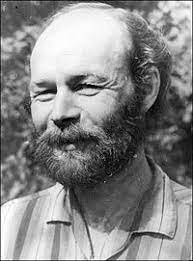
Felix A. Serebrov (1930-2015)
*
On 22 April 1977, Serebrov was summoned to the Internal Affairs Department of Moscow’s Krasnopresnensky district. There Senior Investigator Malyuta charged him with having presented a work-book with forged entries to the personnel section when he had joined his last place of work (details below). Serebrov had to give a written undertaking not to leave Moscow.
On 27 May a search was carried out at Serebrov’s flat to “confiscate documents about his former places of work”. Documents of the Working Commission, a set of directives of the Ministry of Health, poetry written by Serebrov, poetry by Victor Nekipelov, correspondence with Nekipelov, a prescription for a cough medicine (libeksin) written out by Nekipelov, and a blank prescription were confiscated.
On 3 June a search was conducted at the home of Victor Nekipelov (CCE 46.6). Later, as a consequence, materials relating to Nekipelov were taken from the case of Serebrov and made into a separate case.
On 13 June 1977, Serebrov wrote:
“Victor Nekipelov, father of two young children, a talented poet, translator and publicist, is threatened with the danger of repeated imprisonment.
“The noose of punitive authority is dragging Nekipelov into the mincing-machine of repression.
“The devilish mechanism set in motion by Stalin has been regulated, oiled and continues to pulverize human fates. The fate of the family of Victor Nekipelov.”
On the same day he wrote in connection with his own charge:
“It is more convenient for the authorities to disguise the persecution of dissenters (Malva Landa, Josif Begun, M. Shtern, and the artists Volkov and Rybakov) as the punishment for criminal activities …
“Criminal cases are snowballing, … We are waiting for arrests.”
*
INVESTIGATION
On 22 August 1977 Serebrov was summoned to an interrogation.
He refused to answer questions, having stated that the real reason for official persecution of him was his public activities. Then he was arrested on the authorization of Kirakozov, deputy procurator of Krasnopresnensky district, and sent to Butyrka Prison. On being arrested Serebrov declared a hunger-strike.
On 24 August four policemen carried out a search at Serebrov’s flat without presenting the relevant documents. Serebrov’s aunt Yelena Ivanovna GOLUBKOVA (75 years, Group I invalid), who was present, immediately protested against the illegal search.
Two days later Inspector Laniyenko (criminal investigation) of Police Station 11 confiscated Serebrov’s army card at his flat and would not allow those present to record this in the protocol.
On 28 August the Working Commission (Vyacheslav Bakhmin, Irina Kaplun, Alexander Podrabinek) sent a telegram to the International Congress of Psychiatrists in Honolulu, calling on it to speak out in defence of Serebrov. A letter of similar content was signed by 40 people.
The next day Serebrov and his defence attorney Reznikova familiarized themselves with the materials of the completed pre-trial investigation. Reznikova addressed petitions that the case be closed for lack of a corpus delicti and that he be released from detention.
On 30 August 1977 Serebrov stopped his hunger strike at the insistence of his friends.
*
TRIAL
The trial took place on 12 October 1977.
Defence attorney Reznikova requested that she be given time to familiarize herself with the contents of a sealed envelope which had appeared in the case file after the completion of the pre-trial investigation. The envelope turned out to contain documents of the Working Commission and letters in defence of political prisoners confiscated during the search at the home of Serebrov.
At the beginning of the hearing Serebrov stated his objection to the procurator (serving as prosecutor) “insofar as the investigation was conducted in a biased manner and the actions of the procurator were not objective”. The Court ruled against his petition. After this Serebrov refused to answer the questions of the procurator and in order to obtain an answer the judge had to repeat them as though they were his own questions.
*
CHARGES
In the indictment Serebrov was charged with presenting a workbook with three forged entries to the personnel section at the Dawn factory when he started working there in April 1974.
The first of these entries says that in 1953 Serebrov had already worked for seven years, and in addition it was indicated in the work his own case and “the case being prepared against Nekipelov”. Serebrov said that he had been subjected to threats and interrogations by the KGB even while in Butyrka Prison, where KGB Investigator Kapayev had interrogated him (case of Yury Orlov), without concealing the participation of the KGB in his case and expressing regrets that this time Serebrov was getting off lightly.
Serebrov described how in 1976 his work-book had been in the possession of the KGB investigator who tried to recruit him. Serebrov concluded his final address with the words,
“Whatever decision the court takes, I regard the fact that a criminal case has been brought against me as a violation of the Constitution and a flouting of my rights and liberties.”
Serebrov’s final address was interrupted repeatedly by the judge, who forbade Serebrov to mention other criminal cases and to say ‘we’ and ‘dissidents’.
The trial was open but the front benches were occupied by KGB employees.
*
VERDICT & SENTENCE
In the verdict Serebrov received the punishment called for by the prosecution [1].
After the trial Serebrov was transferred from Butyrka to the Krasnopresnensky Transit Prison.
On 18 October 1977 Serebrov handed the prison administration, for dispatch to the court, a statement requesting that he be allowed to read the protocol of the court proceedings; his statement did not reach the court. On 20 October Serebrov was handed a copy of the verdict.
*
On 24 October 1977 Serebrov was dispatched to a labour-camp although his sentence had not yet legally taken effect.
On 25 October the deputy governor of the prison told Vera Serebrova that her husband had been sent to Mordovia, on the instructions of the USSR Procurator’s Office and the Soviet government: pressure had to be taken off Moscow’s prisons, she was told, before the celebrations of the 60th anniversary of the October 1917 Revolution began (in early November [2]).
On 27 October, on his arrival at Mordovia Camp 11 (Yavas village), Serebrov tried to hand the camp administration his appeal against sentence They would not take it, giving as the reason for refusal the fact that Serebrov did not have an envelope.
*
APPEAL
On 23 November 1977 the appeal was heard in the Moscow City Court.
Lawyer Reznikova petitioned (a) for the hearing to be postponed in view of the violation of Serebrov’s right to a defence, (b) for the period in which Serebrov could hand in his appeal to be extended, and (c) for the dispatch of Serebrov back to Moscow so that he could utilise her assistance and hand in the appeal.
The Court ignored her petitions. The hearing took place. The Court also ignored the arguments of Reznikova which sought to prove the lack of any grounds for the sentence. The sentence was left unchanged and took legal effect.
===============================
NOTES
- Serebrov was sentenced to one year in the camps, the maximum sentence under Article 196, and was imprisoned from December 1977 to August 1978 in a strict-regime camp in Dubrovlag (Mordovia).
Arrested a second time in February 1980 (CCE 63.1-2) Serebrov was sentenced under Article 70 to four years in the camps and five years in exile.
↩︎ - In January 1918 the Soviet State shifted from the Julian to the Gregorian calendar. The 25 October (Old Style) Revolution was thereafter celebrated each year on 7 November (New Style).
Neither then nor later did the Russian Orthodox Church follow this change.
↩︎
========================================
 A Chronicle of Current Events