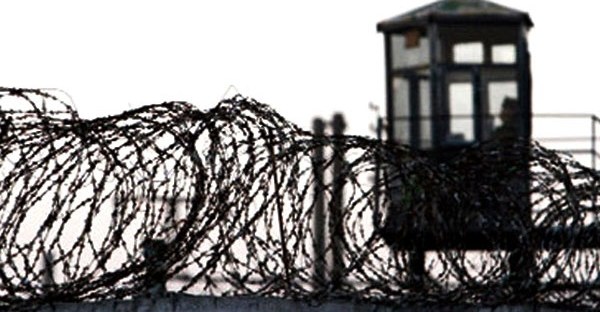
- 5-1. Chistopol Prison. Mordovia. Perm: Camp 35, Diary of Camp 35
- 5-2. Perm Camp 36; Cooler & Punishment cells. Other prisons and camps
- 5-3. Letters & Statements. In Defence of Political Prisoners. Releases
*
1. Chistopol Prison (Tatarstan)
By October 1978 all the Vladimir Prison political prisoners were already here (see CCE 51.9, note 1).
*
The prisoners in Chistopol Prison work without leaving their cells. They make nylon sacks. The [daily?] norm of eight sacks is difficult to fulfil.
Political prisoners often ascribe the output of a whole cell to one individual, so that at least one of them has “fulfilled the norm” and can buy what he needs at the camp shop.
*
Anatoly Shcharansky did not receive a copy of his verdict until November 1978. Since November he has been forbidden to send messages to his wife in Israel in his letters to his family. His letters are considerably delayed. For example, a letter dated 14 December was not received in Moscow until 9 January. Most of this letter was crossed out by the censor. The censored parts included a list of the letters Shcharansky had received.
At the end of February, for ‘inter-cell communication’, Shcharansky was deprived of his scheduled visit. He was also put in the cooler for 15 days.
Viktoras Petkus is in the same cell as Shcharansky.
*
On 11 January 1979, Mikhail Kazachkov began a hunger-strike. The reason was the administration’s refusal to dispatch his letters because they were “too bulky”.
*
2. Mordovia
2.1: CAMP I (special-regime)
On 13 January 1979 two warders beat up Vasily Romanyuk in the presence of Senior Lieutenant Tazin.
Romanyuk declared a hunger-strike. Kuznetsov, Ginzburg, Tikhy, Lukyanenko, Shumuk and Rebrik wrote to the procurator’s office complaining about the beating of Romanyuk.
On 15 January, at the end of his seven-year sentence, Romanyuk was dispatched under guard to serve his three-year term of exile. During the journey he called off his hunger-strike.
A week before Romanyuk’s journey into exile, his belongings were taken for inspection.
They were returned just before Romanyuk’s departure. The head of the ‘special zone’. Major Nekrasov, and KGB Captain Tyurin began to hurry Romanyuk to collect his things together. When Romanyuk answered that he had not yet checked his returned belongings, Tyurin swore on his “honour as an officer” that nothing had been taken. Romanyuk believed him and signed the document stating that he had no complaint against the administration. Later, he discovered that all his manuscripts had disappeared. During the journey, his prayer-books and notebooks of psalms were taken from him.
Romanyuk will serve his term of exile in Sangar village, Kobyaisky district, Yakut ASSR.
*
In the middle of January, at the end of his seven-year sentence, Mikhail Osadchy (CCE 48.10-2) was dispatched under guard to serve his three-year exile term. His address in exile is: Mylva settlement, Troitsko-Pechorsky district, Komi ASSR (flat 7, 14 Yubileinaya Street). He arrived there on 1 February. Osadchy, a Candidate of Philological Sciences, is working as a stoker’s assistant.
*
Alexander Ginzburg’s ulcer is worse, but he is not receiving a special diet; his blood pressure often rises to 220/120. Over two months (December 1978 and January 1979) 24 letters addressed to him were confiscated because they contained “undesirable information”.
*
At the beginning of February Eduard Kuznetsov and Yu P. Fyodorov were taken to Saransk, the capital of Mordovia (pop. 263,337; 1979).
*
Alexei Murzhenko was deprived of his scheduled ‘short’ visit, which was due to take place in March.
*
2.2: CAMP 19
Robert Nazaryan has arrived here (trial CCE 51.1).
***
3. Perm
At the end of October 1978 there were 71 prisoners in Camp 35; 46 in Camp 36; and about 50 in Camp 37.
*
3.1: CAMP 35
On 27 December 1978, having completed his seven-year sentence, Zinovy Antonyuk was sent into exile for three years (this issue, CCE 52.5-2).
*
During the summer of 1978 the food improved a little. The old men serving long sentences said that it was the first time for 25 years that they had eaten tomatoes and eggs. Soon afterwards the food got worse again.
In August-September meals of dry potatoes were served. At the same time those on special diets were given margarine or blended fat instead of butter.
*
In the autumn of 1978 Valery Marchenko spent a long period in hospital with double pneumonia (CCE 51.9). He fell ill in transit in April, when he was being brought back from ‘prophylactic chats’ in Kiev (CCE 49.8-1).
He was not allowed to take out a subscription for the year 1979 to the district newspaper Chusovoi Worker. “You want to subscribe to everything, but the law refers only to papers at regional level, not below,” the Deputy Camp Head for political matters told him.
*
At the beginning of August 1978 Vladimir llych Sverdlov was brought to the camp. He is about 30 years old.
According to his own account he lived in Astrakhan and worked for the KGB and MVD. He was tried, as he put it, “for attempting to pass State Secrets to an Egyptian citizen” and was sentenced to eight years under Article 64 (RSFSR Criminal Code). He explained that the lightness of his sentence was due to his contacts with the local Party elite. Sverdlov behaved in a very cheerful manner, showering his comrades with anecdotes. Very soon he won over a number of prisoners. Later he tried to form an ‘underground organization’ in which he would be responsible for security. He was interested in the existing channels of communication with the ‘outside world’.
On 30 October he partly revealed himself to Zinovy Antonyuk.
Sverdlov told him that he had become a homosexual in the Army and that he was later recruited into the KGB to ‘work’ with foreigners visiting the USSR. On instructions from above, he entered into homosexual relationships with foreigners. If it had not been for Sverdlov’s threat to tell the court the name of a boss with whom he had slept, the prosecution would have presented a whole volume of evidence about various incidents of a homosexual nature. He had been providing his sexual services for nine years and had graduated from a ‘KGB Academy’. Now, in camp too, he was obliged to perform an official operation: to penetrate to the nucleus of the prisoners and especially the Ukrainians.
He spoke about several meetings he had had with KGB officials Afanasev and Shchukin and with ‘operative’ Babidzhashvili; he also said that to enable him to ‘work’ with Yury Orlov, the latter had been transferred to his section. Now Sverdlov wanted to revenge himself for everything and he asked for help in illegally transmitting a letter to Carter, containing “important information” about the Soviet ruling elite. Later he asked Antonyuk to help him send out ‘espionage information’ about Soviet policy in the Near East.
On 15 November 1978 Sverdlov read a long statement to Paruir Airikyan, Verkholyak, Plumpa and Alexei Safronov, in which he offered his services as a highly qualified KGB agent. (Safronov spent two weeks in Camp 35 after leaving the cooler (CCE 51.9-1) and was then taken back to Camp 36.)
*
On 16 November 1978, in the presence of a number of prisoners, Zinovy Antonyuk read out his statement addressed to USSR Procurator-General Rudenko and to Savinkin, Head of the Administrative Agencies Department of the CPSU Central Committee: in it he dealt with the provocative acts of Sverdlov (and those behind him), and requested that they be brought to justice.
Sverdlov had referred to Simokaitis, Butchenko (CCE 38.12-2) and the 18-year-old Latvian Tilgalis (CCE 51.9-1), Antonyuk noted, as though they were paid agents of the KGB and the Ministry of Internal Affairs. On 17 November 1978, Alexei Safronov wrote a similar statement addressed to KGB head Andropov. He also mentioned that Captain Sidyakov, the new ‘Duty Assistant Camp Head’, was, according to Sverdlov, the ‘link’ between the KGB and its agents in camp.
Soon afterwards Sverdlov was taken to hospital for a while — evidently for a ‘consultation’. When he returned, he wrote an open letter to all Ukrainian prisoners, in which he stated that he had been slandered by Antonyuk. He also said that in hospital he had been asked to take a “letter from Israel”, which had allegedly been sent from Camp 36 and expressed dissatisfaction regarding the friendship of ‘Zionists with Ukrainians”.
Antonyuk found this ‘open letter’ from Sverdlov under his pillow. He sent it to the Procurator-General.
*
The circumstances surrounding the death of Stepan Mamchur, which occurred on 10 May 1977, have now become known to the Chronicle. (An obituary appeared in CCE 51.9-2, there is another, written by Gluzman, in the present issue, CCE 52.9-3.)
Mamchur had officially been disabled for several years, on account of his high blood pressure, and was periodically given a special diet. In January 1977 he was in hospital. At the beginning of May hospitalization was again suggested, but he did not have time to give his consent…
On 10 May 1977, Mamchur’s condition worsened considerably.
After several summonses an ensign came, then the duty officer, then the Deputy Camp Head for political matters, and, a long while afterwards, Nurse Kuznetsova. She did not know what to do and asked prisoner Cherkuvsky whether she should give an injection of magnesium. Later still, Dr T. A. Solomina appeared (a graduate of the Faculty of Hygiene, she performs the duties of a therapist) and seeing the alarming state of the patient made arrangements, finally, for hospitalization. The post-mortem showed a brain haemorrhage.
The following day permission was granted for a special diet: Mamchur had been unsuccessfully trying to obtain it over the preceding three months.
*
In October 1978 Dmitry Verkholyak (CCE 51.9-1) wrote to the district procurator’s office complaining about the confiscation of his letters. He pointed out that such a practice violated the Constitution. As the confiscated letters were not destroyed in the presence of the addressee, it was easy to conclude that they “are becoming material for secret action against free citizens of the USSR”.
Procurator Goldyrev soon replied: the letters were legally confiscated, the law did not stipulate that confiscated letters should be destroyed in the presence of the convicted person, so the complaint was unfounded.
*
At the end of 1978 M. Kiirend was taken to Tallinn for ‘prophylactic chats’. He returned in February 1979. He was threatened with a second term of imprisonment in reprisal for his active participation in camp protests and for transmitting information outside the camp. He was ordered to give evidence about the way in which information was transmitted and attempts were made to persuade him to recant. The attempts were unsuccessful.
In Tallinn Kiirend requested a meeting with his sick mother.
At the same time, his wife wrote to him that his mother was dying and she in her turn asked the prison administration to allow the meeting. Kiirend was not given his wife’s letters. On 22 January 1979 he was told that he would be allowed to see his mother if he made a written statement renouncing his views and gave a guarantee that he would not renew his activities once he was released. Kiirend refused. Back in camp he learned that his mother had died on 21 January.
***
DIARY OF CAMP 35
April 1978 to February 1979 (extracts)
1978
APRIL
10. Ramzik Markosyan was put in the cooler for 10 days for not fulfilling the norm and for resisting prisoner G. Voloshin, who is in league with the administration, when the latter was beating him up (see CCE 51.9-1, “Diary of Camp 36”). He served his punishment in Camp 37, where he was taken secretly.
11. Y. Butchenko was punished with 15 days in the cooler for refusing to talk to Lieutenant Shukshin and for missing half a day’s work. He too was taken secretly to Camp 37 to serve his punishment.
16. A ‘Lenin Sunday’ of work was carried out. Those taking part received a glass of stewed fruit, 20 grams of sugar and half a loaf of white bread.
17. The camp was visited by a delegation of ‘workers’ from Lvov Region, led by KGB operations officials Goncharov from Kiev and Ermolenko from Lvov. The delegates organized a lecture which many prisoners refused to attend. Later the delegates summoned Basarab, Kvetsko, Pidgorodetsky and Soroka for a ‘chat’. Pidgorodetsky immediately refused to talk to them and left.
24. Markosyan observed the Armenian National Day of Mourning by not going out to work.
30. The prisoners celebrated Easter at a communal table. Duty Officer Chaika photographed them all and ordered them to disperse. The same happened the following day.
*
MAY
4. Chaika issued a reprimand to Markosyan for failing to turn out for work on 24 April.
Markosyan was also deprived of a month’s access to the camp shop because there was one button missing from his pea-jacket. At the same time Chaika countermanded the doctor’s decision to send Markosyan to hospital: he is in a very emaciated condition due to a stomach ulcer — his height is 175 cm and he weighs 57 kgs.
7. Sunday. Declared a working day.
9. S. Zagursky [see 23 June] suffered a heart-attack. First aid was not given until at least an hour afterwards.
22. For some considerable time the temperature in the living quarters has not risen above 11° Centigrade. It is forbidden to light the boiler.
*
JUNE
1. Vasily Lisovoi refused to work in protest against his having been deprived of access to the camp shop and of a parcel. He was punished with 10 days in the cooler.
5. Altman was taken away to Camp 36. He was transported in such dreadful conditions that he could not stand up on arrival.
6. A medical commission visiting the camp deprived Verkholyak of his Group II invalid status.
Igor Ogurtsov asked the commission for permission to receive from home a parcel of medicinal herbs for his stomach complaint, which was growing progressively worse. He was not receiving any medication in camp. He did not receive permission.
11. Inedible food in the refectory. Mass food poisoning. Six people were sent to hospital.
14. Mark Dymshits and Petras Plumpa sent a statement to the administration demanding permission to make supplementary purchases in the camp shop to the value of the sum for which spoiled food products were sold there. Head of regime Kuznetsov replied with a refusal.
21. Igor Ogurtsov wrote to the USSR procurator’s office complaining that his parents’ visit had been postponed for two months without any reason.
23. S. Zagursky [9 May] suffered another heart attack.
*
JULY
03. Mykola Matusevich was brought into the zone. He had been in the camp since 1 June. He had been kept in an isolation cell, in ‘quarantine’. From 29 May to 29 June 1978, he was on hunger-strike, protesting against the methods of psychological torture employed by the KGB.
09. Sunday declared a working day.
14. The administration summoned Miroslav Simchich in connection with his statement that he had completed his 15-year sentence at the end of 1977 (CCE 48.10-2). A supervisory commission refused to send his case for further investigation, as “Simchich has not reformed”.
21. Procurator Yazev came in connection with Ogurtsov’s complaint. He admitted that the visit had been postponed illegally.
28. Head of Regime Kuznetsov refused to give Yevhen Sverstyuk permission to send a telegram to his wife, inviting her to come for a visit. The administration continues this sort of tyranny, even though Procurator Yazev has admitted that such practices are illegal.
*
SEPTEMBER
0/. A food parcel arrived from the USA for Petras Plumpa. It was not given to him; no reason was given for withholding it.
09. For the first time this year there was fresh cabbage in the refectory.
11. Lisovoi was punished with five days in the cooler for not turning up for work.
20. Antonyuk, Ogurtsov, Marchenko, Grabans and Kvetsko sent a statement to Minister of Health Petrovsky, demanding that he intervene to get them basic medical treatment.
22. Yury Orlov was taken to Camp 37. At the same time, Airikyan and Simokaitis were brought here from Camp 37.
23. For the past few days the temperature in the living quarters has been a steady 10° Centigrade.
27. Snow fell. The temperature in the living quarters is 9° Centigrade.
*
OCTOBER
05. Maris Tilgalis (b. 1960) was brought here. In July 1978 he and his brother Janis were each sentenced in Riga to 3 years for founding an underground group, collecting arms and preparing leaflets calling for freedom for Latvia.
07. Five prisoners staged a one-day hunger-strike in protest against violation of the Constitution.
11. The Special Section announced the confiscation of a statement addressed to Shchelokov [USSR Minister of Internal Affairs], concerning the treatment of political prisoners during transit.
23. Anticipating “Political Prisoners Day” on 30 October, the administration tried to disperse the political prisoners. Airikyan was transferred against his will to the hospital zone.
24. Antonyuk was transferred to the hospital zone.
25. No one knows where Kiirend has been transferred. All the prisoners on the second floor have been transferred to the first.
26. Butchenko was sentenced to seven days in the cooler.
30. Ogurtsov, Lisovoi and Tilgalis staged a one-day hunger-strike.
Before 30 October the doctors had promised Antonyuk that he would be taken to Leningrad for treatment. On the 30th, however, he was transferred from the hospital to the living zone and immediately sent to work, despite his poor state of health. All those who had been taken away before 30 October returned in November.
*
NOVEMBER
17. Alexei Safronov sent a statement to the head of the camp administration demanding an end to Sverdlov’s provocations [see above].
20. The administration harasses Safronov literally every day. He has been deprived of access to the camp shop for a month.
Airapetov and Matusevich have also been deprived of access to the camp shop — Airapetov for trying to bring a magazine to read in the work zone; Matusevich for calling Nurse Kuznetsova (the wife of the head of regime) a “Nazi sadist”.
21. Vasily Pidgorodetsky was transferred to the living zone from the hospital. He is already almost deaf in his right ear. He fell ill in May, but did not receive any treatment for six months.
24 November. Factory Head Tikhomirov made a written report that Valery Marchenko stood by the toilet and not in his work-place. On the basis of this report Duty Officer Chaika reprimanded Marchenko (who is obliged to go to the toilet at least twice an hour because of a kidney infection).
27. Marchenko sent a complaint to Shchelokov, USSR Minister of Internal Affairs, concerning the administration’s confiscation: of his translations of stories by Australian writers of the late 19th and early 20th centuries, and also of Thomas Jefferson’s “Declaration of Independence” (1776).
29. The administration’s accomplice V. Udartsev attacked Igor Ogurtsov without any cause and gave him a severe blow on the head with a plane. Ogurtsov was issued a reprimand and a warning.
*
DECEMBER
09. Eighteen prisoners took part in a protest in connection with the 30th anniversary of the Universal Declaration of Human Rights. Six people staged a one-day hunger-strike, 12 people appealed to UN Secretary General Waldheim to safeguard the letters sent to Soviet camps from abroad. (See Valery Marchenko’s letter in this issue, Chronicle.)
10. Fifteen political prisoners sent statements to the camp administration in which they demanded the removal of the provocateur Udartsev from the boiler house, where he worked together with Ogurtsov.
14. Maigonis Ravins was brought here from Camp 37.
18. Zanis Skudra, an activist of the Lutheran faith, was brought here from Latvia.
He had photographed and written about demolished churches in Latvia. His book, based on factual evidence and entitled A Diary of Occupied Latvia, was published in Stockholm under the pseudonym ‘Ja. Dzintars’ in 1976. Although Skudra had not photographed or collected information about military objectives, the KGB accused him of spying and turned his case over to the military procurator’s office. The military procurator’s office found no evidence of military espionage and refused to take up the case.
On 10 January 1979 Literaturnaya Gazeta weekly wrote that “Skudra had collected information about military units and aerodromes and had photographed military installations and railway junctions on the Baltic seaboard and in other parts of the country” (Chronicle). By permission of the Presidium of the Supreme Soviet, the case was heard in the Latvian Supreme Court. Skudra was sentenced to 12 years in the camps.
20. Since the beginning of the month there has been no fruit or milk in the refectory, not even for the sick.
*
1979
JANUARY
3. Anatoly Altman and Nikolai Matusevich wrote to the Presidium of the Supreme Soviet regarding the revolting camp food.
5. Section Chief Volkov proposed that Altman withdraw his statement. When Altman refused, Volkov produced a report accusing him of violating the regime: on 31 December he had drunk tea with other prisoners in celebration of the New Year.
8. It was announced that the 10 December appeals to Waldheim had been sent to the Regional Procurator’s Office in Perm.
11. Valery Marchenko filed suit against V. Sadovsky, senior inspector of the medical department of the Perm Regional Soviet Executive Committee. Sadovsky had abused his official position and caused Marchenko’s health to suffer.
12. Seven prisoners staged a hunger-strike in solidarity with Ukrainian political prisoners (in January 1972 there was a large wave of arrests in the Ukraine, Chronicle).
The procurator’s office announced that the statements addressed to Waldheim had been confiscated.
19. Deputy Head for political matters Yaroslavkin announced that librarian T. Letova would not be returning to work. The administration started a rumour that she had been arrested for transmitting some sort of information to the prisoners.
31. Valery Marchenko was moved to Camp 36.
Safronov, who had spent three months in punishment cells in Camp 37, was taken to the hospital in Camp 35 (? Chronicle). He had contracted bronchitis.
*
FEBRUARY
01. The political prisoners paid their respects to the memory of Stepan Zatikyan and his friends through prayer and a minute’s silence. Several people sent telegrams of condolence to Zatikyan’s wife (CCE 52.1 this issue).
02. The administration prohibited the sending of telegrams to relatives of the dead Armenians.
04. Kalju Mattik was brought here from Camp 36.
05. Seven prisoners appealed to Khorkov, head of the local camp complex, and nine prisoners to Camp Head Osin, demanding the normalization of correspondence.
12. 12 prisoners staged a 24-hour hunger-strike in support of their demands for the normalization of correspondence: I. that ‘losses’ and appropriation of letters be stopped; 2. that confiscation of incoming letters be stopped; and 3. that incoming letters should not be held back any longer than the prescribed period, irrespective of the language they were written in. Similar statements were sent to the Procurator-General.
13. M. Ravins and M. Tilgalis were deprived of parcels and access to the camp shop for their warning statements on the subject of letters.
15. Yu. Butchenko and M. Tilgalis were punished for refusing to work in 25 degrees of frost (i.e., minus 13 degrees Fahrenheit) without boots and gloves. Butchenko was deprived of access to the camp shop and Tilgalis of a visit.
20. The Chusovoi Procurator refused to allow the prisoners to have post-cards (blank ones) and envelopes sent to them by their families.
27. The censor announced that prisoners no longer had the right to send registered letters.
======================================
 A Chronicle of Current Events