Investigator Katalikov informed Tatyana Velikanova’s relatives of her request to be sent a Bible and photographs of her grandsons. He also agreed to pass on to Velikanova short notes about family matters from her relatives.
The Bible was delivered in the next parcel.
*
On 3 January 1980, Velikanova’s son Fyodor Babitsky brought Katalikov a photograph.
With Babitsky’s consent the investigator interrogated him. Katalikov suggested that Babitsky give a character description of his mother. Babitsky said that Velikanova had brought her children up to show goodwill, a respectful attitude towards people, love and respect for work. People who knew Velikanova regarded her as constituting an example of the highest morality.
They did not ask Fyodor Babitsky any other questions.
*
INTERROGATIONS
*
Ksenia Velikanova
On 14 January 1980, Katalikov interrogated Tatyana Velikanova’s sister Ksenia Mikhailovna.
Before her name had even been entered on the record, he asked Ksenia Velikanova to tell him about her brothers, sisters and parents. Ksenia Velikanova replied that she did not have the sort of relationship with the investigator which would permit her to tell him about her family.
They then started to record the proceedings. Was Ksenia Velikanova prepared to give evidence? That was the first question. Ksenia refused to give any evidence, she replied, as the investigators might use it against her sister.
Nevertheless, Katalikov proceeded to ask the following questions:
How did Tatyana Velikanova send collective letters to the West in defence of alleged violations of human rights?
How did Tatyana Velikanova maintain contact with Petro Grigorenko, Zinaida Grigorenko, Pavel Litvinov, Ludmila Alexeyeva and Yulia Zaks? [1]
How do you and Tatyana Velikanova maintain contact with your relatives who live abroad?
Who wrote — and to whom — the two letters signed ‘Asya’, which were confiscated during the search at Tatyana Velikanova’s apartment? [Friends call Ksenia Velikanova, “Asya”, Chronicle.] Did Tatyana Velikanova write them, or not?
Ksenia Velikanova refused to answer these questions but agreed to add to the record a character sketch of her sister.
In conclusion, Katalikov served Ksenia Velikanova with an order to take a sample of her handwriting. She replied that her handwriting was on record, adding that she refused to permit an analysis of her handwriting as she did not wish to help the investigation.
Katalikov told Ksenia Velikanova: “This is not our last meeting.”
He had also seen a form listing the contents of a food parcel for Tatyana Velikanova, he remarked. It had been written by Yury Shikhanovich. The relatives handing over the food parcel must fill in the form, said the investigator.
*
Ludmila Alexeyeva’s son
On 27 January 1980, Katalikov interrogated Lyudmila Alexeyeva’s son Sergei.
Sergei Alexeyev refused to give evidence, he said, as the KGB had long been putting pressure on him. His telephone had been cut off and he had been demoted at work. In addition, the summons to this interrogation was sent to his place of work, which could also have a detrimental effect on his status there.
The investigator warned Alexeyev about the consequences of refusing to give evidence. Only at Alexeyev’s insistence did Katalikov insert the motive for his refusal in the record.
When Alexeyev was leaving the investigation building, he ‘accidentally’ met a KGB official with whom he had previously talked about emigration. If Alexeyev did not leave the USSR immediately, the man told him, he might not be able to emigrate later.
*
Sophia Kalistratova and Tatyana Osipova
On 15 February 1980, another two interrogations relating to the case of Tatyana Velikanova took place. Kapayev interrogated Sophia Kalistratova; Malyshev interrogated Tatyana Osipova.
At the beginning of the interrogation Kalistratova read out a statement about Velikanova’s arrest (CCE 54.1) and refused to give evidence in her case.
Nevertheless, a number of questions were put to her; they concerned the Chronicle of Current Events, the Political Prisoners Relief Fund (CCE 46.16), the ways in which the Fund received money, and how money was received for other needs of the human rights movement. After the interrogation, at which a procurator was present, the investigator held a lengthy educative chat with Kalistratova.
She was asked to give a written undertaking not to speak about the proceedings. She refused.
*
Investigator Malyshev began his interrogation of Tatyana Osipova by attempting to establish a link between the Chronicle of Current Events and the Popular Labour Alliance or NTS [2].
There followed questions about Tatyana Velikanova’s involvement: with the Chronicle, in issuing documents of the Moscow Helsinki Group, with the activities of the Political Prisoners Aid Fund, as well as Velikanova’s foreign contacts and channels of communication. A few questions concerned Osipova herself.
Osipova refused to answer the questions or give a written undertaking not to talk about the proceedings. A procurator was also present at this interrogation. After the interrogation Malyshev said that the investigators were aware that Tatyana Velikanova was one of the editors of the Chronicle of Current Events.
On 20 February 1980, Ksenia Velikanova was again interrogated.
*
Nina Lisovskaya and Boris Perchatkin
On 31 March 1980, Nina Lisovskaya was interrogated.
She was asked from whom she received the issue of Chronicle of Current Events confiscated from her at a search (CCE 54.1), and whose handwritten corrections were on it. Lisovskaya refused to answer. Katalikov threatened to instigate proceedings against her for refusing to give evidence.
*
On 2 April 1980, Pentecostal Boris Perchatkin was interrogated in Nakhodka (Soviet Far East) about the case of Tatyana Velikanova (CCE 56.20). He was taken to the local KGB for questioning after he failed to respond to two summonses. Lieutenant-Colonel Istomin conducted the interrogation [3].
Istomin was interested to learn how Perchatkin got to know Tatyana Velikanova. How he had stayed in contact with her? Did Perchatkin know that Velikanova was an editor of the Chronicle of Current Events? he asked. The KGB knew, he said, that the Chronicle contained information about the Pentecostals and had named Perchatkin as a source. Perchatkin did not disown the information contained in the Chronicle, he replied.
Istomin asked whether Perchatkin knew about Tatyana Velikanova’s contacts, with foreigners and with Gleb Yakunin and Victor Kapitanchuk. Perchatkin was also asked whether he knew Yury Grimm. Perchatkin refused to answer the investigator’s questions.
*
DEFENCE BULLETIN NO. 2
On 17 February 1980, the Tatyana Velikanova Defence Committee issued “Information Bulletin No. 2”.
Besides material already summarized in the Chronicle (CCE 55.2-1, CCE 56.28), the Bulletin contains an “Appeal to International and National Women’s Organizations” (21 January, 10 signatures) and statements by the writer Georgy Vladimov (21 January 1980), by his wife Natalia Kuznetsova (21 January 1980); and by Vladimir Voinovich.
There are also materials by Velikanova’s brother Kirill and by Natalya Gorbanevskaya, who both live abroad.
=============================
NOTES
In August 1980 (CCE 58.1) Velikanova was sentenced to four years in strict-regime camps plus five years of exile.
In 1987, Velikanova refused to accept Gorbachev’s pardon but demanded rehabilitation (Vesti, 15 December 1987, No. 23). She did not return to Moscow from exile in Kazakhstan until 1988.
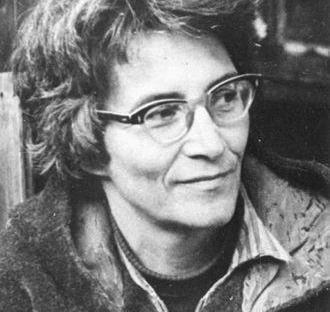
Tatyana M. Velikanova (1932-2002)
*
Petro Grigorenko was deprived of his Soviet citizenship in 1978 (CCE 48.1); his wife Zinaida later joined him in the USA.
Pavel Litvinov left the USSR in 1974 (CCE 32.20 [18]); Ludmila Alexeyeva left in 1977 (CCE 44.8); Yulia Zaks left in 1979 (CCE 52.12 [7]). ↩︎
The Popular Labour Alliance or Union [Russ. Narodno-trudovoi soyuz] was an anti-Soviet, Russian émigré organization, founded in 1930 and currently based in Paris and Frankfurt. ↩︎
On KGB Lieutenant-Colonel Istomin: see //CCE 18, CCEs 28-9, CCE 35, CCE 37 & CCEs 40-42. ↩︎
 A Chronicle of Current Events