Searches, Interrogations, Arrests
1.
The Arrest of Georgy Fedotov
After the arrest of Father Dmitry Dudko (CCE 56.9), Muscovite Georgy Fedotov telephoned foreign correspondents and informed them of what had happened. On 18 January 1980, when Fedotov and his wife were returning home, policemen swooped on him and without any explanations pushed him into a car.
He was conveyed to Police Station 142, where he discovered that there was an authorization from a psychiatric clinic for his hospitalization. In the authorization it said that “in connection with the arrest of his mentor [Fedotov] has developed a pattern of intense activity”. They attempted to interrogate Fedotov, but he refused to answer questions and demanded that a psychiatrist be called. According to Fedotov the duty psychiatrist did not find grounds for his enforced hospitalization, but changed his opinion after a lengthy conversation with police officials.
Fedotov was then conveyed to psychiatric hospital No, 14, where he was placed in Section 6: the section head is V.Ya. Levitsky. He was assigned intensive treatment (Haloperidol, Iriflazin, Aminazin), which was withdrawn soon afterwards. When Fedotov’s wife asked about his discharge, she was told that without special instructions Fedotov would not be discharged. “The people who put him in here are also the ones able to discharge him,” they informed her.
Subsequently it became clear that a criminal case had been instituted against Fedotov under Article 191-1 pt. 2 (RSFSR Criminal Code). He is charged with resisting arrest by police-officers on 18 January 1980. The case is being conducted by Investigator V.A. Sidorov from the procurator’s office of Moscow’s Krasnogvardeisky district [1].
*
2.
The Arrest of Vazif Meilanov (Makhachkala)
On 25 January 1980, in Makhachkala (Dagestan ASSR), Vazif Meilanov went with a placard to the regional Party committee building. Meilanov had embellished a mass-produced printed placard containing a text about the Constitution and human rights with a protest against the exile of Sakharov.
A few minutes after the start of the demonstration Meilanov was arrested. After the arrest a search was carried out at his home. Copies of his statements to official bodies in connection with the official attacks on Sakharov in 1973-7, and a letter criticizing the USSR Draft Constitution (1977), were confiscated.
Vazif Meylanov
(1940-2015)
Meilanov’s case is being conducted by Beshirov, an investigator from the procurator’s office of the Dagestan ASSR. Meilanov is charged under Article 190-1 (RSFSR Criminal Code), but only for his demonstration. As far as is known he is not giving any evidence and not signing records of interrogations. At the end of February or the beginning of March Meilanov was sent for psychiatric diagnosis.
*
On 3 March 1980, searches were carried out at the work-place and home of E. Gorodetsky, a Moscow acquaintance of Meilanov: 285 roubles wrapped up in paper with the inscription “alimony for Vazif’s wife” (Meilanov’s former wife and daughter live in Moscow); an old emigre newspaper; and an issue of the Chronicle were confiscated from Gorodetsky. (The money was subsequently returned.) Then he was interrogated in the Moscow procurator’s office and a summons to Makhachkala was written out.
There, beginning on 10 March, he was interrogated for roughly a week both in the procurator’s office and in the KGB. Gorodetsky was asked about his relations with Tatyana Osipova, whose phone number had been found in his notebook, and about the book Meilanov wrote in 1975, which had been confiscated on 12 February from Alexander Lavut (this issue CCE 56.6). In the book the author presents a critical analysis of the reporting of the Soviet press and of works by Lenin.
*
Meilanov (b. 1936) is a mathematician who graduated from Moscow University’s Mechanics & Mathematics Faculty, completed his doctorate there, and taught at a polytechnic institute in Makhachkala, Dagestan.
He had conflicts with the administration for refusing to raise the grades of children of highly-placed persons. In 1978 he was dismissed for being absent. He was then a concrete worker right up to his arrest. In spring 1979, Meilanov requested permission to emigrate from the Visa & Regiostration Department (OVIR) on the grounds that he wished to have good work and wages. After a refusal he wrote to Izvestiya and the Presidium of the USSR Supreme Soviet. Chats were held with him in Makhachkala in the autumn; he was advised to find work connected with foreign trips.
*
3.
The Arrest of Alexander Kuzkin
On 7 March 1980, Alexander Kuzkin (CCE 51.15, CCE 53.21) was taken from work to Psychiatric Clinic No. 16 in Moscow’s Babushkino district.
There, in the office of chief doctor Afanaseva, and with her participation, a conversation was held about the inadmissibility of preaching Christianity. Kuzkin was asked to enter hospital for examination. He stated that he did not need an examination; he had already been examined by a Soviet and a foreign psychiatrist about a year ago [2].
*
On 26 March 1980, Kuzkin left home in the evening and did not return.
The following day searches were carried out at the place of work and home of his wife D. Krutilina, and at his mother’s home. During the search at Krutilina’s home Pasternak’s poems, a typewriter ribbon, a book Life after Life, a letter from Vyacheslav Zaitsev’s wife (this issue CCE 56.23) and 27 copies of the prayer “People, pray for the whole world,” were confiscated.
From the day of his arrest Kuzkin was held at the investigations prison on Matrosskaya Tishina Street. On 19 April 1980, he was transferred to Butyrka Prison. Investigator E.B. Bondarenko is conducting his case.
His wife Krutilina has been summoned three times to be interrogated. According to the investigator, Kuzkin has been charged under Article 190-1 (RSFSR Criminal Code); he has undergone psychiatric analysis as an out-patient and been ruled not responsible.
*
4.
The Arrest of Josif Dyadkin
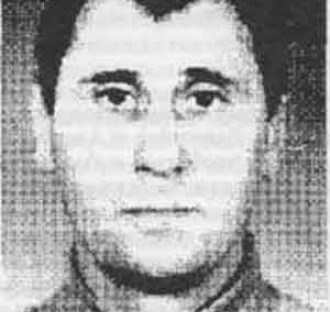
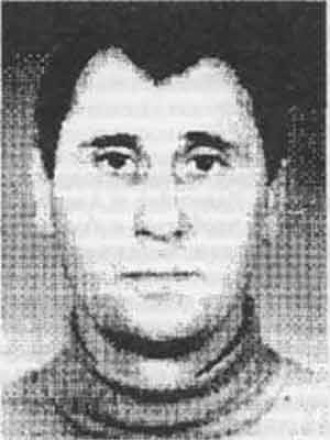
On his way back to Kalinin [Tver] from holiday, Josif Dyadkin [3] was stopped in the Crimea and searched on 15 March 1980.
The car in which he and a driver were travelling from the health resort to Simferopol Station was stopped at a Traffic Inspection check-point. Dyadkin and the driver were asked to get out so that the car could be inspected. A moment later one of the policemen produced a knife which had been instantly found in the car.

DYADKIN, Josif Getselevich
(1928-2015)
Dyadkin and the driver were taken to the local police station in different cars. A body-search was arranged for them after it was stated that the previous night a woman had been robbed, during which she was threatened with a knife similar to the one taken out of the car. On the insistence of the policemen Dyadkin wrote an explanatory note in which he mentioned where he had been on 13 and 14 March 1980 after 6 pm. Nevertheless, his fingerprints and those of the driver were taken.
During the search a photocopy of an article by Mikhail Bernstam [4] published abroad, “The Sides in the Civil War 1917-1923” was confiscated from Dyadkin, as were notes linked to the article, notepads containing notes on the situation of the Crimean Tatars, letters and postal receipts.
*
On 25 April 1980, Dyadkin was taken from work to be present at a search; after the search he was arrested. He has been charged under Article 190-1 (RSFSR Criminal Code). Investigator Myagkov of the Kalinin procurator’s office is conducting the case.
On the same day Dyadkin’s acquaintances L.A. Lozovsky and Sergei Gorbachev were searched (CCE 57.9-1; trial CCE 58.20).
================================================
NOTES
- Fedotov was not in fact tried but kept in hospital until his discharge in August 1980. Previously he had been forcibly hospitalized in 1976.
See the transcript of a conversation about Fedotov in 1976 with Dr. Levitsky: Jane Ellis, ‘The Christian Seminar’, Religion in Communist Lands quarterly, 1980, No 2 (pp. 109-112).
↩︎ - Drs. A. Voloshanovich (Moscow) and Harald Blomberg (Sweden) both concluded that Kuzkin was not mentally ill.
↩︎ - On Dyadkin, see CCE 45.20 [4], CCE 47.15 [23], CCE 52.1 & CCE 53.25-2 and Name Index.
↩︎ - Mikhail S. Bernstam, a founding member of the Moscow Helsinki Group, emigrated to the USA in 1976. There he published two volumes of documents, Popular Resistance to Communism in Russia (1981-1982) and worked as a researcher at the Hoover Institution, Stanford University (California). ↩︎
============================

