
This section is largely based on material from Aušra No. 20 (January 1980) and The Chronicle of the Lithuanian Catholic Church [LCC Chronicle] No. 42 (March 1980).
*
PERSECUTION OF THE LITHUANIAN HELSINKI GROUP
Vytautas Skuodis arrested (9 January 1980)
Vytautas SKUODIS has been arrested in Vilnius, the capital of Lithuania. A geologist, Doctor of Science, assistant professor and lecturer in the Faculty of Hydrogeology and Geological Engineering at Vilnius University, he is known for his research on the geology of Lithuania, Latvia and Siberia. Skuodis has also made extensive studies of philosophy and Lithuanian history.
During a search on 24 November 1979 (CCE 55.6), an unfinished book, “Spiritual Genocide in Lithuania”, dedicated to the defence of the ethical, religious and cultural traditions of the Lithuanian people was confiscated from Skuodis. Two statements issued Skuodis after 24 November are available.
On 28 November he sent a letter to US President Carter, in which he declared that he considered himself a citizen of the USA, as he was born in Chicago in 1929 and was registered in the relevant documents as Benedict Scott. Later his family had returned to Lithuania, where he began to be called Vytautas Skuodžis, and then Vytautas Skuodis. “In this letter”, writes Skuodis, “I assure you, Mr President, that whatever tribulations I may have to face in the future, I shall always remain true to the principles of defending human rights, thus also defending the honour of my land of birth — the USA — and my Fatherland, Lithuania.” In the same letter he dates the beginning of his participation in “the movement of the Lithuanian people for democratic freedoms and human rights” as 18 June 1940.
In an appeal addressed to all signatories of the Final Act of the Helsinki Conference, and also to all his fellow-countrymen, Skuodis writes that since 20 November 1979 he has been a member of “the Lithuanian Helsinki initiative Group for the Defence of Human Rights” [Lithuanian Helsinki Group] and promises to publicize all violations of rights and freedoms in Lithuania. The first such information Skuodis made public was the seizure of his 240-page work “Spiritual Genocide in Lithuania”.
On 4 January 1980, when Skuodis came to the University to give a scheduled lecture, the Dean of the Geology Faculty Tarvydas told him that he had been sacked on 29 December 1979 under Article 287 of the Lithuanian Code of Labour Laws (‘for immoral actions’). Skuodis asked for an explanation from the Minister of Higher and Special Secondary Education in Lithuania, Zabulys. The latter explained that Skuodis’s immorality consisted of teaching young people while at the same time engaging in anti-Soviet activities. Skuodis was arrested on 9 January 1980.
The search which accompanied the arrest was carried out in connection with Case 58 (CCE 54.18, CCE 55.6).
*
The Case of Mečislovas Jurevičius (6 February 1980)
On 17 January 1980, the worker Mečislovas JUREVICIUS, a member of the Lithuanian Helsinki Group (CCE 36.7, CCE 40.10, CCE 44.22), was summoned to the procurator’s office in Šiauliai.
He was received by A. Jucys, an investigator with the Vilnius City procurator’s office, who told Jurevičius that a criminal case had been brought against him under Article 199-3 (Lithuanian SSR Criminal Code = Article 190-3, RSFSR Code) for organizing a religious procession to the Hill of Crosses on 22 July 1979. Three witnesses were summoned and an ‘identification’ was made. Jurevičius was told not to leave town. He refused to answer many of the investigator’s questions and would not sign the record.
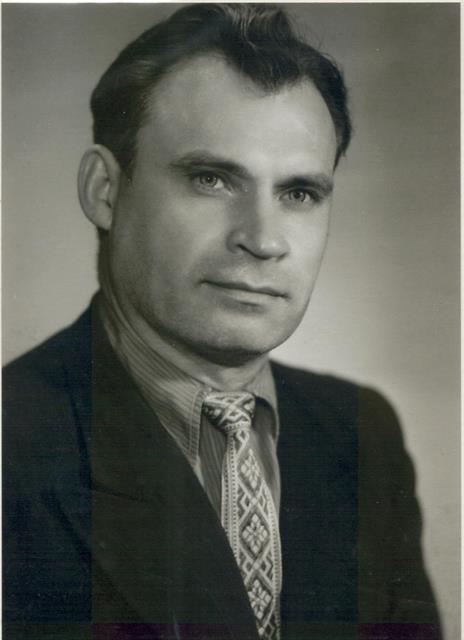
Mečislovas Jurevičius (1927-1999)
On 6 February Jurevičius was taken off a bus bound for Riga via Minsk at the Šiauliai Bus Station. KGB men searched him and confiscated a number of Helsinki Group documents concerning arrests in Lithuania; Lithuanian residents of German nationality who are not allowed to emigrate to West Germany; the December 1979 invasion of Afghanistan; and a declaration by Birute Pašiliene [1] about the fate of political prisoner P. Paulaitis (CCE 46.23-2). Jurevičius was interrogated. The questions concerned documents found during the search and the organization of religious processions. Jurevičius refused to answer any questions.
Towards the end of the interrogation, Investigator Jucys and KGB Major Markevičius (CCE 54.18) arrived from Vilnius. A search was then carried out at the home of Jurevičius in connection with Case No. 58. The following were confiscated: photographs of religious processions, religious literature, the texts of prayers “for the freedom of the Motherland and freedom of religion”, and cassettes with tape-recordings. The search was led by Markevičius, who was “working in consultation with” Jucys.
*
Search at the Home of Father Bronius Laurinavičius
On 6 February 1980, seven KGB officials, led by Major Sventauskas, carried out a search in connection with Case No. 58 in the village of Adutiškis (Svenčionys district), at the home of Father Bronius LAURINAVICIUS, a member of the Lithuanian Helsinki Group. His two typewriters (with Cyrillic and Latin type) were confiscated, together with an issue of Tiesos Kelias [the Path of Truth] and religious documents and letters.
*
Algirdas Statkevičius arrested (15 February 1980)
On 9 January 1980, a fresh search in connection with Case No. 58 was carried out at the home of Lithuanian Helsinki Group member Algirdas STATKEVICIUS (CCE 54.18). The search was again led by KGB Lieutenant-Colonel Kalakauskas and Major Pilelis. They confiscated some Lithuanian Helsinki Group documents, Labour Camp Tales by Ona Lukauskaite-Poškiene, and addresses and telephone numbers. On the night of 14/15 February 1980, Statkevičius was arrested.
Algirdas Statkevičius, by profession a psychiatrist, was born in 1923. During the war he cooperated with the Germans; in 1944 he graduated from an intelligence school in Germany and was sent to Lithuania. Statkevičius himself says that he took no part in spying activity. In 1951 he was arrested and condemned to 25 years imprisonment. He was released in 1957. In 1970 he was again arrested and spent about a year in a psychiatric hospital. He was released after signing a plea for mercy. He joined the Lithuanian Helsinki Group in autumn 1979.
*
ARRESTS (1-3)
[1] Povilas Pečeliunas
On 9 January 1980, in Vilnius, a search was again carried out in connection with Case 58 (CCE 55.6) at the flat of Povilas PECELIUNAS (in CCE 55.6 his name was misspelt). The search was conducted by KGB Major Markevičius. Twenty covers for the journal Alma Mater, two issues of Aušra and a book by A. Maceina, The Origin and Meaning of Philosophy, were confiscated. Pečeliunas was then arrested.
Povilas Pečeliunas was born in 1928. After graduating from the Faculty of Lithuanian Language at Vilnius University, he taught Lithuanian in schools for many years. He owns a unique library on Lithuanian language studies. During the interrogation he was asked why he was fighting against the Soviet system, as he came from a family of poor peasants. Pečeliunas replied that he was fighting not the system, but injustice.
*
[2] Anastasis Janulis
On 29 January 1980, the organist Anastasis JANULIS, a resident of the town of Kaišiadorys, was arrested in Kaunas. Algina Suslavičiute, also a resident of Kaišiadorys, was detained with him.
The next day KGB officials searched Janulis’s flat; after the search the flat was sealed. On 30 January 1980, a search was also carried out at the home of Algina Suslavičiute, and for the next three days she was subjected to interrogations. According to Aušra No. 20, Janulis was arrested “for disseminating subversive pamphlets”.
*
[3] Povilas Buzas
On 30 January 1980, in the town of Birstonas, KGB Major Markevičius carried out a search at the house of Povilas BUZAS.
Buzas was found to have about 100 photocopies of LCC Chronicle (41), about 50 photocopies of Rupintojelis (No. 11) and typed copies of LCC Chronicle (41), Rupintojelis (No. 11) and Ausra (No. 19; CCE 51.21 [20]). Buzas himself was discovered in the cellar of the house, working on a home-made electric photocopier. After the search Buzas was arrested and taken to Vilnius.
According to Aušra No. 20, Buzas is accused of “duplicating underground publications”.
*
SEARCHES (1-4)
[1] Home of Alexander Zarskus
On 24 November 1979, at the same time as the searches in Vilnius (CCE 55.6), a search was carried out in Kaunas at the home of Alexander ZARSKUS, a lecturer at the Agricultural Academy. The search was led by KGB Major Markevičius.
Two colleagues of Zarskus, Academy lecturers Vytas Danilevičius and Algirdas Railas, were asked to be witnesses: they not only helped in the search, but watched to make sure that the Zarskuses did not talk to each other. A packing case was discovered, which was measured, weighed and taken away without being opened. After the search the KGB officials persistently demanded that the owners should hand over some hidden papers they had been looking for.
*
[2] Home of Natalya Mandrit
On 7 February 1980, a search was carried out in connection with Case No. 58 in Vilnius at the home of Natalya MANDRIT, a third-year student of the Faculty of Physics at Vilnius University. A Geiger counter was used during the search. A Stankevičius’s book Sophiocracy or Geomorality turned out to be ‘radioactive’.
*
[3] Home of Ona Sereikaite
On 12 February 1980, in Kaunas, the police carried out a search at the home of Ona SEREIKAITE, an ophthalmologist at the Kaunas Republican Clinic.
Religious books, photographs and notebooks were discovered and confiscated. The search was conducted without a search warrant being shown. The police broke down the door of the larder and even searched a neighbour’s room, where they carefully looked through her scientific works. The search was led by Investigator Jucys.
Ms Sereikaite was brought back to witness the search from the small town of Jurbarkas, where she had been on a work assignment.
*
[4] Home of Kazimieras Sabaliauskas
On 8 April police Captain Slibinskas carried out a search at the home of Kazimieras SABALIAUSKAS. Two religious pamphlets and the Universal Declaration of Human Rights [1948] were confiscated.
*
INTERROGATIONS AND CHATS
[1] A Chat with Algis Patackas
On 24 December 1979, Investigators Pilelis and Rukšenas summoned Algis PATACKAS for a ‘chat’ at KGB headquarters in Vilnius. Patackas was asked to write a renunciation of his participation in underground publishing and to state in writing his loyalty to the authorities. He refused.
*
[2] Vitalija Zvikaite is Interrogated
On 4 January, the same KGB officials interrogated Vitalija ZVIKAITE. They asked her about her acquaintances in Vilnius and Kaunas (particularly about Patackas).
They were interested in how an article confiscated from Zvikaite in manuscript form during a search (CCE 54.18) managed to appear in Aušra. Investigator Rukšenas expressed regret that the interrogation was not taking place 30 years ago: no one would have “played around” with her then, and no proof would have been necessary. They promised to summon her again.
*
[3] The Case of Antanas Terleckas
In February 1980 scores of people were summoned for interrogation in connection with the case of Antanas TERLECKAS (arrest CCE 54.18). In most cases they refused to come.
*
The Death of Father Virgilijus Jaugelis
On 17 February 1980, Father Virgilijus JAUGELIS, assistant priest of Kybartai parish, died after a long and agonizing illness.
Virgilijus Jaugelis was born on 9 September 1948: his father was in prison at the time. Virgilijus was brought up as a Catholic. After leaving school he applied every year from 1968 to 1973 to enter the Theological Seminary, but none of his applications was accepted. Jaugelis became one of the most active fighters for religious freedom. He was first detained during the trial of Father Zdebskis (CCE 22.8 [6]); he was then let off with a beating and 10 days in jail. It was at this time that he began to study philosophy at an underground Theological Seminary.
In 1972 Virgilijus collected signatures for the Memorandum of 17,000 Lithuanian Catholics (CCE 24.6). In 1973, while trying to set up a secret printing-press on which to produce LCC Chronicle. Jaugelis was arrested. In December 1974, a court condemned him to two years in the camps (CCE 34.6).
In 1975 Jaugelis was released early, being incurably ill (CCE 36.7). None the less he managed to gain entrance to the Seminary. After graduating, he was ordained a priest and appointed as assistant priest to Kybartai parish.
LCC Chronicle (42) reports that the funeral of Jaugelis was attended by thousands of believers from all over Lithuania, including over 100 priests [see pdf for illustrations]. The next day. before a great crowd of people in Kybartai church, the priests Tamkevičius, Kauneckas, Svarinskas and Jelinskas made speeches praising the religious and political activity of Virgilijus Jaugelis.
*
MISCELLANEOUS
The Dismissal of Keršiute
On 29 December 1979, five weeks after a search Danuta Keršiute was sacked from her job at the Lithuanian Ministry of Culture for ‘unsuitable behaviour’.
Wreaths laid on Basanavičius’s grave
On 16 February 1980, Lithuanian Independence Day, wreaths were again laid (CCE 52.10) on the grave in Vilnius of Jonas Basanavičius (1851-1927; the ‘Patriarch of the Nation’). The next day Algis BALTRUSAS was summoned by the KGB in this connection. Colonel Stašaitis tried to question him as to who organized the wreath-laying, Baltrušas refused to answer.
=========================================
NOTES
- On Birute Pašiliene, see CCE 34.7 [10], CCE 35.5 [7], CCE 36.7, and Name Index.
↩︎
==========================
 A Chronicle of Current Events