SERHIYENKO
Alexander Fyodorovich SERGIYENKO (Ukr. Serhiyenko), sentenced by the Kiev Regional Court under Article 62 (UkSSR Criminal Code) to seven years in strict-regime camps and three years of exile (CCE 25.2, CCE 27.1), has been confined in the Perm camps (penal institution VS-389/36) since December 1972.
One of the main counts of the indictment stated that
“in his own hand he edited the first 33 pages of the printed text of Ivan Dzyuba’s Internationalism or Russification?“
*
On 15 March 1973, in accordance with a camp disciplinary penalty, Sergiyenko was confined in a punishment cell. The maximum term of six months was imposed at once and with no prior warning.
On 28 December 1973, by decision of the Kuchino town court, A. Sergiyenko was transferred to Vladimir Prison for three years. The camp commandant explained that “… the transfer to prison is a disciplinary educational measure, not a penalty for crimes committed.”
Sergiyenko suffers from chronic, generalized pulmonary tuberculosis. Such a severe form of punishment has caused a sharp deterioration in his health. His total prison confinement will now amount to four years and five months (although he was sentenced to seven years in labour camps): 11 months in an investigations prison; six months in a punishment cell; and three years in Vladimir Prison.
*
The Administrative Staff of Camp 36
Perm Region, Chusovskoi district, Kuchino village, post office VS-389/36.
- Commandant – Major V. F. Kotov.
- Deputy Commandant in charge of Camp Regime and Operations Section – Major V. Fyodorov,
- Deputy Commandant in charge of Political Section – Captain Zhuravlyov. Chief of Camp Regime and Guard Services – Romanov.
- Chief of Special Section – Gnedina.
- Chief of Operations Section – Lieutenant Rogachev.
- Chief of Medical Section – Petrov.
- Camp Physician – Kotova.
- Camp Nurse – Makhnutina.
- Chiefs of Detachments – Captain Gnedin, First Lieutenant Melyantin, First Lieutenant Belov.
- Duty Officers – Captain Kislov, First Lieutenant Rak.
*
Medical Facilities in The Perm Camps
There are two physicians in the hospital serving the VS-389 camp complex [1]: an oculist, serving as Chief of Medical Section, and a therapist.
The hospital is inadequately stocked with basic equipment such as syringes or even bed pans, and the one electrocardiograph is not functioning.
In some cases, medicine is known to have been administered after the expiration date on the supply. No stores of blood are available for transfusions.
The following are some specific facts about individuals [2].
Prisoner Gorbal (Ukr. Horbal) who fell ill during confinement in a punishment cell, was not exempted from work after his release from the cell.
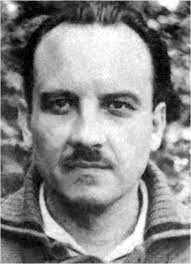
Zinovy Antonyuk (1933-2020)
Prisoner Antonyuk, who is ill with both hepato-pancreatitis and bone tuberculosis, is not receiving proper treatment and has not in fact been examined by specialists.
He was discharged from the hospital twice: first by Sharikov, an official of the Operations Section of the Perm Directorate of Internal Affairs (UVD) and subsequently by Ruban, a representative of the Kiev KGB.
Prisoner Dyak, who is ill with lymphogranulomatosis, was not treated until six months after his initial examination by a physician.
*
Only in extreme cases is the presence of incurable illness certified.
Lieutenant-Colonel T. P. Kuznetsov of the MVD Medical Service, chairman of a visiting medical commission, stated that he had come to the camp not to pardon people because of illness but to force them to work.
Ten prisoners, including two who had only one leg, were declared fit for work. The disability certifications that many prisoners had held for years were revoked. Instead of medical questions, Kuznetsov generally asked prisoners:
“How many years are you serving? For what?”
Replies to such questions provided all the information he needed to make decisions.
KURKIS
For example, Kurkis, a Lithuanian prisoner serving the final part of a 25-year term, was stripped of his disability status by the commission. Kurkis had not worked for many years because he suffered from ulcers.
After the commission issued its decision, he was assigned to heavy labour, ploughing the “forbidden zone” [zapretka]. Perforation of an ulcer occurred on his first day of work. Pimenov, commandant of Camp 35, telephoned to Perm to speak to Lieutenant Colonel T. P. Kuznetsov (who is surgeon to the camp). He refused to come and see the man, referring to the bad weather. Kurkis died.
In September 1973, the political prisoners in Camps 35 and 36 wrote and sent off a great number of statements appealing to have the circumstances of Kurkis’s death investigated. In response, the Perm UVD sent a commission headed by the same Kuznetsov. Nothing resulted from the commission, and the prisoners’ protests mounted.
The Ministry of Internal Affairs then appointed a new commission in which Kuznetsov served only as a member, the chairman being some woman from Moscow (her name is unknown to the Chronicle).
Not one of the prisoners’ demands was met.
*
The Staff of the “Special Section” for Especially Dangerous State Criminals,
Perm Region Department of Internal Affairs (UVD)
- Commander – Lieutenant Colonel Mikov.
- Operations personnel – Captain Sharikov and Second Lieutenant Terentyev.
- Chief of the KGB group – Major Afansov.
- Guards Service: Commander – Ensign Titov, senior assistant – Ensign Makhnutin.
*
MORDOVIA
Women Prisoners
The following are imprisoned in the women’s camp for political prisoners in Dubrovlag (Mordovian ASSR):
Nina Antonovna STROKATOVA (Ukr. Strokata) (CCE 25.1, CCE 28.7 [2]): 4-year term under Article 62 (UkSSR Criminal Code = Article 70, RSFSR code).
Nadezhda Alexeyevna SVETLICHNAYA (Ukr. Svitlychna): 4-year term plus exile, also under Article 62.
Stefaniya Mikhailovna SHABATURA: 5-year term plus 3 years of exile, also under Article 62.
Iryna STASIV-KALYNETS: 6-year term plus 3 years of exile, also under Article 62.
Their address is Mordovian ASSR, Tengushevsky district, Barashevo settlement post office, penal institution ZhKh 385/3.
During the autumn the Ukrainian women prisoners of Camp 3 staged several brief hunger strikes. They demanded in particular that Ivan Dzyuba [3] visit their camp (apparently their demand was not addressed to the administration).
Shortly before, Dzyuba published a “repentant” article in a newspaper: see CCE 29.5 and CCE 30.17.
*
In late December 1973, the administration of the camp refused Strokata a meeting with the person (Leonid Tymchuk) she had authorized to take care of her affairs (CCE 23.7 [4], CCE 32.22 [1]), on the grounds that the two were not related. In response, the Ukrainian women prisoners of Camp 3 staged two and three-day hunger strikes.
Stefaniya M. Shabatura, an applied artist, carpet-designer, has been persecuted by the administration for her attempts to paint. During searches, her paints were confiscated.
==================================
NOTES
- It is not clear whether this hospital serves only the two camps for “especially dangerous State criminals” in the Perm Region (numbers VS-389/35 and 36), or other camps in the Region as well. ↩︎
- On Mikhaylo Dyak see CCE 11.3 [6], CCE 17.7; on Zinovy Antonyuk CCE 24.3 [4], CCE 27.1. Nikolai Gorbal is a singing teacher from Ternopol (Ukraine).
↩︎ - On Dzyuba, see CCE 17.2, CCE 24.3, CCE 24.10 [3] and Name Index.
↩︎
==============================
 A Chronicle of Current Events