EIGHTEEN ITEMS
MOSCOW (1-3)
[1]
At 5 pm on 23 May 1972, the editor of the journal Veche, Vladimir Osipov, was walking along a Moscow street. A policeman approached him and, after checking his documents, ordered Osipov to get into a car that had driven up. Osipov was driven to Police Station 2.
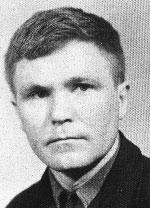
Vladimir Osipov (1938-2020)
There, without any explanation and without the sanction of a Procurator, he was subjected to a body search, had his fingerprints taken, and a statement was drawn up concerning his violation of the residence regulations.
Are the authorities not preparing to prosecute Osipov, as they once did Anatoly Marchenko (CCE 3.1 [1]), for a breach of the secret “Statute on Identity Documents” (see Article 198, RSFSR Criminal Code)? Again without any Procurator’s sanction, the police confiscated everything in Osipov’s briefcase: academic and literary materials.
On 5 June, Osipov wrote a letter to the USSR Minister of Internal Affairs, N. A. Shchelokov, about the unlawful incident, demanding the return of his belongings and the punishment of the guilty persons.
*
[2]
On 3 July 1972, Malva Landa (CCE 25.11 [7]) was declared a suspect under Article 70 (RSFSR Criminal Code).
Until then she had been summoned to interrogations in the capacity of a witness.
*
[3]
At the beginning of June leaflets addressed to working people were distributed in Moscow. The subject of the leaflets was economic. The Chronicle does not know the precise content of the leaflet.
*
MORDOVIA (4-5)
[4]
In June 1972 prisoners convicted at the Leningrad “aeroplane” trial (CCE 17.6) declared a hunger strike in connection with the second anniversary of their arrest.
One of the strikers’ demands was, inasmuch as the Israeli government had granted them Israeli citizenship they should be transferred to a camp for foreigners.
*
[5]
Gennady Gavrilov (CCE 10.5, CCE 11.5, CCE 15.4 [1]) has been transported from Mordovia to the Lefortovo KGB Investigation Prison, apparently for interrogation.
*
KIEV (6-9)
[6]
On 25 May 1972, employees of the USSR Department of Internal Affairs (MVD) presented themselves at the apartments of Zinovy Melamed, Lazar Slutsky and Alexander Feldman, and escorted them to a police station.
There they were required to put their signatures to a typewritten text concerning the “non-commission of anti-Soviet acts“. When they refused to do so they were put in a preventive detention cell. Melamed and Slutsky were released on 27 May; Feldman on 30 May.
*
[7]
On 25 May Klara Geldman received a summons to come to a police station. There she was charged with causing a breach of the peace.
After this she was jailed for fifteen days. As a protest against her groundless arrest Geldman declared a hunger strike from the very first day of her imprisonment.
*
[8]
On 25 May S. Borshchevsky was stopped on the street by a stranger who stated that Borshchevsky had pushed him.
There happened to be some druzhinniki standing nearby. Borshchevsky was taken off to a people’s court where he was sentenced to 15 days in jail for “petty hooliganism”: he had “expressed himself in obscene language and insulted national pride …” (whose is not known, Chronicle).
Alexander Feldman, Klara Geldman, and S. Borshchevsky are being questioned as witnesses in the case of Leonid Plyushch and Lyubov Serednyak (CCE 24.3).
*
[9]
The infant son of Nadiya Svetlichnaya [Ukr. Svitlychna] (CCE 25.2 [5], see Kiev entries) has been returned to his relatives.
*
Releases (10-11)
[10]
Valery Ronkin has been released from the camps and sent to serve his term of exile in Syktyvkar (Komi ASSR, Northwest Russia).
In 1965 he was sentenced in Leningrad to seven years imprisonment and three years’ exile, for participating in a clandestine Marxist circle which produced the journal Kolokol (The Bell).
*
[11]
On 12 June 1972, upon the expiry of his term of imprisonment, Sergei Khakhayev was released from the camps. He still has three years’ exile to serve.
*
Departures (12-13)
[12]
On 22 May, the artist Yury Titov and his wife Yelena Stroyeva left the USSR.
When they received their luggage in Rome, all Titov’s paintings were found to have been burned through with sulphuric acid.
*
[13]
On 20 May, Alexander Volpin left the USSR.
A poet and mathematician, who has opened up a new field in fundamental mathematics, Volpin was a consultant to the Human Rights Committee, and the son of the poet Sergei Yesenin.
*
JERUSALEM.
[14]
During Nixon’s visit to Moscow, repatriates from the USSR carried out a hunger strike at the Wailing Wall in Jerusalem in protest at the persecution of Jews in the Soviet Union.
About two hundred people, most of them young, took part in the hunger strike. They also staged a demonstration in front of the building of the Russian Orthodox Mission, where Patriarch Pimen, who had come to Israel, was staying.
The demonstrators chanted “Let My People Go!” and handed in a petition to the Patriarch demanding freedom of religion in the USSR.
*
BRUSSELS.
[15]
At the end of 1971, an “International Committee on the Situation of Minorities and on Human Rights in the USSR” [1] was founded, with its headquarters in Brussels.
Directly concerned in the founding of the Committee were René Cassin, 1968 Nobel-Peace-Prize winner and President of the International Institute for the Rights of Man [2], and the Norwegian public figure Odd Nansen, son of Fridtjof Nansen.
The Committee has begun publishing, in French, English and Russian [3], an information bulletin “Human Rights in the USSR”. A voluntary group attached to the Committee has published a French language edition of Nos. 19 and 20 of the Chronicle of Current Events [4].
*
In Sweden, the SMOG-Committee is publishing a Swedish translation of the Chronicle of Current Events.
*
LONDON.
[16]
The “International Committee for Amnesty of Political Prisoners” [i.e., Amnesty International] has published an English edition of all the issues [5] of the Chronicle of Current Events and is continuing to publish issues as they appear.
*
[17]
In 1972, Polonia Book Fund (London) published a book in Polish (Kronika Biedacych Wydurzen) consisting of the complete texts of Nos. 1-12 of the Chronicle of Current Events and excerpts from Nos. 13-16 of the Chronicle.
In the introduction the translators, Nina Karsow and Szymon Szechter [6], write:
“… in summer 1968, an unusual text found its way to the West. …
“From that day issues of the Chronicle began to appear steadily in samizdat, and to reach the West at regular intervals of two months. And probably no-one realised at that time how tremendously significant this journal was to be for the development of the democratic movement and in particular for informing the Western public about events in the Soviet Union.
“The Chronicle’s laconic, to-the-point, non-editorializing, we might even say dry reporting on judicial and extra-judicial terror, conditions in Soviet prisons, camps and prison psychiatric hospitals … and, finally, the review of samizdat news which appears in each issue — all of this has become the chief and sole source of accurate information, especially for those who wish to make use of such information. …
“For the Western press, the Chronicle has become a source of non-falsified information.
“It is thus fulfilling a task of prime importance; the informing and consequently the mobilization of the Western public, so that it should react more strongly than it has in the past to what is happening in the Soviet Union. There is still a great deal that can and must be done in this sphere; truth to tell, what has been done is very little, but for what has been achieved we are indebted to samizdat and to the Chronicle in particular”.
*
[18]
The English-language book Uncensored Russia (1972) has come out in London. Its compiler is the English historian, Peter Reddaway.
The book contains the text of the first 11 numbers of the Chronicle, split up into chapters and sections. The text of the Chronicles is annotated and accompanied by an introductory article by the compiler. The book contains many photographs.
The forward to the book is by Julius Telesin (CCE 14.11 [22]).
=========================================
NOTES
- At its first conference, held in Paris in June 1972, the Committee renamed itself “The International Committee for the Defence of Human Rights in the USSR”.
A detailed account of the conference, including the contributions made by L. Rigerman, Yu. Titov and E. Stroyeva (see above, “Departures”), appeared in Human Rights in the USSR (CHR 6-7, 1972).
↩︎ - Institut internationale des droits de l’homme (IIDH, Strasbourg), founded 1968.
↩︎ - The Bulletin was published only in English and French, not Russian.
↩︎ - The only regular publication of the Chronicle in Russian at this time was in the journal Volnoye slovo. Samizdat Izbrannoye (Possev publishers, Frankfurt). Its first four issues published: CCE 21 (1, 1972), CCE 22 (2), CCE 23 (3), and CCE 24 and CCE 25 (4). No. 5 was due to publish CCE 26 (July 1972).
Thereafter Khronika Press in New York published each new issue of the Chronicle in Russian.
The Chronicle was also published regularly in Italian in condensed form in the periodical Russia Cristiana (Milan).
↩︎ - In fact, Amnesty only began to publish an English version of the Chronicle from No. 16 onwards. CCE 12-15 were translated and circulated by Peter Reddaway.
↩︎ - Karsow and Schechter were joint authors of Monuments are Not Loved, London, 1970. An autobiographical work, it was published in New York under a different title, In the Name of Tomorrow: Life Underground in Poland (1971).
↩︎
================================
 A Chronicle of Current Events