In May 1974, the Vladimir Region Court examined the case of Victor A. Nekipelov, charged under Article 190-1 (RSFSR Criminal Code).
For Nekipelov’s interrogation in the case of Sergei Myuge, the searches of Nekipelov’s apartment and his arrest in July 1973, see CCE 29.11 (1, 13, 17).
*
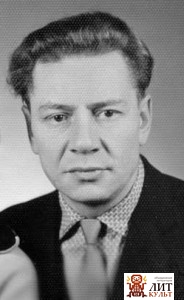
Victor Nekipelov (1928-1989, Paris)
*
Victor Alexandrovich NEKIPELOV was born in Harbin (China) in 1928.
He has a higher education in pharmaceutics, and at the end of the 1960s completed the Gorky Literary Institute’s correspondence course. He has published his verse and translations in several newspapers and journals. In the mid-1960s, Between Mars and Venus, a collection Nekipelov’s poetry was published in the USSR.
From 1970 onwards, Nekipelov worked in the town of Solnechnogorsk (Moscow Region) where he had a temporary residential permit. In autumn 1971, when he had received permission to live there permanently and authorization to obtain a flat, both rights were suddenly withdrawn, without any explanation. From spring 1972, Nekipelov has lived in Kameshkovo, a small town [1] in the Vladimir Region (east-central Russia) and worked there as manager of a pharmacy.
Nekipelov has two children, born in 1967 and 1972.
*
Nekipelov was arrested on 11 July 1973. The investigation was conducted by Junior Counsellor of Justice E.N. Dmitrievsky, a Senior Investigator with the Vladimir Region Procurator’s Office.
Nekipelov was subjected to a psychiatric examination in the Serbsky Institute and declared accountable for his actions.
*
APPEALS
Interventions in defence of Nekipelov have been published.
Shortly after he left the USSR, Sergei Myuge made a statement on 9 October 1973 (CCE 30.14 [5]) to KGB Chairman Andropov. He reminded Andropov that he, Ksenia Velikanova and Nekipelov had been suspects in the same criminal case, in which he himself had born the main burden of the charges. Now Myuge had been allowed to leave, whilst Nekipelov had been arrested.
Myuge hoped that “KGB leaders will find it possible to free Nekipelov from prison so that he can subsequently go abroad”. The text of the statement was published in A Chronicle of Human Rights (New York 1974), No 4 [2].
In January 1974, the Action Group published a statement signed by Tatyana Velikanova, Sergei Kovalyov, Anatoly Krasnov-Levitin, Grigory Podyapolsky and Tatyana Khodorovich. In particular, it said:
“… his own fate, his persecution, his soul, and the face of the world in which he lived was reflected by Victor Nekipelov in his verse, and his verse was found at his home when it was searched. It is hardly necessary to search long for the real reason behind Victor Nekipelov’s arrest: certain worlds cannot bear their own reflections.
“But as poetry is not included in the crimes specified by our criminal code, it is natural to ask: of what is Victor Nekipelov formally guilty? And to this question there is, evidently, only one possible answer, strange though it may be: of nothing — not even of what people are normally tried for in our country.”
The authors express the fear that Nekipelov
“… is threatened by the most terrible of the possible punishments, a psychiatric hospital”.
(The statement was published in A Chronicle of Human Rights, 1974, No. 7.)
*
Trial
The trial was held on 16, 17 and 21 May 1974. The prosecutor was Obraztsov; the defence counsel was Nelly Nimirinskaya [3]. (The names of the judge and lay assessors are not known to the Chronicle.)
Nekipelov’s friends were not allowed into the courtroom, and when on 16 May they entered the room during the recess and occupied some free places, they were rudely removed by the policemen. They were not even allowed in to hear the verdict.
In the indictment Nekipelov was charged with the following:
- he had “circulated” CCE No. 19 (30 April 1971) by giving it to witness Dvortsin for perusal. This assertion was proven by the evidence of Dvortsin;
- Nekipelov wrote, and had the intention of circulating, a “Letter of Appeal” entitled “They want to try us — for what?”[4] His intent was proved by the fact that the letter was typed and that the text contained an appeal to his relatives and friends;
- he wrote and circulated eight poems: the assertion about circulation was proved, one, by the fact that some of the poems were typewritten; two, by the evidence of his wife that she was familiar with the poems; and, three, by the evidence of witness Afanasyev that Nekipelov had sent him three poems — with two of which Nekipelov was now charged;
- he had made manuscript drafts on the basis of which he was intending to write a “Book of Anger” and an article about Special Psychiatric Hospitals “with the aim of future samizdat publication and distribution”;
- Nekipelov had verbally circulated “deliberately false fabrications which defamed the Soviet political and social system” (Article 190-1): this was proven by the evidence of witness Voropayev and by witnesses Serkov and Ulanov, who occupied the same cell as Nekipelov during his pre-trial detention.
Nekipelov pleaded not guilty. He had expressed his own thoughts and convictions, and, therefore, his works were not deliberately false. Nekipelov denied giving the Chronicle to Dvortsin. He had not even read CCE No. 19 (April 1971), he said, before his arrest.
He also denied any intention of circulating his article “They want to try us — for what?” At the same time, he expressed regret concerning the last lines of the article.
Regarding his eight poems, Nekipelov stated that seven of them were not criminal. He had even sent two of the poems to Afanasyev, a reviewer of his published book of poems, in order to obtain his critical comments. Only with regard to the poem “A not quite Canonical Ode” did Nekipelov express regret that he had written it. He noted, however, that he had typed only one copy of it.
Of his manuscript drafts Nekipelov stated that the first of them consisted of ten lines in all, which contained various phrases, not the plan of a book: the indictment had conferred a title on a non-existent book. The second draft consisted of only eight lines, written, he thought, in connection with Pyotr Grigorenko’s internment in a psychiatric hospital and not containing any slander.
Finally, regarding “verbal circulation” Nekipelov stated that his conversations with Voropayev, Serkov and Ulanov did not contain any slander. Statements by Ulanov to the pre-trial investigation, alleging that Nekipelov had praised The Gulag Archipelago, could easily be refuted since he had been in the same cell as Ulanov long before Gulag had come out.
Nekipelov protested against the use of his cellmates as witnesses, as it was easy to exert pressure on people under investigation. Nekipelov said that Investigator Dmitrievsky had exerted pressure on him by threatening to reclassify the charges under Article 70 (RSFSR Criminal Code).
*
WITNESSES
Three of the witnesses summoned to the courtroom refused to testify: N.M. Komarova (Nekipelov’s wife), Ksenia Velikanova and Malva Landa.
The motives for their refusal were as follows. For Komarova the fact that her husband had not committed any crime; for Ksenia Velikanova, the vagueness of the charges; for Malva Landa, the illegality of criminal persecution for literature.
Witness Serkov stated that his interrogation during the investigation lasted 15 minutes. Yet very lengthy statements had been written into the interrogation record. He had signed the record without reading it, as he did not have his spectacles with him.
Witness Monakhov, Nekipelov’s deputy in the chemist’s shop, described how one day he had discovered Raskolnikov’s “Open Letter to Stalin” [5] in the drawer of Nekipelov’s table. Monakhov immediately telephoned the town soviet.
*
Witness Afanasyev testified that Nekipelov had regularly consulted him on questions of poetry.
Of those sent to him, he held in high regard the two poems for which Nekipelov was subjected to a psychiatric examination in the Serbsky Institute and declared accountable for his actions.
Of those sent to him, Afanasyev regarded the two poems with which Nekipelov was now charged as good; he could not perceive any libel in them and at one time had advised Nekipelov to publish them as part of a historical cycle, as they described the times of Ivan the Terrible.
*
PROSECUTION
The State prosecutor, a senior assistant of the Vladimir Region procurator, Senior Counsellor of Justice Obraztsov, declared in his speech that Nekipelov’s claims to freedom of speech and freedom of the press were unsubstantiated and slanderous. In reality Article 125 of the 1936 Soviet Constitution guaranteed these freedoms only in those cases when they were used in the interests of working people.
Of the charges enumerated above, the procurator withdrew that of ‘verbal circulation’ as it had not been corroborated by the evidence of witnesses in court.
In conclusion the procurator said that since Nekipelov had partially repented and expressed regret that he had written some of the poems, his punishment could be limited to two years’ imprisonment.
*
DEFENCE
Defence counsel Nimirinskaya, referred to the official commentary on Article 190-1 [6] , to which, in her opinion, even lawyers often did not attach due significance. She noted that statements expressing a critical or even negative attitude to one or another aspect of our system were not a crime; only deliberately false information was a crime.
Convictions, whatever they were, did not constitute a crime. Convictions, uttered aloud or set down on paper, remained convictions. Therefore, Nimirinskaya regarded as a slip of the tongue the procurator’s remark that convictions of a certain sort, when expressed verbally or in writing, became defamation.
An examination of Nekipelov’s case, she said, permitted the assertion that it was precisely with the utterance of his views and convictions — mistaken though they might be in a number of cases — that Nekipelov was being charged, as thereby slandering the Soviet political and social system. Nimirinskaya declared that the charge had been formulated too generally and abstractly: the indictment simply enumerated the titles of ‘slanderous’ works; it was not known which particular information and circumstances expounded in these works the prosecution regarded as slander. Because of the abstract nature of the charge, said the lawyer, she had had to make assumptions as to which phrases might be interpreted by the charge as slanderous.
Having reviewed possible hypotheses regarding the criminality of the article “They want to try us — for what?” and the seven poems, the lawyer reached the conclusion that the charges of slander were unfounded.
As for “A not quite canonical ode”, Nimirinskaya said that the poem should not have been written. Yet even in this poem there was no crime as envisaged by Article 190-1. It only contained derogatory remarks about Brezhnev and Czechoslovak leader Husak. However, the ‘fabrications’ specified in Article 190-1 were meant to concern the political and social system, not individual political leaders. The prosecution was stretching too far the interpretation of a crime under Article 190-1. The lawyer cited an episode from The Bolsheviks, a play by A. Zorin, in which a girl is arrested for writing an insulting inscription on a portrait of Lenin. Lenin insisted that she be freed.
Besides which, Nekipelov had not acquainted anyone with his “Ode”.
Nimirinskaya declared that it was legally inadmissible to build a case exclusively on hypotheses, ascribing to Nekipelov, on the basis of two small manuscript drafts, the intention to write a book and an article of slanderous character.
The lawyer considered unproven the episode of the giving of the Chronicle to Dvortsin, since it was confirmed only by the evidence of Dvortsin himself, who could easily slander Nekipelov in order, for example, to cover up for those from whom he had really received it.
Nimirinskaya reached the conclusion that Nekipelov was not guilty of the crimes with which he was charged.
*
As his final speech, Nekipelov read out a poem which said, among other things, that he “never called unfreedom freedom” in his works: he hoped that he was one of the tiny guiding stars of Russia.
*
SENTENCE
The verdict repeated all the charges enumerated except for verbal circulation. The court found Nekipelov guilty, and sentenced him to two years imprisonment in an ordinary-regime corrective-labour colony. In addition, the court imposed costs on Nekipelov to the sum of 199 roubles.
The verdict also mentioned procedural violations committed during the pre-trial investigation of “verbal circulation” as regards the interrogation of the witnesses.
On 10 July 1974, the RSFSR Supreme Court considered an appeal and left the sentence unchanged.
=========================================
NOTES
Nekipelov again stood trial in July 1980 (CCE 57.2) and was sentenced to seven years in the camps and five years in exile. In spring 1987 he was among the early groups of political prisoners to be released (Vesti, 1987, 5/6-1, No. 18).
*
- Kameshkovo (Vladimir Region) had a population of 12,865 in 1970; Solnechnogorsk (Moscow Region) then had 33,482 inhabitants.
↩︎ - See Myuge’s article about Nekipelov, and Nekipelov’s verse in Russkaya mysl (Paris), 3 January 1974 and 11 April 1974 respectively.
↩︎ - Nimirinskaya, a defense attorney from Voroshilovgrad (Luhansk) in east Ukraine, defended many dissidents and rights activists across the length and breadth of the USSR, for example, Bidiya Dandaron in 1972 (CCE 28.6).
↩︎ - Cf. Samizdat Update, December 1973 (CCE 30.15 [5]).
↩︎ - A reference to the letter of the Bolshevik Raskolnikov (Ilyn), criticising Stalin. Dated 17 August 1939, it was first published in the Paris émigré newspaper Novaya Rossiya on 1 October 1939 (see note 1, CCE 13.3).
↩︎ - Commentary on the RSFSR Criminal Code, Yuridicheskaya literatura: Moscow, 1971.
↩︎
===========================
 A Chronicle of Current Events