THE RIGHT TO LEAVE
- 8-1 Introduction
- 8-2 Pentecostalists
- 8-3 Those who Have Left
- 8-4 The Jewish movement
*
FIFTEEN ENTRIES
[1-3]
KALUGA REGION. In August Valentin Ivanov (CCE 46.9) left the USSR.
DONETSK REGION. In October Victor Borovsky (CCE 46.13) left the USSR.
KIEV. In September the Chudnovsky family (CCE 46.9) departed from the USSR. They were not allowed to take their mathematical manuscripts with them.
*
[4]
SAKHAROV FAMILY
MOSCOW. At the beginning of September 1977, members of Andrei Sakharov’s family left the USSR: Efrem Yankelevich (CCE 41.14 [1], CCE 44.15 [4]) and his wife Tatyana Semyonova (CCE 44.27). After receiving her belongings in Rome, Semyonova discovered that the contents of one of the suitcases had been smeared with indelible paint.
*
On the same day, the wife of Sakharov, Yelena Bonner, left the USSR for treatment.
The Soviet authorities gave her an exit visa for two months, until 5 November 1977. As the treatment had not been completed by 5 November, Bonner and the doctor who had performed the operation on her petitioned the Soviet authorities to extend the visa by two months. The visa was extended by only two weeks.
On 22 November 1977 Bonner returned to the USSR.
*
[5]
At the end of September Alexander Slepak left the USSR.
He is the eldest son of one of the activists of the Jewish emigration movement, the long-term refusenik and member of the Moscow Helsinki Group, Vladimir Slepak.
*
[6]
TURCHIN
On 14 October 1977, the chairman of the Soviet group of Amnesty International, Valentin Turchin, Kronid Lyubarsky and his wife Galina Salova, and Boris Vail (CCE 16.2, CCE 35.10 [39]), left the USSR.
On 4 October Turchin was summoned to an interrogation in the case of Alexander Ginzburg. Amongst others, he was asked the question: “Who gave Ginzburg the idea of getting a job with Sakharov?” (Before his arrest A. Ginzburg was working as A. D. Sakharov’s secretary).
In response to the bewilderment which this question aroused in Turchin, it was explained to him: “There is an idea that it was Solzhenitsyn who fixed up his man close to Sakharov in order to broaden the sphere of his influence.” Turchin refused to answer questions.
After the interrogation he was sent to the Visa & Registration Department (OVIR), where he was handed an exit visa valid until 15 October 1977.
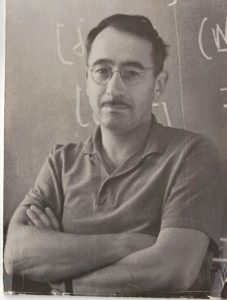
Valentin Turchin (1931-2010)
*
[7]
KRONID LYUBARSKY
On 26 August 1977 Lyubarsky was summoned to Kaluga to an interrogation in the case of Alexander Ginzburg.
In the middle of the interrogation investigator Vladimir Sergeyevich Gaideltsov said to Lyubarsky that after the interrogation he should go to OVIR. He added that, as far as he knew, Lyubarsky was applying for an exit visa to the USA.
“The USA is too splendid a country,” he remarked. “Israel is somewhat less splendid. They’ll explain the rest to you in OVIR”. Having found out that Lyubarsky had an invitation from Israel and that he was willing to register his departure as emigration to Israel, the head of Kaluga OVIR, Captain V. E. Arro, said that this “changed matters”.
On 29 August Lyubarsky brought his Israeli invitation to Kaluga and the same day received permission to leave. It was suggested to him that he buy the visas quickly.
*
On 31 August Lieutenant Belov (CCE 46.11) appeared at the home of Lyubarsky and told him that if he did not find a job by 1 September 1977 a criminal case would be brought against him for parasitism. Lyubarsky addressed a statement to the Tarusa Procurator Sapronov that he could not at the same time hand his workbook into OVIR and find a job.
The Procurator refused to give assurances that a criminal case would not be brought but advised him to register his exit documents as quickly as possible. On 12 September, when the Lyubarskys arrived in Kaluga for the visas, Salova was interrogated in the Ginzburg case before her visa was handed to her, but she refused to answer questions. On 12 September 1977, the Lyubarskys received exit visas valid until 12 October.
The same day surveillance of Lyubarsky was lifted. From 12 September the police also stopped appearing at the home of Nina Strokata (CCE 46.6).
*
In Chernogolovka (Noginsky district, Moscow Region) a district policeman appeared at Lyubarsky’s and said that if he needed any help, he should phone such-and-such a Moscow number and ask for Victor Nikolayevich — who would help him.
Subsequently ‘Victor Nikolayevich’ helped in extending the visa (for two days) and in speeding up the customs inspection at Sheremyetevo Airport. At the Moscow customs in Komsomol Square Lyubarsky was inspected out of turn. The packer, who had come to an advance agreement with Lyubarsky about the ‘usual’ reward, on the day of the inspection carefully avoided contact with him.
Packers also did not take the agreed money from the Jew who was inspected on the same day as Lyubarsky: “Today it’s impossible, the place is full of Chekists [KGB officials 1]“.
*
[8]
On 7 September Vail was summoned to Smolensk OVIR by an urgent telegram delivered by phone, even though he had not yet assembled all the necessary documents.
He was told “Time is pressing!” and his documents were accepted in incomplete form.
Thereupon he was told that an answer — whether he had been permitted or not — would be given to him on 15 September, but he must buy the visas before the 22nd.
*
[9]
On arrival in Vienna, Turchin and Lyubarsky discovered that a tape recorder, cameras, a typewriter and other things were missing from their luggage. A representative of Aeroflot in Vienna said to them:
“You can complain wherever you like. We’ve seen lots of people like you.”
After Turchin’s departure the writer Georgy Vladimov (CCE 46.9 [21] and CCE 47.15 [13]) became the leader of the Soviet group of Amnesty International.
*
OTHERS (10-15)
[10]
On 6 November 1977, Tatyana Khodorovich, Mark Popovsky, Dina Kaminskaya and her husband K.M. Simis (CCE 43.7 [8]) left the USSR.
*
[11]
TATYANA KHODOROVICH
Tatyana Khodorovich was one of two members of the Action Group for the Defence of Human Rights still in the USSR and at liberty.
In February 1977, after the arrest of A. Ginzburg, Khodorovich together with Kronid Lyubarsky and Malva Landa became his successors at the Relief Fund for Political Prisoners (CCE 44.3, //CCE 46).
On 14 October 1977, Tatyana Khodorovich was summoned to the reception of the USSR KGB. Bulat Bazerbayevich Karatayev (CCE 45.18 [2]) told her that if she did not leave the USSR immediately a criminal charge would be brought against her.
On 18 October 1977, she published this statement:
“I Want to Live According to my Conscience
“I am not afraid of searches or interrogations. I am not afraid of prisons or camps; I am not afraid of the refined mockery of the human essence which is practised now in my country.
“The desire to leave the USSR arose in me before and independently of the proposal of the authorities. I cannot and do not want to observe a Constitution which prescribes an ideology, that is, which infringes on the freedom of the Spirit.
“Not observing the Law, I enter into a contradiction not only with the State and the authorities, but also with the society that has accepted this Law. This is inevitable.
“Though not sharing the communist ideology of Soviet society, I consider it my duty to declare this fact openly. The Law forbids this.
“I refuse to build an atheistic society, for I am a believer. The Law obliges me to do so.
“The mother of four children, I want to educate my grandchildren in Faith, Love and Justice. The Law orders them to be educated in the spirit of communist ideology.
“A manager of the Russian Public Fund for Assisting Political Prisoners in the USSR, I want openly to help prisoners of conscience and their families. The Law forbids me to do this.
“I want to live according to a Higher Law, the Law of my conscience. The Law deprives me of this right.
“Before my eyes culture is being destroyed. The Law facilitates this. I am helpless to stop this destruction without breaking the Law.
“According to the Law I do not have the right to criticise the essence of Soviet art. i.e., the ideology which permeates it and fills it with lies and hypocrisy.
“I am powerless even to defend worthy people from cruel repression; for in my defence not only can I not rely on the Law – I must go against it.
“But I’m a human being. The Law of the society in which I live should be sacred for me. I want to respect and observe the Law. That is impossible here.
“I refuse to live in a State, the Constitution of which I reject.
“I am 56 years old. I am tired of struggle. I am tired of lies. I feel sorry for my children.
“I accept the proposal of the Soviet authorities that I leave the Soviet Union. I request the American people and their President Jimmy Carter to allow me to live in America. I vow to observe the Constitution of the USA.”
*
After the departure of Lyubarsky and Khodorovich (Malva Landa is in exile, CCE 46.1) the wife of A. Ginzburg, Arina Zholkovskaya, and the cousin of Tatyana Khodorovich, Sergei Khodorovich, became the managers of the Relief Fund for Political Prisoners.
In their statement of 6 November, they wrote:
“. . . Today we accept the responsibility of being Managers of the Fund. We shall continue the work of helping prisoners of conscience in the spirit of the well-established traditions of humanity and brotherly love.”
*
[12]
MARK POPOVSKY
One of the last reports of the Mark Popovsky Press agency (CCE 46.19) was “When the Muse is the Property of the State …” (19 September).
It recounts how, despite all his efforts, Popovsky was not able to clarify whether a legal procedure exists in our country which regulates for writers the export of their own manuscripts. As a result, the customs at Sheremetyevo Airport would not allow Popovsky to take out his archive and he was forced to leave without it.
*
[13]
In her time the defence attorney Dina Kaminskaya (CCE 46.5-2) defended Yury Galanskov, Vladimir Bukovsky, Anatoly Marchenko, Pavel Litvinov and Ilya Gabai.
*
[14]
In November, several Jewish refuseniks of many years left the USSR.
The Muscovites Kandel and Lazaris left.
F. Kandel writes under the literary pseudonym, F. Kamov. He is a comic author, a film-script writer, one of the authors of the cartoon film “Wait a Moment!’, and an editor of the Jewish samizdat journal Tarbut.
V. Lazaris is a lawyer and editor of the samizdat journal Jews in the USSR.
Ya. Gordin, V. Kaminsky and L. Frumkin left from Riga; Rozen left from Leningrad; S. Abramovich and Yu. Shekhtman left from Kishinyov [Chisinau].
*
[15]
GRIGORENKO
On 30 November Petro Grigorenko and his wife Zinaida flew to New York. They left for the USA with an invitation to visit from their son Andrei (CCE 37.13 [19]).
It is an almost unprecedented event for the Soviet authorities to let out a man as a visitor at the invitation of a person who left for permanent residence in Israel and who does not live in Israel [2].
On 11 November, the Grigorenkos issued a statement for the press:
“On 10 November 1977 our family, i.e., myself, my wife and our son Oleg, received visas for six months for a private visit to the USA. The visas were issued on the basis of an invitation from our son Andrei, who is living in New York.
“THE PURPOSE OF THE VISIT is to see our son and for me to have a prostate operation …
“We have been asked, further, whether we are counting on returning to the Soviet Union. This question evidently has a double meaning. So I shall reply to it in the same way. If by this is implied, are we thinking of staying in the USA, then we all three reply firmly, NO! But if those who asked the question are interested in whether we shall be deprived of our citizenship, then here we can only express our views. We shall not conceal it: this question worries us, too, and we have discussed it with our friends, including A.D. Sakharov.
“We have all come to the conclusion that if we have been given visas then it is not to turn them into an instrument of repression. The government has many repressive measures without this. Therefore, we are inclined to evaluate the permission given to us as an act of humanism and we hope that after a successful operation we shall successfully return home.”
============================================NOTES
- Romantic name for State Security officials, used largely by themselves and supporters of the neo-Stalinist regime, the term Chekist linked the KGB to Felix Dzerzhinsky and the earliest embodiment of that ruthless and brutal organisation.
Cheka (1918-1923) was an acronym for the “Extraordinary Commission to combat Subversion, Corruption, Speculation etc.”
↩︎ - On 13 February 1978, Pyotr Grigorenko was stripped of his Soviet citizenship “for activities discrediting the title of Citizen of the USSR” (CCE 48.1).
↩︎
=========================
 A Chronicle of Current Events