Pyotr Grigorevich GRIGORENKO has been deceitfully expelled from the USSR [1].
*
On 10 March 1978, Soviet subscribers received issue No 8 of the Gazette of the USSR Supreme Soviet (22 February 1978). There they learned that on 13 February the Presidium of the USSR Supreme Soviet had stripped Petro Grigorenko of his Soviet citizenship “for activities discrediting the title of citizen of the USSR” [2].
The same day as the publication, 10 March, the Grigorenkos asked at the Soviet embassy in the USA whether it was true that P.G. Grigorenko had been stripped of his citizenship. “The rumour has not been confirmed,” they were told.
*

Grigorenko flies to the USA
In early November 1977, a KGB official told Grigorenko that permission had been granted for him to visit his son in the USA: he assured him that he could “book a return ticket this very instant”. In a statement for the press made on 11 November Grigorenko expressed his certainty that he and his family would return home safely (CCE 47.8-3).
On 30 November 1977, the Grigorenko family flew to the United States.
*
PRESS CONFERENCE
On 11 March 1978, P.G. Grigorenko held a press conference in New York.
This was the saddest day of his life, said Petro Grigoryevich. The Soviet government had illegally and unjustly deprived him of his homeland. With great emotion he said that now he would not see his sons and grandchildren who remained in Russia, and his many friends, and he would not be able to visit his native Ukraine or blessed Crimea.
“They have deprived me of the right to die in my Motherland.”
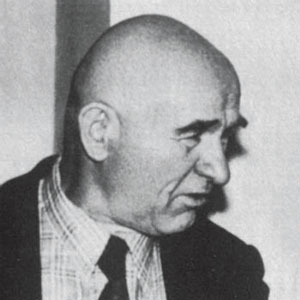
Petro Grigorenko (1907-1987)
Alluding to the cruel persecution which has hit members of the Helsinki groups, Grigorenko said, “They have decided to deal with me differently.” He recalled that the authorities had deceived him when giving him a visa and emphasised that the decree on deprivation of citizenship had been announced in cowardly fashion “the day after the Belgrade Conference closed” [3].
*
APPEALS & PROTESTS
Grigorenko called upon his friends in the Soviet Union and upon the governments of countries participating in the European (CSCE) Conference in Belgrade to support his protest.
He read out his statement to the Presidium of the USSR Supreme Soviet in which he demands to be given the opportunity to return to his native land in order to prove his complete innocence before an open court.
*
On 14 March 1978, Andrei Sakharov made the following statement:
“To statesmen and public figures of all countries, veterans of the Second World War, and defenders of human rights throughout the world!
“The Presidium of the USSR Supreme Soviet has deprived one of our country’s worthiest citizens, Pyotr Grigorevich GRIGORENKO, of his citizenship on a charge of activities detrimental to the prestige of the USSR and incompatible with the title of citizen of the USSR. This charge is of an unsubstantiated nature; it is not even specified where these activities took place — in the USSR or abroad — or what they consist of.
“The charge is not based on a judicial investigation. It is in fact absolutely false!
“Pyotr Grigorevich has rendered great services to the State, and to the people of our country and to humanity: by his selfless struggle in wartime against fascism at the front and his no less heroic fight in peacetime against arbitrariness, lawlessness and the violation of human rights; by defending the victims of injustice — the Tatars of the Crimea, political prisoners, inmates of psychiatric hospitals, and religious believers.
“After his first public statements Grigorenko was immediately stripped of his military rank of Major-General and his academic degree. At the end of the 1960s he became a victim of severe oppression culminating in his unlawful incarceration for four years in a psychiatric prison. Although gravely ill when he emerged, Grigorenko did not cease his noble activities in defence of human rights.
*
“Grigorenko is a transparently honest, broad-minded, intelligent and courageous man who commands the profoundest respect of his friends and of all with whom he comes into contact.
“Grigorenko is attached to his country by all the threads of his life. Now he has been stripped of Soviet citizenship, stripped in a fraudulent, treacherous fashion.
“I support Pyotr Grigoryevich’s demand to be given an opportunity to return to the USSR and to prove before an open court the injustice of the accusations made against him. I call upon veterans of the Second World War, defenders of human rights, statesmen and public figures throughout the world to support Pyotr Grigorenko’s right to return to his homeland, something that is the indubitable right of every person!”
==========================================
NOTES
- On Grigorenko, see CCE 8.3, CCE 12.2, CCE 14.2, CCE 16.9, CCE 24.11 [16], CCE 32.13, CCE 37.12. The decison to strip him of his citizenship was taken by the Politburo the previous month: see “9 February 1978, Pb 92/65” [R].
↩︎ - Others were subjected to the same treatment in 1978.
In March the CPSU Politburo decided (14 March 1978, Pb 97/54) to deprive cellist Mstislav Rostropovich and his wife, the soprano Galina Vishnevskaya, of their citizenship while they were travelling and performing abroad.
*
In the late 1960s, the Soviet authorities considered expelling two noted rights activists, Ilya Gabai and Anatoly Marchenko from the USSR and taking away their citizenship (draft edicts, 15 April 1968, PB 79/XII, Bukovsky Archive). The Politburo had second thoughts and the two men later died in the USSR: Gabai committed suicide in October 1973; Marchenko died in December 1986 after a prolonged hunger-strike.
↩︎ - The Conference on Security and Cooperation in Europe (CSCE), held in Belgrade between 4 October 1977 and 8 March 1978, was attended by representatives of all 35 signatories of the August 1975 Helsinki Accords.
↩︎
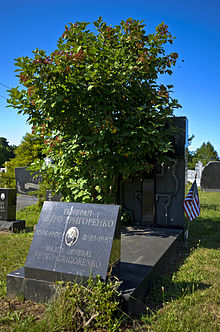
Grigorenko’s grave (New Jersey)
======================
 A Chronicle of Current Events