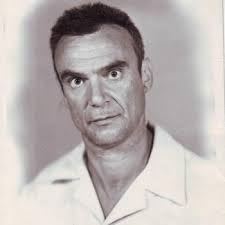
From 9 to 13 September 1974 the Leningrad City Court, Judge Karlov and People’s Assessors Karpov and Kosenko, heard the case of Mikhail Ruvimovich HEIFETZ.
(For details of his arrest and the pre-trial investigation, see CCE 32.6).
Heifetz was charged under Article 70 (RSFSR Criminal Code). The charges were put by Procurator Ponomaryov. The lawyer Zerkin conducted the defence. The trial took place in open court.
*
THE CHARGES
In the indictment the accused was charged with preparing and storing (in 1971)
- two copies of A. Amalrik’s article “Will the Soviet Union Survive Until 1984?” for the purpose of disseminating them, and with allowing three people to read this article in 1971-1974;
- with storing and summarizing the book Smolensk Under Soviet Rule by Merle Fainsod (1958) [1];
also with reproducing the following items in autumn 1973, for the purpose of disseminating them:
- the article “Joseph Brodsky and Our Generation” [2];
- a letter by Arkady Belinkov to the Union of Soviet Writers; and
- a letter by Grigorenko and Kostyorin to the 1968 Budapest Conference of Communist & Workers’ Parties (CCE 1.4).
*
The court concerned itself mainly with the article “Joseph Brodsky and Our Generation”.
This article was written by Kheifets himself as an introduction to a collection of Brodsky’s works, being prepared for samizdat publication. He showed it to several of his literary acquaintances by way of consultation (this was later termed dissemination). After making some unsuccessful attempts to alter the article in accordance with the comments these people had made about it, he put the draft copy, with its crossings-out, in a desk: it was found there during a police search on 1 April 1974.
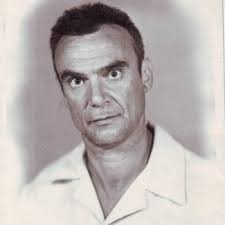
Mikhail R. Heifetz (1934-2019)
All the incidents of ‘dissemination’ mentioned in the charges (with the exception of one of the three instances of ‘dissemination’ of A. Amalrik’s article) were admitted either by the accused or by other witnesses.
*
THE TRIAL
At the beginning of the trial, Heifetz pleaded not guilty and declared that he was not anti-Soviet, but a dissenter; Heifetz explained that his interest in samizdat literature was the professional interest of a historian and literary critic.
At the very end of the judicial proceedings, however, he changed his position.
Perhaps the following dialogue with his defence lawyer influenced this change:
Lawyer – Heifetz, do you agree that the documents the court has been discussing are anti-Soviet in character?
Heifetz – Yes.
Lawyer – And what about your article on Brodsky?
Heifetz – Yes, that is too, but the point is that it wasn’t deliberately so.
Lawyer – That doesn’t matter. Did you show it to those persons who are appearing as witnesses in this case?
Heifetz – Yes.
Lawyer – Do you agree that these actions could have been classified as propagation?
Heifetz — Apparently, yes. Formerly I did not think they were, but having listened to the opinion of the court, I agree with it. Even though I did not do so deliberately, I carried out propaganda against the Soviet regime.
Lawyer – Before the pre-trial investigation you did not admit any guilt.
During the pre-trial investigation you admitted yourself guilty in part. I ask you now: do you consider yourself guilty, after these four days of your trial?
Heifetz – As I did not fully understand, I did not admit my guilt. But I am used to trusting qualified people. After listening to these lawyers, I now understand that my actions come under Article 70, and I admit my guilt.
Lawyer – You fully admit your guilt?
Heifetz – Yes.
In answer to additional questions from the judge, Heifetz said:
“I formerly understood the word propaganda to mean deliberate dissemination. I did not understand that, even if I myself did not agree with the contents of the documents which l distributed, I could still be considered guilty in law.”
As a result of this, the final speeches by the defence and the prosecution basically concerned the question of whether Heifetz had repented sufficiently for what he had done.
*
Extracts from the Speech by Procurator Ponomaryov
“In giving evidence during the pre-trial investigation and this court trial, the accused denied his guilt at first, but he always admitted the facts of the case to be true.
“Later, during this trial, the accused stated that he did not consider himself guilty, as agitation and propaganda had not been his aim. Now, in answer to the questions of the court and his lawyer, Heifetz has stated that he fully admits his guilt, but alleges that at the time he was committing the crime he did not realize the anti-Soviet nature of his activities and did not consider his actions to be anti-Soviet propaganda.
“Let us say quite clearly that this is a one-sided admission!
“The nature of a person’s activity is not determined only by his own opinion of it, or that of others, nor by any evaluation of his behaviour and actions, but by the innate character of the actions themselves. No one could doubt for a moment that the objective circumstances show that Heifetz’s actions were knowingly and deliberately aimed at subverting the Soviet political and social system. No one could doubt that Heifetz, because of his level of education, understood that the literature he stored and disseminated was anti-Soviet in nature, …
“Heifetz not only distributed samizdat literature produced by others, he even wrote an anti-Soviet article himself. The article in question cannot be called anything else but anti-Soviet. In any case, there is no third choice in the ideological struggle: either you are for the Soviet regime and for your Motherland, or you are an enemy, you are fighting against the Soviet regime. The facts show that Heifetz made the second choice: he was against the Soviet regime, he was an enemy, he fought against it! …
“The accused has taken a step — no, not a step, a half-step — in the direction of repentance. But he has not repented … He has not repented because he has not revealed what he really feels in his soul …
“Even though Kheifets has admitted his guilt, I am not convinced of his sincerity, since he has said that it was only here in court that he understood his guilt. The point is that Heifetz, who knowingly took part in such activity, does not wish to repent or to admit his fault.
“And I cannot say that Heifetz was sincere when he acknowledged that he is fully guilty. Therefore, I consider that he must be isolated from society for a lengthy period of time.
“I ask the court to recognize the full gravity of the offence committed, and set the punishment at five years’ imprisonment, to be followed by two years in exile.”
*
Extracts from the Speech of Defence Lawyer Zerkin
“The procurator has based his request for such a severe sentence on the argument that Heifetz has not repented sufficiently. The procurator maintains that he is not convinced of Heifetz’s sincerity in admitting his guilt. I consider that such a subjective attitude on the part of the procurator to this admission cannot be allowed to justify so severe a sentence.
“The term of imprisonment demanded by the procurator is almost twice as long as the sentence passed on the authors of the samizdat literature which Heifetz is accused of disseminating. The indictment states that during the pre-trial investigation Heifetz gave frank evidence and actively assisted in establishing the truth. And the procurator still says that Kheifets has not repented!
“He is not taking into account Heifetz’s behaviour during confrontations with the witnesses, when Heifetz himself reminded the witnesses of details which showed his own guilt. This behaviour is different from that to which we are accustomed. And on the basis of all this, the procurator demands such a severe punishment …
*
“Heifetz’s misfortune is that he gave this material to others with the aim — true, this is his version — of informing them. Heifetz understands that he is being tried not for storing this material, but for the act of passing it on to others. If he has passed anti-Soviet literature to another person, this is an action which the law calls propaganda. He has now understood this, and to ask the court to punish him by five years of imprisonment and two more years of exile is … well!”
(Zerkin gives a gesture of total amazement.)
“As regards the free discussion of various controversial questions, such discussions will, and must, go on taking place. However, Heifetz did not take into account the necessity of distinguishing problems caused by minor inadequacies and difficulties in our economic development and problems which involve the basic interests of our people, our Party and our country. If a discussion is concerned with the first type of problem, it is necessary.
“However, Heifetz’s article on Brodsky is anti-Soviet in nature.
“It concerns the most fundamental interests of our country, and Heifetz could not but have known this, especially after his friends had unanimously pointed out to him the incorrectness of the article’s political aspect. Having been made aware of the anti-Soviet nature of his article, Heifetz should not have continued distributing it to other people; such dissemination was a crime, and Heifetz should have realized this. I am happy to conclude that Heifetz has now realized it — perhaps rather late, but he has now understood this.
[…]
“Seven years’ imprisonment is not the only penalty provided by this article of the law; the period of detention may be from six months upwards, or instead of imprisonment the penalty can be limited to one year in exile. I should like to hope that you, comrade judges, will react differently from the procurator to Heifetz’s admission of guilt. The procurator’s point of view seems to me to be subjective. You know about this man’s life, the fact that he has two children, that he is himself a sick man. The case file includes a report giving details of Heifetz’s state of health. He has been in hospital, suffering from suspected heart-trouble.
“I hope that, taking all this into account, taking into account Heifetz’s sincere repentance in court, you will consider it possible to demonstrate the strength of our judicial system not by the severity of the sentence, but by its mercy.”
Prolonged applause in the courtroom.
*
SENTENCE
The court sentenced Mikhail Heifetz to four years’ imprisonment in a strict-regime camp and two years in exile. On 22 October, an appeal hearing at the RSFSR Supreme Court upheld the sentence passed by the Leningrad City Court.
*
According to people who were present in the courtroom, Judge Karlov behaved rudely to the witnesses.
In addition, he told witness Vladimir Maramzin, brought into court under guard (CCE 34.7 [1]), that for giving false evidence and refusing to give evidence he could be imprisoned for between two and seven years.
Maramzin then asked the judge to tell him the penalties for false evidence and for refusing to give evidence, separately.
“Up to seven years,” Karlov repeated.
When Maramzin said that he had heard that the penalty for refusing to give evidence was no more than six months of corrective labour, the judge said nothing. The procurator and defence lawyer also kept silent.
===========================================
NOTES
- A classic study based on archival materials captured in 1941 by invading German forces in western Russia (Smolensk Region), analysed and interpreted later by US academic Merle Fainsod.
↩︎ - An excerpt from Brodsky’s 1964 trial, transcribed by Frida Vigdorova.
↩︎
===========================
 A Chronicle of Current Events