TRIAL
The case of Leonid Plyushch was heard by the Kiev Region Court from 25 to 29 January 1973. The judge was Dyshel [1].
The trial was held behind closed doors; the accused was not present. According to the Chronicle‘s information, none of the officially appointed psychiatrists was present in Court.
The defence counsel was permitted only one meeting with his client. Plyushch himself was not allowed access to the case file.
*
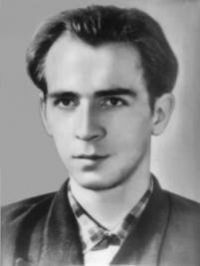
Leonid Plyushch (1939-2015) [2]
*
Nine witnesses were questioned at the trial. Among them was the man of letters Ivan Dzyuba, arrested in 1972.
*
RULING
The Court ruled that Plyushch was mentally ill, and that while in a non-responsible state he had committed especially dangerous crimes under Article 62 (UkSSR Criminal Code).
Plyushch was charged with the following:
- Possessing several copies of A Chronicle of Current Events, the Ukrainian Herald, and other samizdat materials; distributing some of them among his acquaintances;
- Writing seven articles of literary criticism, the content of which was ruled to be “anti-Soviet”; familiarizing several acquaintances with some of these articles;
- Signing Open Letters to the UN as a member of the Action Group (CCE 8.10);
- Membership of the “illegal Action Group”;
- “Anti-Soviet Agitation”: conversations with one or two of the witnesses.
By order of the court, Plyushch was sent to a Special Psychiatric Hospital for compulsory treatment.
Plyushch’s wife and sister were allowed into the courtroom for the reading of the ruling.
*
PSYCHIATRIC REPORTS
Because of the especial secrecy with which Plyushch’s case has been conducted, the information provided on this case requires confirmation and amplification.
It has been possible to establish that two psychiatric reports on Plyushch’s mental state figured in the court ruling on his case. These reports served as the official basis for sending him for compulsory psychiatric treatment.
It is known that he was actually subjected not to two but three psychiatric examinations.
*
1st EXAMINATION
The first examination was conducted in March and April of 1972 by psychiatrists from the Kiev Regional Hospital’s Department of Forensic Psychiatry: Lifshits (D.Sc., medicine), Department Head Vinarskaya, and Dr Kravchuk.
This commission found Plyushch mentally responsible, while noting he had a “psychopathic personality”, “behaved somewhat demonstratively”, had “exaggerated pretensions”, and was a “poseur”.
This examination was conducted on an out-patient basis, under prison conditions, at the KGB investigations prison in Kiev.
*
2nd EXAMINATION
The first officially-recorded examination was conducted by a commission of psychiatrists from the Serbsky Institute. It was headed by the institute’s director G. V. Morozov, corresponding member of the USSR Academy of Medical Sciences.
The commission’s conclusion:
“The materials of the case, including the output of manuscripts, and the results of the examination indicate that L. I. Plyushch is suffering from a mental illness — slowly-developing schizophrenia.
“Since his youth he has suffered from a paranoid disturbance characterized by ideas of reformism, disturbance of the affective sphere and an uncritical attitude toward his condition. He represents a social danger. He must be considered non-responsible and sent to a Special Psychiatric Hospital for compulsory treatment.”
Officially, it is stated, the commission reached its conclusion after a month of examination in the Serbsky Institute under clinical conditions. In reality, it is suspected, there was only a two-hour talk in the investigations section of the KGB’s Lefortovo Prison in Moscow.
*
3rd EXAMINATION
The second officially-recognized examination was conducted under the direction of Academician A. V. Snezhnevsky of the USSR Academy of Medical Sciences. It was organized by the Soviet Ministry of Public Health.
The commission’s conclusion:
Suffers from a chronic mental illness in the form of schizophrenia. A feature of the aforementioned illness was its early onset accompanied by the formation of a paranoid disturbance—elements of fantasizing and naivete in judgements-all of which determines his behaviour. Recently it has been characterized by the appearance of ideas about developing inventions in the field of psychology. The patient has an uncritical attitude toward the offences committed.
He represents a social danger and requires treatment in a psychiatric hospital.
Since the time of the first examination his condition has improved. A disturbance in the affective-volitional sphere (apathy, indifference, passivity) has made its appearance; the stable idea of reformism has been transformed into the idea of developing inventions in the field of psychology … The patient should be sent to a psychoneurological hospital for compulsory treatment.
Officially, it is stated, the conclusion was reached after a clinical examination. … In reality, a few talks were held with Plyushch in the investigations section of the KGB’s Lefortovo Prison (Moscow). The last was conducted in October 1972 by Academician Snezhnevsky.
*
APPEAL
In March 1973 the UkSSR Supreme Court reviewed Plyushch’s case in an appellate proceedings. The court ruled that Plyushch should be compulsorily confined in a psychiatric hospital of ordinary type.
The Procurator’s Office of Ukraine, in the person of the procurator supervising cases handled by the KGB, filed a protest against the appellate decision of the Court. Plyushch must be confined to a Special Psychiatric Hospital, she insisted, because of the extreme social danger of his actions.
In June 1973 the collegium of the UkSSR Supreme Court considered the protest of the Procurator’s Office against the decision of the appellate court. It ruled that the protest was well-founded.
*
On 5 July the UkSSR Supreme Court handed down a final decision:
“To send Leonid Ivanovich Plyushch for compulsory treatment to a Special Psychiatric Hospital in view of the extreme social danger of his anti-Soviet acts.”
On 15 July 1973 Plyushch was sent to the Special Psychiatric Hospital in Dnepropetrovsk.
*
BIOGRAPHY
Leonid Ivanovich PLYUSHCH was born in 1939.
In 1962 he graduated from Kiev University (Mechanics & Mathematics Department). Until July 1968 he worked as a mathematical engineer at the Cybernetics Institute of the UkSSR Academy of Sciences. He published a number of scientific works.
In July 1968 he was dismissed because of a letter he sent to Komsomolskaya Pravda [3], criticizing an article in that newspaper about the trial of Ginzburg and others.
*
All of Plyushch’s attempts to find work ended in failure.
In June 1969 Plyushch became a member of the Action Group for the Defence of Civil Rights in the USSR.
He was arrested on 15 January 1972.
Plyushch is married; his two children were born in 1959 and 1965.
===========================================
NOTES
- Judge Dyshel was in charge of may trials in Kiev of rights activists and dissidents; Dyshel CCE tagged items.
He presided at the trials of: Zinovy Antonyuk (CCE 27.1 [3]); Vasyl Stus (CCE 27.1 [4]); Semyon Gluzman (CCE 28.7 [1.4]); Lyubov Serednyak (CCE 28.7 [1.4]); and Yevhen Sverstyuk (CCE 29.5 [2]).
↩︎ - Leonid Plyushch was born in April 1939 in the small town of Naryn (Kirghiz SSR); he died in Besseges (France) in 2015.
↩︎ - Russia’s top-selling newspaper today, the “Komsomol Truth” daily was first published in 1925. By the 1970s it had a circulation of roughly 9 million copies.
↩︎
===========================
 A Chronicle of Current Events