In Kiev and Lvov between 11 and 14 January 1972 a number of searches were carried out. 19 persons were arrested, eleven in Kiev and eight in Lvov.
*
KYIV
The eleven people arrested in Kiev were
[1]
Ivan Svitlychny (42), a literary scholar.
The search was in connection with the case of Jaroslav Dobosch, a Belgian citizen, about whom the newspaper Evening Kiev published an article on 11 February [1]. Samizdat literature was confiscated. Immediately after the search Svitlychny was taken away, and three days later his wife was officially informed of his arrest. The investigation is being conducted by KGB investigator Major Goryachyov.
The writer Ivan Dziuba (for his expulsion from the Writers’ Union see this issue, CCE 24.10 [3]), was visiting Svitlychny at the time. He was taken to his home, which was also searched. On each of the following three days Dzyuba was questioned.
*
[2]
Vasyl Stus (32), a poet and critic
who has had a book of poetry published abroad. In 1965 he took part in protests, for which he was expelled from graduate school.
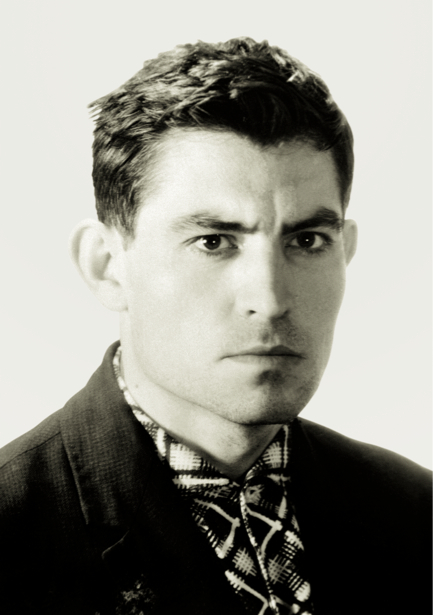
Vasyl Stus (1938-1985)
*
[3]
Yevhen Sverstyuk (32), a literary scholar
for signing protest letters he was dismissed from his job and not allowed to defend his Master’s dissertation. He is the author of many critical articles which have been published in samizdat, one of them on O. Honchar’s novel The Cathedral.
At the time of the search on 14 January he was ill, and he was arrested a few days later in the village of Boyarka. During the search literary articles were confiscated.
*
[4]
Zynoviy Antonyuk, a philologist.
A copy of the Chronicle and other materials were confiscated.
*
[5]
Fedir Kovalenko, a teacher from the village of Boyarka.
*
[6]
Leonid Seleznenko, a chemist.
*
[7]
Lyubov Serednyak (19), a typist.
During the search novels by Solzhenitsyn and Vasily Grossman were confiscated [correction CCE 27.14].
*
[8]
Vasyl Heorhiyenko.
*
[9]
Mykola Plakhotnyuk, a young doctor.
*
[10]
Danylo Shumuk, spent 27 years in prisons prior to 1967.
*
[11]
LEONID PLYUSHCH
Leonid Plyushch, a mathematician and Action Group member (CCE 10.4).
His home was searched on 14 January in connection with “Case 24”. Samizdat materials and his own manuscripts were confiscated.
On 17 January his wife was told that he was being indicted under Article 62 (UkSSR Criminal Code = Article 70, RSFSR Criminal Code).
*
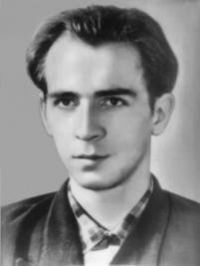
Leonid Plyushch (1938-2015)
*
A Statement on the arrest of Plyushch issued by the Action Group says:
“On 14 January 1972 Leonid Ivanovich PLYUSHCH, a member of the Action Group for the Defence of Human Rights since its formation, was arrested in Kiev. The search which culminated in his arrest was carried out by KGB officers under the command of Lt-Col. Tolkach …
“… L. Plyushch was born in 1939. At the beginning of the war he lost his father, who was killed at the front. After contracting osseous tuberculosis he was bed-ridden for five years, and will be an invalid for the rest of his life.
“He graduated from secondary school with distinction and entered Odessa University to study physics and mathematics. For a year he worked as a village teacher. In 1962 he completed his education at the Mechanics & Mathematics Faculty of Kiev University. Until 1968 he was employed at the Cybernetics Institute of the UkSSR Academy of Sciences. Plyushch has published three works on his speciality (bio- and psychocybernetics).
“For signing a collective letter in defence of Galanskov and Ginzburg he was dismissed. At the time Academician Glushkov, Director of the Institute, said of Plyushch: ‘He is behaving like Dubcek!’
*
“In search of a livelihood Plyushch, the father of two children, applied to more than twenty enterprises and institutions of various sorts and was ready to accept practically any work, but everywhere he was turned away.
“The Employment Commission attached to the Executive Committee assigned Plyushch to the post of boilerman in a military establishment, but there too he was rejected on the grounds that he was an invalid. Eventually he found a job as a book-binder, but was dismissed for signing an Appeal to the UN as a member of the Action Group. He remained without work until the day of his arrest.
“The investigation of his case is veiled in secrecy. One of the people who were summoned as witnesses in the case was told by the investigator: ‘Plyushch is just as crazy as Grigorenko’.
“We declare that the arrest of Plyushch is a continuation of the lawless persecution of the Action Group. His public activities in the cause of the defence of human rights in our country have never involved anything criminal.
“FREEDOM FOR LEONID PLYUSHCH!”
*
LVIV
*
*
Among those arrested in Lvov were:
[1]
Viacheslav Chornovil
previously served a three-year sentence under Article 187-1 (UkSSR Criminal Code = Article 190-1, RSFSR Code).
*
[2]
Iryna Stasiv (31), a poet and wife of the poet Ihor Kalynets.
*
[3]
Ivan Gel (Ukr. Hel)
previously served a sentence under Article 62 UkSSR Code (= Article 70, RSFSR Criminal Code).
*
[4]
Mykhaylo Osadchy, formerly an official of the Lvov Region Komsomol Committee, served a term of imprisonment under Article 62 (UkSSR Code).
The Chronicle has no information on the other four persons arrested.
*
Many of those arrested are well-known for their statements in defence of human rights and of the national culture [2].
On 11 February 1971, the newspaper Evening Kiev published an article claiming that the young Belgian subject Jaroslav Dobosch (24), arrested by the KGB on 4 January, had come to the USSR “to carry out an assignment for the foreign anti-Soviet centre of the Banderites [3] of the Organisation of Ukrainian Nationalists (OUN).” In connection with his case, it stated, criminal proceedings had been started against Ivan O. Svitlychny, Viacheslav M. Chornovil, Yevhen O. Sverstyuk and others [4].
In February further searches were carried out, at the homes of Zinovy Antonyuk, Ivan Dziuba, Zynoviya Franko (grand-daughter of the writer Ivan Franko), Nadiya Svitlychna, Ivan Svitlychny and Yevhen Sverstyuk. [5]
*
In the middle of February, after several days’ detention and interrogation, Zynoviya Franko was released. On 2 March she published an Open Letter to the editors of the Kiev newspaper “Soviet Ukraine” (Radyanska Ukraina) [6] from which the following excerpts are taken:
“The foreign press and radio stations have recently been strenuously fanning the flames of the subject – which they themselves invented – of the persecution in the Soviet Ukraine of cultural figures. But recent events (I have in mind the arrest of the Belgian subject J. Dobosch) have opened my eyes . . . My guilt resulted from an incorrect and distorted understanding of the shortcomings and difficulties of our life . . .
“Through my friends and relations abroad I established contact with wealthy foreigners of Ukrainian descent who visited the Ukraine as tourists. I gave certain of them such information of a political nature as I had … In my political blindness I failed to notice that I had begun to hand over information to disguised representatives of hostile foreign nationalist centres, which are connected with the intelligence services of the imperialist powers. Such a man was Jaroslav Dobosch, who was caught red-handed … I fully realise my guilt and utterly condemn all my actions which have caused harm to my fatherland … I understand everything now. May they also understand who hold dear the Soviet motherland, who have not lost the sense of pride of Soviet man and who wish no place in the camp of internal émigrés.”
=================================================
NOTES
- Pravda Ukrainy of the same date also wrote about Jaroslav Dobosch (CCE 26.9).
↩︎ - See the writings and photographs of many, with more information, in the following:
Reddaway, Uncensored Russia (1972), chapter 14; V. Chornovil, The Chornovil Papers; M. Browne (ed), Ferment in the Ukraine (1971); the quarterly journal The Ukrainian Review (London); the booklet “The January 1972 Arrests in the Ukraine“, Committee for the Defence of Soviet Political Prisoners (Woodhaven, USA);
and Ukrainsky visnyk (Ukraine Herald), Nos. 1-4, which have been jointly published as books by PIUF (Paris) and Smoloskyp (Baltimore, USA).
↩︎ - Stepan Bandera (1909-1959) was a Ukrainian nationalist leader, assassinated by the KGB in Munich.
↩︎ - On 2 June Jaroslav Dobosch gave a press-conference in Kiev, attended only by Soviet journalists (CCE 26.9). On 3 June all the Ukrainian papers carried an identical account (by TASS), which was summarized in the Western press on 8 June.
Dobosch took the same line as Evening Kiev (11 February) and incriminated Svitlychny, Franko, Seleznenko, Anna Kocurova and Stefaniya Hulyk. A few hours later he was expelled from the USSR and flown out of the country.
↩︎ - Later, on 18 April, Ivan Dziuba, who suffers from tuberculosis, was arrested; so was Nadiya Svitlychna (Svitlychny’s sister) on 19 May.
↩︎ - Zinoviya Franko later made a broadcast of similar content in Ukrainian on Kiev Radio. Both this and her open letter were published, on 4 May and 9 March respectively, in Visti z Ukrainy (News from Ukraine), a weekly published in Kiev for circulation almost exclusively to Ukrainians living abroad.
↩︎
======================================
 A Chronicle of Current Events