The trial of Reiza Palatnik took place on 22-24 June in Odessa (CCE 17.8). The investigation was conducted by Major V.I. Larionov, an Investigator with the Odessa Region KGB.
The Court Chairman was Kadenko; the prosecutor, Procurator Tekunova.
*
Palatnik was indicted under Article 187-1 (UkSSR Criminal Code = Article 190-1, RSFSR Code). Materials confiscated during a search, and forming the basis for the charges against the accused, included:
- an Open Letter by 40 Jews, in reply to the Moscow press-conference of 4 March 1970 [1];
- an article “Einstein and Zionism”, from Israel Today;
- poetry by Naum Korzhavin and Alexander Galich;
- Open Letters, all three in defence of Solzhenitsyn [2], by Victor Konetsky and Victor Sosnora, members of the USSR Union of Writers, and by Lydia Chukovskaya, daughter of Kornei Chukovsky.
Palatnik pleaded not guilty and stated that she did not consider these materials to be slanderous.
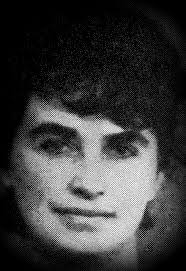
Raiza Palatnik (1936-1995)
*
The witnesses – colleagues at the library where Palatnik worked – spoke highly of her.
Palatnik claimed that the court was persecuting her for her desire to emigrate to Israel.
When the judge remarked that Zionism, with which Palatnik sympathised, was a reactionary and anti-Soviet movement, she replied that Albert Einstein had also sympathised with it.
Procurator Tekunova called Palatnik a renegade who had fallen under the influence of Zionist propaganda. “Her guilt is aggravated”, said the Procurator, “by the fact that she works on the ideological front.” Tekunova declared the Letter by 40 Jews to be slanderous and fabricated, claiming falsely that many of the signatures to the letter were “faked”.
*
In her final address to the court Palatnik said that she regarded her trial as a link in the unbroken chain of anti-Jewish trials in Leningrad, Kishinyov and Riga.
She considered that now, when very many Jews in the Soviet Union were expressing the wish to emigrate to Israel, her trial was intended to intimidate them. Reiza told of the severe and humiliating conditions in which she had been held in prison. Palatnik ended her speech as follows:
“I allowed myself the luxury of thinking, which is clearly not permitted. That is why I am in the dock.
“I ask nothing of the court but justice. ”
The sentence was two years of ordinary-regime camps [3].
*
Several of Palatnik’s relatives and friends, who had been admitted to the courtroom to hear the sentence pronounced, began shouting: “Reiza, we’ll see you in Israel! The whole Jewish people is with you!”
==================================================
NOTES
- The text of the Open Letter by 40 Jews was reproduced in Possev: sedmoi spetsvypusk (special issue 7); a condensed English version was published in Jews in Eastern Europe (Vol. IV, Issue 5, August 1970).
↩︎ - The letters by Konetsky and Lydia Chukovskaya are available in Leopold Labedz (ed), Solzhenitsyn: a Documentary Record, New York, 1971.
Chukovskaya subsequently wrote a letter to the UkSSR Supreme Court (CCE 22.9 [9]) protesting at the confused classification of anti-Stalinist works and individuals as “anti-Soviet”.
↩︎ - UPI reported on 5 August 1971 that Valery Chalidze had protested against the sentence on Reiza Palatnik in a letter to the UkSSR Supreme Court.
↩︎
=============================
 A Chronicle of Current Events