The imprisonment of dissenters in psychiatric hospitals continues to be the subject of public concern and protest.
*
1.
ACTION GROUP
In a letter appealing to the psychiatrists of a number of countries, the Action Group stresses once more that this form of persecution of freedom of thought in our country is intolerable and immoral [1].
The findings of the forensic-psychiatric examinations to which dissenters are subjected are wholly unconvincing, revealing a deliberate lack of integrity on the part of the experts. The “benefits” derived from placing troublesome persons in psychiatric hospitals are obvious, on the other hand, says the letter, since
“this method
“(a) guarantees the complete secrecy of the trial and deprives the accused of the opportunity to defend himself personally in court;
“(b) permits the most thorough isolation of troublesome persons without limitation of the period of isolation;
“(c) allows the use of medical methods of influencing the minds of dissenters; and
“(d) discredits these people and their ideas.
“It is also logical with treatment of this sort that the ‘patient’s’ renunciation of her or his convictions is regarded as the main indication of his or her ‘recovery’.”
The letter ends with a request “that each psychiatrist should help in whatever way he feels able”.
*
2.
GRIGORENKO
Zinaida M. GRIGORENKO, wife of Petro Grigorenko (b. 1907), who is a prisoner in the hospital-prison in Chernyakhovsk (Kaliningrad Region, Northwest Russia), has again sent letters to Soviet and international organisations [2] demanding their urgent intercession over the fate of her husband.
She gives a detailed account of the inhuman treatment to which P.G. Grigorenko is being subjected in the Chernyakhovsk Special Psychiatric Hospital. He is still deprived of pen and paper for independent work; he is still being fed and taken out for exercise together with aggressive patients; despite his requests he has been refused the right to any physical labour, etc.
In January 1971, Grigorenko was brought before a regular commission. One of the professor’s first questions was:
“Pyotr Grigorevich, how are your convictions?”
“Convictions are not like gloves,” he replied, “they are not easily changed.”
In answer to his request for pen and paper he was told:
“What do you need a pen for? You’ll start getting ideas and writing them down, which is not permitted in your case.”
The commission’s decision:
“Treatment to be continued in view of the patient’s unhealthy condition.”
*
3.
APPEAL
In January 1971 an “Appeal to Soviet society” [3], signed by Vasily Ivanovich CHERNYSHOV, was received from the Leningrad Special Psychiatric Hospital.
The author writes that he is a graduate of the Mechanics & Mathematics Faculty at Leningrad University and a former teacher at the Leningrad branch of the Moscow Institute of Technology. He is married and has a son; he was well regarded by his superiors, colleagues and students. He collected books and records, and wrote poetry, short stories and philosophical studies “for his own amusement”.
Certain of his ideas were, in his own words, of an “anti-communist nature”. He gave his notes, which he had bound into a note-book, to two friends only to read.
In March 1970, Chernyshov was arrested on a charge of Anti-Soviet Propaganda.
“One of the readers of my compilation begged for his freedom and, through showing sincere remorse, was released. The other was Vladimir Popov, a graduate of the Academy of Arts, whose guilt consisted in having drawn an ex-libris in the notebook. He was arrested.”
After examining Chernyshov for half an hour, a commission diagnosed chronic schizophrenia in a paranoid form (Popov was similarly diagnosed). The court prescribed compulsory treatment in a special hospital. Chernyshov did not learn of the diagnosis and decision of the court for six weeks.
*
The author of the “Appeal” is shocked by the cynical haste with which the examination was conducted and by its grossly unsubstantiated findings.
The grounds for judging Chernyshov to be of unsound mind were “two allegedly unmotivated acts: withdrawal from the university in 1962, and a suicide attempt in 1963 because of an unhappy love affair.” As the author writes, his withdrawal from the university was caused by expulsion for failing his examinations. As for the suicide attempt, a commission which examined him at the time — not for half an hour, but for four days — concluded that Chernyshov was healthy and normal: he was not even placed on the psychiatric register.
The author does not conceal his bitterness and horror at the catastrophic hopelessness of his position. The fate of other prisoners (Vladimir Borisov, Victor Fainberg, Nikolai Broslavsky, and I. Timonin, see list below, item 4) has convinced him that placing dissenters in the madhouse is a consciously calculated reprisal. “The statistics are depressing,” he writes: “on average, political prisoners are held for longer than murderers and rapists.” The most terrifying aspect is the forcible ‘treatment’, the slow mutilation and destruction of the human soul.
“After treatment, I have been told, I shall be able to work even as a book-keeper, but I shall not be capable of creative activity …
“I fear death, but I shall accept it. I am terribly afraid of torture. But there is an even worse torture – meddling with my brain with chemical substances … I have now been informed of the decision that I shall be given ‘treatment’. Farewell!”
*
Following the “Appeal”
On 16 February 1971, Chernyshov was brought before a commission, and after a five-minute interview treatment was indeed prescribed.
When Chernyshov asked: “What are you treating me for? As you know, my views are different now.”
One of the doctors, Tamara Anatolyevna, replied:
“Can’t you get it into your head that we couldn’t care less what your views are — the main thing for us is that you shouldn’t have any views at all.”
Treatment began on 18 February.
*
The “treatment” of Vladimir Vasilevich POPOV, mentioned in Chernyshov’s “Appeal”, has also begun.
Popov’s wife has been informed that on being discharged he will have to train for a new profession: he will be unable to work as an architect after treatment.
*
4.
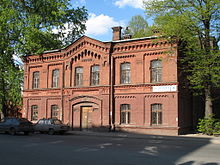
Political prisoners in the Leningrad SPH
9 Arsenalnaya Street; the hospital commandant is Blinov.
[1] Sergei Sergeyevich ALEXEYENKO (b. 1924), Captain in the Soviet Army. Article 83 via 15 (RSFSR Criminal Code: “attempting to cross the border”); “schizophrenia”. Place of residence: Kzyl-Orda (Kazakhstan).
[2] Nikolai Ivanovich BARANOV (b. 1936), manual worker. Article 70; “psychopathic”. Place of residence: Leningrad (arrested in Moscow).
[3] Vladimir Yevgenevich BORISOV (b. 1943), manual worker. Article 190-1; “residual signs of organic brain disorder”. Leningrad (CCE 11.10).
[4] Vladimir Sergeyevich BORISOV (b. 1937), manual worker. Article 190-1; “schizophrenia”. Moscow Region (taken to the hospital in summer 1969).
[5] Nikolai Ivanovich BROSLAVSKY (b. 1905), manual worker. Article 83 via 15; “schizophrenia”.
[6] Yevgeny Yevgenevich KOMAROV (b. 1930), manual worker. Article 70; “paranoid development of the personality”. Leningrad.
[7] Ivan Maksimovich LARIN (b. 1939), manual worker. Article 70; “schizophrenia”. Kaluga (Central Russia).
[8] Vladimir Vasilyevich POPOV (see Chernyshov’s “Appeal”, item 2 above). taken to the hospital in August 1970.
[9] Yury Petrovich SAPENKO (b. 1936), manual worker. Article 83 via 15; “schizophrenia”. Petrozavodsk (Karelian ASSR, Northwest Russia).
[10] Oleg SMIRNOV (b. 1934), architect. Article 70; “schizophrenia and induced psychosis”. Moscow; arrested in 1968 in connection with the case of the Fetisov group (CCE 7.8).
[11] Victor Isaakovich FAINBERG (b. 1933), philologist. Article 190-1; “schizophrenia”. Leningrad; took part in the demonstration on Red Square, 25 August 1968. Fainberg is author of a samizdat document on conditions in the hospital (see CCE 17.13 and [4]).
[12] Lev Konstantinovich FYODOROV (b. 1934), manual worker. Articles 68 and 70; “syphilis of the brain”.
[13] Ivan Leontevich FROLKIN (b. 1914), manual worker. Article 70; “organic brain disorder with symptoms of feeble-mindedness”.
[14] Anatoly Grigorevich CHEPULA (b. 1950), manual worker. Article 70; “schizophrenia”. Romanovka Village, Shkotovsky district, Primorsky Region (Krai), Soviet Far East.
[15] Vitaly I. CHERNYSHOV (see his “Appeal” above, item 2).
[16] Yevgeny Viktorovich SHASHENKOV (b. 1932), engineer. Article 70; “non-typical manic-depressive psychosis”. Leningrad; arrested in connection with the case of Kvachevsky and Gendler (CCE 5.2).
*
5.
GERSHUNI
On 8 December 1970 — not 5 December, as CCE 17.12 [15] incorrectly stated — Vladimir Gershuni, then in Moscow’s Butyrka Prison, announced a hunger-strike timed for 10 December (Human Rights Day). In expectation of being transferred to a Special Psychiatric Hospital, he began it two days early.
Explaining the causes and aims of the hunger-strike in a statement to the USSR Supreme Court, Gershuni included in his demands the return of letters and telegrams confiscated from him. On New Year’s Eve, Gershuni was transferred to the Special Psychiatric Hospital in Oryol [Orel]. Address: institution IZ-55/1a, 8 Razgradskaya Street (formerly the Oryol Region Prison).
Gershuni discontinued his hunger-strike on 31 January 1971; it lasted, therefore, for 55 days. On the 43rd day a warder struck Gershuni on the face while he was being forcibly fed.
During the hunger-strike, besides force-feeding, Gershuni was given injections of Aminazin in large doses, which in Gershuni’s words “deprived me of sleep and normal perception”. Haloperidol was later substituted for Aminazin.
*
6.
GORBANEVSKAYA
On 9 January 1971 Natalya Gorbanevskaya was transferred from Butyrka Prison to the Special Psychiatric Hospital on Sechenov Street in Kazan, Tatarstan (postal address: building 148, block 6, postbox UE, Kazan-82). A course of treatment with Haloperidol has been prescribed for her there.
The text of a statement by Gorbanevskaya on her hunger-strike of 5-10 December 1970 (CCE 17.12 [15]) has now become known:
“As a symbol of solidarity with the political prisoners in the Mordovian camps, in the Vladimir, Lefortovo and Butyrka Prisons, and in the Leningrad, Kazan and Chernyakhovsk Special Psychiatric Hospitals and in other places of confinement;
“and as a protest against the anti-constitutional political persecution of people, and in particular against my arrest, protracted imprisonment and the deliberately false judgement that I am of unsound mind, I declare a hunger-strike from 5 December (Constitution Day) to 10 December (Human Rights Day).”
*
7.
VICTOR KUZNETSOV
On 26 January 1971 the Moscow Region Court considered the findings of a commission of experts, who visited the Kazan Special Psychiatric Hospital in November 1970 to examine whether or not to release Victor Kuznetsov (CCE 9.3) from compulsory treatment.
Yakov L. Landau of the Serbsky Institute spoke on behalf of the commission. Procurator Morozov requested the court, “in view of the gravity of Kuznetsov’s guilt”, to extend his period of detention in the Kazan Special Psychiatric Hospital. The Court, under the chairmanship of Shevtsov, rejected the petition of the commission and concurred with the opinion of the Procurator.
*
8.
JOFFE
By the decision of a commission, subsequently confirmed by the Kazan City Court on 13 January 1971, Olga Joffe (CCE 15.2) has been prescribed treatment in a hospital of general type.
On 28 February, she was despatched to the Central Psychiatric Remand Centre (hospital No. 7) in Moscow. At present Joffe is in psychiatric hospital No. 3 on Matrosskaya Tishina Street.
=============================================
NOTES
Reports on these cases were published abroad in 1971 by the NTS periodical Possev.
*
- In 1992 Bukovsky found a top secret contemporary note to the Politburo from Andropov (22 January 1970, Pb 151/xiii) suggesting there was “a widespread threat to public order and the Soviet system from the mentally ill” and encouraging it to take action.
As the Chronicle reported (CCE 28.9), new measures were introduced in August 1971; the January 1970 decision bears handwritten confirmation (February 1972) that changes had been implemented.
↩︎ - The Russian text of one of Zinaida Grigorenko’s letters, dated 11 February and addressed to “The World Mental Health Society”, was published in Possev 1971 (issue 5, pp 5-6). English extracts appeared in The Observer (London), 2 May 1971.
↩︎ - Chernyshov’s appeal was published in Russian in Possev 1971 (issue 5, pp. 3-4).
↩︎ - A shortened version of Fainberg’s document is in Possev 1971 (issue 3, pp. 6-7). The full text is in Kaznimye sumasshestviem (punished by madness), a large compilation on Soviet prison-hospitals, published by Possev Verlag in 1971.
↩︎
=================================
 A Chronicle of Current Events