Does Censorship Exist in the Soviet Union?
Samizdat collection of 1917-1922 documents, with an anonymous foreword (Leningrad, 1970).
*
“… people of our era should know what a price in sacrifices was paid by the working class of our country to achieve the right to a free press”,
reads the foreword to The Bolshevik Press in the Vice of Tsarist Censorship (1910-1914), a collection published in Leningrad in 1939.
People today should also know what price was paid for the loss of that right.
*
[1]
REVOLUTION & CIVIL WAR
The samizdat collection includes documents on the initial stage (1917-1922) of Soviet censorship : “The Decree on the Press” and “General Regulations on the Press”, signed by Lenin on 27 October (9 November) 1917. Prohibition of the non-Bolshevik press and censorship restrictions were declared to be temporary, extraordinary measures.
“As soon as the new order is consolidated, all administrative pressures on the press will be terminated and absolute freedom will be established for the press within the limits of legal accountability, in accordance with a law which in this respect will be extremely broad and progressive.”
“The present regulations are of a temporary nature and will be repealed by special decree when public life returns to normal.”
As is well-known, there has been no such ‘special decree’ to this day.
*
[2]
CIVIL WAR TO NEP
There then follow extracts from the discussion of this issue at sessions of the All-Russian Central Executive Committee (VTsIK).
Quotations from the discussions are drawn from a book published in Moscow in 1918: the Proceedings of Sessions of the All-Russian Central Executive Committee of the Soviets of Workers’, Soldiers’, Peasants’ and Cossacks’ Deputies (Second Convocation).
Excerpts from the memoirs of D.A. Lutokhin, who was editor of the journals Economist and Utrenniki, were published in the Archive of the Russian Revolution (Vol. XII, Berlin, 1923). There are also excerpts from the book by P. Vityazev, Private Publishing Houses in Soviet Russia (Petrograd, 1921), issued in duplicated form and with all rights reserved (na pravakh rukopisi).
The second part of the 1970 collection deals principally with the period of transition to NEP [1] and the abolition of military-revolutionary censorship.
At that time (1921) the functions of censorship were exercised by the State Publishing House (Gosizdat). Founded in 1919 by Vаclav Vorovsky, it was later headed by Nikolai Meshcheryakov and Ivan Skvortsov-Stepanov. Gosizdat was then a department of the People’s Commissariat of Enlightenment (Education).
In the second part of the collection there is material on the role played in censorship by the Agitprop Department of the Communist Party’s Central Committee and the Press Department of the Cheka and GPU, 1918-1923 (first forms of State Security).
It also includes a list of decrees restricting private publishing activity: on the State monopoly of public announcements (1917-1918); the mandatory publication of official communications; etc.
Names mentioned include:
- N. Lisovsky, Petrograd Press Commissar;
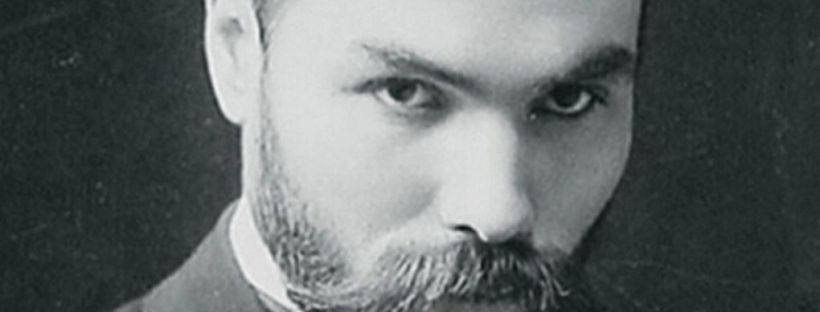
- V.Ya. Bryusov [2], head of the literature and publishing department at the Commissariat of Enlightenment;
- A. Serafimovich, one of the first “fervent supporters” of the achievements of the October Revolution in the field of the press; and
- M. K. Lemke, who was author of several studies of Tsarist censorship and, according to rumours of the time, a theoretician of the “statutes” of Soviet censorship.
*
[3]
FROM GOSIZDAT TO GLAVLIT
“Regulations on Glavlit and its local agencies” are taken from Collected Statutes, 1922 (No. 40, Article 461). They were also published in Izvestiya (No. 137), 23 June 1922.
Gosizdat was the sole State agency possessing all rights to control literature and the press. Censorship was therefore within its purview. As Gosizdat became more and more of an economic organisation, however, it began to lose its typically administrative functions. Censorship was one of them.
Censorship passed from the political departments of Gosizdat to Glavlit [3], under the Commissariat of Enlightenment. Glavlit was founded by a decree of the Council of People’s Commissars on 6 June 1922, and signed on behalf of Lenin (who was ill) by Alexei Rykov.
*
6 June 1922 must therefore be regarded as the date on which official censorship was established in the USSR. (De facto censorship had already been introduced by the 1917 “Decree on the Press”.)
The name Glavlit, incidentally, was originally short for “Principal directorate for matters of Literature and Art” (Small Soviet Encyclopaedia, 1st edn., Moscow 1929, vol. 2). Today Glavlit is short for “Principal directorate at the USSR Council of Ministers for safeguarding State and Military Secrets in the Press”.
Glavlit is charged, the Regulations read (para. 2[a]), with
“the preliminary examination of all works intended for publication and circulation, both in manuscript and in printed form; of periodic and non-periodic publications, photographs, drawings, maps etc.”
Admittedly, the Regulations exclude those publications which were at the time exempt from pre-publication censorship: all Party and State publications, and research work published by the USSR Academy of Sciences.
*
On 2 December 1922, Issue 1 of the Bulletin of Official Instructions and Communications of the Commissariat of Enlightenment published “Glavlit Instructions to its local agencies”. There follow certain excerpts from those Instructions:
“1. Glavlit and its local agencies carry out all forms of censorship: military, political, ideological etc.”
(No mention of artistic censorship but this omission was made good in a duplicated copy of the “Instructions”) …
Paragraph 7 explains what the censorship consists of. For example,
“the banning of all sorts of printed works containing an ideology applied to basic issues (society, religion, economics, the national question, the field of art etc.) that is hostile to us”
(the duplicated copy reads: “which is utterly alien to the working class”);
“the deletion from articles of the most controversial passages — regarding facts, figures, evaluations — which compromise the Soviet regime and the Communist Party”,
(the duplicated copy reads: “which aim to undermine the prestige of the Soviet regime”).
Glavlit was directly linked with State Security, the GPU and its department of Political Oversight: one of the two deputy-heads of local agencies of Glavlit was chairman of the local GPU.
*
This section of the samizdat collection gives examples:
- deletions from books of verse by Fyodor Sologub, Kuzmin and others; and
- orders banning the publication of a number of journals and almanachs, as well as books (among them Begushchaya po volnam by Alexander Grin and a two-volume edition of Akhmatova).
- It gives the names of censors, the list being headed by the first director of Glavlit, Lebedev-Polyansky.
In the foreword the compilers refer to protests by literary and scientific figures, among them Fyodor Sologub and Academician Ivan Pavlov, against the banning of the activities of private publishing houses. They give an excerpt from a 1926 letter by Maxim Gorky to Romain Rolland about the serious situation of Soviet literature under censorship.
============================================
NOTES
At his trial (CCE 32.3) Gabriel Superfin admitted to being the author of the above text.
*
- NEP = the New Economic Policy (1922-1927), the interlude between the Civil War and the First Five-Year Plan.
↩︎ - The poet Valery Bryusov (1873-1924) is the subject of the feature photo around the title of this report.
↩︎ - For the contemporary operation of Glavlit, fifty years on, see the succession of “Official Documents” (02. CCE CONTENTS, No. 12) published by the Chronicle, between 1974 and 1981.
↩︎
================================
 A Chronicle of Current Events