plus “A Statement by the Action Group” (below)
*
On 27 August 1973, judicial proceedings commenced in the Lyublino district people’s court (Moscow) in the case of Pyotr Yakir and Victor Krasin, indicted for criminal “Anti-Soviet Activities” under Article 70, pt. 1 (RSFSR Criminal Code).
The judge was Mironov, deputy chairman of the Moscow City Court.
Solonin, an assistant to the USSR Procurator-General, served as prosecutor;
Yudovich and Shveisky acted as counsels for the defence.
*

Victor Krasin (1929-2017)
*
TRIAL
The court was in session for almost a week without recessing.
Representatives of various State and public organizations (the composition of this group changed from day to day) were allowed into the courtroom with special tickets.
The defendants’ relatives were also permitted to attend the trial. After questioning, witnesses had the right to remain in the courtroom until the end of the trial, but only two or three chose to do so.
Friends and acquaintances of the defendants were barred from the courtroom. Guards with red armbands told them the courtroom was full, and finally asked the group assembled on the street to move away from the court building.
Foreign correspondents, too, were not admitted to the trial but were regularly given information about the proceedings.
*
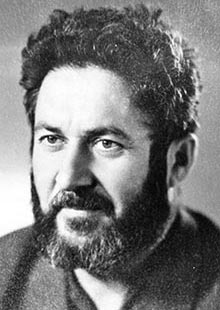
Pyotr Yakir (1923-1982)
*
The materials of the Yakir-Krasin case constituted 150 volumes.
At the start of the investigation, there is reason to believe, charges were preferred under Article 64 (“Treason”). During the pre-trial investigation more than two hundred people (see below) were interrogated.
*
INDICTMENT
The reading of the indictment took four hours. Yakir and Krasin were accused of the following activities:
- the composition and signing, possession, duplication and circulation of many documents of a political nature: of letters of protest, leaflets and A Chronicle of Current Events;
- transmission of these documents to the West through foreign journalists or foreign tourists;
- procurement and subsequent possession of various documents of the “People’s Labour Alliance” (NTS) [1], and of other literature published in the West and categorized in the indictment as anti-Soviet;
- the receipt of 4,000 roubles from the NTS through a representative of the Italian organization “Europa Civilta”;
- procurement from foreigners of portable tape-recorders subsequently to be used “for hostile purposes”;
- statements and an interview given to the foreign press and television.
Both defendants pleaded guilty in full and repented of their actions. Both also acknowledged that they had had designs against the Soviet regime.
*
WITNESSES
Of approximately thirty witnesses examined during the trial, many were not residents of Moscow.
One witness, the psychiatrist Snezhnevsky [2], stated, among other things, that in his entire 50 years’ experience in psychiatric institutions, no healthy individual had ever been confined in a psychiatric hospital.
During the examination of witnesses Judge Mironov tried mainly to corroborate and clarify the points of the indictment and refrained from judgement, leaving this to the prosecution.
*
PROSECUTION AND DEFENCE
In his speech to the court for the prosecution, Solonin demanded a penalty of three years imprisonment and three years of exile for each of the defendants.
In their pleadings counsel for the defence acknowledged that their clients’ actions had been categorized correctly. Both attorneys gave detailed accounts of the unlawful persecution Yakir and Krasin had endured during the period of “the Cult of Stalin’s Personality” and of the serious ill health from which both suffered. In conclusion, they asked the court to limit the penalty to the amount of time the defendants had already served.
In a brief final plea, Pyotr Yakir requested some form of penalty other than imprisonment. “I want to die elsewhere than behind barbed wire,” he said.
Victor Krasin also asked to have his sentence reduced.
*
SENTENCE
The verdict was announced on 1 September 1973. Each man was sentenced to three years imprisonment and three years exile.
After sentencing, the defendants were permitted a brief meeting with their relatives in the courtroom. Yakir and Krasin asked them to thank their lawyers and inform the latter that their services would no longer be needed.
Each of the convicted men wrote his own appeal against the sentence.
*
PRESS CONFERENCE, APPEAL. ACTION GROUP STATEMENT
*
A PRESS CONFERENCE WITH YAKIR AND KRASIN, ATTENDED BY FOREIGN CORRESPONDENTS, was held in the House of Journalists on 5 September 1973. Parts of it were broadcast on Soviet television the same day.
Both men repented of their criminal deeds which had, objectively speaking, furthered the hostile activities of anti-Soviet organizations abroad. Yakir described reports of psychiatric persecution of dissenters in the Soviet Union as “libellous”. Subsequently the news conference was given extensive coverage in the press.
*
APPEAL
In an appellate session on 28 September 1973 the RSFSR Supreme Court reviewed the decision of the Moscow City Court.
Procurator Ilyukhin [3], acting for USSR Procurator-General Rudenko, argued the case for the prosecution. He declared the court’s decision valid but presented a medical report on the health of Yakir and Krasin. The main conclusion of the physicians was that further confinement of the accused in custody could seriously endanger their health.
For this reason Ilyukhin asked to have Yakir’s sentence reduced to one year and four months of imprisonment and Krasin’s to one year and one month, terms roughly equal to the time each had already served in the Lefortovo Prison since his arrest. The procurator asked that the sentence of exile remain in force. The RSFSR Supreme Court concurred with this proposal.
In mid-October 1973 the two men were exiled to cities in Central Russia: Krasin to Kalinin [Tver], Yakir to Ryazan.
*
In late October or early November the RSFSR Supreme Court pardoned Krasin’s wife, Nadezhda Yemelkina [4], sentenced in 1971 to five years exile under Article 190-3 (RSFSR Criminal Code).
She had been exiled to the city of Yeniseisk in central Siberia (Krasnoyarsk Region [Krai]). Yemelkina gave testimony which was very useful to the investigators conducting “Case 24” (CCE 28.2, CCE 29.8).
*
Early in December the KGB petitioned to have the criminal case against Irina Belogorodskaya dropped, apparently through the granting of a pardon.
During the investigation she had testified against several people (CCE 29.8, CCE 30.3). Belogorodskaya was released from Lefortovo Prison where she had been confined for over 11 months.
*
OVER 200 QUESTIONED
The Chronicle lists below the names of people whom it knows were interrogated [over one hundred surnames in Russian alphabetical order] during the investigation of the Yakir-Krasin-Belogorodskaya case.
This list is far from complete. In all, over two hundred people were interrogated, most of them in Moscow.
*
А — Ludmila Alexeyeva; Genrikh Altunyan (Kharkov); A. Alshutov, V. Albrekht, A. Amalrik, Zamfira Asanova;
Б — Tatyana Bayeva, V. Balakirev, V. Batshev, Vyacheslav Bakhmin, Alexander Bolonkin, Vladimir Bukovsky, Nina Bukovskaya;
В — Tatyana Velikanova, Vladimir Voinovich, Alexander Volpin (Yesenin);
Г — Galina Gabai, Ilya Gabai; E. Gaidukov (Khabarovsk); Yury Gendler (Leningrad); S. Genkin, Ludmila I. Ginzburg, G. Gladkova; Semyon Gluzman (Kiev); Zinaida Grigorenko;
Д — Vadim Delaunay, Mustafa Dzhemilev; T. Dibtseva (Sochi); Vladimir Dremlyuga, A.A Dubrov, Reshat Dzemilev;
Е, Ж, З, И — Nadezhda Yemelkina, Father Sergy Zheludkov; Tatyana Zhitnikova (Kiev); L. Ziman, Yu. lvanov;
К — Ihor Kalynets (Lvov); A Kaplan, Irina Kaplun, L. Kardasevich, Yury Karyakin, Yuly Kim, Sergei Kovalyov, V. Kozharinov, D. Kozilo, S. Kozilo, Yekaterina Kostyorina, N. Kravchenko, Yu. Krasin, Irina Kristi, E. Kushev, L. Kusheva;
Л — Alexander Lavut, Anatoly E. Levitin-Krasnov, Pavel Litvinov; Letinsky (Leningrad), Yury M. Lotman (Tartu);
М — Gyuzel Makudinova, Yu. Maltsev; D. Markov (Obninsk); V. Miloshevich, B. Mikhalevsky, R. Mukhamedyarov;
Н, О — B. Naidorf (Novosibirsk), A. Nenarokov; Yekaterina Olitskaya (Uman), B. Orlov;
П — Svetlana Pavlenkova (Gorky), O. Paulson (Smela); L. Pinsky, Grigory Podyapolsky; V. Ponomaryov (Kharkov);
Р, С — V. Rokityansky, I. Rudakov, V. Savenkova, T. Svirepova; Vaclav Sevruk (Vilnius), Semendyayev (Melitopol), Lyubov Serednyak (F. Kiev), Vladimir Slepak, M. Smolyansky, E. Smorodinova, A. Snezhnevsky, Victor Sokirko; Sergei Soldatov (Tallinn), Pyotr Starchik, Nina Strokata (Odessa); Gabriel Superfin;
Т, У, Ф — Leonard Ternovsky, V. Timachev, L. Tkachenko, Lev Ubozhko, Ustinova; Forsel (Petrozavodsk?);
Х, Ч, Ш — Victor Khaustov, Tatyana Khodorovich, Valery Chalidze; Viacheslav Chornovil (Lvov); Nadezhda Ya. Shatunovskaya, Yury Shikhanovich, Boris Shragin;
Ю, Я — Yu. Yukhnovets, G. Yablonsky; S. Jakas (Vilnius); Irina Yakir, Anatoly Yakobson, V. Yanushevich.
*
Statement by the Action Group
At the trial of P. Yakir and V. Krasin, and in material published in the Soviet press, there have been insinuations that the Action Group for the Defence of Human Rights in the USSR engages in slander of the Soviet system.
“The Action Group does not share the position taken at their trial by its former members Pyotr Yakir and Victor Krasin and feels obliged to make the following clear:
“[1] In all documents of the Action Group we report only facts.
We are convinced of the truth of our reports. The Action Group has never sought to discredit the social system or the government of its country. It has protested only against those actions of the authorities which it would consider inadmissible under any system and any government.
“[2] The Action Group has refrained, as a matter of principle, from making any political statements whatsoever.
“Now, as in the past, it considers its primary duty to be the defence of human rights in its country.
“[3] We continue to assert that, in a number of cases, psychiatry has been used in our country as a way of locking up people whom the authorities find objectionable.
The appalling reality of this fact cannot be altered by any assertions by Academician A. Snezhnevsky (USSR Academy of Medical Sciences) or Professor R. Nadzharov [5], by any repentant statements issued by Yakir and Krasin, or by any court indictments or decisions.
“[4] We direct attention to the fact that while publicly denying the use of psychiatry in the USSR to combat dissent, A. Snezhnevsky and R. Nadzharov are themselves accomplices in this crime.
Their signatures appear on the forensic psychiatric reports of people convicted for ideological reasons. And on the basis of these reports Soviet courts rule that people be committed to psychiatric hospitals for compulsory treatment. …
“[5] We affirm that during their investigation, trial and press conference Yakir and Krasin made false statements.
“It is tragic that these lies also affect the fate and reputation of all the political prisoners in the camps, prisons and psychiatric hospitals of the USSR.
“[6] We emphasize that a press conference given by people convicted of ‘Anti-Soviet Agitation & Propaganda’ is an unprecedented phenomenon in our country.
“Other such people suffer severe punishments merely for trying to get information about the conditions of their detention to the world outside.
“[7] We protest against the use of investigation methods which break people down and force them to discredit themselves, their actions and those of their comrades.
“[8] We draw attention to the impermissible conditions that prevail during investigations:
“the prolonged periods of confinement in investigation prisons, the banning of visits and correspondence (except when this benefits the investigators), and the lack of any right to legal counsel [6].
“All this renders the person under investigation utterly defenceless against abuses by the investigation agencies.
*
“We are alarmed by the resumption in our country of fierce campaigns of denunciation in which the accusers have no qualms about acknowledging that they have not read the works they are infuriated by.
“We are all the more alarmed to find members of our intelligentsia — scientists, scholars, writers and artists — participating in this campaign. We also consider it our duty to express the deep respect we have for the noble and courageous stands taken by Academician Sakharov and the writer Alexander Solzhenitsyn.
— The Action Group intends to continue in the future to make individual and collective efforts to promote universally acknowledged freedoms, such as the freedom to express and disseminate opinions, and, for example, the freedom not to be subjected to fraudulent charges by courts.
The Action Group for the Defence of Human Rights in the USSR:
Tatyana Velikanova, Sergei Kovalyov, Anatoly Levitin-Krasnov, Grigory Podyapolsky, Tatyana Khodorovich
September 1973
=========================================
NOTES
- One witness, Anatoly Levitin-Krasnov, circulated in samizdat a verbatim account of his own examination. In it he quoted a statement by Yakir, Bukovsky and himself, describing in detail their negative attitude to the People’s Labour Alliance (NTS).
See Bukovsky’s more recent, sceptical commentary (Chapter Five, 5.2: “The NTS and the Dissident Movement“, Judgement in Moscow, 2016): “The KGB made every effort to link each one of us, justly or unjustly, with the NTS”.
↩︎ - Since the 1950s, wrote an anonymous samizdat author in 1971, Andrei Snezhnevsky (1904-1987) “practically holds a monopoly over the entire science of psychiatry in the USSR” (CCE 22.3 [3]).
↩︎ - Procurator Ilyukhin was promoted during the 1970s to become the USSR Procurator for the Supervision of the State Security Agencies (CCE 49.6) .
(Not to be confused with the “Red Procurator” Victor Ilyukhin, 1949-2011, cf. Alexander Podrabinek’s “Our Campaign for an Amnesty” [R].)
↩︎ - Nadezhda Yemelkina, the wife of Leonid Krasin, was arrested in Moscow on 27 June 1971 (CCE 20.11 [14]). Sentenced to five years exile on 25 November 1971 (CCE 23.2), she arrived in Yeniseisk, her place of exile, on 16 February 1972.
↩︎ - The reference is to the former’s assertion at the Yakir-Krasin trial and to an interview by Nadzharov summarized later in this issue (CCE 30.9 [7]).
↩︎ - Soviet practice at the time was that counsel might be engaged only after the investigation was complete.
↩︎
==============================
 A Chronicle of Current Events