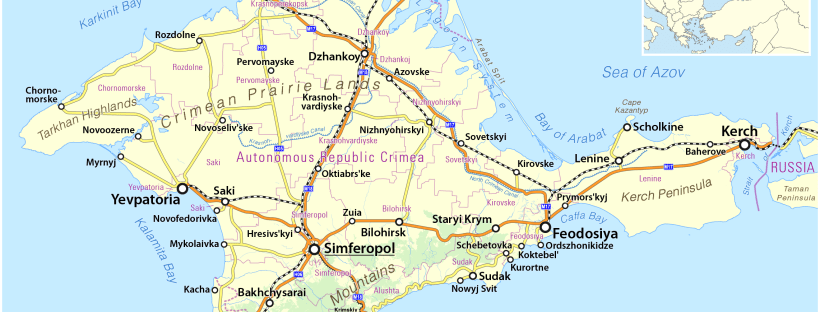
In 1968 the Uzbek authorities announced that Crimean Tartars would return to the Crimea in a planned way, making work contracts with representatives from the Crimea who had come to Uzbekistan. In this way they tried to avert the planned mass exit of Crimean Tartars to the Crimea.
That year, only 148 families were resettled through the system of labour recruitment; resettlement permits were issued only when the blessing of the KGB was forthcoming — and to those who had not taken the slightest part in the national movement.
*
The response of the regional authorities
The Chronicle has already reported how the Crimean regional administration, obeying unwritten (most probably verbal) instructions, meets the Crimean Tartars who return to their homeland without KGB permits. In this edition of the Chronicle, a number of further incidents from 1968 are given, based on the recent protest of the Crimean Tartar nation addressed to official bodies and Soviet public opinion.
*
Direct action
MARINO VILLAGE
98 Crimean Tartars put up tents on 26 May 1968, near the village of Marino outside the city limits of Simferopol. On 27 May at 4 pm the tents were surrounded by policemen, KGB operatives and vigilantes: about 250 men altogether. On an order from Lieutenant-Colonel Kosyakov, they began pulling down the tents and grabbing people, beating them up and shoving them into buses.
Everyone who was at that moment standing near the tents — these included women, children and war invalids — was transported in buses, guarded by police cars and motorcycles, to the Simferopol police headquarters. From there a group of 38 Tartars were sent off to Baku without a chance to collect their belongings and clothes. They travelled for four days without bread or water.
At Baku they were forcibly put onto the ferry “Soviet Turkestan”: even women were beaten. The crowd which gathered was told that ‘Enemies of the People’ were being transported. On 31 May the ferry was met at Krasnovodsk (Turkmenistan) by members of the police. The Tartars were put on to a train and sent off to Tashkent under KGB guard.
*
Prosecution and imprisonment
On 26 June 1968, a group of Crimean Tartars, 21 people, came for an interview with Chemodurov, chairman of the executive committee of the Crimean Region Soviet.
They wished to complain about the administrators who had not given residence permits to Crimean Tartars. Chemodurov locked himself in his office and called the police, who kicked the Tartars out of the executive committee building and deposited them at the police station.
Eleven of them were given 15 days in jail; all of them, including the women, went on hunger strike.
The remaining ten were bought aeroplane tickets with the money taken from them when searched, and then sent to Dushanbe (Tajik SSR) where none of them had ever lived.
Criminal proceedings were initiated against Mamedi Chobanov — one of those sentenced to 15 days in jail — on a charge of resisting a representative of authority. On 26 August 1968, Chobanov was sentenced to three years’ imprisonment.
*
On 27 August 1968, Mubein Yusupov and Fakhri Ismailov were sentenced to one year and six months imprisonment, respectively, for the same offence.
They were arrested during a police attack similar to that staged against the Crimean Tartars at the executive committee building. Mustafa Hebi, Kadyr Sarametov and Muniver Abibullaeva, who tried to attend this trial and appear as witnesses, were detained and given 15 days in jail.
On 4 September 1968, Zekerya Asanov, arrested as the result of a police provocation, was sentenced to one year’s imprisonment.
*
Suggestion and reality
BOLSHEVIK STATE FARM
On 10 July 1968, a group of Crimean Tartar families applied to the executive committee of the Crimean Region Soviet for permission to settle in any part of the Crimea. Zubenko, an official of the executive committee, suggested they should move into empty houses on State farms. The Tartars moved into the houses in the first section of the Bolshevik State farm in the Red Guard (Krasnogvardeisky) district.
One night lorries were driven up to the houses by uniformed and vigilantes. They grabbed the Tatars’ coats and blankets, threw them into the lorries, then wrenched the children away from their mothers and threw them also into the lorries. They dragged the rest, twisting their arms and shouting: “You sold the Crimea once and now you’ve come to sell it again! Get out! Only Ukrainians are going to live here!”
The people who had gathered at the noise took the Tartars’ side. “So you’ve found someone to take pity on! They ought to be shot!” shouted the police bullies in reply to the indignation of the local inhabitants. It all ended with the police and the volunteers taking away with them same belongings and four Tartars. The remaining Tartars were taken in for the night by the local inhabitants.
But at dawn the police and volunteers returned, fell upon those who were asleep, beat them up, tied their hands and shoved them all into lorries and drove them to a waiting railway truck in a siding. They were robbed while being beaten up: eight wrist-watches and 1,000 roubles were taken. At Novo-Alekseevka station in Ukraine’s Kherson Region four more families, taken from the “Plenty” [Obilnoe] State farm (Dzhankoisky district) in exactly the same way, were put into the same truck.
The Russian and Ukrainian workers of the first section of the “Bolshevik” State farm refused to go out to work the day after this incident. Seventeen Russian and Ukrainian families demonstratively left the State farm in protest, and four immigrant families, recently transported from the Ukraine, refused to settle there.
*
Since the promulgation of the 1967 Decree on the Political Rehabilitation of the Crimean Tartar nation, approximately 12,000 Crimean Tartars have attempted to return to the Crimea. In one way or another, most often forcibly, they have been evicted and sent back.
============================================
 A Chronicle of Current Events